
AnimaliaNot EvaluatedacceptedspeciesAccepted
Aplidium fuegiense
Cunningham, 1871
GBIF:119391093
0year
ABOUT
Descriptions(2)
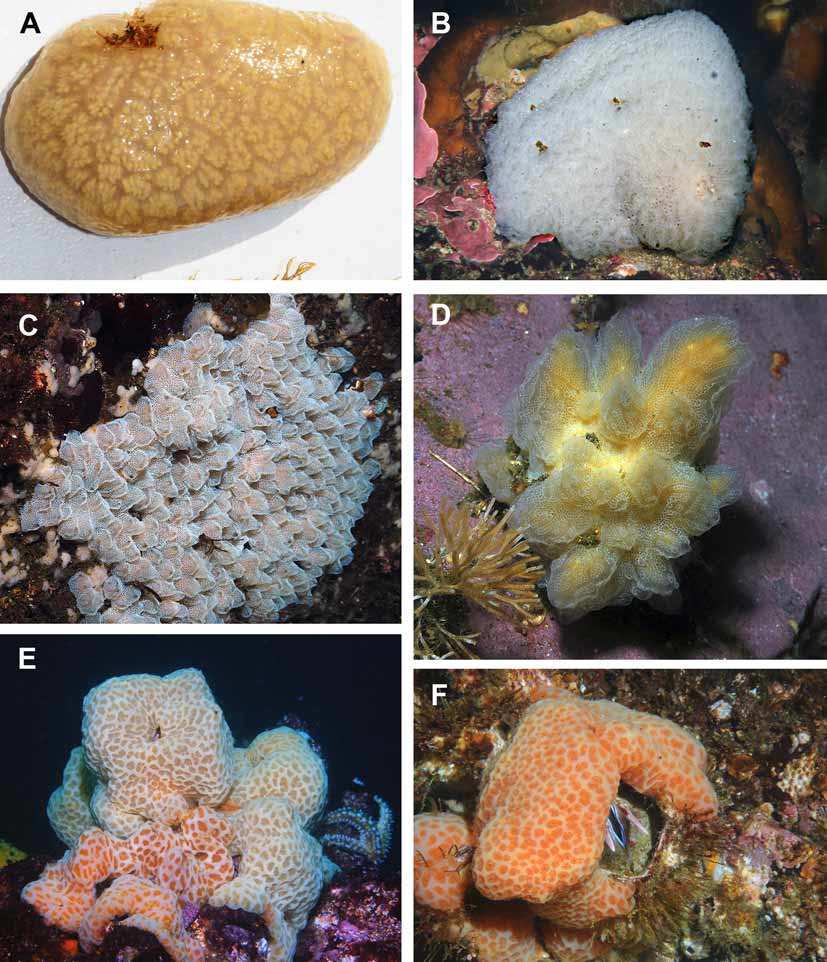
Remarks. Zooids of the present specimens agree with previous descriptions and colonies have small crowded oval bodies in the superficial layer of the tunic, a very characteristic feature allowing easy identification. In previous accounts, based on preserved material, the shape of colonies was described as extremely variable, and generally no obvious system of zooids could be recognized (Millar, 1960). Indeed, all examined preserved colonies are thick irregular masses without any recognizable systems. However, underwater photographs of the same specimens show that the shape of living colonies is rather characteristic: the surface is raised into several to numerous large conical lobes with a single cloacal siphon on the top of each lobe. Zooids open on the sides of these lobes and arranged along rather wide anastomosing cloacal canals converging to the top of the lobe (Figures 5 C, D). The material described by Van Name (1954) from Chile is certainly wrongly identified and consists of several species: reported number of stomach folds (12 – 24) is too high for A. fuegiense and range is too wide for one species.
Sanamyan, Karen, Schories, Dirk, Sanamyan, Nadya (2010): New records of aplousobranch ascidians from Central Chile. Zootaxa 2537: 58-68, DOI: 10.5281/zenodo.196669
Material examined: Chile, 10. region: Caleta Yerbas Buenas, 18 m, one colony; 4. region: Punta de Choros, Bajo tiburon, 15 m, one colony; La gruta, 30 m, one colony.
Sanamyan, Karen, Schories, Dirk, Sanamyan, Nadya (2010): New records of aplousobranch ascidians from Central Chile. Zootaxa 2537: 58-68, DOI: 10.5281/zenodo.196669
Export occurrence data
Darwin Core Archive (ZIP)
CLASSIFICATION
Taxonomic Classification Tree

IMAGES