AnimaliaNot EvaluatedacceptedspeciesAccepted
Orobdella dolichopharynx

Orobdella dolichopharynx

GBIF:119406066

0

Synonyms

ABOUT

Descriptions(6)

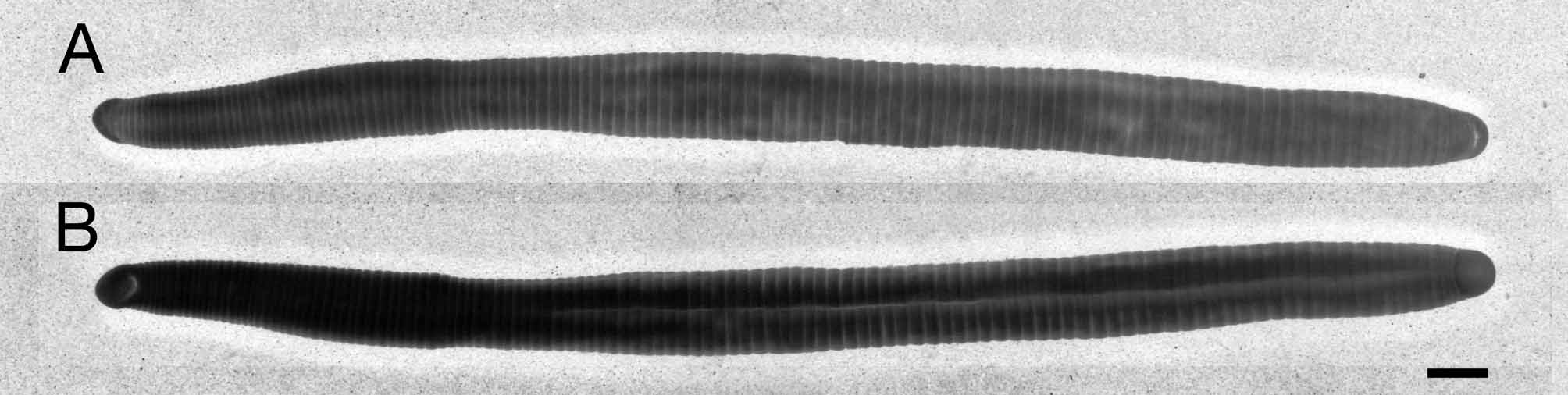
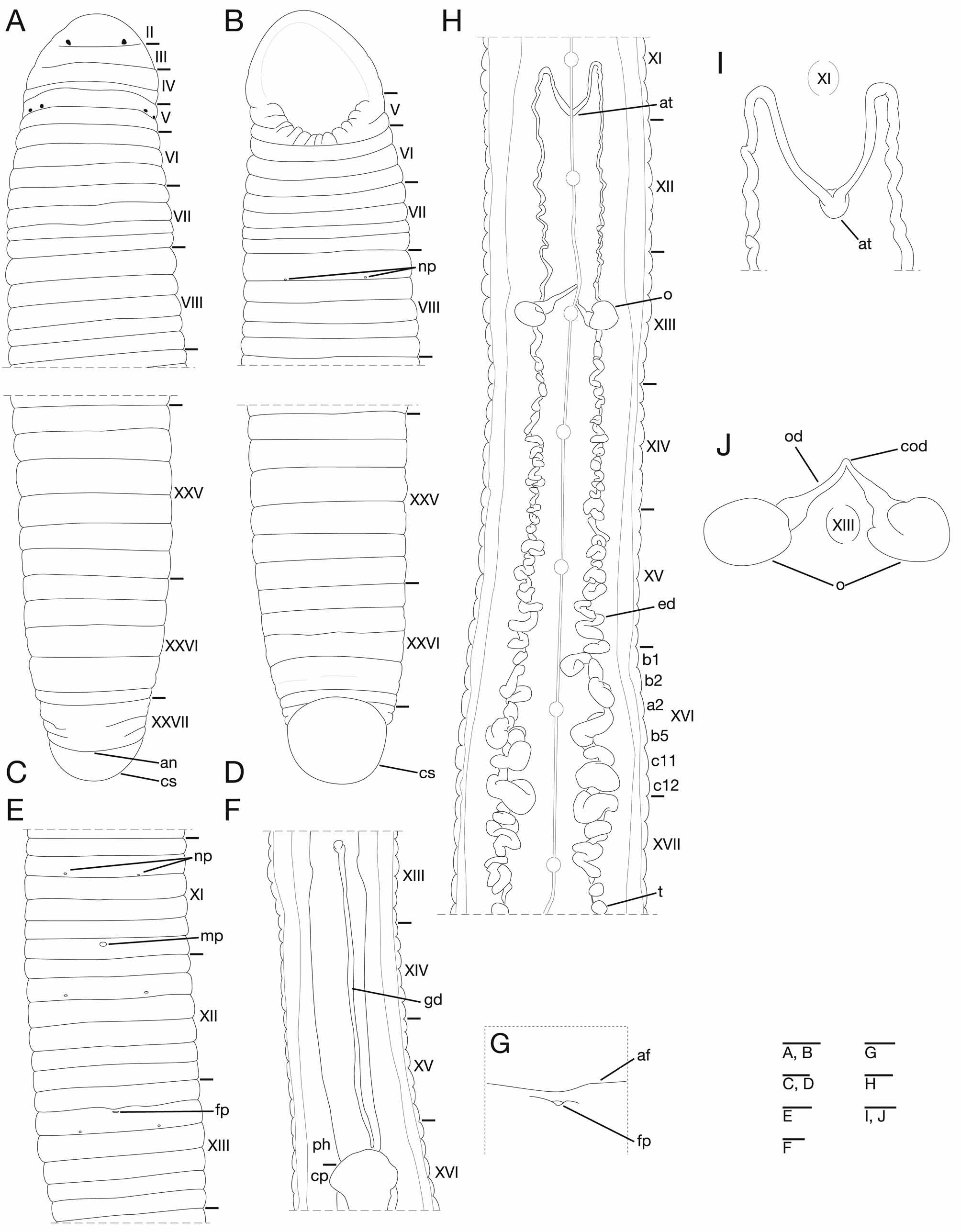
Description of holotype. Body firm, muscular, BL 106.7 mm, BW 6.6 mm (Fig. 5). Caudal sucker ventral, oval, its diameter slightly smaller than maximum body width (Fig. 6 D). In life, dorsal surface yellowish green, ventral surface whitish yellow, dorsal surface darker than ventral surface. Color faded in preservative, without any dark lines. Somite I completely merged with prostomium (Fig. 6 A). Somite II uniannulate, not separated from I (Fig. 5 A). Somite III uniannulate (Fig. 6 A). Somite IV biannulate (Fig. 6 A). Somite V biannulate, a 3 forming posterior margin of oral sucker (Fig. 6 A, B). Somites VI triannulate (Fig. 6 A, B). Somite VII complete quadrannulate, a 1 = a 2> b 5 = b 6 (Fig. 6 A, B). Somite VIII complete quinquannulate, a 1> a 2 = b 5> c 11 = c 12 (Fig. 6 A, B). Somite IX complete sexannulate, b 1 c 11 = c 12. Somites X – XXV complete sexannulate, b 1 = b 2 = a 2 = b 5 = c 11 = c 12 (Fig. 6 C – E, H), X a 2 the first annulus of the clitellum, XIII b 5 the last annulus of the clitellum. Somite XXVI quinquannulate, b 1 = b 2 = a 2 b 6, b 6 the last complete annulus on the venter (Fig. 6 C, D). Somite XXVII incomplete biannulate (Fig. 6 C). Anus behind XXVII (Fig. 6 C). Post-anal annulus absent (Fig. 6 C). Anterior ganglionic mass in VI a 2 and a 3. Ganglion VII in a 2. Ganglia VIII – XXI in a 2 of each somite (Fig. 6 H). Ganglia XXII – XXV in b 2 and a 2 of each somite. Ganglion XXVI in b 1 and b 2. Posterior ganglionic mass in XXVI a 2 – b 6. Eyes three pairs, first pair dorsally in II, second and third pairs dorsolaterally on posterior margin of V (a 1 + a 2) (Fig. 6 A). Nephridiopores 17 pairs, ventrally at posterior margin of a 1 at VIII and b 2 of each somite, at IX – XXIV (Fig. 6 B, E). Papillae numerous, minute, hardly visible, one row on every annulus. Pharynx agnathous, euthylaematous, reaching to XVI b 2 / a 2. Crop tubular, acecate, in XVI b 2 / a 2 to XXII a 2. Gastropore absent (Fig. 6 E, G). Gastroporal duct narrow, tubular but slightly bulbous at female gonopore, in XIII b 1 / b 2 to XVI b 2, not joining with crop (Fig. 6 F). Intestine tubular, acecate, in XXII a 2 to XXIV / XXV. Rectum tubular, thin-walled. Male gonopore at anterior of XI c 12, close to annular furrow of c 11 / c 12 (Fig. 6 E). Female gonopore at anterior of XIII b 2, close to annular furrow of b 1 / b 2 (Fig. 6 E, G). Gonopores separated by 8 annuli (Fig. 6 E). Testisacs multiple, two or three testisacs on each side in each annulus, in XVII b 5 to XXV b 5 (Fig. 6 H). Epididymides absent. Ejaculatory bulbs absent (Fig. 6 H). ejaculatory ducts in XI a 2 to XVII a 2, coiled, widen from each junction with testisacs, narrow gradually toward each junction with atrium, with pre-atrial loop extending to ganglion XI (Fig. 6 H, I). Atrial cornua absent. Atrium rudimentary in XI c 11 and c 12 (Fig. 6 H, I). Ovisacs one pair, thin-walled, globular, in XIII a 2 (Fig. 6 H, J). Oviduct thin-walled, right oviduct crossing ventrally beneath nerve cord, both oviducts converging into common oviduct in XIII b 2 (Fig. 6 H, J). Common oviduct thin-walled, very short, directly descending to female gonopore (Fig. 6 H, J). Variation. Somite VII triannulate (KUZ Z 124) or ventrally triannulate (KUZ Z 118, Z 122). Somite XXVII incomplete biannulate or triannulate. Clitellum from X b 5 to XIII a 2 – XIV b 1. Pharynx reaching to XVI b 1 – c 11. Crop reaching to XXII b 1 – XXIII b 1. Gastroporal duct tends to attach ventral sinus (Fig. 7). Intestine reaching to XXIV c 11 – XXV b 1 / b 2. Male gonopore in XI c 11 / c 12 or at anterior XI c 12. Female gonopore in XIII b 1 / b 2 or at anterior of XIII b 2. Testisacs in XVIII b 1 – XVIII b 5 to XXV a 2 – c 11.
Nakano, Takafumi (2011): Redescription of Orobdella ijimai (Hirudinida: Arhynchobdellida: Gastrostomobdellidae), and two new species of Orobdella from the Ryukyu Archipelago, Japan. Zootaxa 2998: 1-15, DOI: 10.5281/zenodo.207870

Diagnosis. In life, dorsal surface yellowish green, ventral surface whitish yellow. Somite VII quadrannulate. Somite VIII quinquannulate. Somites IX – XXV complete sexannulate. Somite XXVI quinquannulate. Pharynx reaching to XVI. Gastropore absent. Gastroporal duct narrow, tubular, not joining with crop. Male gonopore in XI c 11 / c 12 or at anterior of XI c 12, close to c 11 / c 12. Female gonopore in XIII b 1 / b 2 or at anterior of XIII b 2, close to b 1 / b 2. Gonopores separated by eight annuli. Pre-atrial loop present, extending to ganglion XI. Atrial cornua absent.
Nakano, Takafumi (2011): Redescription of Orobdella ijimai (Hirudinida: Arhynchobdellida: Gastrostomobdellidae), and two new species of Orobdella from the Ryukyu Archipelago, Japan. Zootaxa 2998: 1-15, DOI: 10.5281/zenodo.207870
Remarks. Orobdella dolichopharynx was considered to be Orobdella ijimai (Oka 1910 a; b). However, O. dolichopharynx is easily distinguished from the latter by the number of annuli between the gonopores.
Nakano, Takafumi (2011): Redescription of Orobdella ijimai (Hirudinida: Arhynchobdellida: Gastrostomobdellidae), and two new species of Orobdella from the Ryukyu Archipelago, Japan. Zootaxa 2998: 1-15, DOI: 10.5281/zenodo.207870
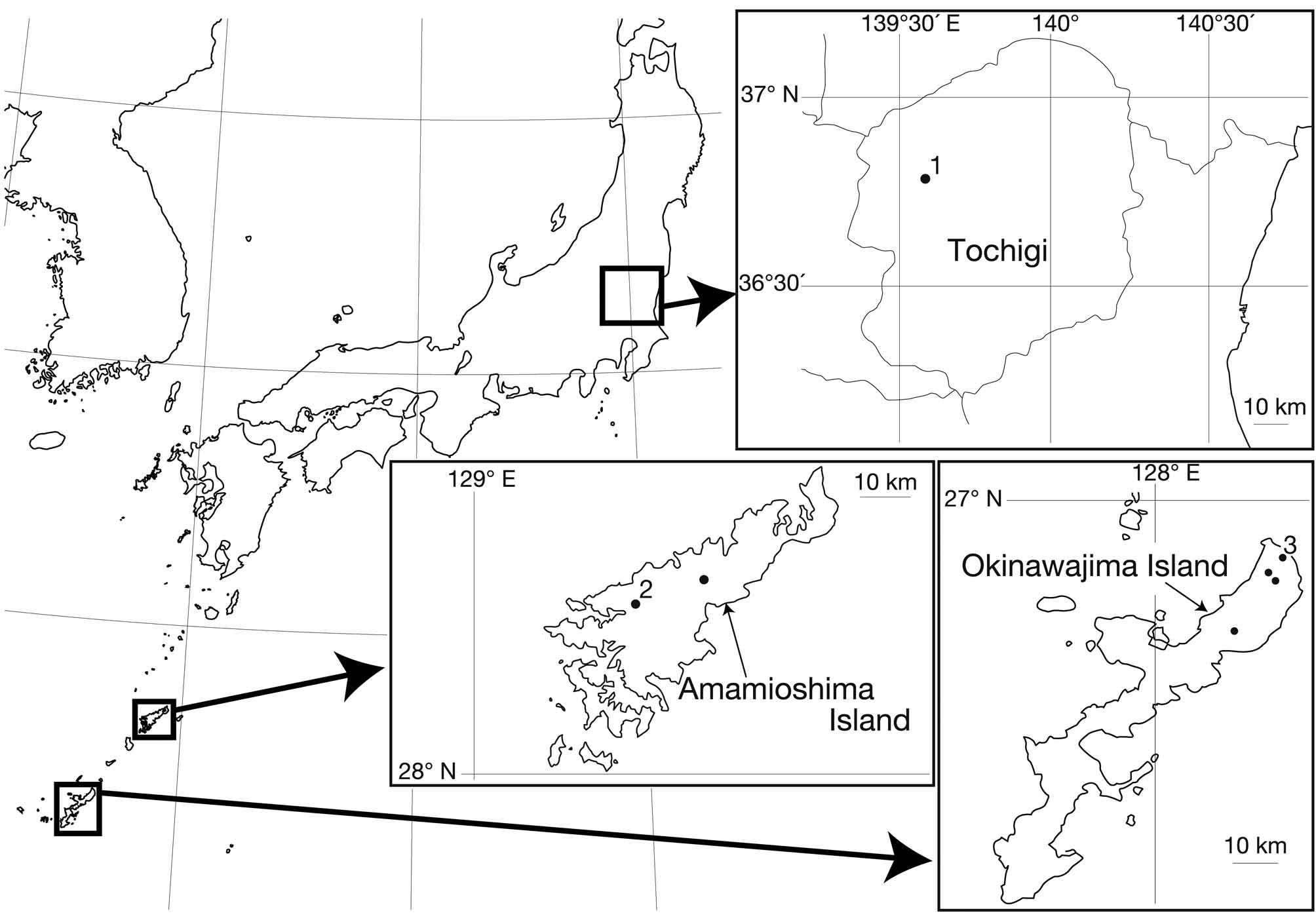
Distribution and ecology. Known from the mountain region of Amamioshima Island in the Ryukyu Archipelago, Japan (Fig. 1). Leeches were found under rocks or fallen leaves.
Nakano, Takafumi (2011): Redescription of Orobdella ijimai (Hirudinida: Arhynchobdellida: Gastrostomobdellidae), and two new species of Orobdella from the Ryukyu Archipelago, Japan. Zootaxa 2998: 1-15, DOI: 10.5281/zenodo.207870
Etymology. The specific name is a compound noun in apposition derived from the Greek words transliterated into Latin, dolicho (long), and pharynx (pharynx), referring that the pharynx of this new species is reaching to somite XVI (those of the other known Orobdella species in Japanese islands north of the Ryukyu Archipelago are reaching to somite XIV).
Nakano, Takafumi (2011): Redescription of Orobdella ijimai (Hirudinida: Arhynchobdellida: Gastrostomobdellidae), and two new species of Orobdella from the Ryukyu Archipelago, Japan. Zootaxa 2998: 1-15, DOI: 10.5281/zenodo.207870
Materials examined. Holotype. KUZ Z 120, mature specimen of 106.7 mm length, dissected, collected from under fallen leaves along a road at Mt. Yuwandake (alt. 448 m, 28 ° 17´11 ˝ N, 129 ° 18´56 ˝ E), Uken, Amamioshima Island, Kagoshima Pref., Japan, by Takafumi Nakano on April 30, 2010. Paratypes (a total of nine specimens collected from Amamioshima Island in 2009 – 2010). Six specimens collected from the type locality by Takafumi Nakano: KUZ Z 115 (alt. 520 m, 28 ° 17´27 ˝ N, 129 ° 18´58 ˝ E), dissected, on March 6, 2009; KUZ Z 116 (alt. 536 m, 28 ° 17´29 ˝ N, 129 ° 19´00 ˝ E), dissected, on March 12, 2009; KUZ Z 117 (alt. 440 m, 28 ° 17´06 ˝ N, 129 ° 18´55 ˝ E), on August 28, 2009; KUZ Z 118 (alt. 606 m, 28 ° 17´42 ˝ N, 129 ° 19´06 ˝ E), dissected, on April 27, 2010; KUZ Z 119 (alt. 434 m, 28 ° 17´08 ˝ N, 129 ° 18´55 ˝ E), dissected, and KUZ Z 121 (alt. 448 m, 28 ° 17´11 ˝ N, 129 ° 18´56 ˝ E), dissected, on April 30, 2010. Three specimens collected from Kinsakubaru, by Masahiro Nishi on July 26, 2010: KUZ Z 122, dissected, KUZ Z 123 and KUZ Z 124.
Nakano, Takafumi (2011): Redescription of Orobdella ijimai (Hirudinida: Arhynchobdellida: Gastrostomobdellidae), and two new species of Orobdella from the Ryukyu Archipelago, Japan. Zootaxa 2998: 1-15, DOI: 10.5281/zenodo.207870

Export occurrence data

Darwin Core Archive (ZIP)

CLASSIFICATION

Taxonomic Classification Tree

NOMENCLATURE

Synonyms(1)

MULTIMEDIA

Media Files(4)

FIGURE 1. Location of collecting localities in this study. The locality numbers are referred to as follows: the type locality of, (1) Orobdella ijimai Oka, (2) Orobdella dolichopharynx sp. nov., and (3) Orobdella shimadae sp. nov.

Imageimage/png© Nakano, TakafumiNakano, Takafumi

FIGURE 5. Orobdella dolichopharynx sp. nov., holotype, KUZ Z 120. (A) Dorsal, and (B) ventral surface. Scale bar, 5 mm.

Imageimage/png© Nakano, TakafumiNakano, Takafumi

FIGURE 6. Orobdella dolichopharynx sp. nov., holotype, KUZ Z 120. (A) Dorsal, and (B) ventral views of somites I – VIII. (C) Dorsal and (D) ventral views of somites XXV – XXVII and caudal sucker. (E) Ventral view of somites XI – XIII. (F) Ventral view of gastroporal duct. (G) Ventral view of female gonopore. (H) Dorsal view of reproductive system including ventral nervous system. (I) Dorsal view of male atrium. (J) Dorsal view of female reproductive system including position of ganglion XIII. Scale bars, 1 mm (A – F, H), 0.5 mm (I, J), 0.25 mm (G).

Imageimage/png© Nakano, TakafumiNakano, Takafumi

FIGURE 7. Orobdella dolichopharynx sp. nov., paratype, KUZ Z 118, from the type locality. Dorsal view of gastroporal duct and reproductive system including ventral sinus. Scale bar, 1 mm.

Imageimage/png© Nakano, TakafumiNakano, Takafumi

IMAGES

Gallery(4)

See Gallery

Occurrences with images

Source Information

Redescription of Orobdella ijimai (Hirudinida: Arhynchobdellida: Gastrostomobdellidae), and two new species of Orobdella from the Ryukyu Archipelago, Japan

checklist

This dataset contains the digitized treatments in Plazi based on the original journal article Nakano, Takafumi (2011): Redescription of Orobdella ijimai (Hirudinida: Arhynchobdellida: Gastrostomobdellidae), and two new species of Orobdella from the Ryukyu Archipelago, Japan. Zootaxa 2998: 1-15, DOI: 10.5281/zenodo.207870

Abstract

Sexannulate Orobdella leech, Orobdella ijimai, is redescribed based on newly collected specimens from the type locality, Nikko, Tochigi Pref., Japan, since this species was originally described based on limited number of characters. In addition, two new sexannulate species, Orobdella dolichopharynx sp. nov. from Amamioshima Island in the Ryukyu Archipelago, Japan, and Orobdella shimadae sp. nov. from Okinawajima Island also in the Ryukyu Archipelago, are described. They resemble O. ijimai in the annulation of mid-body somites, but they differ from the latter in the annulation of somite VIII, position of gonopores, the lack of gastropore, the length of pharynx, the shape of gastroporal duct, and the morphology of male genital organ. Two new Orobdella species differ from each other in the annulation of somite VII, the position of gonopores, and the shape of gastroporal duct. In accordance with the two new species, the diagnosis of Orobdella is slightly emended.

Key words: Hirudinida, Gastrostomobdellidae, Orobdella ijimai, new species, gastroporous, Japan

Nakano T, plazi (2011). Redescription of Orobdella ijimai (Hirudinida: Arhynchobdellida: Gastrostomobdellidae), and two new species of Orobdella from the Ryukyu Archipelago, Japan. Plazi.org taxonomic treatments database. Checklist dataset https://doi.org/10.5281/zenodo.207870 accessed via GBIF.org on 2026-06-14.

CC0Published 12/31/2011View dataset
GBIF Usage Key
119406066
Dataset Key
0e6dd8ec-40b2-4ad9-a56c-b7368a352266
Origin
source
Backbone Key
7552972
Taxon ID
03ED87EDFFB3FFB9FF3AFA5F260F1AFA.taxon
Last Crawled
6/11/2026
Last Interpreted
6/11/2026