AnimaliaNot EvaluatedacceptedspeciesAccepted
Polycarpa rubida

Polycarpa rubida

(Sluiter, 1898) Sluiter, 1898

GBIF:119508098

0year

0

Synonyms

ABOUT

Descriptions(1)

Polycarpa rubida (Sluiter, 1898)

(Figures 30 B, 32A,B)

Styela (Polycarpa) rubida Sluiter, 1898: 53 pl.7 fig.1–4, Mozambique.

Polycarpa rubida: Monniot & al 2001: 96 fig. 47B and synonymy, Natal.

Station. TA 52 (MNHN S1 POL.B 563).

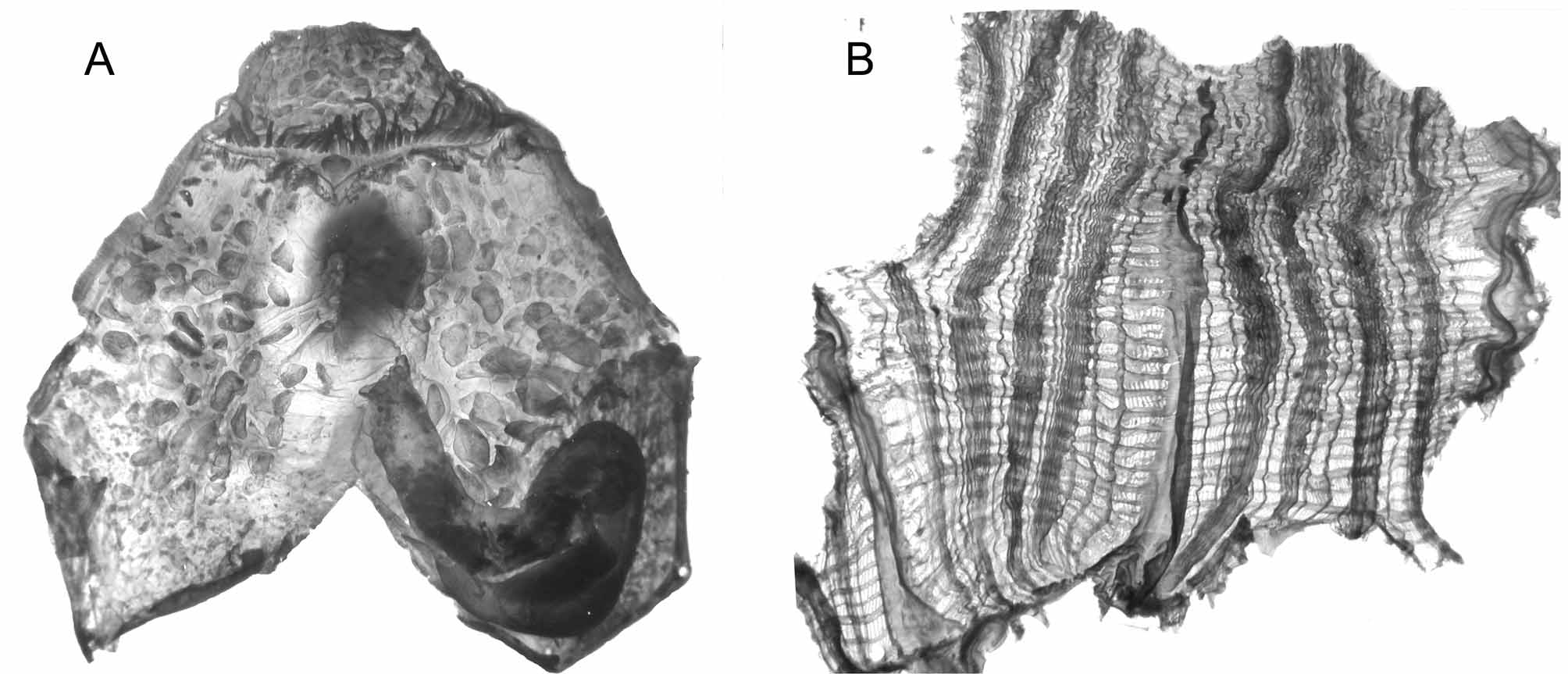
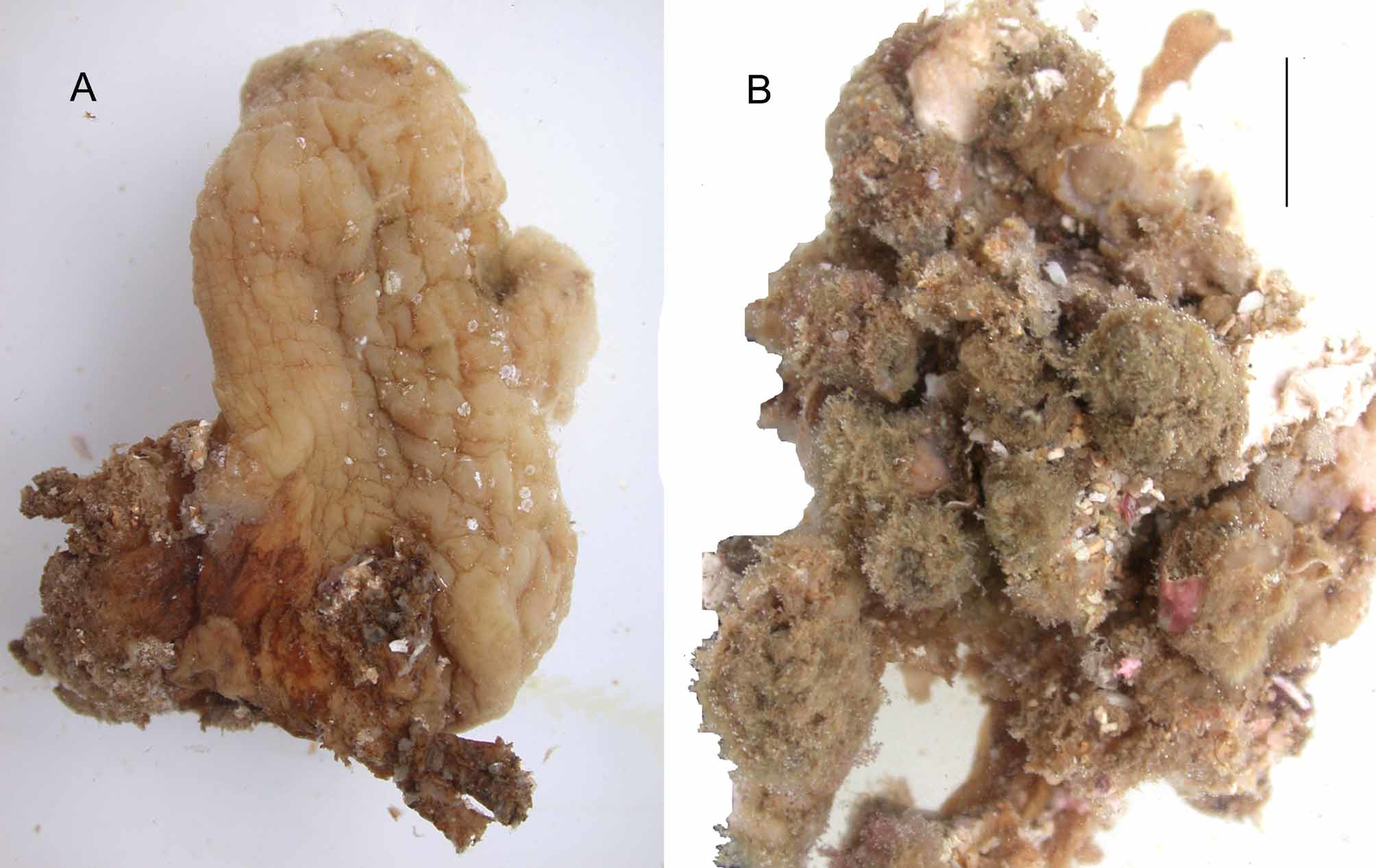
A group of about 10 individuals more or less isolated are entirely covered with epibionts (Fig. 30 B). P. rubida looks like a colonial species but no obvious links appear. The basal part of the individuals is sometimes elongated in a kind of filled peduncle giving a characteristic aspect to this species. In formalin, below the cover of varied organisms, the tunic is ochre with deep furrows. The body wall is thick. The oral siphon has a long velum. About 30 tight oral tentacles alternate with smaller ones. The dorsal tubercle is simple. The 4 branchial folds are low (Fig.32 B). For a 2cm large specimen the branchial formula on the right side is: E-1- 7 -2- 9 -2- 9 -2- 8 -2-DL. The stigmata rows are sometimes irregularly cut by parastigmatic vessels. The gut loop is simple located posteriorly (Fig.32 A). The long stomach has either marked or almost absent folds according to the individuals. The anus is lobed. Numerous endocarps are spread on the whole body wall (Fig. 32 A). An average of 10 elongated polycarps lie on each body side. The internal side of the atrial siphon is covered with thread-like papillae.

P. rubida is recorded from Natal to Mozambique where it has been reported several times.

Monniot, Françoise (2012): Some ascidians from the southern coast of Madagascar collected during the “ AtimoVatae ” survey. Zootaxa 3197: 1-42, DOI: 10.5281/zenodo.246182MagnoliaPress via PlaziNo known copyright restrictions apply. See Agosti, D., Egloff, W., 2009. Taxonomic information exchange and copyright: the Plazi approach. BMC Research Notes 2009, 2:53 for further explanation.

Export occurrence data

Darwin Core Archive (ZIP)

CLASSIFICATION

Taxonomic Classification Tree

MULTIMEDIA

Media Files(2)

FIGURE 30. A, Polycarpa madagascariensis. B, Polycarpa rubida, scale bar = 1 cm.

Imageimage/png© Monniot, FrançoiseMonniot, Françoise

FIGURE 32. Polycarpa rubida: A, dissection; B, branchial sac.

Imageimage/png© Monniot, FrançoiseMonniot, Françoise

IMAGES

Gallery(2)

See Gallery

Occurrences with images

Source Information

Some ascidians from the southern coast of Madagascar collected during the “ AtimoVatae ” survey

checklist

This dataset contains the digitized treatments in Plazi based on the original journal article Monniot, Françoise (2012): Some ascidians from the southern coast of Madagascar collected during the “ AtimoVatae ” survey. Zootaxa 3197: 1-42, DOI: 10.5281/zenodo.246182

Abstract

Surveys of littoral invertebrates along the southern coast of Madagascar have produced the first study of ascidians in this part of the Indian Ocean. Collections were made by SCUBA divers in May and June 2010 down to 25m depth. This region is considered the southern limit for coral reefs but remains diverse biologically. Upwellings and an abundant plankton community particularly favour the abundance of ascidians in this area. Of the 39 species of non-didemnid species described here, eight are new. Ten species are common to South Africa. Other species were for the most part already known from the Mozambique Channel and a few have also been recorded in the western Pacific (either cosmopolitan or introduced).

Key words: Ascidians, Madagascar, systematics, new species

Monniot F, plazi (2012). Some ascidians from the southern coast of Madagascar collected during the “ AtimoVatae ” survey. Plazi.org taxonomic treatments database. Checklist dataset https://doi.org/10.5281/zenodo.246182 accessed via GBIF.org on 2026-06-15.

CC0Published 12/31/2012View dataset
GBIF Usage Key
119508098
Dataset Key
4c036a63-9718-48de-97a2-f29c5976eb99
Origin
source
Backbone Key
5200810
Taxon ID
3055E11FFFB3FFB471A5CB69FB366A41.taxon
Last Crawled
6/11/2026
Last Interpreted
6/11/2026