
AnimaliaacceptedgenusAccepted
Cystodytes

Cystodytes

GBIF:119508123

0datasets

0

Descendants

0

Children

0

Species

ABOUT

Descriptions(1)

Cystodytes sp.

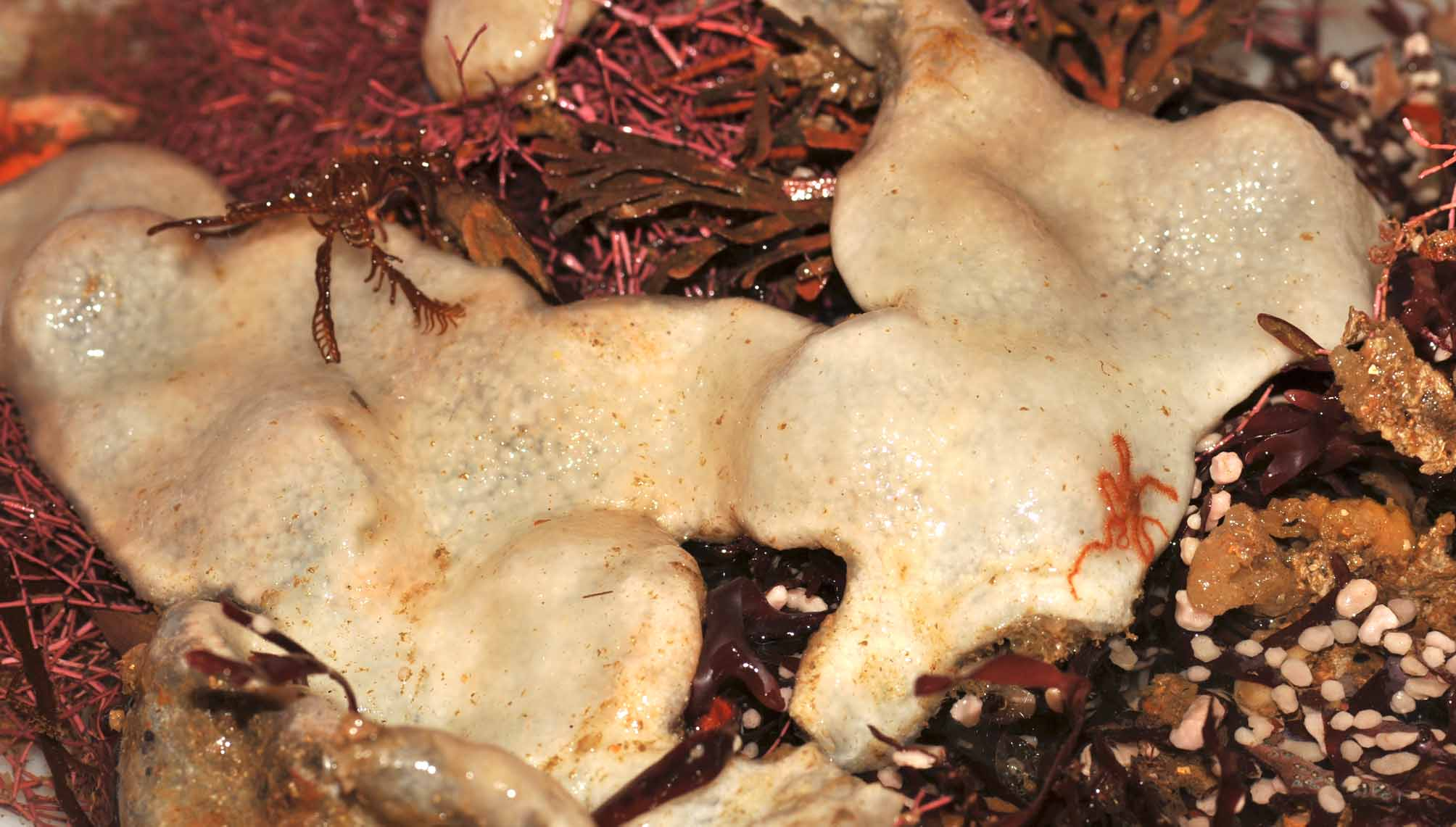
(Figure 26)

Stations. TA 35 (MNHN A3 CYS 139). TA 52 (MNHN A3 CYS 140).

The colonies in life are large white crusts 0.5 to 1cm thick (Fig. 26). The surface layer is smooth, thin and devoid of spicules. The zooids are withdrawn and included in complete capsules of plate-like spicules densely packed in the translucent tunic, giving a white colour to the fixed colonies. Below the capsule layer the tunic contains sparse brown pigment cells. Removed from the tunic the tips of the siphons are light brown but the remaining body wall is clear. The male gonad is a rosette of about 10 lobes and the sperm duct is straight. The ovary and testes are not mature in a same zooid but both sexes can be found in a same colony. The ovary includes a large protruding oocyte and several smaller ones. No fully developed tadpoles have been found but several regressed ones are present in the deepest part of the colonies; they are transparent bodies in which the otolith and ocellus remain but not any other organ. They are not included in capsules.

Monniot, Françoise (2012): Some ascidians from the southern coast of Madagascar collected during the “ AtimoVatae ” survey. Zootaxa 3197: 1-42, DOI: 10.5281/zenodo.246182MagnoliaPress via PlaziNo known copyright restrictions apply. See Agosti, D., Egloff, W., 2009. Taxonomic information exchange and copyright: the Plazi approach. BMC Research Notes 2009, 2:53 for further explanation.

Export occurrence data

Darwin Core Archive (ZIP)

CLASSIFICATION

Taxonomic Classification Tree

MULTIMEDIA

Media Files(1)

FIGURE 26. Cystodytes sp. in situ colony (photo P. Laboute).

Imageimage/png© Monniot, FrançoiseMonniot, Françoise

IMAGES

Gallery(1)

See Gallery

Occurrences with images

Source Information

Some ascidians from the southern coast of Madagascar collected during the “ AtimoVatae ” survey

checklist

This dataset contains the digitized treatments in Plazi based on the original journal article Monniot, Françoise (2012): Some ascidians from the southern coast of Madagascar collected during the “ AtimoVatae ” survey. Zootaxa 3197: 1-42, DOI: 10.5281/zenodo.246182

Abstract

Surveys of littoral invertebrates along the southern coast of Madagascar have produced the first study of ascidians in this part of the Indian Ocean. Collections were made by SCUBA divers in May and June 2010 down to 25m depth. This region is considered the southern limit for coral reefs but remains diverse biologically. Upwellings and an abundant plankton community particularly favour the abundance of ascidians in this area. Of the 39 species of non-didemnid species described here, eight are new. Ten species are common to South Africa. Other species were for the most part already known from the Mozambique Channel and a few have also been recorded in the western Pacific (either cosmopolitan or introduced).

Key words: Ascidians, Madagascar, systematics, new species

Monniot F, plazi (2012). Some ascidians from the southern coast of Madagascar collected during the “ AtimoVatae ” survey. Plazi.org taxonomic treatments database. Checklist dataset https://doi.org/10.5281/zenodo.246182 accessed via GBIF.org on 2026-06-14.

CC0Published 12/31/2012View dataset
GBIF Usage Key
119508123
Dataset Key
4c036a63-9718-48de-97a2-f29c5976eb99
Origin
source
Backbone Key
2330271
Taxon ID
3055E11FFF8EFF8E71A5CAA3FD6D6A62.taxon
Last Crawled
6/11/2026
Last Interpreted
6/11/2026