
AnimaliaNot EvaluatedacceptedspeciesAccepted
Polyclinum pedicellatum
GBIF:119508172
ABOUT
Descriptions(1)
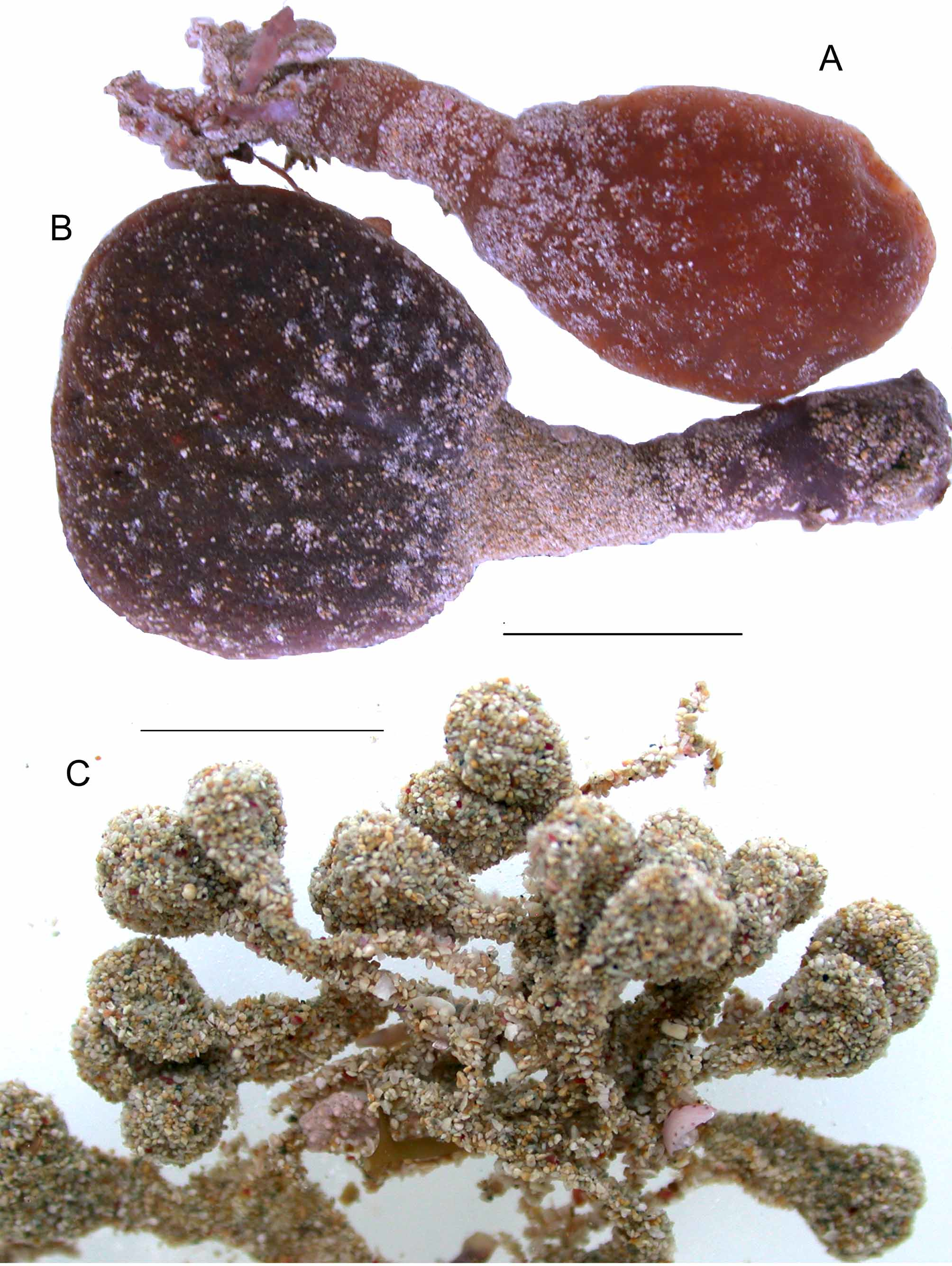
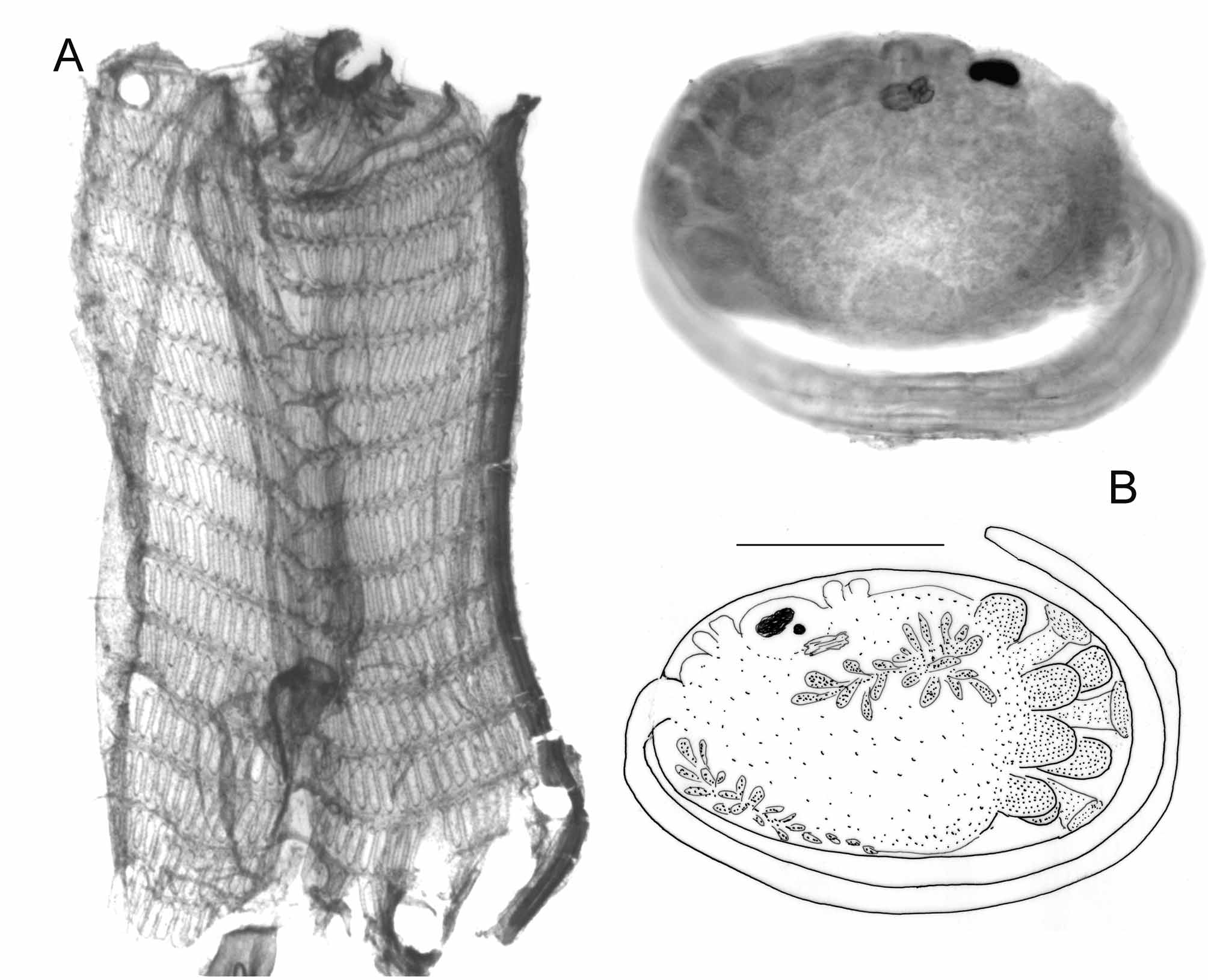
Etymology. in latin: pedica = peduncle Stations. TR 17, 15 colonies (MNHN: A 1 POL. B 106 type). TA 26, 1 colony (MNHN: A 1 POL. B 106). All colonies have a hard cylindrical incrusted peduncle bearing an elongated lobe in shape of a muff (Fig. 12 B). The largest colony has a head 12 cm long, 5 cm wide and 2 cm thick, on a peduncle 3 cm long. The zooids are in circular systems and perpendicular to the colony surface. The systems are not easily seen at the colony surface which is smooth but irregularly embedded with sand (Fig. 12 B). The tunic is brown, superficially resistant but internally softer with rare sediment particles included. The pigment of the tunic does not diffuse into the fixative. The zooids are colourless. The oral siphon has 6 lobes. The atrial siphon is very anterior with a long languet pointed or dented at the tip and has a posterior button-shaped protrusion. The numerous oral tentacles are in 3 orders of size. The thoracic musculature is weak with 8 to 10 short longitudinal fibres on each side. The branchial sac has 15 rows of stigmata (Fig. 14 A). On the right side and in the middle of the branchial sac I have counted 18 stigmata in a row and 12 papillae. The stigmata rows are not interrupted on the dorsal line. The abdomen with a twisted gut loop has the common shape of the genus. The post-abdomen begins by a long thin peduncle. The ovary is central between the testis lobes. The larvae (Fig. 14 B) 450 µm long are circled by a tail in one and a half turn. There are 3 short adhesive papillae and 2 odd vesicles between them; 4 round anterior vesicles are on each side. Multiple small ampullae occupy the dorsal and ventral sides of the trunk. Ocellus, otolith and an oxalate crystal are in the trunk. By the colony shape P. pedicellatum looks like P. ti ng e n s n. sp. It differs in the pigment, more numerous stigmata in a row and the presence of round papillae on the transverse vessels. Both species differ from other Polyclinum of the Indian Ocean by their pedunculate colonies.
Monniot, Françoise (2012): Some ascidians from the southern coast of Madagascar collected during the “ AtimoVatae ” survey. Zootaxa 3197: 1-42, DOI: 10.5281/zenodo.246182
Export occurrence data
Darwin Core Archive (ZIP)
CLASSIFICATION
Taxonomic Classification Tree

IMAGES