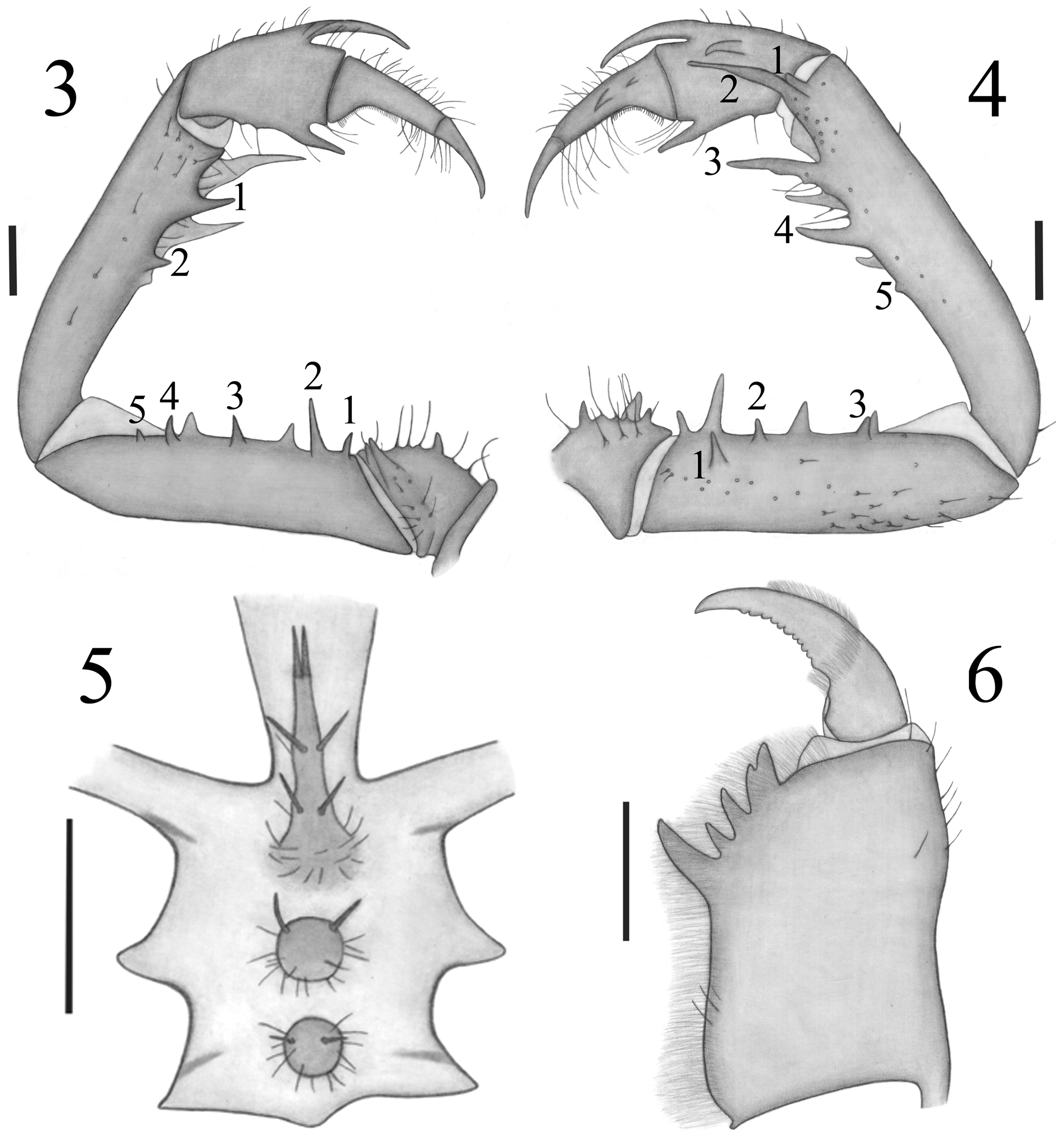
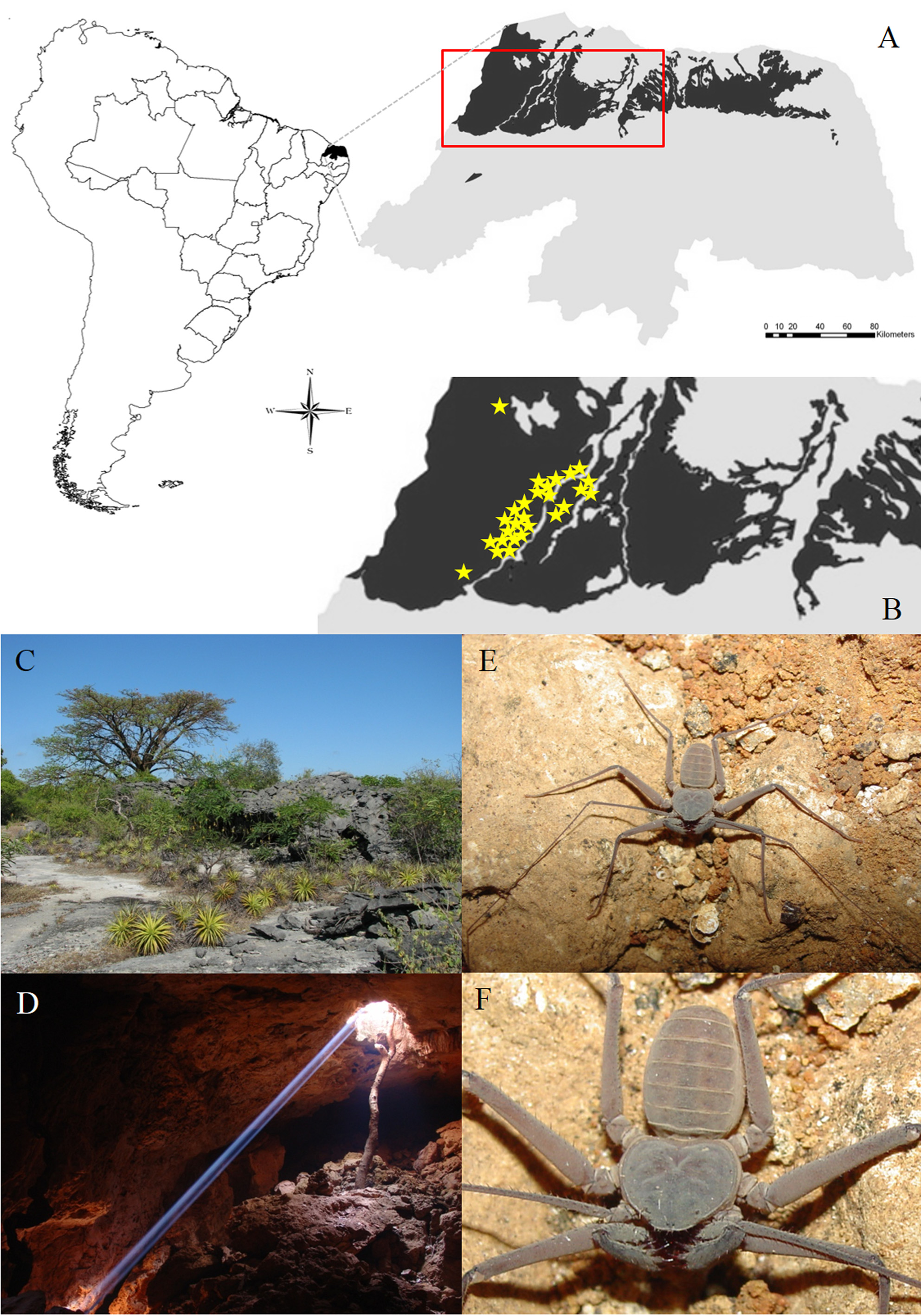
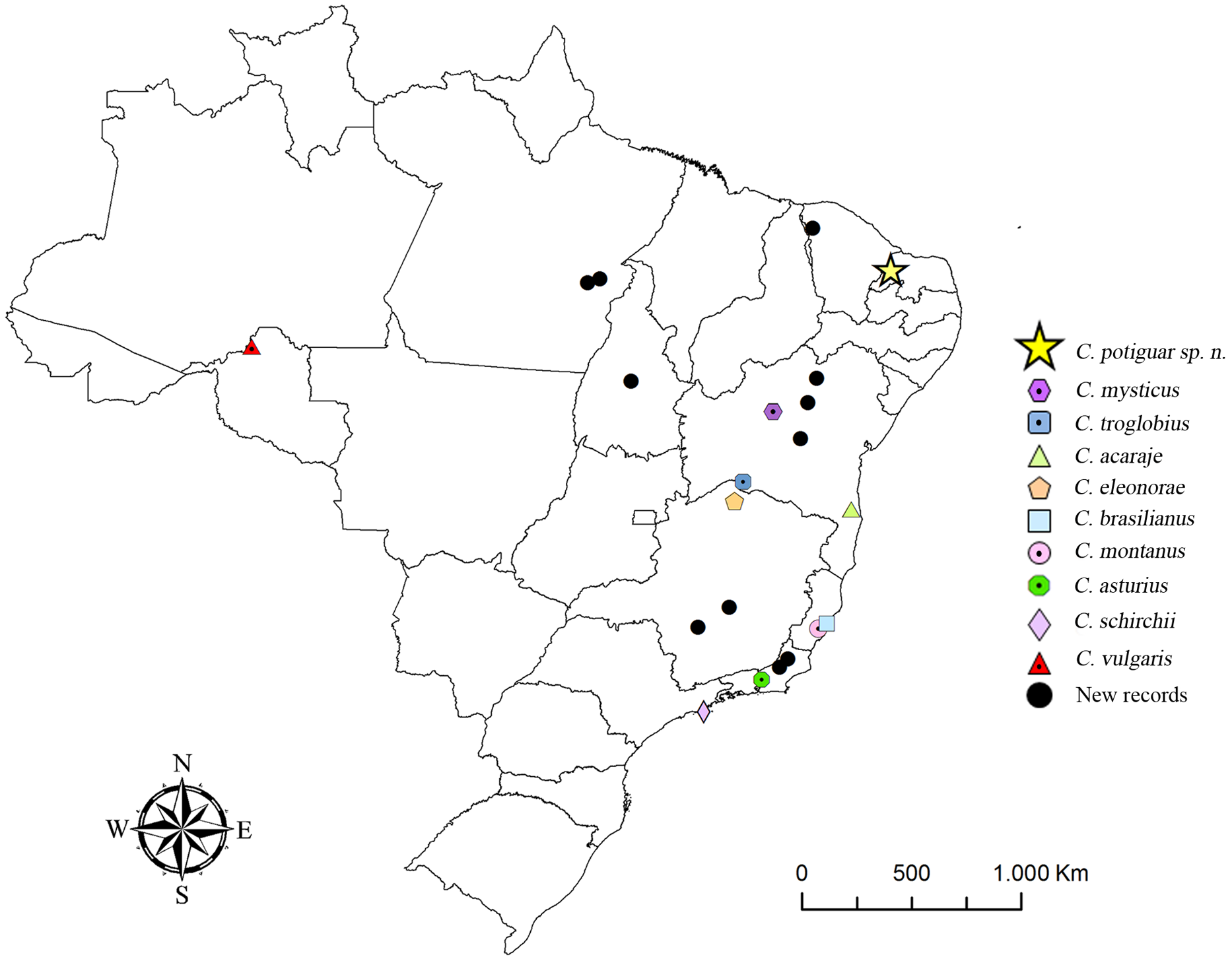
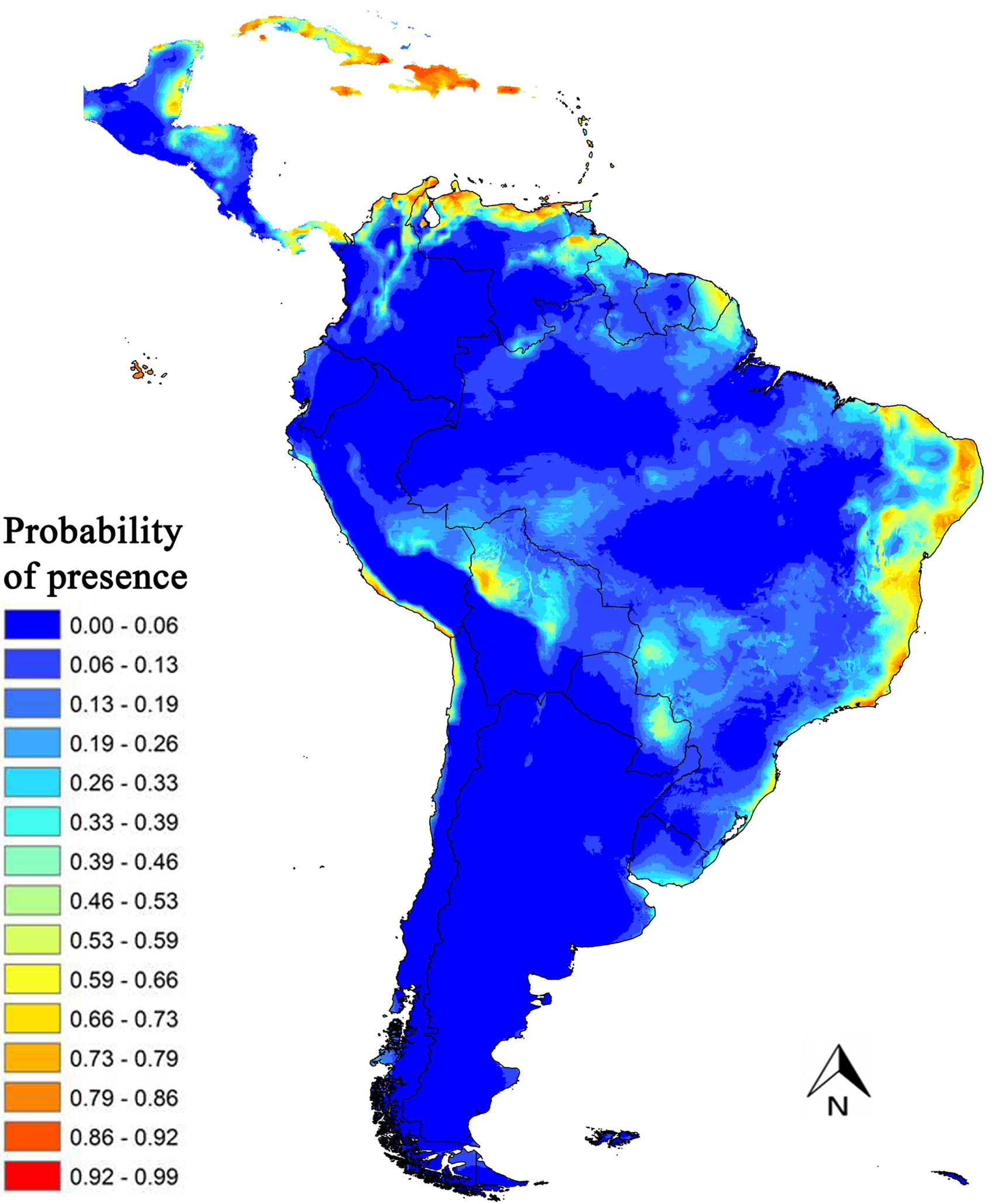
Charinus potiguar is easily distinguished from other species of South America by having four pseudo-articles in basitibia of leg IV, while C. quinteroi, C. platnicki and C. bromeliaea have just two, and C. tronchonii, C. bordoni, C. pardillalensis and C. camachoi have three pseudo-articles. C. potiguar separates from C. gertschi, among other characteristics, by the number of spines in dorsal and ventral patella of the pedipalp. The first species has five dorsal and two ventral spines, whereas C. gertschi has six dorsal and four ventral spines. C. potiguar is distinguishable from C. koepckei due to the latter having small claws on the female gonopods. C. insularis is endemic to the Galapagos Island (Ecuador) and has three spines on the ventral femur of the pedipalp, while C. potiguar presents five. The Amblypygi continue to reproduce and grow throughout life even after reaching sexual maturity (Weygoldt, 1999). This fact explains the wide difference between the sizes observed in adult body length (ranging from 6.27 to 13.73 mm). Some adults observed were twice as large in relation to others. Charinus potiguar is the northernmost record of the genus in Brazil and the first for the state of Rio Grande do Norte. On the other hand C. asturius, of Ilha Bela on the coast of the state of São Paulo, comprises the southernmost registration of Brazil and South America. The Brazilian species of Charinus are more distributed in the eastern portion of Brazil, where there are regions of different climatic conditions. These conditions range from subtropical climate, such as the Atlantic Forest, where C. asturius, C. montanus, C. brasilianus, C. schirchii and C. acaraje are inserted, to the semi-arid climate, as in the Brazilian northeast, where C. potiguar inhabits. According to the map of Charinus potential distribution (Fig. 13), there is still a potential possibility of other species of the genus to be found in the southeast (states of Espírito Santo and Rio de Janeiro) and northeastern Brazil (states of Piauí, Ceará, Rio Grande do Norte, Paraíba, Pernambuco, Alagoas, Sergipe and Bahia). Charinus has most of its species represented on islands such as the Antilles, Solomon Islands in the Southwest Pacific, Ilha Bela in Brazil, Saint Thomas and Prince and Seychelles in Africa, or in portions near the continental coastlines, as in Venezuela, Peru, Panama, on the eastern borders of the Mediterranean, and India (Harvey, 2003; Víquez et al., 2012). This predisposition to occupy coastline portions and islands is also revealed in the Charinus potential distribution (Fig. 13), which shows a high possibility of occurrence of species on the coast of northeastern and southeastern Brazil, in portions of coastal Peru, Chile, north and northwest of South America, in Panama, eastern portions of Honduras, Guatemala and Belize, and in the Caribbean (Cuba, Haiti, Dominican Republic, Puerto Rico and Jamaica). The only exception found was an area in Bolivia near the Andes, which comprises part of the Madidi National Park, which borders the Beni River, a major tributary of the Rio Madeira. This last river bathes Porto Velho, where C. vulgaris, species of the interior of South America, was collected. The two main environmental variables that were identified by the Maxent program to explain the potential distribution of Charinus (Fig. 13) were diurnal temperature range and annual cloud cover, which corroborates the fact of the genus has preferred to inhabit shadowed environments and shelter during the day (Weygoldt, 2000). The Brazilian legislation that currently protects the cave environments (decree-law no. 6640) categorizes the caves according to their geological and biological importance. Subterranean environments that are type locality of a species are considered most relevant. Thus, the description of new species for caves can help increase the biological importance of these environments, increasing the chances that they are preserved, as well as their adjacent external environments.
Vasconcelos, Ana Caroline Oliveira, Giupponi, Alessandro Ponce De Leão, Ferreira, Rodrigo Lopes (2013): A new species of Charinus Simon, 1892 from northeastern Brazil with comments on the potential distribution of the genus in Central and South Americas (Arachnida: Amblypygi: Charinidae). Zootaxa 3737 (4): 488-500, DOI: 10.11646/zootaxa.3737.4.9