
AnimaliaNot EvaluatedacceptedspeciesAccepted
Polysyncraton amethysteum

Polysyncraton amethysteum

Van Name, 1902

GBIF:120692815

0year

ABOUT

Descriptions(1)

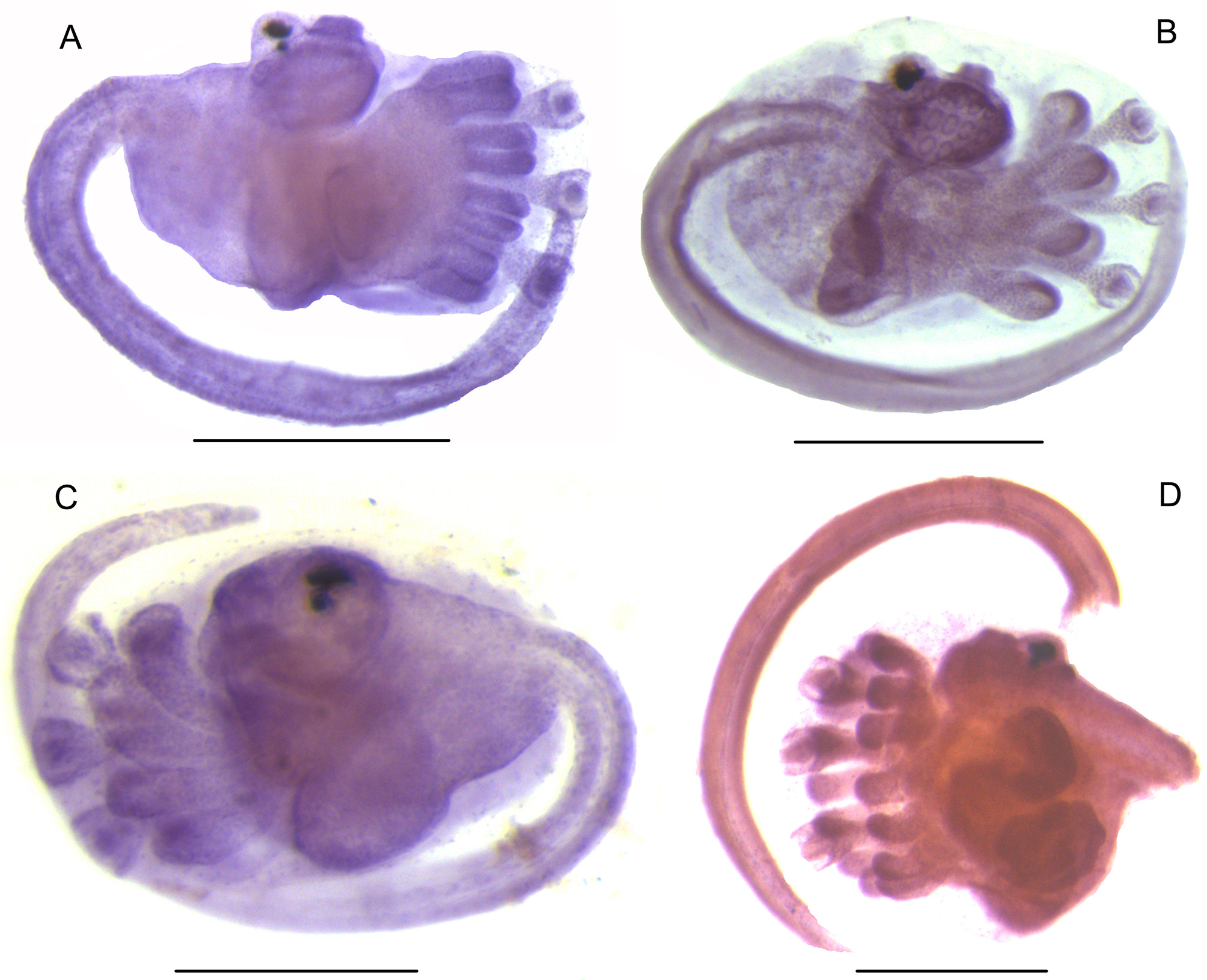
Stations. SC 9; SC 12; SC 13; SS 2; SS 3; SS 4; SS 12; SR 8; SR 10; SR 11; SR 14; SR 21; SR 23; SR 25; SB 3. Common on all kinds of substrates the colonies in large or small thin crusts are variable in a colour, always purple but more or less dark. The spicule density varies and they are sometimes absent or restricted to the colony surface. The Guiana material has been compared to specimens from Bermuda in the MNHN collection and all characters are similar. The thorax has a large atrial languet and a muscular thoracic appendage. The testis is divided into 4 lobes, rarely less, circled by the sperm duct in 4 to 5 turns. The larva 0.85 mm in length (Fig. 4 D) has 3 adhesive papillae, 8 pairs of ampullae and one lateral bud. The spicules are variable in size: the largest do not exceed 50 µm and are made of balls of needles.
Monniot, Françoise (2016): Ascidians (Tunicata) of the French Guiana Expedition. Zootaxa 4114 (3): 201-245, DOI: 10.11646/zootaxa.4114.3.1

Export occurrence data

Darwin Core Archive (ZIP)

CLASSIFICATION

Taxonomic Classification Tree

MULTIMEDIA

Media Files(1)

FIGURE 4. Didemnid larvae stained with hemalum. A, Didemnum duplicatum; B, Didemnum galacteum; C, Didemnum psammathodes; D, Polysyncraton amethysteum. Scale bars: A = 0.5 mm; B = 0.3 mm; C = 0.2 mm; D = 0.4 mm.

Imageimage/png© Monniot, FrançoiseMonniot, Françoise

IMAGES

Gallery(1)

See Gallery

Occurrences with images

Source Information

Ascidians (Tunicata) of the French Guiana Expedition

checklist

This dataset contains the digitized treatments in Plazi based on the original journal article Monniot, Françoise (2016): Ascidians (Tunicata) of the French Guiana Expedition. Zootaxa 4114 (3): 201-245, DOI: 10.11646/zootaxa.4114.3.1

Abstract

Ascidians were collected along the shore of Iles du Salut and deeper on the slope in a program of evaluation of the biodiversity in Guiana. Most of the samples belong to already known species from the Caribbean area and Brazilian coast. The colonial forms dominate. The 6 new species have been dredged deeper than 50m but not found by SCUBA divers. In spite of an intensive sampling, the ascidian diversity in Guiana is low with 36 species recorded. This is the result of the abundance of sediment suspended in the water and uniformly deposited on all substrates which affects filtration rate and limits the settling of the ascidian larvae.

Key words: Tunicata, Ascidians, French Guiana, new species

Monniot F, plazi (2016). Ascidians (Tunicata) of the French Guiana Expedition. Plazi.org taxonomic treatments database. Checklist dataset https://doi.org/10.11646/zootaxa.4114.3.1 accessed via GBIF.org on 2026-06-17.

CC0Published 12/31/2016View dataset
GBIF Usage Key
120692815
Dataset Key
23e20931-307e-416c-ab19-00d57933e67d
Origin
source
Backbone Key
2329661
Taxon ID
A25D4D00D64A76227BF3F9557D96FEFB.taxon
Last Crawled
6/11/2026
Last Interpreted
6/11/2026