
AnimaliaacceptedgenusAccepted
Charinus
Simon, 1892
GBIF:124483385
0year
ABOUT
Descriptions(2)
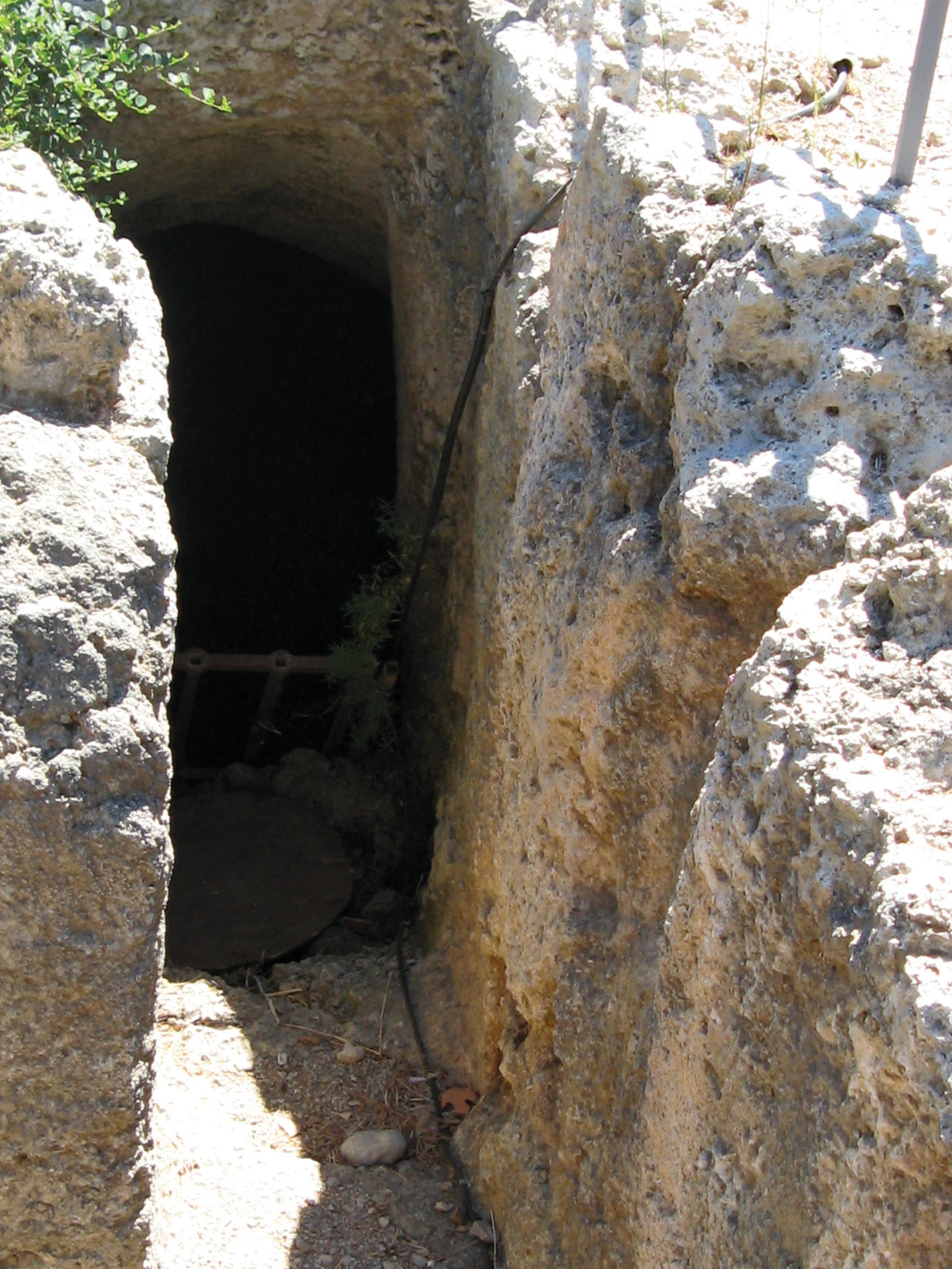
This species (Fig. 1) was described from the Greek Island of Rhodes (Kritscher 1959: sub Lindosiella i.) at Lindos in crevices of rocks and walls of the castle of the ‘ Bailiwick of Brandenburg of the Chivalric Order of Saint John of the Hospital at Jerusalem’ (in German ‘ Johanniterorden’). The types are deposited in the Natural History Museum Vienna, NHMW (Seiter & Hörweg 2013). Additional specimens were collected in the years 1963, 1969, and 1973 (Weygoldt 2005) as well as in the ancient capital of Rhodes in 2003 and 2010 (Fig. 2) and in the capital of another Dodecanese Island, Kos, in 1965 (Weygoldt 2005; Seiter & Hörweg 2013). Both islands are situated in the south-eastern part of the Aegean Sea close to the Turkish mainland. Kraus (1961) determined the four specimens of an unnamed Charinus found in Jerusalem (Israel) by Rosin & Shulov (1960) as C. ioanniticus (as Lindosiella i.) and added the record of a female from Zipori near Nazareth from 1948. Weygoldt (2005) lists rediscoveries of the species in Jerusalem from 1979, 1985 and 1998. Kovařík & Vlasta (1996) published a first record of this species in Turkey from a Karst cave at Ҫevlik near Samandagi found in 1995, and Weygoldt (2005) added a record from Ҫevlik from 1990 and published two former records from Turkey, i. e. from ‘ Adana’ (Adana Sivas Yolu), 12 km N of Kozan, 300 m a. s. l. [above sea level] in the year 1967 and Antakya 7 km E of Yeşilkent [Ezrin], 350 – 400 m a. s. l. in the year 1978. Seyyar & Demir (2007) reported another record of the species in Turkey from Aşağıarıcaklı near Bahçe (100 m a. s. l.). All sites are situated in the central southern part of Turkey (Fig. 6). In 1998, the species was recorded from Egypt, at El-Mallahat, near the castle El-Arab, 20 m a. s. l., among the ruins of an old stone building (El-Hennawy 2002). Habitat. Crevices of natural rocks, caves as well as houses and cellars (Fig. 2 shows an entrance to the undergroundtunnels of Rhodes City, where one single female specimen was found sitting on the walls in the year 2010).
Blick, Theo, Seiter, Michael (2016): Whip spiders (Amblypygi, Arachnida) of the Western Palaearctic — a review. Zootaxa 4161 (4): 586-592, DOI: 10.11646/zootaxa.4161.4.11
Distribution. Greece (Rhodes, Kos), Turkey, Israel, Egypt (Fig. 6 for details). We expect additional records of the species in the Eastern Mediterranean in the future, most probably in Syria, Lebanon or Jordan. Even though the species is known only from the eastern Mediterranean region it has been reported from three continents (Europe, Asia, and Africa). Half of the records were made close to sea level (Tab. 1: nos. 1, 2, 3, 6, 10), but the others, 250 m (4), 300 m (7), 350 – 400 m (8), 600 – 800 m (5), and 760 m (9), demonstrate a wider altitudinal range for the species, independent of the predominant temperature and humidity regimen. Notes. Charinus ioanniticus is one of only three species of whip spiders known to reproduce by parthenogenesis, but only in the population on the Greek Island of Rhodes (Weygoldt 2007). All other parthenogenetic species in Amblypygi belong to the family Charinidae, i. e. Charinus acosta (Quintero, 1983) from Cuba (Armas 2000), C. ioanniticus and Sarax buxtoni from Singapore (Seiter & Wolff 2014). This special reproduction positively results in establishing new populations and growth rates, but has negative effects, because all individuals are clones and genetically identical.
Blick, Theo, Seiter, Michael (2016): Whip spiders (Amblypygi, Arachnida) of the Western Palaearctic — a review. Zootaxa 4161 (4): 586-592, DOI: 10.11646/zootaxa.4161.4.11
Export occurrence data
Darwin Core Archive (ZIP)
CLASSIFICATION
Taxonomic Classification Tree

MULTIMEDIA
Media Files(2)
FIGURE 2. Entrance of the underground habitat of Charinus ioanniticus at Rhodes (Greece) (photo M. Seiter).
Imageimage/png© Blick, Theo;Seiter, MichaelBlick, Theo;Seiter, Michael
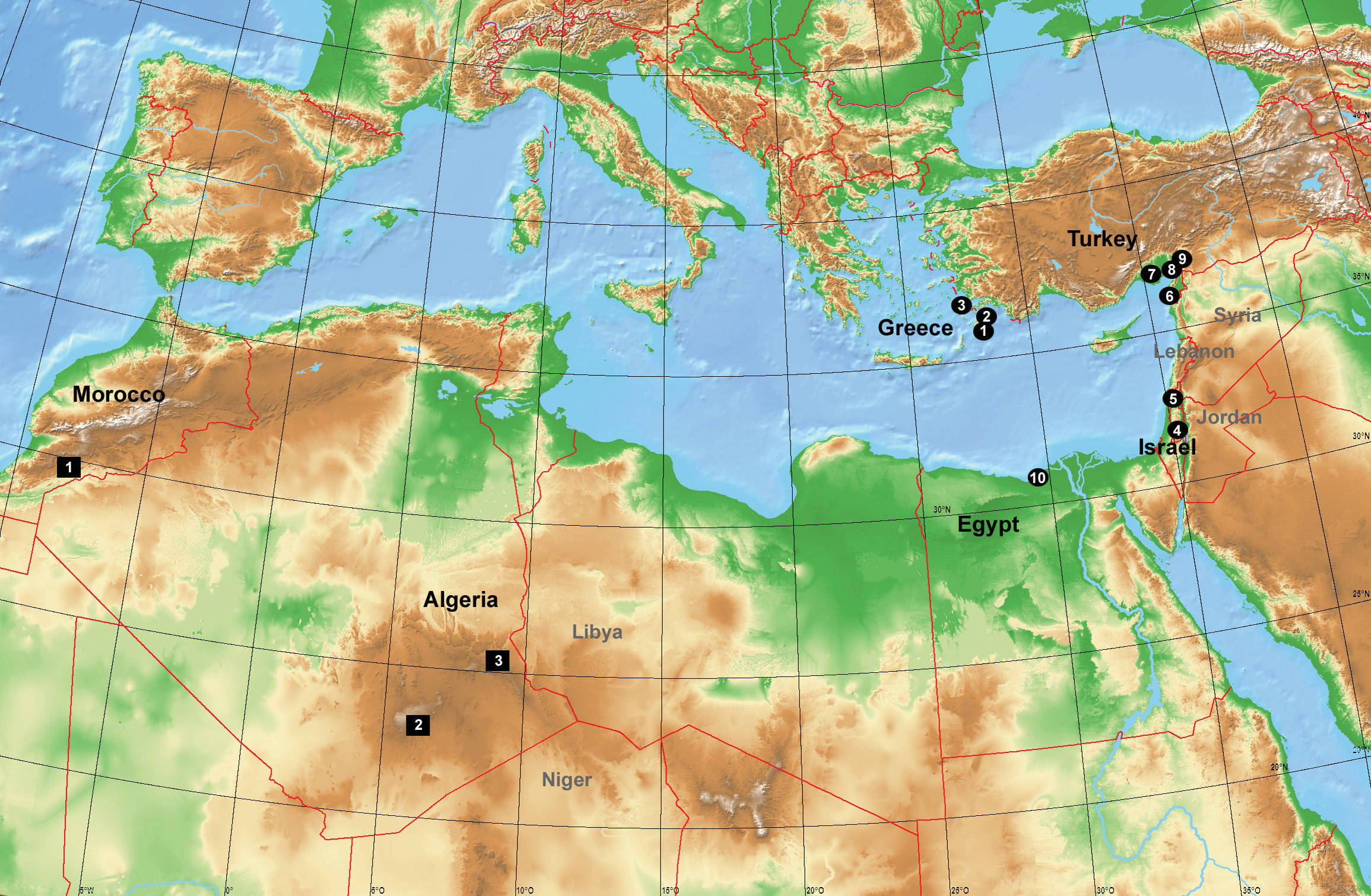
FIGURE 6. Map of the Mediterranean records of Amblypygi: Charinus ioanniticus (dots with nos. 1 – 10) and Musicodamon atlanteus (squares with nos. 1 – 3) (map: http: // maps-for-free. com) - no. 1 is the type locality of each species.
Imageimage/png© Blick, Theo;Seiter, MichaelBlick, Theo;Seiter, Michael
IMAGES