AnimaliaNot EvaluatedacceptedspeciesAccepted
Anomaloglossus verbeeksnyderorum

Anomaloglossus verbeeksnyderorum

GBIF:124956997

ABOUT

Descriptions(6)

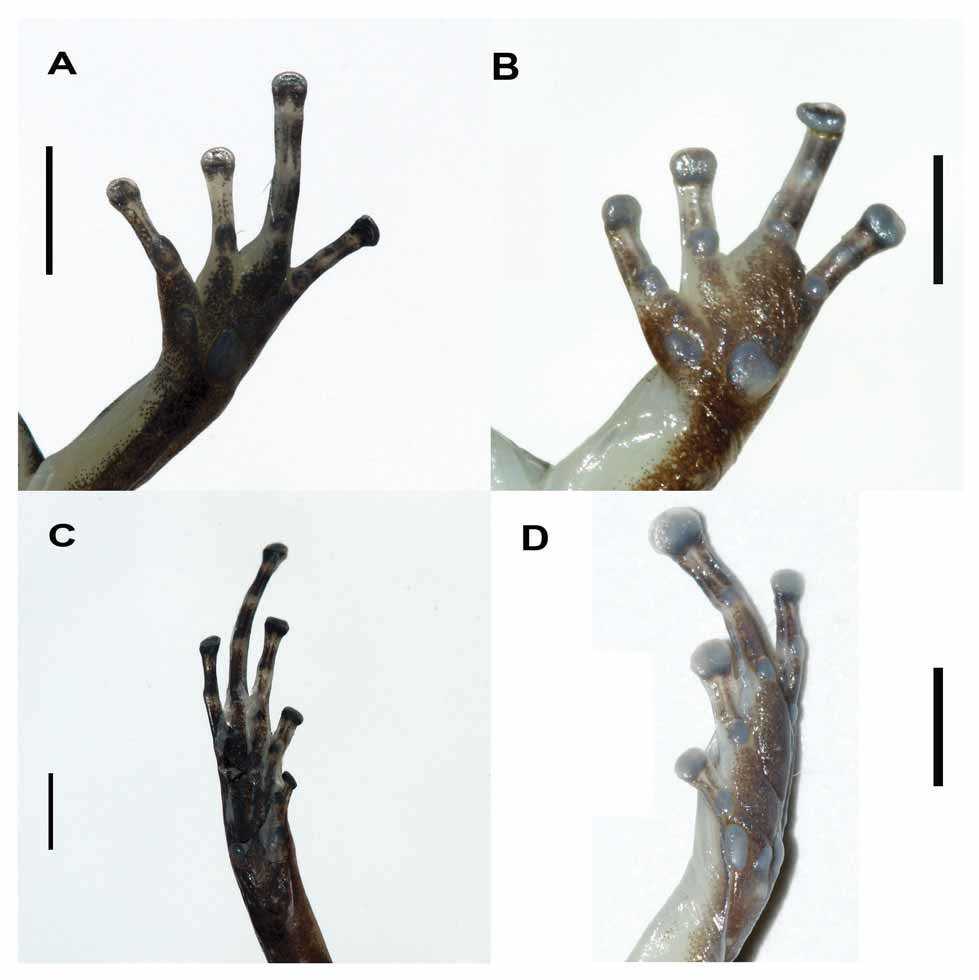
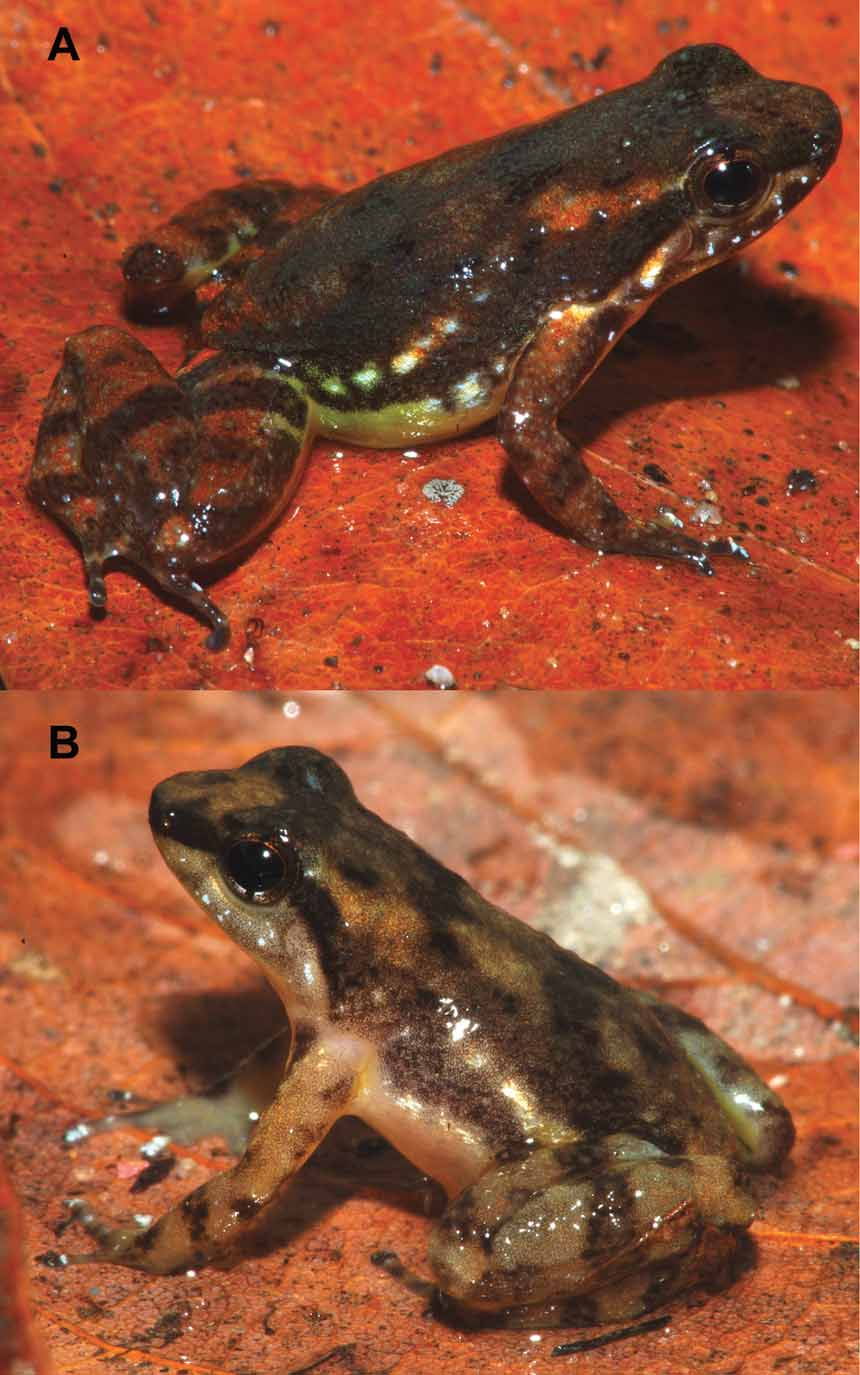
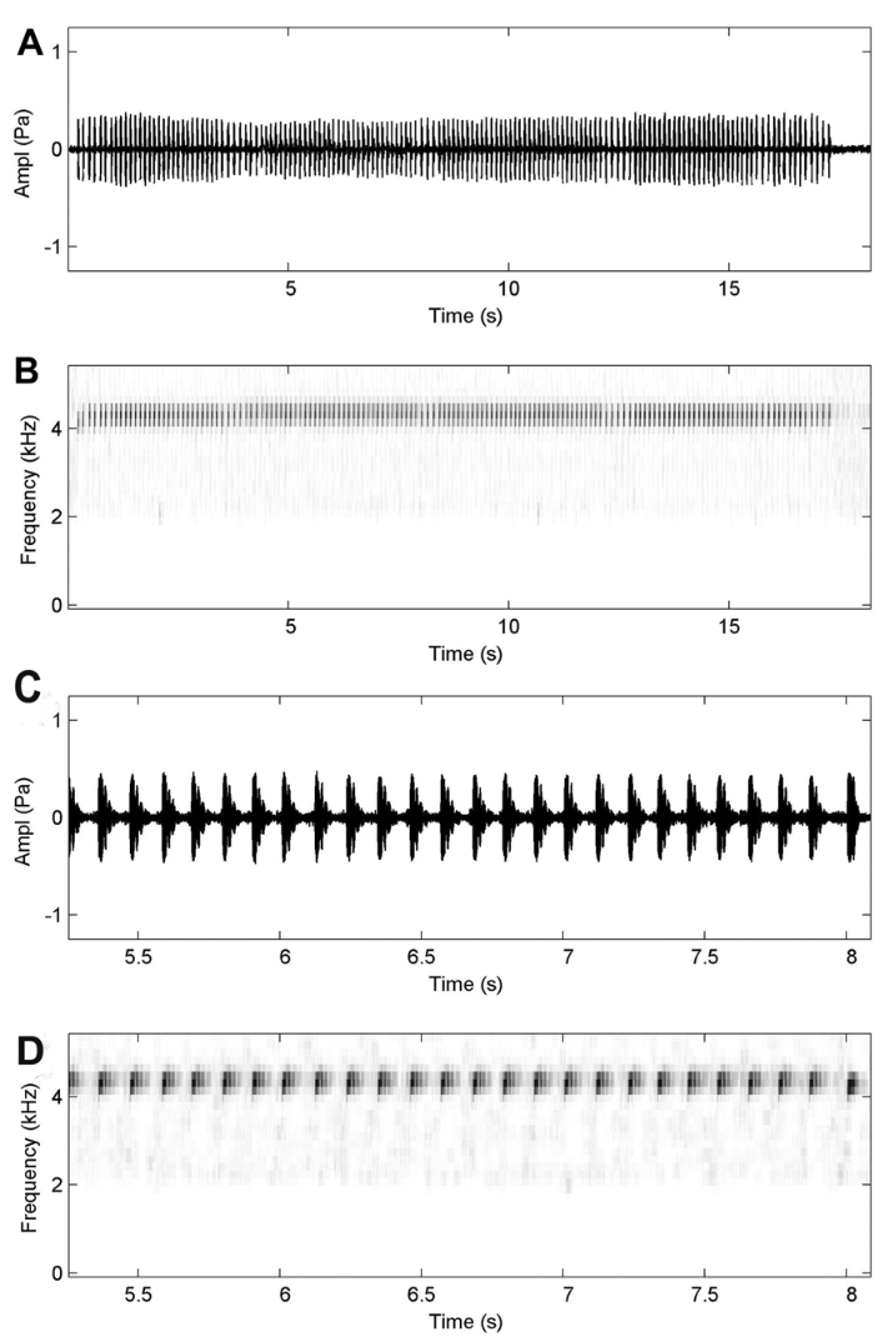
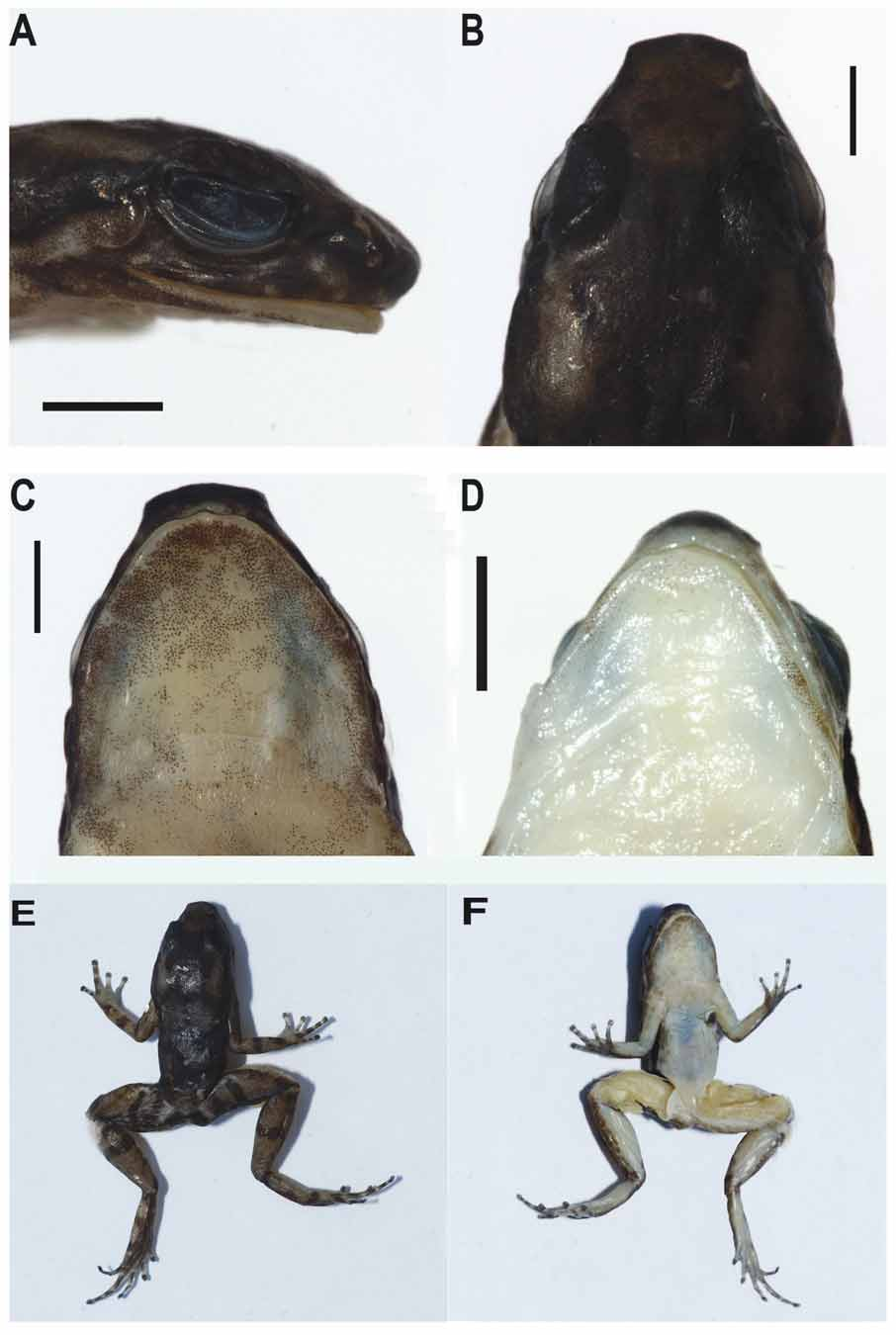
Description of holotype. Dorsal and ventral skin smooth in preservative; without tubercles on the posterior part of the dorsum. Dorsal skin forming a well-defined rounded, posteriorly projecting flap above vent, opened at the upper level of thighs; no anal tubercles. Head longer than wide, HW 33.6 % of SVL. Snout subacuminate in profile (Fig 1 A), truncate in dorsal and ventral views (Figs 1 B and 1 C respectively). Nares situated near the tip of the snout and directed slightly anterolaterally, visible from the front, and barely visible from the dorsum and below. Canthus rostralis rounded; loreal region slightly concave. Interorbital region width slightly wider than upper eyelid width. Snout slightly longer than eye diameter; EN 64 % of ED. Tympanum large, 40 % of ED, distinct only its inferior half; its posterodorsal half hidden beneath the superficial slip of the M. depressor mandibulae; positioned close behind eye and low, close to the angle of jaws. Maxillary teeth present. Tongue longer than wide, triangular, notched posteriorly, posterior half free; vocal slits present, large. MLP very small, round, as long as wide, positioned on the anterior third of the tongue. Hand length small, 27.4 % of SVL. Relative lengths of adpressed fingers III> IV> I> II (Fig 2 A); F I slightly longer than F II. Discs of all fingers barely expanded; F III disc 1.2 times width of distal end of adjacent phalanx. Base of palm with large, nearly round, median palmar tubercle; oval inner thenar tubercle on base of F I; one subarticular tubercle on F I and F II, and two on F III and F IV, distal tubercles small; all tubercles low, round. Fringes only appreciable on F II, thick and low. Hind limbs of moderate length; shank 46.6 % of SVL. Relative lengths of adpressed toes IV> III> V> II> I (Fig 2 C); TI reaching, when adpressed, half subarticular tubercle of TII. Toe discs moderately expanded; T IV disc 1.6 times width of distal end of adjacent phalanx. Feet moderately webbed, the web distally continuous with a thick fringe on all toes, including external edges of T I and T V. Toes moderately webbed; webbing formula I 1 ½ - 2 ½ II 1 2 / 3 - 3 III 2 ½ - 3 2 / 3 IV 4 - 2 ½ V. One to three non protuberant subarticular tubercles on toes as follows: one on T I and T II, two on T III and T V, and three on T IV. Sole with two distinct metatarsal tubercles, a round outer metatarsal tubercle, and a 1 / 3 longer elliptical inner metatarsal tubercle. A thick tarsal keel, straight and weakly curved distally, ending at mid length of tarsus, proximally continuous with the narrow fringe on free (preaxial) edge of T I. Metatarsal fold present, low. Color in preservative. dorsally dark brown with two conspicuous parotoid pale brown elongate marks (comma shape), and two symmetrical scapular pale brown round marks (Fig 1 E). Rostral area pale brown. Both flanks are dark brown, with long white oblique lateral stripes, reaching the posterior edge of the arm. Upper lips dark brown with a few irregular small whitish spots; tympanic area pale brown. Arms and limbs are pale brown, bar crossed by dark brown. Two symmetrical white paracloacal marks surrounded by black. Ventral surfaces are white at simple view; under magnification, melanophores are concentrated on the throat, especially on the chin and along the edges of the lower mandible; melanophores are more scarce on the chest, and missing on the belly (Fig 1 F). Palms and soles are dark brown. Color in life. The only available photo of a living male is that of an uncollected specimen. In all individuals seen was evident, however, the characteristic color described herein. Anomaloglossus verbeeksnyderorum males (Fig 3 A) differ from all known species in the genus by showing some bright marks, mostly on the parotoid area (orange), upper arm (orange), post tympanic area (white and orange); paracloacal area (orange), inguinal region and oblique lateral stripe (yellow), and some bluish small spots on the flanks, upper lip, and fingers. Also the upper surfaces of hind limbs are dull orange, barred with dark brown. The rest of dorsum is dark brown with darker brown canthal, supratympanic and interorbital stripes; ventrally males are bright yellow. Females (Fig 3 B) are more according to dull colored Anomaloglossus, as they are dorsally light brown to greyish, with dark brown marks; the parotoid and paracloacal areas are dull orange, and the axilar region can be yellowish. The fingers have bright bluish white rings beside the finger discs; ventrally they are white. Measurements of holotype (in mm). SVL: 19.3; SL: 9.0; FL: 8.8; HeL: 8.0; HW: 6.5; EN: 1.6; ED: 2.5; TD: 1.0; F 3 D: 0.6; T 4 D: 0.6 1 FiL: 3.0; 2 FiL: 2.7. See Table 1 for measurements of the type series. Variation. The only difference between males and females in preservative is the throat coloration, immaculate white on females, with few melanophores on the chin edge (Fig 1 D), and dirty white to greyish on males, with a profusion of melanophores observed with magnification (Fig 1 C). Size is not very significant (mean SVL of males 18.8 ± 0.7 mm; mean SVL of females 19.3 ± 1.8 mm). The shape of the snout is also variable; truncate (Fig 1 C) to round (Fig 1 D). The shape of the fingers can be slender (Fig 2 A) or robust (Fig 2 B). Although in the type series there is not an individual that presents warts or flat tubercles on the posterior part of the body or on the thighs, as is usual for Anomaloglossus, a few flat warts can be appreciated in Fig 3 A. The paracloacal marks are most patterned and bright on males (Fig 3 A) than on females (Fig 3 B). Little variation is observed in dorsal coloration of females. The back can be light to dark brown, with irregular darker marks, barely distinct on dark specimens (MHNLS 19646, MHNLS 19648, CVULA 7139, for instance), and conspicuous on lighter specimens (CVULA 7137 - 38). The marks are usually a dark interorbital bar pointing backwards, two symmetric dark and round spots on the occipital area, and an inverted W behind the head (CVULA 7140). All specimens have the hind limbs bar-crossed, being better marked on males. On the left foot of MHNLS 19644 there is a median metatarsal tubercle, half size of inner metatarsal tubercle; the outer metatarsal tubercle is much bigger than on right side; and there is another smaller median tubercle just below the median one. The left foot lacks one toe naturally, apparently T IV) (see remarks; Fig 2 D). Vocalization. A single call was recorded at 24.5 ºC the morning of the 19 th of June, 2007. The complete train call has 152 pulsed notes (Fig 4 A, 4 B), lasting 17.14 sec. Nine notes are produced per second (Fig 4 C, 4 D). The dominant frequency is at 4405 Hz while the fundamental is at 3921 Hz. 25 consecutive notes were chosen at random on the spectrogram to determine note duration and inter-note interval. Note duration and inter-note interval were measured, respectively, 0.067 ± 0.003; 0.064 – 0.072 sec, and 0.044 ± 0.003; 0.0042 – 0.0048 sec. (mean ± SD and range, respectively). Call comparisons. Only five Anomaloglossus advertisement calls are known. Grant et al. (1997) describe the call of Anomaloglossus atopoglossus; Myers & Donnelly (1997) that of A. tamacuarensis; Myers & Donnelly (2008) A. tepuyensis, and Kok et al. (2006 a, 2006 b) A. kaiei and A. beebei. For comparison we note (in parentheses) the pertinent call characters of A. verbeeksnyderorum. Anomaloglossus atopoglossus produces calls with 12 – 14 notes (152), with note call duration of 0.7 – 0.9 sec (0.06 sec), and a frequency from 4160 to 4240 Hz (3921 - 4405 Hz). Anomaloglossus tamacuarensis call consists of a long train of double notes (single notes) given at three per second, resulting in six notes per second (9), with a frequency of 3840 Hz (3921 – 4405 Hz). The call of A. tepuyensis is a short trill of 14 – 22 notes (152), with 4 – 7 notes per second (9), with frequency varying from 3270 to 3580 Hz (3921 – 4405 Hz). Anomaloglossus kaiei does not have a trill, but instead a repetitive and unmodulated call with a note duration of 0.03 and inter-note duration of 0.1 sec (0.06; 0.04 sec) and a dominant frequency of 4850 Hz (3921 – 4405 Hz). Finally, the described call of A. beebei is a series of whistled trills made from 2 to 5 modulated notes (continuous trill), with a frequency of 4640 Hz (3921 – 4405 Hz), and 7 (10) calls per second.
Barrio-Amorós, César L., Santos, Juan Carlos, Jovanovic, Olga (2010): A new dendrobatid frog (Anura: Dendrobatidae: Anomaloglossus) from the Orinoquian rainforest, southern Venezuela. Zootaxa 2413: 37-50, DOI: 10.5281/zenodo.194347

Diagnosis. (1) Skin smooth on dorsum, without tubercles in preservative; smooth on belly. (2) Paired dorsal scutes present on digits. (3) Distal tubercle on F IV present but indistinct. (4) F IV length reaching distal half of distal subarticular tubercle of F III. (5) F I equal to slightly longer than F II. (6) Digital discs present. (7) Fingers discs weakly expanded. (8) Finger fringes little evident, thick and low. (9) Metacarpal ridge absent. (10) F III not swollen in adult males. (11) Carpal pad absent. (12) Male excrescences on thumb absent. (13) Thenar tubercle small, oval. (14) Black arm gland in adult males absent. (15) Tarsal keel weakly curved, thick. (16) Toe discs moderately expanded. (17) Toes moderately webbed. (18) Metatarsal fold present, low. (19) External coloration dark brown (males) and pale brown (females) with parotoid and paracloacal marks whitish in preservative, orange in life; thighs dorsally reddish brown cross barred; dorsolateral and ventrolateral stripes absent; oblique lateral stripe continuous or broken, to midbody or the posterior edge of the arm. (20) Gular-chest markings absent. (21) Dermal collar absent. (22) Male throat coloration pale with a profusion of melanophores; female throat coloration free or nearly free of melanophores. (23) Male abdomen color pattern immaculate, yellow in life. (24) Female abdomen color immaculate white, free of melanophores. (25) Iris coloration reddish bronze with a dark red pupil ring. (26) Large intestine unpigmented. (27) Testis white. (28) Median lingual process present, small, round. (29) Tympanum inconspicuous to distinct, tympanic annulus present. (30) Vocal sac not distinct. (31) Teeth present on the maxillary arch. (32) Size small, males 17.8 to 19.5 mm (n = 4, mean 18.8 ± 0.7), females 16.9 to 22.3 mm (n = 9, mean 19.3 ± 1.8) Comparison with other species. Anomaloglossus verbeeksnyderorum is easily distinguished from congeners due to its particular coloration (characters of A. verbeeksnyderorum in parentheses). No other Anomaloglossus has any orange mark on the parotoid and paracloacal areas. Only three other Anomaloglossus are known to be yellow ventrally, as is the male of A. verbeeksnyderorum. Of these, Anomaloglossus breweri has protuberant tubercles on the posterior back (absent), and male coloration is similar to females (dichromatic); this species appears to be endemic to Aprada, an isolated tepui 550 km to the east. Anomaloglossus moffetti is a larger, more robust species up to 27 mm (up to 22.3 mm), characterized by the absence of fringes on the fingers (low and thick), an indistinct tympanum (barely distinct to distinct), irregular and diffuse spotting on chest (absent), and apparently endemic to Sarisariñama tepui, 390 km to the East of Tobogán de la Selva. Anomaloglossus kaiei also has yellow ventral coloration, though on females (only on males), smaller size, up to 19.8 mm (up to 22.3 mm), and pale dorsolateral stripes (absent). In preservative, no other Anomaloglossus has the peculiar dorsal pattern, in which always are easily seen two striking parotoid light marks. Anomaloglossus ayarzaguenai has a F I shorter than II (equal to slightly longer); and a uniform brown color pattern with small dark brown spots (two parotoid and two para-cloacal marks). We compare the new species with the rest of cis-Andean Anomaloglossus in order to provide a comprehensive comparison set. Anomaloglossus degranvillei has F I shorter than II (equal to slightly longer), oblique lateral stripe absent (present), a post tympanic white bar (absent) and ventral surfaces brown with white spots (whitish or yellowish). Anomaloglossus guanayensis has Finger I shorter than II (equal to slightly longer), anal sheath present (absent), chest marks not forming a collar, dark ventral coloration (immaculate white or yellow). Anomaloglossus murisipanensis has F I shorter than F II (equal to slightly longer), oblique lateral stripe absent (present), dark ventral colouration (immaculate white or yellow). Anomaloglossus parimae has F I shorter than F II (equal to slightly longer), melanophores profuse on the chest (absent). Anomaloglossus parkerae has F I shorter than F II (equal to slightly longer), oblique lateral stripe absent (present), sexual dimorphism in ventral pattern absent (present). Anomaloglossus shrevei is a much larger frog, up to 36 mm (up to 22.3) with a truncate snout in dorsal view (round), and F I is shorter than II (equal to slightly longer). Anomaloglossus tamacuarensis has anal tubercles (absent) and F III slightly swollen in males (not swollen). Anomaloglossus tepuyensis is a larger frog, up to 26.5 mm (22.3), has the F I shorter than F II (equal to slightly longer), fingers with keel-like lateral folds (finger fringes barely evident), dorsal skin granular (smooth). Anomaloglossus triunfo is a smaller frog, up to 20 mm (up to 22.3) with a triangular metacarpal tubercle (rounded), F I distinctly longer than II (equal to slightly longer) and an indistinct tympanum (distinct). Anomaloglossus wothuja has a nearly truncated snout in dorsal view (round), granular dorsal skin (smooth) and no consistent dorsal pattern (two parotoid and two para-cloacal orange marks). Finally the new species is easily distinguished from those Anomaloglossus having scanty toe webbing, A. beebei, A. kaiei, A. praderioi and A. roraima (toe webbing moderately developed).
Barrio-Amorós, César L., Santos, Juan Carlos, Jovanovic, Olga (2010): A new dendrobatid frog (Anura: Dendrobatidae: Anomaloglossus) from the Orinoquian rainforest, southern Venezuela. Zootaxa 2413: 37-50, DOI: 10.5281/zenodo.194347
Remarks. Median metatarsal tubercles are not uncommon in dendrobatids (e. g. Allobates undulatus Myers & Donnelly 2001; Anomaloglossus triunfo and A. wothuja, Barrio-Amorós et al. 2004; Anomaloglossus moffetti Barrio-Amorós & Brewer-Carías 2008). Malformations on fingers and toes are also common in stream dwelling species (Mannophryne cordilleriana from the Andes, M. riveroi and M. aff. venezuelensis from Peninsula de Paria, and Aromobates n. sp. from Serranía de Perijá, for example; CLBA pers. obs.). Apart from the paratopotype MHNLS 19644, no other specimen in the type series has a median metatarsal tubercle. The state of the left foot of MHNLS 19644 is quite unusual (Fig 2 D). There is no evidence that a toe has been lost (no malformation is evident) and it is difficult to discern which toe is lacking; Fingers I and II have their typical characters, it seems that F III is naturally missing. Hand and foot malformations were also found in two other specimens of the type series (MHNLS 19648 and CVULA 7139). MHNLS 19646 had broken skin on the left thumb, only a phalanx is present. MHNLS 19648 has F III and F IV of the right hand broken. CVULA 7139 shows an evident reduction of T I of the left foot, and T I on the right foot is, as in the holotype, missing. In this specimen it is clear that the missing digit is the thumb as the inner metatarsal tubercle is hypertrophied, and a small disc appears to have developed from that tubercle. Discussion. The Median Lingual Process (MLP) is diagnostic of the genus Anomaloglossus yet it has been reported from Anomaloglossus atopoglossus, A. lacrimosus, A. parkerae, A. shrevei, A. tepuyensis and A. tamacuarensis (Grant et al. 1997; Myers and Donnelly 1997). The presence of an MLP in other described species from Venezuelan Guayana by La Marca (1996), A. ayarzaguenai, A. guanayensis, A. murisipanensis, A. parimae, A. praderioi and A. roraima, were not yet been verified. In the original proposition of Anomaloglosus, Grant et al. (2006) assumed the occurrence of an MLP in all species but with no direct confirmation on the presence of MLP was provided. We examined several species housed at the MHNLS, and can confirm that MLP is present in the following species: A. ayarzaguenai (small and rounded on MHNLS 12950 - 51); A. guanayensis (small and rounded in MHNLS 10798); A. murisipanensis (moderately sized and pointed in MHNLS 11385); A. praderioi (very small on MHNLS 11272). Grant et al. (2006) interpreted the MLP as independently derived in Anomaloglossus. Anomaloglossus verbeeksnyderorum and A. wothuja are the most proximate members of the genus to those from trans-Andean species, being at about 1000 km from the Valle del Cauca in Colombia, type locality of A. atopoglossus; although this does not imply close phylogenetic relationship. In terms of conservation, the distribution and abundance of the new species is not yet well known and we doubt that it is a threatened species, given that the habitat continuum is enormous. We propose a status of data deficient (DD) under the terms of the IUCN (Stuart et al. 2008). The knowledge of amphibian diversity in remote locations of the Guiana Shield is growing thanks to ongoing explorations and a general growth of interest in biodiversity (Hallowell & Reynolds 2005). We are confident that the Guiana Shield remains one of the poorest known regions in the world, and that much more investigation is needed to understand relationships among its biota.
Barrio-Amorós, César L., Santos, Juan Carlos, Jovanovic, Olga (2010): A new dendrobatid frog (Anura: Dendrobatidae: Anomaloglossus) from the Orinoquian rainforest, southern Venezuela. Zootaxa 2413: 37-50, DOI: 10.5281/zenodo.194347
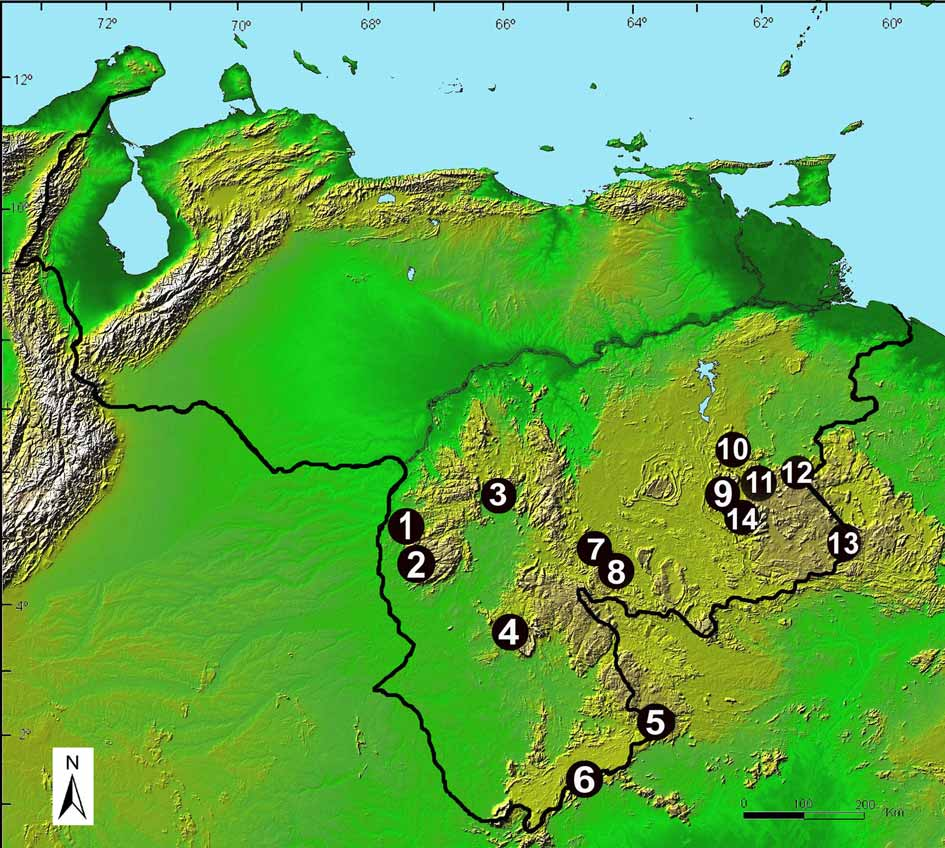
Distribution. Known from its type locality and a nearby site (Cerro el Tigre, near Tobogán de la Selva, together a single spot in the map, Fig 5), where the species was heard calling in sympatry with Dendrobates leucomelas. There is no reason to believe that the new species does not occur throughout lowland rainforest on granitic substrate at least through the north-western Amazonas and Bolívar states in Venezuela. The area has been little explored, existing a continuum of habitat both to the NE and S. Natural history. Anomaloglossus verbeeksnyderorum has only been seen active on rainy days. Of the many times that the stream at Tobogán de la Selva was visited (from 1995 to 2007, at least once a year), only in two instances was the species apparent, in both cases during and after rains. The type series was found active on the ground of an immense sandstone slab under rainforest on 22 April 2005 (Fig 6). Around midday, after a rain in the morning, males were calling, and most individuals were seen along the slab, hiding rapidly under boulders when we approached. The animals were also seen and heard on 19 and 20 of June 2007 inside the forest although never more than 20 m away from the stream. Other herpetofauna observed along the creek inside the forest were (during the day) Dendrobates leucomelas, Synapturanus salseri, Gymnophtalmus sp., Plica pansticta, Corallus hortulanus, Bothrops atrox; and (at night) Pristimantis vilarsi, Leptodactylus lithonaetes, Leptodeira annulata, Oxyrhopus melanogenys, Sibon nebulata and Paleosuchus palpebrosus.
Barrio-Amorós, César L., Santos, Juan Carlos, Jovanovic, Olga (2010): A new dendrobatid frog (Anura: Dendrobatidae: Anomaloglossus) from the Orinoquian rainforest, southern Venezuela. Zootaxa 2413: 37-50, DOI: 10.5281/zenodo.194347
Etymology. verbeeksnyderorum is genitive plural that we apply to honor the Verbeek and Snyder families from Dallas, Texas, who won the auction made by the Amphibian Ark during the “ 2008 Year of the Frog ” campaign. The funds donated went directly to the “ Atelopus Project ” managed by Fundación AndígenA (www. andigena. org) in Mérida, Venezuela, for field investigation and conservation efforts aimed at protecting Andean amphibian species.
Barrio-Amorós, César L., Santos, Juan Carlos, Jovanovic, Olga (2010): A new dendrobatid frog (Anura: Dendrobatidae: Anomaloglossus) from the Orinoquian rainforest, southern Venezuela. Zootaxa 2413: 37-50, DOI: 10.5281/zenodo.194347
Holotype. MHNLS 19649, an adult male from Tobogán de la Selva, Municipio Atures, Estado Amazonas, Venezuela, 5 º 23 ’ N, 67 º 34 ’ W, 56 masl, 5.4109 ºN, 67.6197 ºW, collected by C. Braver and C. S. Jones. Paratopotypes. five adult females, MHNLS 19644 - 48, and two adult males MHNLS 19650 - 51, with the same data as the holotype; five adult females CVULA 7136 - 7140, and one adult male CVULA 7141, from the type locality on 19 of June, 2007 by O. Jovanovic, G. Safarek and Z. Cernelic.
Barrio-Amorós, César L., Santos, Juan Carlos, Jovanovic, Olga (2010): A new dendrobatid frog (Anura: Dendrobatidae: Anomaloglossus) from the Orinoquian rainforest, southern Venezuela. Zootaxa 2413: 37-50, DOI: 10.5281/zenodo.194347

Export occurrence data

Darwin Core Archive (ZIP)

CLASSIFICATION

Taxonomic Classification Tree

MULTIMEDIA

Media Files(6)

FIGURE 1. Anomaloglossus verbeeksnyderorum sp. nov. A. Left profile of the head of the holotype (MHNLS 19649). B. Dorsal view of the head of the holotype (MHNLS 19649). C. Ventral view of the head of the holotype (MHNLS 19649). D. Ventral view of female paratopotype MHNLS 16944 showing the sexual dichromatism explained in the text. Scale equals 2 mm. E. Dorsal view of the holotype (MHNLS 19649). F. Ventral view of the holotype (MHNLS 19649).

Imageimage/png© Barrio-Amorós, César L.;Santos, Juan Carlos;Jovanovic, OlgaBarrio-Amorós, César L.;Santos, Juan Carlos;Jovanovic, Olga

FIGURE 2. Hands and feet of Anomaloglossus verbeeksnyderorum sp. nov. A. Palmar view of the left hand of the holotype (MHNLS 19649). B. Palmar view of the left hand of the female paratopotype MHNLS 16944. C. Sole view of the right foot of the holotype (MHNLS 19649). D. Sole view of the left foot of the paratotype (MHNLS 19644), showing a median metatarsal tubercle. Note that there are only four toes instead five. See explanation on the text. Scale equals 2 mm.

Imageimage/png© Barrio-Amorós, César L.;Santos, Juan Carlos;Jovanovic, OlgaBarrio-Amorós, César L.;Santos, Juan Carlos;Jovanovic, Olga

FIGURE 3. Anomaloglossus verbeeksnyderorum sp. nov. in life. A. Male. B. Female. Specimens not collected. Photo by Zelimir Cernelic.

Imageimage/png© Barrio-Amorós, César L.;Santos, Juan Carlos;Jovanovic, OlgaBarrio-Amorós, César L.;Santos, Juan Carlos;Jovanovic, Olga

FIGURE 4. Anomaloglossus verbeeksnyderorum sp. nov. A. Audiospectrogram and B. oscillogram of a complete trill call with 152 notes. 24.5 ºCelsius. C. audiospectrogram and D. oscillogram of an amplified random section of the complete call sequence.

Imageimage/png© Barrio-Amorós, César L.;Santos, Juan Carlos;Jovanovic, OlgaBarrio-Amorós, César L.;Santos, Juan Carlos;Jovanovic, Olga

FIGURE 5. Distribution of the genus Anomaloglossus in Venezuela. 1. A. verbeeksnyderorum sp. nov. type locality. 2. A. wothuja. 3. A. guanayensis. 4. A. shrevei. 5. A. parimae. 6. A. tamacuarensis. 7. A. ayarzagüenai. 8. A. moffetti. 9. A. tepuyensis. 10. A. triunfo. 11. A. murisipanensis. 12. A. parkerae. 13. A. praderioi and A. roraima. 14. A. breweri.

Imageimage/png© Barrio-Amorós, César L.;Santos, Juan Carlos;Jovanovic, OlgaBarrio-Amorós, César L.;Santos, Juan Carlos;Jovanovic, Olga

FIGURE 6. Natural habitat of the type locality of Anomaloglossus verbeeksnyderorum sp. nov., Tobogán de la Selva, Estado Amazonas, Venezuela.

Imageimage/png© Barrio-Amorós, César L.;Santos, Juan Carlos;Jovanovic, OlgaBarrio-Amorós, César L.;Santos, Juan Carlos;Jovanovic, Olga

IMAGES

Gallery(6)

See Gallery

Occurrences with images

Source Information

A new dendrobatid frog (Anura: Dendrobatidae: Anomaloglossus) from the Orinoquian rainforest, southern Venezuela

checklist

This dataset contains the digitized treatments in Plazi based on the original journal article Barrio-Amorós, César L., Santos, Juan Carlos, Jovanovic, Olga (2010): A new dendrobatid frog (Anura: Dendrobatidae: Anomaloglossus) from the Orinoquian rainforest, southern Venezuela. Zootaxa 2413: 37-50, DOI: 10.5281/zenodo.194347

Abstract

A new species of Anomaloglossus is described from the Venezuelan Guayana; it is the 21st described species of Anomaloglossus from the Guiana Shield, and the 15th from Venezuela. This species inhabits rainforest on granitic substrate on the northwestern edge of the Guiana Shield (Estado Amazonas, Venezuela). The new species is distinguished from congeners by sexual dimorphism, its unique male color pattern (including two bright orange parotoid marks and two orange paracloacal spots on dark brown background), call characteristics and other morphological features. Though to the new species is known only from the northwestern edge of the Guiana Shield, its distribution may be more extensive, as there are no significant biogeographic barriers isolating the type locality from the granitic lowlands of Venezuela.

Key words: Amphibia, Dendrobatidae, Anomaloglossus, Venezuela, Guiana Shield

Barrio-Amorós C L, Santos J C, Jovanovic O, plazi (2010). A new dendrobatid frog (Anura: Dendrobatidae: Anomaloglossus) from the Orinoquian rainforest, southern Venezuela. Plazi.org taxonomic treatments database. Checklist dataset https://doi.org/10.5281/zenodo.194347 accessed via GBIF.org on 2026-06-14.

CC0Published 12/31/2010View dataset
GBIF Usage Key
124956997
Dataset Key
02e70f16-ae0e-4ab2-8328-75ee80e56772
Origin
source
Backbone Key
8734266
Taxon ID
03A787C0F974FFA1FF4D70D5FC15FEEF.taxon
Last Crawled
6/11/2026
Last Interpreted
6/11/2026