
AnimaliaNot EvaluatedacceptedspeciesAccepted
Circularius wilsoni

Circularius wilsoni

(Thomson, 1921) Mcfadden & Van Ofwegen, 2017

GBIF:137679942

0year

0

Synonyms

ABOUT

Descriptions(2)

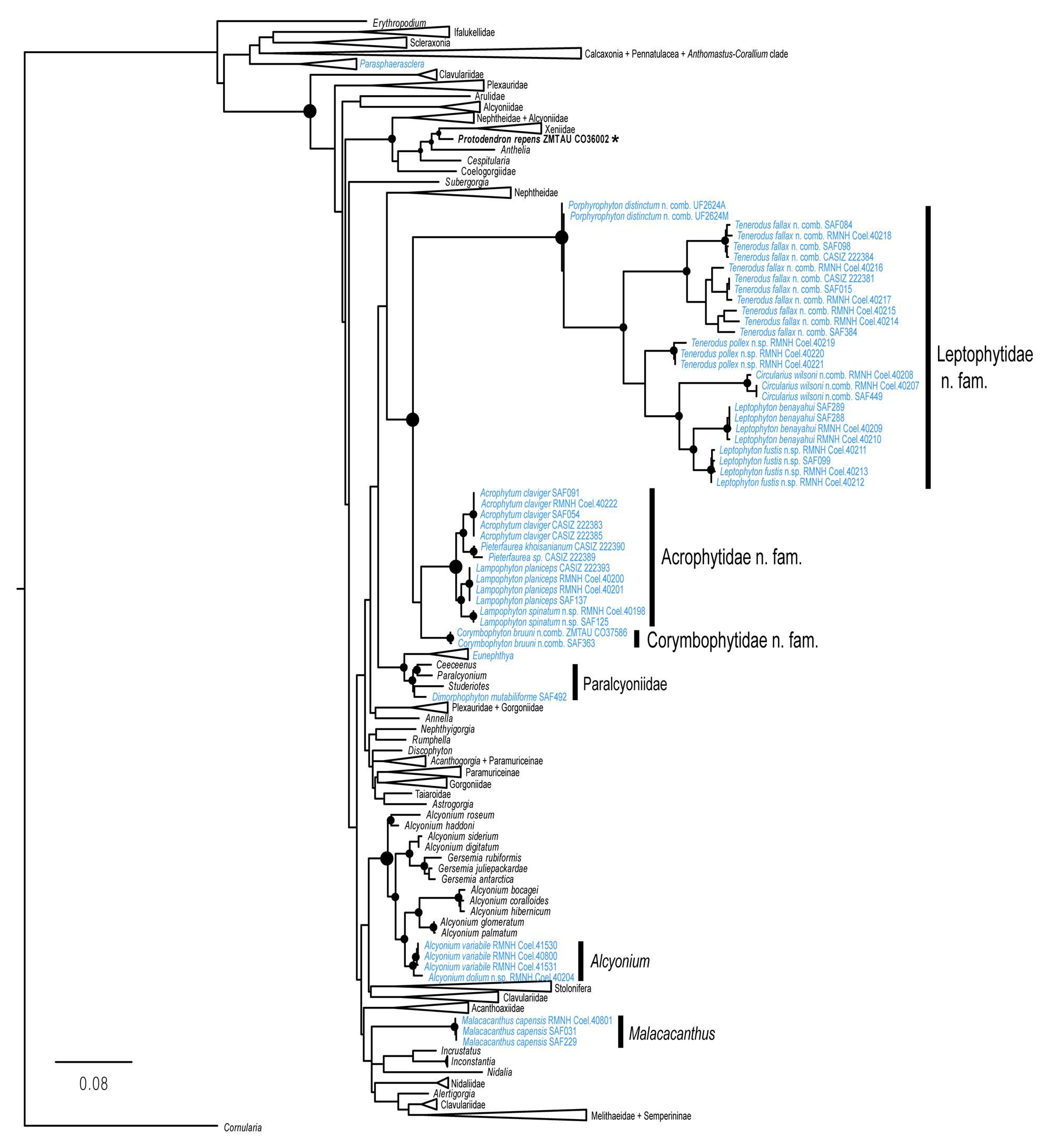
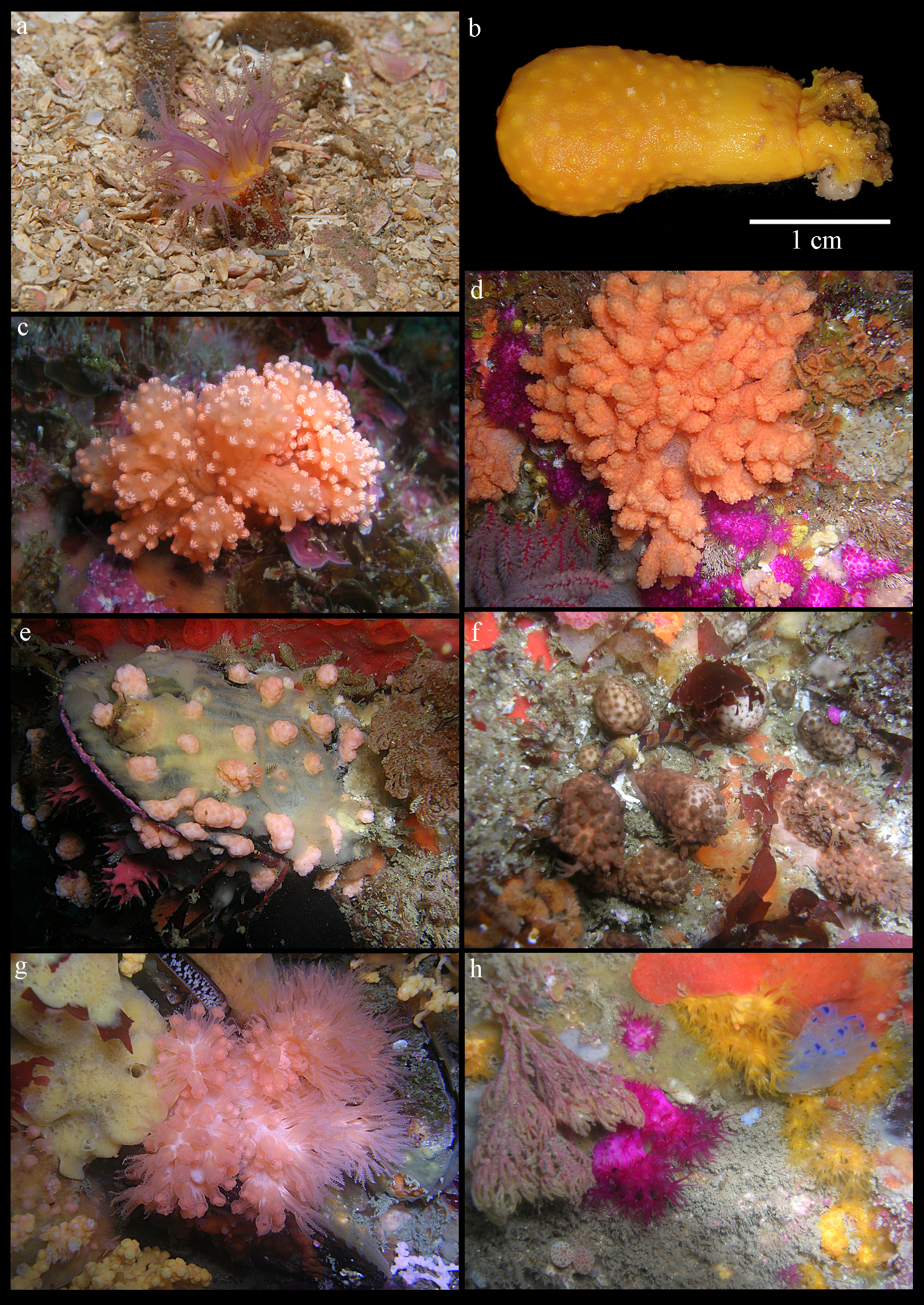
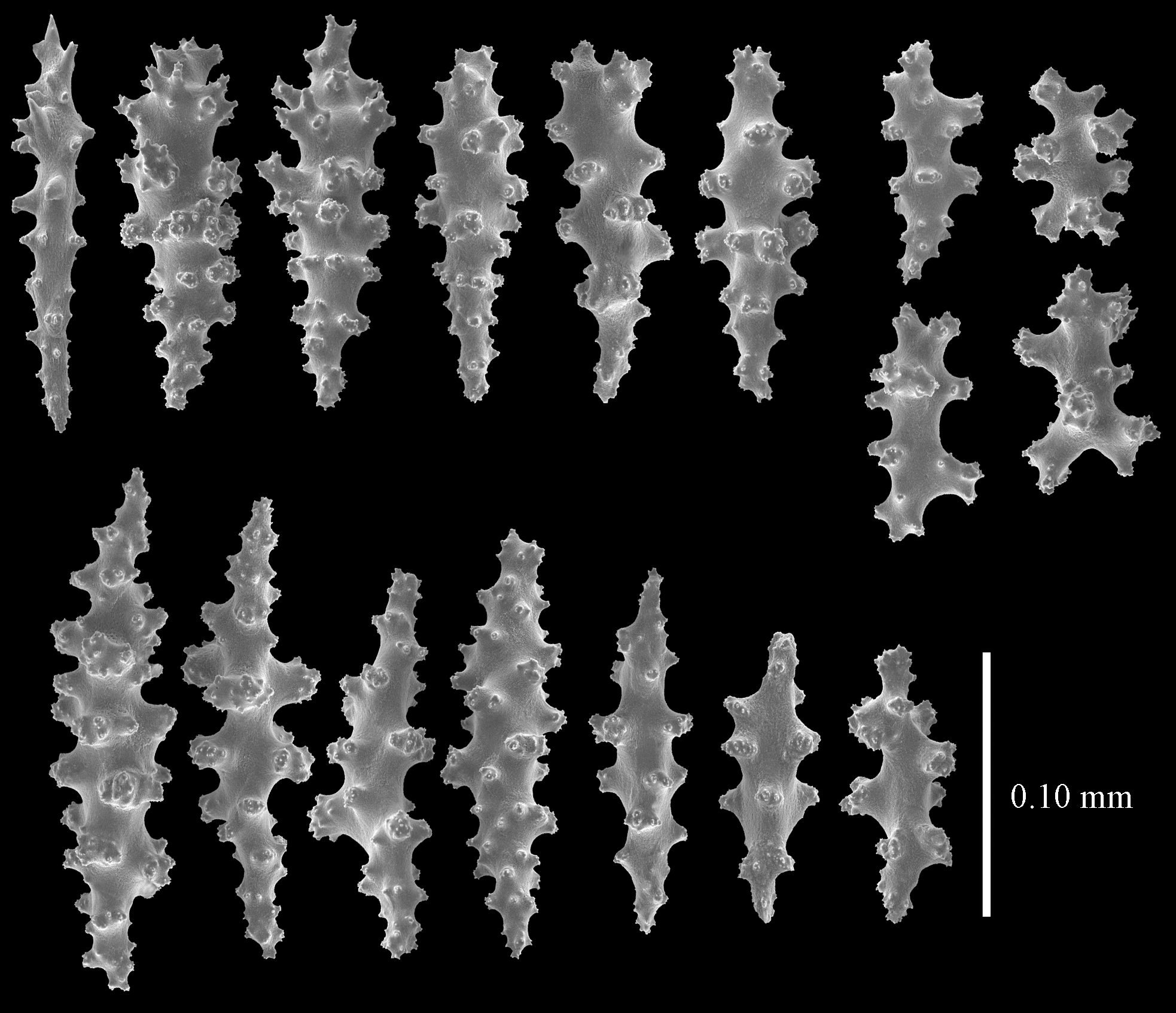
Remarks. Williams (1992 a) provides a good description of this species. Similar to the material he examined, the colonies we collected were growing on the surfaces of other organisms, specifically mussels and polychaete tubes (Fig. 5 e). Small colonies, most <5 mm in diameter, occur in aggregations of 20 or more, typically separated from one another by a few mm to 1 cm. These aggregations appear to arise as the result of colony fission and the subsequent movement of clonemates away from each other, as has been documented in Discophyton rudyi (Verseveldt & Ofwegen) (McFadden 1991). In a few cases adjacent colonies are still connected by a thin membrane, but in most this connection has been lost and the intervening substrate has been overgrown by sponges or other encrusting organisms. Williams (1992 a) included few SEM images of the sclerites of this species, so we include additional images here to facilitate comparisons with similar species (Figs. 10 – 11). We also note that in life colonies are pink, but they fade to cream, white or beige in ethanol; the sclerites are colorless. Superficially, C. wilsoni n. comb. resembles the pink color morph of Tenerodus fallax n. comb., but it can be distinguished from that species in the field by its habit of forming aggregations of very small colonies (Fig. 5 e). C. wilsoni can be further distinguished from T. fallax by the sclerites, which are predominantly spindles and clubs (Figs. 10 – 11) rather than tuberculate spheroids (Figs. 15 – 16). Although Williams (1992 a) speculated that Alcyonium wilsoni might represent a variant of Alcyonium fauri (= T. fallax n. comb.), the marked difference in sclerite form between the species and molecular phylogenetic analyses (Fig. 1) both confirm that they are clearly different species. Phylogenetic analyses suggest that C. wilsoni n. comb. is closely related to Leptophyton. That genus does not have sclerites arranged as a collaret and points in the polyps, however, and the colonies are typically much larger and have branched lobes.
Mcfadden, Catherine S., Van Ofwegen, Leen P. (2017): Revisionary systematics of the endemic soft coral fauna (Octocorallia: Alcyonacea: Alcyoniina) of the Agulhas Bioregion, South Africa. Zootaxa 4363 (4): 451-488, DOI: 10.11646/zootaxa.4363.4.1
Material examined. CASIZ 222396 (SAF 446), RMNH Coel. 40208 (SAF 447), RMNH Coel. 40207 (SAF 448), SAM (SAF 449), SAF 456, South Africa, Western Cape, Cape Peninsula, Star Walls, 34 º 02.472 ' S, 18 º 18.083 ' E, depth 20 – 29 m, coll. C. S. McFadden, 24 March 2008. UF 3876, South Africa, Western Cape, Capetown, Hout Bay / Vulcan Rock, depth 24 m, coll. J. Starmer, 0 1 April 2000.
Mcfadden, Catherine S., Van Ofwegen, Leen P. (2017): Revisionary systematics of the endemic soft coral fauna (Octocorallia: Alcyonacea: Alcyoniina) of the Agulhas Bioregion, South Africa. Zootaxa 4363 (4): 451-488, DOI: 10.11646/zootaxa.4363.4.1

Export occurrence data

Darwin Core Archive (ZIP)

CLASSIFICATION

Taxonomic Classification Tree

MULTIMEDIA

Media Files(6)

FIGURE 1. Maximum likelihood phylogeny of Octocorallia based on combined, partitioned analysis of 28S rDNA, COI and 16S mtDNA.South African species and clades are identified in blue. Filled circles indicate nodes with>70% bootstrap support and Bayesian posterior probabilities>0.95 (shown for South African clades only). Strongly supported clades (bootstrap 70%) with no South African members have been collapsed to facilitate readability. Phylogenetic position of Protodendron repens indicated with *.
Imageimage/png© Mcfadden, Catherine S.;Van Ofwegen, Leen P.Mcfadden, Catherine S.;Van Ofwegen, Leen P.

FIGURE 5. a, Lampophyton spinatum n. sp. paratype, RMNH Coel. 40199 (SAF195), colony photographed in situ; b, Alcyonium dolium n. sp. holotype, RMNH Coel.40204 (SAF292); c, Leptophyton benayahui SAF289 photographed in situ; d, Leptophyton fustis n. sp., holotype, RMNH Coel. 40211 (SAF087), colony photographed in situ (T. fallax n. comb. purple morph visible in lower right corner); e, Circularius wilsoni n. comb. RMNH Coel. 40207 (SAF448), colonies growing on mussel shell photographed in situ; f, Tenerodus pollex n. gen., n. sp. holotype, RMNH Coel. 40219 (SAF420), colonies photographed in situ; g, Tenerodus fallax, n. comb. RMNH Coel. 40217 (SAF383), pink color morph; h, Tenerodus fallax, n. comb. SAF015, purple and yellow color morphs.

Imageimage/png© Mcfadden, Catherine S.;Van Ofwegen, Leen P.Mcfadden, Catherine S.;Van Ofwegen, Leen P.

FIGURE 10. Circularius wilsoni n. comb. RMNH Coel. 40207 (SAF448). a, polyp sclerites; b, sclerites from surface of polyparium.
Imageimage/png© Mcfadden, Catherine S.;Van Ofwegen, Leen P.Mcfadden, Catherine S.;Van Ofwegen, Leen P.

FIGURE 11. Circularius wilsoni n. comb. RMNH Coel.40207 (SAF448).Sclerites of membranous base.

Imageimage/png© Mcfadden, Catherine S.;Van Ofwegen, Leen P.Mcfadden, Catherine S.;Van Ofwegen, Leen P.

FIGURE 15. Tenerodus fallax n. comb. RMNH Coel. 40214 (SAF072). a, club-like sclerites from polyps and colony surface; b, asymmetrical spinose clubs from polyps and colony surface; c, tentacle sclerites; d, radiates and tuberculate spheroids from colony surface.

Imageimage/png© Mcfadden, Catherine S.;Van Ofwegen, Leen P.Mcfadden, Catherine S.;Van Ofwegen, Leen P.

FIGURE 16. Tenerodus fallax n. comb. RMNH Coel. 40214 (SAF072). Radiates and tuberculate spheroids from interior of colony.

Imageimage/png© Mcfadden, Catherine S.;Van Ofwegen, Leen P.Mcfadden, Catherine S.;Van Ofwegen, Leen P.

IMAGES

Gallery(6)

See Gallery

Occurrences with images

Source Information

Revisionary systematics of the endemic soft coral fauna (Octocorallia: Alcyonacea: Alcyoniina) of the Agulhas Bioregion, South Africa

checklist

This dataset contains the digitized treatments in Plazi based on the original journal article Mcfadden, Catherine S., Van Ofwegen, Leen P. (2017): Revisionary systematics of the endemic soft coral fauna (Octocorallia: Alcyonacea: Alcyoniina) of the Agulhas Bioregion, South Africa. Zootaxa 4363 (4): 451-488, DOI: 10.11646/zootaxa.4363.4.1

Abstract

The Agulhas Bioregion of southern South Africa supports a unique octocoral fauna that is entirely endemic to the region. Recent molecular phylogenetic studies indicate that this endemism extends to deeper taxonomic levels than had previously been recognized, and that most of these endemic species belong to genera and families that are also endemic to South Africa. Here we revise the taxonomy of soft corals (subordinal group Alcyoniina) that were previously assigned to the cosmopolitan families Alcyoniidae, Nephtheidae and Nidaliidae, describing three new families endemic to South Africa, along with four new genera and four new species. We reassign the endemic genera Acrophytum, Pieterfaurea and Lampophyton to Acrophytidae n. fam, and describe a new species of Lampophyton, L. spinatum n. sp. The endemic species Protodendron bruuni is reassigned to a new, monotypic genus, Corymbophyton bruuni n. comb., and family, Corymbophytidae n. fam. The endemic genus Leptophyton is placed in a third new family, Leptophytidae n. fam., along with three new genera that are established for species previously assigned to Alcyonium: Circularius wilsoni n. comb., Porphyrophyton distinctum n. comb., and Tenerodus fallax n. comb. In addition, we describe new species of Leptophyton, L. fustis n. sp.; Tenerodus, T. pollex n. gen. n. sp.; and Alcyonium, A. dolium n. sp.; reassign Protodendron verseveldti to Tenerodus verseveldti n. comb.; and reassign the endemic genus Dimorphophyton to family Paralcyoniidae. Although molecular phylogenetic analyses unite Acrophytidae, Corymbophytidae and Leptophytidae within a well-supported monophyletic group, both morphological and molecular distinctions support maintaining them as three separate families. These revisions increase the number of endemic species of shallow-water soft corals known from the Agulhas Bioregion to 40, and the number of endemic genera to 13.

Key words: molecular phylogenetics, Acrophytum, Alcyonium, Dimorphophyton, Lampophyton, Leptophyton, Pieterfaurea, Protodendron

Mcfadden C S, Van Ofwegen L P, plazi (2017). Revisionary systematics of the endemic soft coral fauna (Octocorallia: Alcyonacea: Alcyoniina) of the Agulhas Bioregion, South Africa. Plazi.org taxonomic treatments database. Checklist dataset https://doi.org/10.11646/zootaxa.4363.4.1 accessed via GBIF.org on 2026-06-18.

CC0Published 12/13/2017View dataset
GBIF Usage Key
137679942
Dataset Key
a141fa76-cc88-4901-944a-306171e41413
Origin
source
Backbone Key
9346767
Taxon ID
038A07766C19286EFF245B5FFDA94DE6.taxon
Last Crawled
6/10/2026
Last Interpreted
6/10/2026