
AnimaliaNot EvaluatedacceptedspeciesAccepted
Parantipathes hirondelle

Parantipathes hirondelle

MOLOdTSOVA, 2006

GBIF:148421363

0year

ABOUT

Descriptions(5)

Description of the CIDARIS Specimens: THe CIDARIS SPeCIMeNS ARe SIMILAR TO THe TYPe Of P. hirondelle IN bOTH THe deNSITY ANd ORIeNTATION Of PINNULeS WHeRe 38 PINNULeS (TOTAL fOR ALL gROUPS) CAN be COUNTed PeR 1 CM COMPARed WITH 33 TO 40 PeR 1 CM IN THe TYPe, ANd IN HAVINg, ON AVeRAge, SIX ROWS Of PINNULeS THAT fORM dISTINCT SeMISPIRAL ALTeRNATINg gROUPS (FIgURe 5 A – 5 b). THe NUMbeR Of PINNULeS PeR gROUP INCReASeS fROM ONe ANd TWO PINNULeS PeR gROUP (CORReSPONdINg TO A TOTAL Of THRee ROWS) bASALLY ON THe STeM TO THRee ANd fIVe PINNULeS PeR gROUP (TOTAL Of 8 ROWS) dISTALLY NeAR THe APeX. IN CONTRAST, THe TYPe Of P. hirondelle HAS NO MORe THAN fOUR PINNULeS PeR gROUP. THe CIDARIS SPeCIMeNS ARe LIke THe TYPe Of P. hirondelle bY ALSO HAVINg LONgeR POSTeRIOR PINNULeS THAN ANTeRIOR PINNULeS. FOR eXAMPLe, THe LeNgTH Of THe LONgeST POSTeRIOR PINNULeS fOR SPeCIMeNS G 35429 ANd G 62019 ARe ~ 2 CM ANd 0.5 CM, ANd THe MAXIMUM LeNgTH Of ANTeRIOR PINNULeS ARe ~ 1 CM ANd 0.3 CM, ReSPeCTIVeLY (FIgUReS 5 A ANd 5 C). THe SPINeS Of THe CIDARIS SPeCIMeNS ARe SMOOTH, SIMPLe, TRIANgULAR, SOMeTIMeS INCLINed dISTALLY, WITH POLYPAR SPINe HeIgHTS beINg ~ 0.05 MM ANd AbPOLYPAR SPINe HeIgHTS beINg ~ 0.03 MM fROM MId-bASe TO TIP (FIgURe 5 d). THRee TO fOUR AXIAL ROWS Of SPINeS CAN be SeeN fROM ONe ASPeCT (FIgURe 5 d) WITH ~ 0.25 MM beTWeeN AdjACeNT SPINeS, ReSULTINg IN fIVe TO SIX SPINeS PeR 1 MM (FIgURe 5 b).
Horowitz, Jeremy, Opresko, Dennis M., Bridge, Tom C. L. (2018): Black corals (Anthozoa: Antipatharia) from the deep (916 m - 2542 m) Coral Sea, north-eastern Australia. Zootaxa 4472 (2): 307-326, DOI: 10.11646/zootaxa.4472.2.5
Diagnosis (after Molodtsova 2006): CORALLUM MONOPOdIAL OR VeRY SPARSeLY bRANCHed, PINNULATe. PINNULeS UP TO 2 CM IN LeNgTH, fORMINg dISTINCT bILATeRAL ANd ALTeRNATINg SeMISPIRAL gROUPS, WITH THRee TO fOUR PINNULeS PeR gROUP, 33 TO 40 PINNULeS (TOTAL fOR ALL gROUPS) PeR 1 CM. SPINeS SIMPLe, SMOOTH, ROUNded AT THe APeX, TRIANgULAR ANd COMPReSSed; 0.02 MM TO 0.06 MM TALL; ARRANged IN LONgITUdINAL ROWS, fOUR TO fIVe Of WHICH ARe VISIbLe IN LATeRAL VIeW, WITH SIX TO SeVeN SPINeS PeR 1 MM IN eACH ROW. POLYPS eLONgATed, 0.9 MM TO 1.7 MM IN TRANSVeRSe dIAMeTeR, WITH 6 TO 6.5 PeR 1 CM.
Horowitz, Jeremy, Opresko, Dennis M., Bridge, Tom C. L. (2018): Black corals (Anthozoa: Antipatharia) from the deep (916 m - 2542 m) Coral Sea, north-eastern Australia. Zootaxa 4472 (2): 307-326, DOI: 10.11646/zootaxa.4472.2.5
Remarks: CURReNTLY THeRe ARe NINe NOMINAL SPeCIeS IN THe geNUS Parantipathes: P. larix (ESPeR 1790), P. tetrasticha (POURTALeS 1868), P. laricides (VAN PeSH 1914), P. euantha (PASTeRNAk 1958), P. wolffi (PASTeRNAk 1977), P. helicosticha (OPReSkO 1998), P. hirondelle (MOLOdTSOVA 2006), P. dodecasticha (OPReSkO 2015), ANd P. robusta (OPReSkO 2015). THe TAXONOMIC CHARACTeRS Of THe fIRST SeVeN SPeCIeS HAVe beeN THOROUgHLY SUMMARIzed bY MOLOdTSOVA (2006), ANd THe LAST TWO HAVe beeN deSCRIbed ANd COMPARed TO THe fORMeR bY OPReSkO (2015). G 35429 ANd G 62019 HAVe PINNULeS THAT fORM dISTINCT SeMISPIRAL gROUPS WITH THeIR LONgeST PINNULeS beINg 2 CM ANd 0.5 CM, ReSPeCTIVeLY. THe LONgeST PINNULe LeNgTH IS ReLATIVeLY SMALL fOR Parantipathes SPP., bUT COULd POTeNTIALLY be ANY Of THe NINe SPeCIeS eXCePT fOR P. larix ANd P. tetrasticha, WHICH HAVe MUCH LARgeR MAXIMUM PINNULe LeNgTHS (6 CM TO 12 CM ANd 4 CM, ReSPeCTIVeLY). HOWeVeR, THe RATIO Of THe LONgeR POSTeRIOR PINNULeS COMPARed TO ANTeRIOR PINNULeS IS SIMILAR TO P. hirondelle, ANd WHeN CONSIdeRINg PINNULe ARRANgeMeNT, THe ReMAININg PINNULe CHARACTeRISTICS fIT beST WITH THe deSCRIPTION Of P. hirondelle beCAUSe THe CIDARIS SPeCIMeNS fORM dISTINCT SeMI SPIRAL gROUPS THAT dO NOT ARISe fROM THe SAMe POINT fOR A gIVeN gROUP AS WITH P. laricides ANd P. wolfi. FIVe TO SIX SPINeS CAN be COUNTed PeR 1 MM (FIgURe 5 b) ANd THRee TO fOUR ROWS Of SPINeS CAN be COUNTed fROM ONe ASPeCT (FIgURe 5 d), WHICH fALLS beTWeeN P. hirondelle (6 TO 7 SPINeS PeR 1 MM ANd fOUR TO fIVe ROWS Of SPINeS PeR ONe ASPeCT) ANd P. helicosticha (2 TO 3.5 SPINeS PeR 1 MM ANd 3 TO 4 ROWS Of SPINeS PeR ONe ASPeCT). HOWeVeR, P. helicosticha IS RePORTed TO HAVe ~ 25 PINNULeS PeR 1 CM (COUNTINg PINNULeS AROUNd THe STeM) WHILe THe CIDARIS SPeCIMeNS HAVe ~ 38 PINNULeS, LIke THe TYPe Of P. hirondelle (33 - 40 PINNULeS PeR 1 CM). THe SPINeS IN THe CIDARIS SPeCIMeNS RANge fROM 0.03 MM TO 0.05 MM IN HeIgHT fROM MId-bASe TO TIP (FIgURe 6 d), WHICH fITS WITH P. hirondelle (0.02 MM TO 0.06 MM) ANd eXCLUdeS THe CIDARIS SPeCIMeNS fROM beINg P. dodecasticha ANd P. helicosticha beCAUSe THe LATTeR TWO HAVe SPINe HeIgHTS AS LARge AS 0.18 MM ANd 0.22 MM, ReSPeCTIVeLY. AddITIONALLY, THe CIDARIS SPeCIMeNS ARe UNLIkeLY TO be P. dodecasticha beCAUSe P. dodecasticha HAS AbOUT TWICe THe NUMbeR Of PINNULe ROWS AS THe CIDARIS SPeCIMeNS (12 IN P. dodecasticha COMPARed TO SIX IN THe CIDARIS SPeCIMeNS), ANd A HIgHeR AVeRAge NUMbeR Of PINNULeS PeR gROUP (fIVe TO SIX PINNULeS PeR gROUP IN P. dodecasticha COMPARed TO THRee TO fOUR PINNULeS PeR gROUP IN THe CIDARIS SPeCIMeNS). LASTLY, THe CIDARIS SPeCIMeNS ARe UNLIke THe TYPe Of P. robusta beCAUSe P. robusta CHARACTeRISTICALLY HAS fORked SPINeS NOT fOUNd IN THe CIDARIS SPeCIMeNS. POLYPS ARe NOT PReSeNT ON eITHeR Of THe CIDARIS SPeCIMeNS, THeRefORe, We CANNOT COMPARe POLYP SIze ANd deNSITY WITH THeSe feATUReS IN THe OTHeR SPeCIeS.
Horowitz, Jeremy, Opresko, Dennis M., Bridge, Tom C. L. (2018): Black corals (Anthozoa: Antipatharia) from the deep (916 m - 2542 m) Coral Sea, north-eastern Australia. Zootaxa 4472 (2): 307-326, DOI: 10.11646/zootaxa.4472.2.5
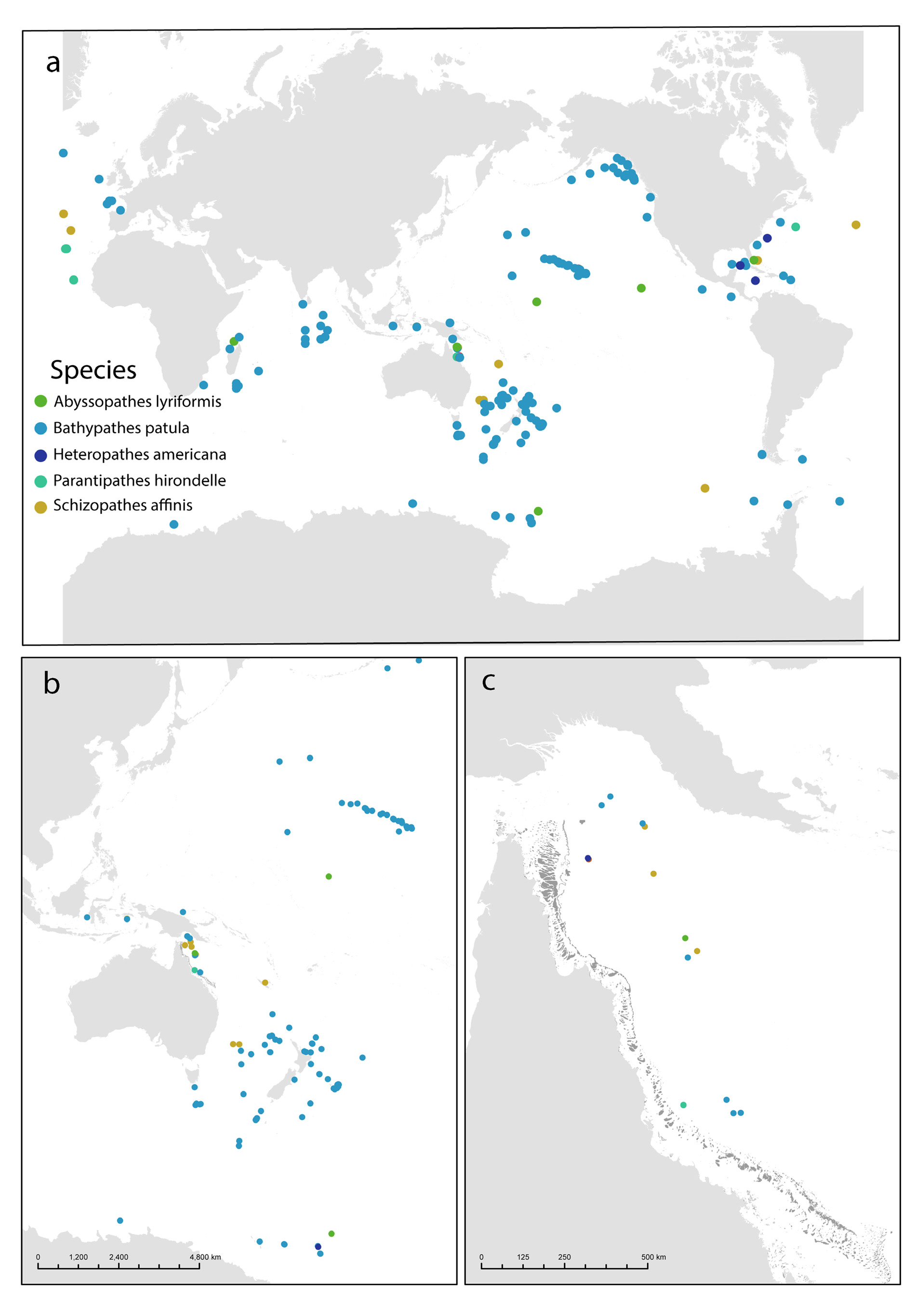
Distribution: Parantipathes hirondelle HAS beeN RePORTed fROM THe NORTH ATLANTIC OCeAN fROM dePTHS Of 305 M TO 1,401 M, ANd THIS STUdY POTeNTIALLY eXPANdS THe dISTRIbUTION TO THe CORAL SeA, AUSTRALIA (FIgURe 1 C), A RANge eXPANSION Of> 15,000 kM.
Horowitz, Jeremy, Opresko, Dennis M., Bridge, Tom C. L. (2018): Black corals (Anthozoa: Antipatharia) from the deep (916 m - 2542 m) Coral Sea, north-eastern Australia. Zootaxa 4472 (2): 307-326, DOI: 10.11646/zootaxa.4472.2.5
Material examined: MTQ MATeRIAL (PReSeRVed IN eTHYL ALCOHOL): G 35429 ANd G 62019 (STATION dATA IN TAbLe 1).
Horowitz, Jeremy, Opresko, Dennis M., Bridge, Tom C. L. (2018): Black corals (Anthozoa: Antipatharia) from the deep (916 m - 2542 m) Coral Sea, north-eastern Australia. Zootaxa 4472 (2): 307-326, DOI: 10.11646/zootaxa.4472.2.5

Export occurrence data

Darwin Core Archive (ZIP)

CLASSIFICATION

Taxonomic Classification Tree

MULTIMEDIA

Media Files(3)

FIGURE 1. a, Map of collection sites for the specimens in this study and other locations globally where the same species have been collected; b, view of the Central and Eastern Indo-Pacific region; c, new black coral records from the Coral Sea.

Imageimage/png© Horowitz, Jeremy;Opresko, Dennis M.;Bridge, Tom C. L.Horowitz, Jeremy;Opresko, Dennis M.;Bridge, Tom C. L.

FIGURE 5. Parantipathes cf. hirondelle: a, G62019, side-view showing pinnule density along the stem; b, G35429, section of corallum showing pinnule orientation and density; c, G35429, cross-sectional view of the pinnules; d, G35429, spines on a section of pinnule.
Imageimage/png© Horowitz, Jeremy;Opresko, Dennis M.;Bridge, Tom C. L.Horowitz, Jeremy;Opresko, Dennis M.;Bridge, Tom C. L.

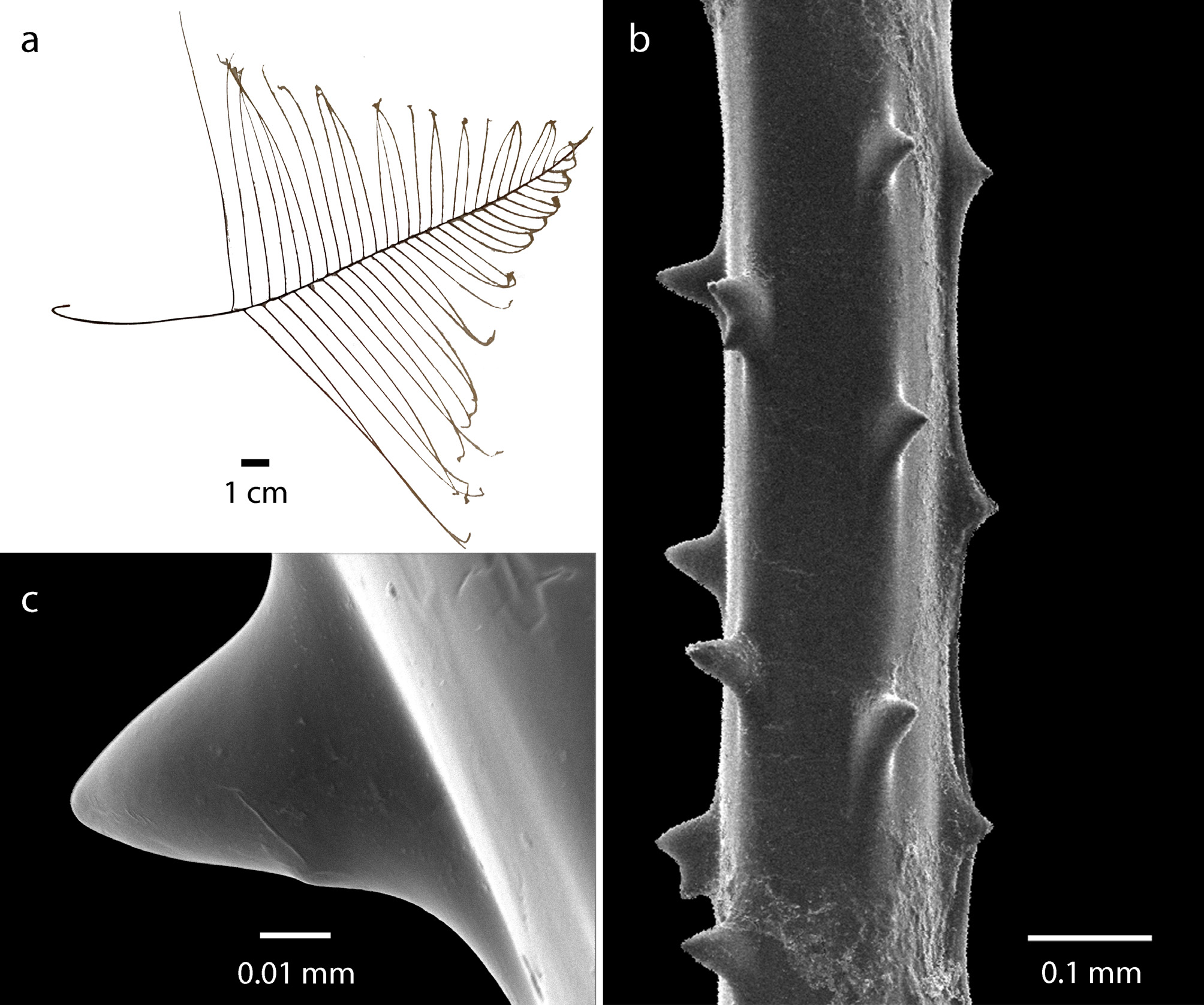
FIGURE 6. Schizopthes affinis: a, G61837, anterolateral view of corallum showing pinnule density, triangular corallum shape, and curved hook at basal end b, G61978, spines on a pinnule shows bifucation of some polypar spines (seen on left side of image) and larger polypar spines than abpolypar spines; c, G61837, spine on a section of a pinnule.

Imageimage/png© Horowitz, Jeremy;Opresko, Dennis M.;Bridge, Tom C. L.Horowitz, Jeremy;Opresko, Dennis M.;Bridge, Tom C. L.

IMAGES

Gallery(3)

See Gallery

Occurrences with images

Source Information

Black corals (Anthozoa: Antipatharia) from the deep (916 m - 2542 m) Coral Sea, north-eastern Australia

checklist

This dataset contains the digitized treatments in Plazi based on the original journal article Horowitz, Jeremy, Opresko, Dennis M., Bridge, Tom C. L. (2018): Black corals (Anthozoa: Antipatharia) from the deep (916 m - 2542 m) Coral Sea, north-eastern Australia. Zootaxa 4472 (2): 307-326, DOI: 10.11646/zootaxa.4472.2.5

Abstract

Black corals (Anthozoa: Antipatharia) occur in all the world’s oceans in a wide range of habitats from shallow-water coral reefs to the deep-sea. However, the taxonomy of black corals is poorly known compared to many other anthozoan groups. This knowledge gap is particularly acute for the deep-sea, where collecting specimens is logistically difficult and costly. Here, we identify 21 black coral specimens collected from the western Coral Sea adjacent to north-east Australia. The specimens represent five nominal species from five genera and two families. All species represent new records for the region, including the first record for the family Cladopathidae Brook, 1889. We describe the morphology of these specimens, note geographic and bathymetric range expansions, and provide evidence to support the hypothesis that Bathypathes seculata Opresko, 2005 is the juvenile stage of Bathypathes patula Brook, 1889, thus warranting synonymization. Our findings demonstrate that deep-sea antipatharians in this region are much more diverse than previously reported. Furthermore, this study highlights the importance of museum collections in terms of increasing our understanding of taxonomy and patterns of biodiversity, particularly for poorly-studied habitats such as the deep-sea.

Horowitz J, Opresko D M, Bridge T C L, plazi (2018). Black corals (Anthozoa: Antipatharia) from the deep (916 m - 2542 m) Coral Sea, north-eastern Australia. Plazi.org taxonomic treatments database. Checklist dataset https://doi.org/10.11646/zootaxa.4472.2.5 accessed via GBIF.org on 2026-06-17.

CC0Published 9/10/2018View dataset
GBIF Usage Key
148421363
Dataset Key
1113cb35-3bdb-482b-babd-a58f7caea92c
Origin
source
Backbone Key
6472298
Taxon ID
03F087B8FFA12623E7BCFDAAF7C60EEA.taxon
Last Crawled
6/10/2026
Last Interpreted
6/10/2026