
AnimaliaNot EvaluatedacceptedspeciesAccepted
Halocynthia microspinosa
(Van Name, 1921)
GBIF:148692790
0year
0
Synonyms
ABOUT
Descriptions(1)
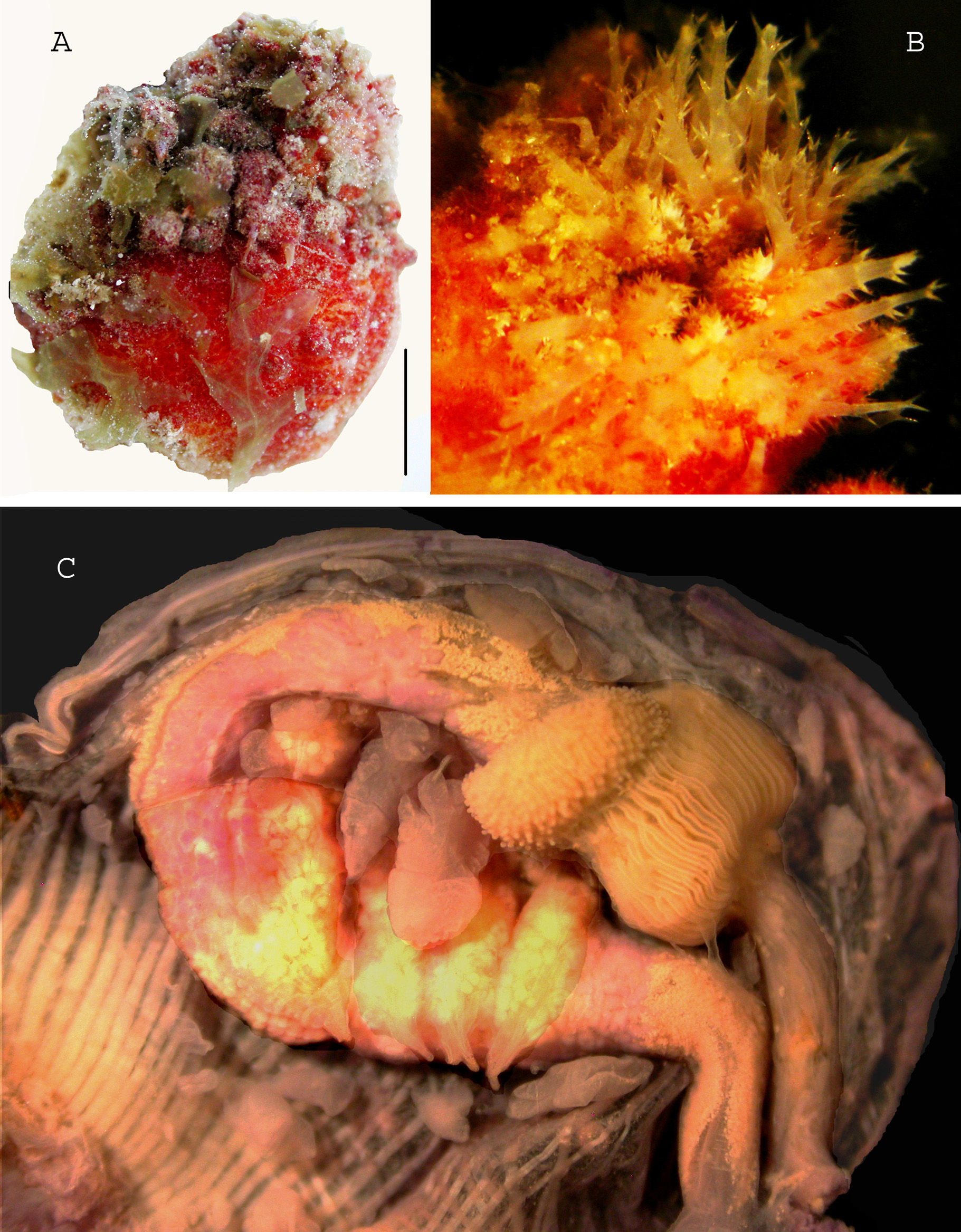
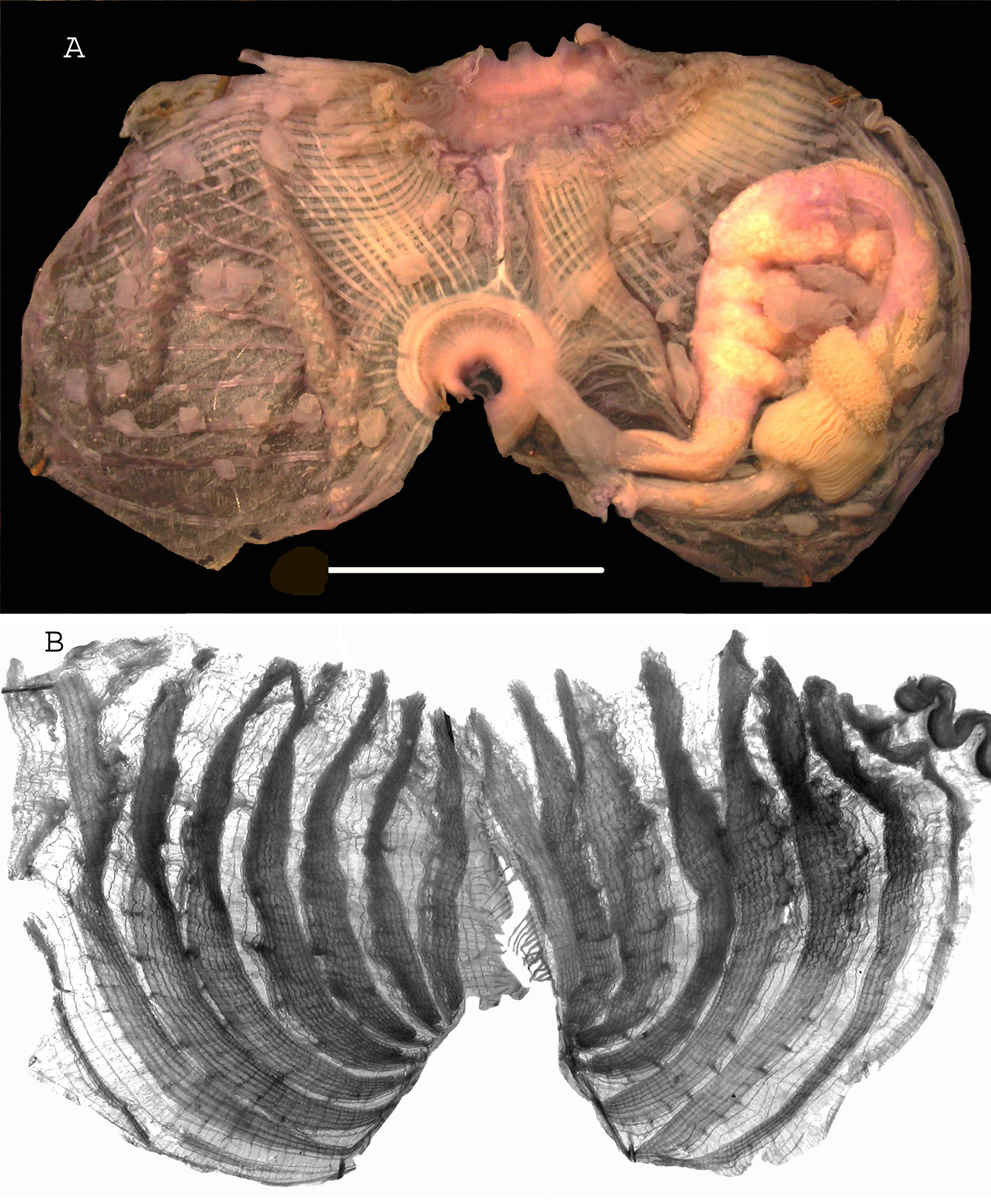
Two specimens 1 and 3 cm large have a thick red tunic (Fig. 2 A) with protuberances at the siphons. The body is covered with spines much longer around the siphons (Fig. 2 B). Internally the tunic is colourless and not nacreous. Extracted from the tunic the body wall is red on the siphons but pale and translucent elsewhere. The musculature is strong with siphon sphincters and spaced radiating muscular ribbons covering the whole body (Fig. 3 A). The 12 large tentacles are thin only once ramified. The dorsal tubercle has horns internally rolled. The neural ganglion is particularly long (Fig. 3 A). The dorsal lamina in long with thin languets doubled around the oesophagus entrance. The branchial sac has 8 high folds on each side (Fig. 3 B). The longitudinal vessels are close together at the top of the folds but spaced at the sides. The stigmata are straight and short and there is no trace of spirals on the top of the folds. The branchial formula on the right side of the largest specimen is: E- 2 (9) 2 (19) 2 (23) 2 (23) 2 (24) 2 (23) 2 (22) 2 (20) 2 - DL. The digestive tract forms a wide loop (Figs 2 C, 3 A). The oesophagus is long, well separated from the stomach which has two parts: one with longitudinal folds and one covered with hepatic papillae (Fig. 2 C, 3 A). The intestine is isodiametric ending in a lobed anus. There are 4 long sinuous gonads parallel to each other placed inside the gut loop and partly overlying the descending limb of the intestine. The ovaries are central, sided by series of testis vesicles. The gonoducts are short tubes and the sperm duct is a little longer than the oviduct. Gonads are lacking on the right body side. Numerous endocarps encircle ventrally the gut loop (Fig. 2 C), others take place between the gonads inside the gut loop and many are scattered on each side on the body wall (Fig. 3 A). A thin lobed velum is at the base of the atrial aperture. These observations correspond to the very detailed original description. H. microspinosa type locality was supposed to be the Bahamas (Van Name 1921). It was collected again in Jamaica (Millar & Goodbody 1974), and in Guadeloupe (Monniot C. 1983), and nowhere else. So this spectacular species is obviously endemic to the Caribbean region.
Monniot, Françoise (2018): Ascidians collected during the Madibenthos expedition in Martinique 3. Stolidobranchia, Pyuridae and Molgulidae. Zootaxa 4459 (3): 401-430, DOI: 10.11646/zootaxa.4459.3.1
Export occurrence data
Darwin Core Archive (ZIP)
CLASSIFICATION
Taxonomic Classification Tree

NOMENCLATURE
Synonyms(1)
MULTIMEDIA
Media Files(2)
IMAGES