
AnimaliaNot EvaluatedacceptedspeciesAccepted
Cnemidocarpa drygalskii
(Hartmeyer, 1911) Nomen, 1911
GBIF:154507603
0year
0
Synonyms
ABOUT
Descriptions(2)
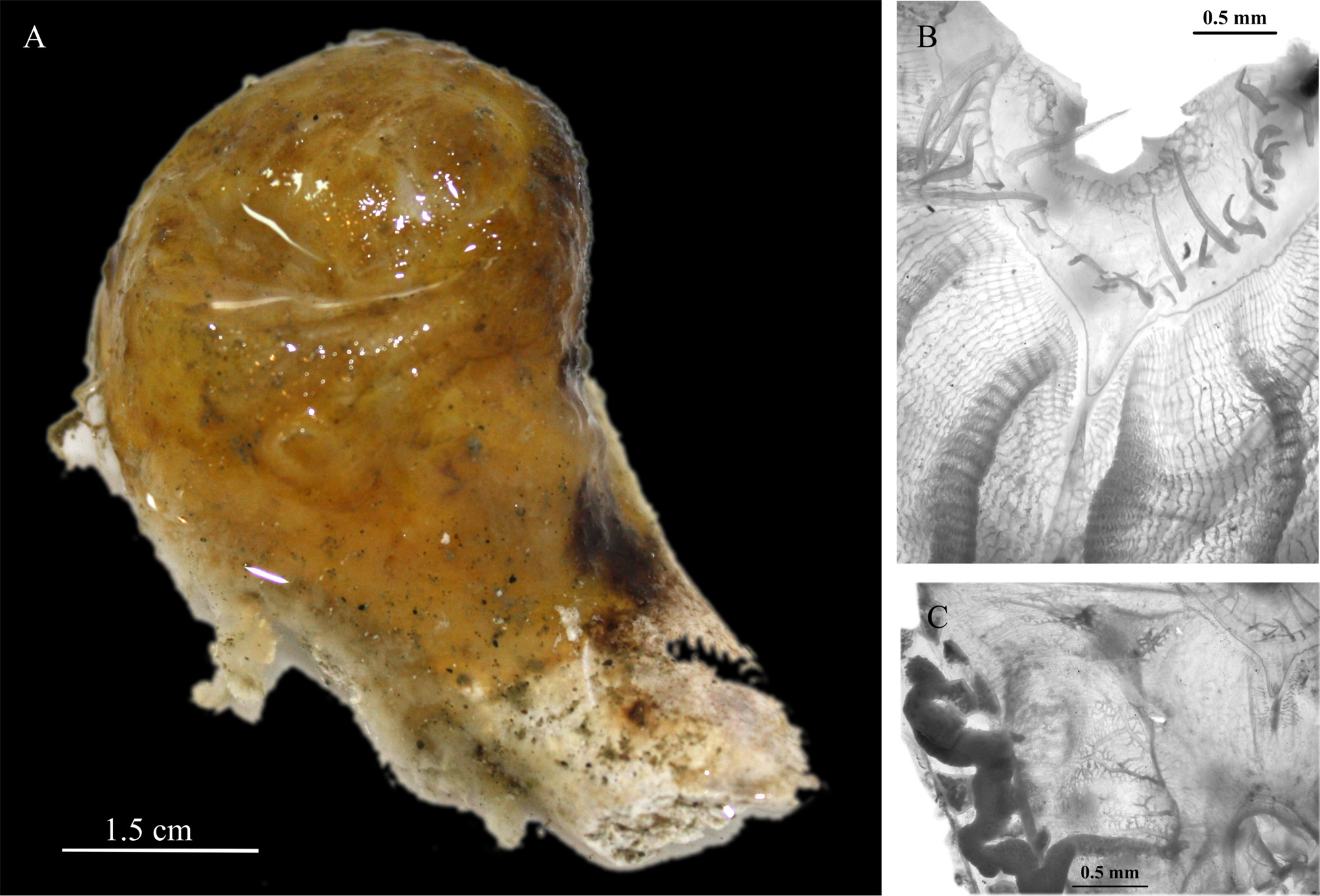
Remarks. Monniot C. (1978) and Monniot & Monniot (1983) showed the variability among the individuals of C. drygalskii. The present specimen from the Argentine Sea shows intermediate features in relation to specimens described from Kerguelen, Crozet and Antarctica (Table 5). However, it presents additional characteristics not cited for any previous descriptions, reaffirming the high variability of the species: The musculature on the right side is thick with a ramified pattern. The musculature on the left side is thin and mainly longitudinal; The longitudinal vessels are far less numerous, never exceeding 12 bars per fold; The margin of the oral velum presents a bubble-like texture. This is the first record of the species in the SW Atlantic Ocean. It is also the northernmost register outside Antarctic waters, increasing its known range of distribution.
Maggioni, Tamara, Taverna, Anabela, Reyna, Paola B., Alurralde, Gastón, Rimondino, Clara, Tatián, Marcos (2018): Deep-sea ascidians (Chordata, Tunicata) from the SW Atlantic: species richness with descriptions of two new species. Zootaxa 4526 (1): 1-28, DOI: 10.11646/zootaxa.4526.1.1
Material examined: One individual; trawl; - 38.0083 lat. - 54.4178 long. (station 11); 1200 m; 12 August 2012 (Figures 11 A – C). One individual 4.3 cm long and 2.4 cm wide was found attached to a piece of coral by its posterior margin. The tunic is wrinkled and tough, covered completely by fine translucent short hairs. When alive, the tunic is bright yellow. After conservation in formalin, it becomes duller and opaque, though it retains the yellowish hue (Fig. 11 A). Both apertures present thin orange rings at their outermost margins. 30 thin oral tentacles of two sizes are placed alternately in a single row (Fig. 11 B). A wide velum with an undulated margin covers them completely, reaching the oral aperture. A small U-shaped dorsal tubercle is placed at the bottom of a deep V formed by the prepharyngeal band. The dorsal lamina is a continuous and plain membrane with an undulated margin. The muscle fibers on the right side are thick and ramified (Fig. 11 C). The muscle fibers on the left side are thin and distributed in longitudinal rows. There are four branchial folds on each side; the most dorsal one being the thickest. The branchial formula on the right side is: E- 7 - 9 - 10 - 10 - 11 - 10 - 13 - 12 - 13 - DL. There are four elongated and simple stigmata per mesh. Fine parastigmatic vessels are also present. The stomach is elongated transversally. It presents eight folds on each side. The gut loop does not overpass the level of the endostyle. The border of the anus is simple. There is a wide cloacal velum covering completely the atrial aperture. The circumference from where the velum arises presents a series of tiny simple cloacal tentacles. There is one elongated and sinuous gonad on each side. The testis follicles lie beneath the ovaries. The vas deferens and gonoduct are long, almost reaching the base of the atrial opening. The numerous endocarps cover the half ventral side of the body and are located around the gonads and inside the gut loop.
Maggioni, Tamara, Taverna, Anabela, Reyna, Paola B., Alurralde, Gastón, Rimondino, Clara, Tatián, Marcos (2018): Deep-sea ascidians (Chordata, Tunicata) from the SW Atlantic: species richness with descriptions of two new species. Zootaxa 4526 (1): 1-28, DOI: 10.11646/zootaxa.4526.1.1
Export occurrence data
Darwin Core Archive (ZIP)
CLASSIFICATION
Taxonomic Classification Tree

NOMENCLATURE
Synonyms(1)
MULTIMEDIA
Media Files(1)
FIGURE 11. Cnemidocarpa drygalskii (Hartmeyer, 1911). A: individual; B: oral tentacles, dorsal tubercle, pre-pharyngeal band and branchial sac (part); C: detail of musculature (right side).
Imageimage/png© Maggioni, Tamara;Taverna, Anabela;Reyna, Paola B.;Alurralde, Gastón;Rimondino, Clara;Tatián, MarcosMaggioni, Tamara;Taverna, Anabela;Reyna, Paola B.;Alurralde, Gastón;Rimondino, Clara;Tatián, Marcos
IMAGES