
AnimaliaNot EvaluatedacceptedspeciesAccepted
Ceriodaphnia reticulata

Ceriodaphnia reticulata

(Jurine, 1820)

GBIF:154507997

0year

ABOUT

Descriptions(1)

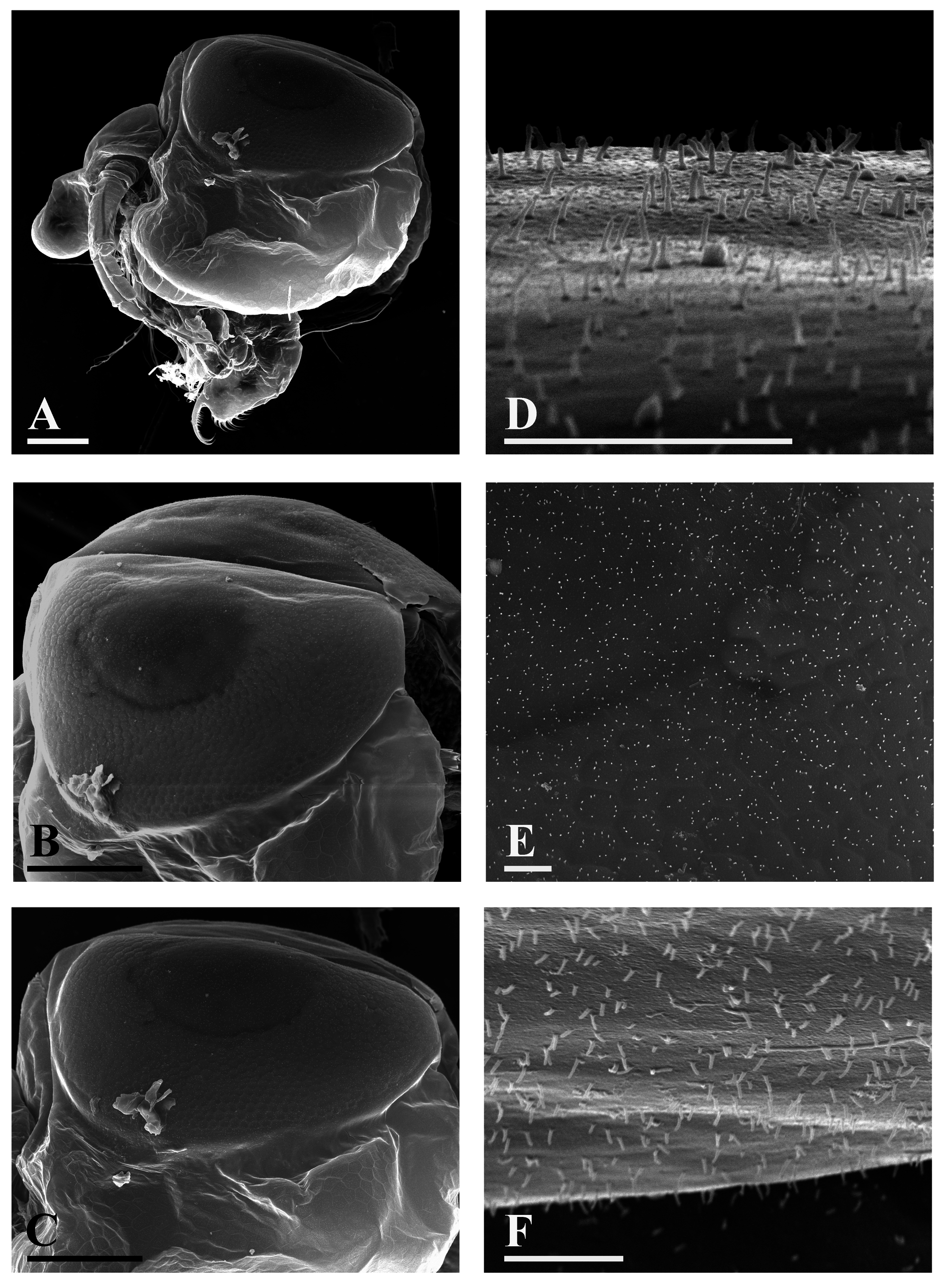
(Figs. 11 – 12) Length about 0.6 mm, width about 0.6 of length. In lateral view, ephippium almost semicircular; dorsal margin straight; ventral margin regularly curved from postero-ventral angle to antero-ventral portion which is almost perpendicular to dorsal margin (Figs. 11 A – C, 12 A – D). Paired latero-dorsal ridges absent (Fig. 11 B). A depression along dorsum separating two halves of ephippium well-visible (Fig. 11 B); sculpture of dorsal plate without any wrinkles, without any spots, covered by thin, minute filiform projections (Fig. 11 D). Egg locule very slightly extends laterally, without any wrinkles; in general smooth, but bearing minute tubercles (Figs. 11 E – F) too small to make the surface non-transparent (Figs. 12 D – F). Space between egg locule and dorsal margin with same sculpture. The rest of ephippium with obscure (under SEM) polygonal reticulation (Fig. 11 E) – external sign of air-spaces which are well visible under light microscope (Figs. 12 C – D), and sculpture as in egg locule. Ephippium with narrow ventral rim and obscure reticulation, lacking any tubercles (Figs. 11 C, 12 F).
Kotov, Alexey A., Ibragimova, Aisylu G., Neretina, Anna N. (2018): Identification of Ceriodaphnia Dana, 1853 (Crustacea: Cladocera) taxa from European Russia based on ephippial morphology. Zootaxa 4527 (1): 105-123, DOI: 10.11646/zootaxa.4527.1.9

Export occurrence data

Darwin Core Archive (ZIP)

CLASSIFICATION

Taxonomic Classification Tree

MULTIMEDIA

Media Files(2)

FIGURE 11. Ceriodaphnia reticulata (Jurine, 1820), ephippial female from Cherepovetskoe Reservoir, Vologda Area. A, lateral view of female. B, dorso-lateral view of ephippium. C, lateral view. D, fragment of ephippium dorsal portion, lateral view. E–F, sculpture of its central portion. Scale bars: 0.1 mm for A–C; 0.01 mm for D–F.

Imageimage/png© Kotov, Alexey A.;Ibragimova, Aisylu G.;Neretina, Anna N.Kotov, Alexey A.;Ibragimova, Aisylu G.;Neretina, Anna N.

FIGURE 12. Ceriodaphnia reticulata (Jurine, 1820), ephippial female from Cherepovetskoe Reservoir, Vologda Area. A–B, ephippial female with a single egg in ephippium, lateral view. C–D, opened ephippium. E–F, its dorsal and ventral portion. Scale bars: 0.1 mm.

Imageimage/png© Kotov, Alexey A.;Ibragimova, Aisylu G.;Neretina, Anna N.Kotov, Alexey A.;Ibragimova, Aisylu G.;Neretina, Anna N.

IMAGES

Gallery(2)

See Gallery

Occurrences with images

Source Information

Identification of Ceriodaphnia Dana, 1853 (Crustacea: Cladocera) taxa from European Russia based on ephippial morphology

checklist

This dataset contains the digitized treatments in Plazi based on the original journal article Kotov, Alexey A., Ibragimova, Aisylu G., Neretina, Anna N. (2018): Identification of Ceriodaphnia Dana, 1853 (Crustacea: Cladocera) taxa from European Russia based on ephippial morphology. Zootaxa 4527 (1): 105-123, DOI: 10.11646/zootaxa.4527.1.9

Abstract

Over the last decades significant progress was achieved in the investigations of water fleas (Crustacea: Cladocera). Their morphology, taxonomy and biogeography can be considered as well-studied, but still there are genera almost ignored by taxonomists. The genus Ceriodaphnia Dana, 1853 (Cladocera: Daphniidae) belongs to such problematic groups. From previous publications, it is obvious that different taxa from the genus have a very different morphology of their ephippia. Here, we study ephippium morphology in six common taxa from central-northern European Russia (Ceriodaphnia megops Sars, 1862; C. laticaudata P.E. Müller, 1867; C. rotunda (Straus, 1820) sensu Sars, 1862; C. quadrangula (O.F. Müller, 1785); C. pulchella Sars, 1862; C. reticulata (Jurine, 1820)) using light and scanning electron microscopy. A key to their identification based on ephippium morphology is proposed. This could be the starting point for revisions based on morphological characters with special emphasis on ephippia. Also, we propose that Ceriodaphnia taxa at least from the Holocene subfossil samples could be identified to the species group level according to structure of their ephippia. This approach to identification of Ceriodaphnia remains in sediments could improve palaeoecological reconstructions. However a global revision of the genus is still needed.

Kotov A A, Ibragimova A G, Neretina A N, plazi (2018). Identification of Ceriodaphnia Dana, 1853 (Crustacea: Cladocera) taxa from European Russia based on ephippial morphology. Plazi.org taxonomic treatments database. Checklist dataset https://doi.org/10.11646/zootaxa.4527.1.9 accessed via GBIF.org on 2026-06-17.

CC0Published 12/4/2018View dataset
GBIF Usage Key
154507997
Dataset Key
021796c0-cde1-4dfd-a83a-3b1c83ce466b
Origin
source
Backbone Key
2234854
Taxon ID
38745B7FFFA7FF90FF4ECB73FBDCC720.taxon
Last Crawled
6/10/2026
Last Interpreted
6/10/2026