
AnimaliaNot EvaluatedacceptedspeciesAccepted
Ascidia paratropa
(Huntsman, 1912)
GBIF:159168003
0year
ABOUT
Descriptions(1)
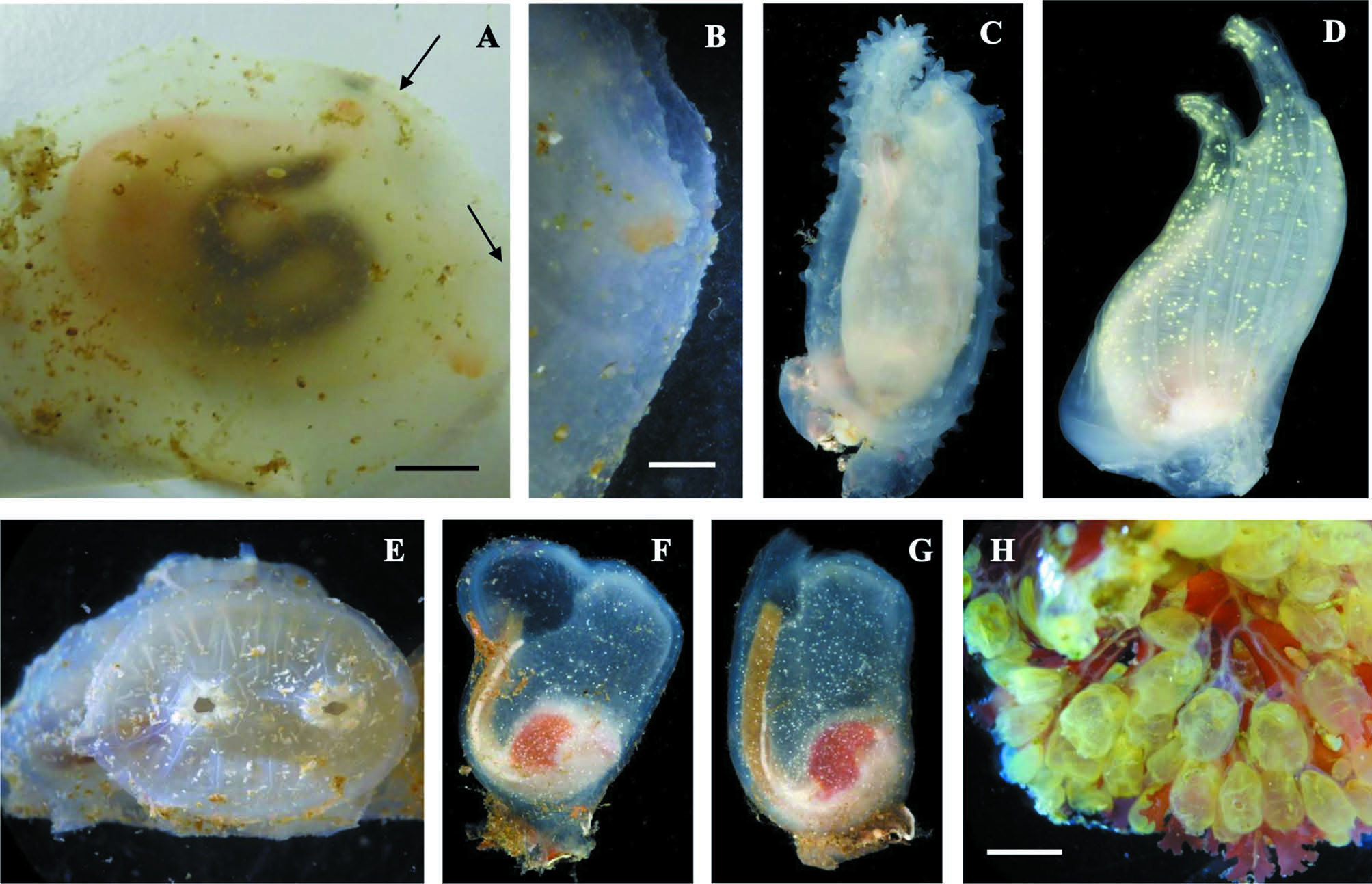
Figure 10 C IHAK 55 BHAK 1731 UF 2542. Kwakshua Petroglyph Cliff, vertical rock wall high current. Scuba, 17 – 20 m. One specimen. This species can be up to 11 cm in length and is thought to have a long life span. It is distinguished by its large columnar size and the clear colorless thick tunic covered with short tubercles. Its growth form is upright, attached only at the posterior end. Both siphons are at the anterior end. For detailed descriptions see Huntsman (1912 a, b as Ascidiopsis paratropa) and Van Name (1945). This widely distributed but somewhat rare native of the west coast of N. America has a distribution from Alaska to central California (Van Name 1945; Abbott & Newberry 1980; Lamb & Hanby 2005).
Lambert, Gretchen (2019): The Ascidiacea collected during the 2017 British Columbia Hakai MarineGEO BioBlitz. Zootaxa 4657 (3): 401-436, DOI: 10.11646/zootaxa.4657.3.1
Export occurrence data
Darwin Core Archive (ZIP)
CLASSIFICATION
Taxonomic Classification Tree

MULTIMEDIA
Media Files(1)
FIGURE 10. Figure 10. Phlebobranchia. A, B: Ascidia columbiana. A: whole animal right side, anterior on the right. Arrows indicate oral siphon opening (on right) and atrial opening above. B: anterior end around oral opening showing tunic papillations. C: Ascidia paratropa 9 cm in length; D: Ciona savignyi 6.2 cm in length; E: Chelyosoma productum 1.5 cm in diameter; F: Corella inflata about 3 cm in length; G: Corella willmeriana about 3 cm in length; H: Perophora annectens. Scale bars: A, 1.5 cm; B, 2 mm; H, 4 mm. C, D, F, G photos by G. Paulay.
Imageimage/png© Lambert, GretchenLambert, Gretchen
IMAGES