
AnimaliaacceptedfamilyAccepted
Ceratopsidae

Ceratopsidae

Marsh, 1888

GBIF:159397298

0year

ABOUT

Descriptions(2)

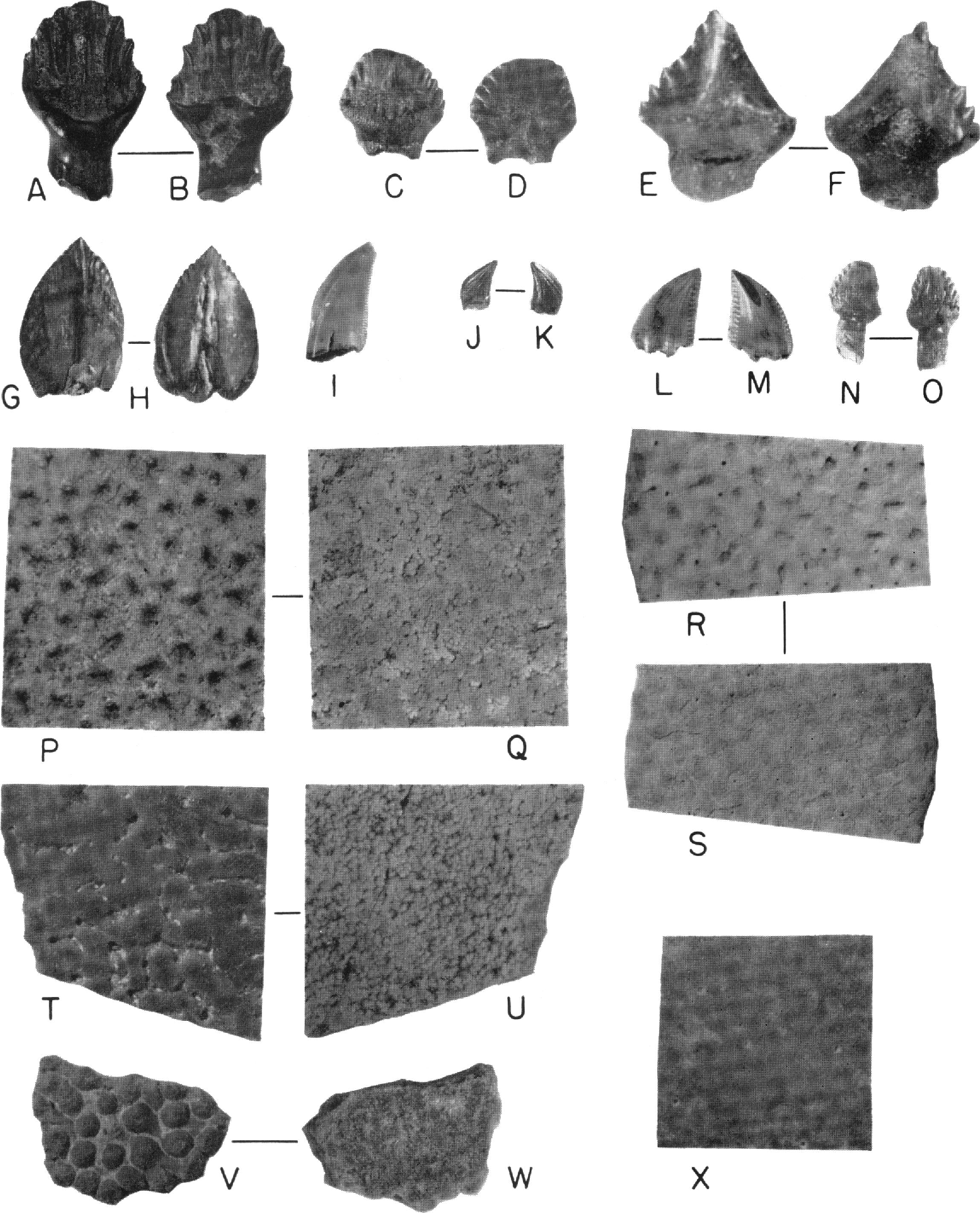
Figure 9 G, H
Sahni, Ashok (1972): The vertebrate Fauna of the Judith River formation, Montana. Bulletin of the American Museum of Natural History 147 (6): 319-416, DOI: 10.5281/zenodo.3382461, Hdl: http://hdl.handle.net/2246/1099
Although worn ceratopsian teeth form a sizable portion of the ornithischian remains, they cannot be differentiated at the generic level. Unworn teeth indicate that at least two genera of ceratopsians may have been present. The ceratopsians of the Judith River Formation have been discussed by, among others, Lull and Hatcher (1907) and Lull (1933). Based mostly on fragmentary material, a number of species of Monoclonius and Ceratops, the only two genera known from the formation, have been described. Brachyceratops montanensis was described by Gilmore (1917) from the Two Medicine Formation of Montana. The Oldman Formation of Alberta has produced better known forms such as Eoceratops, Brachyceratops, Monoclonius, Centrosaurus, Styracosaurus, Chasmosaurus, and Anchiceratops (Sternberg, 1940 a; Langston, 1965, p. 4). ~~~~~~~~~~~~~~~~~~~~~~~~~~~~ 3. An unworn tooth, AMNH 8540, from Clambank Hollow, has a sharply pointed apex (fig. 9 G, H). The sides of the crown are serrated toward the apex, and a strong median keel must have been present but it is broken away in the specimen. A much larger tooth, AMNH 8541, also from Clambank Hollow, with rougher ornamentation, probably belongs to a distinct genus.
Sahni, Ashok (1972): The vertebrate Fauna of the Judith River formation, Montana. Bulletin of the American Museum of Natural History 147 (6): 319-416, DOI: 10.5281/zenodo.3382461, Hdl: http://hdl.handle.net/2246/1099

Export occurrence data

Darwin Core Archive (ZIP)

CLASSIFICATION

Taxonomic Classification Tree

MULTIMEDIA

Media Files(1)

FIG. 9. A, B. Edmontonia lorngiceps, AMNH 8543, lateral views of an isolated tooth, x 1. C, D. Palaeoscincus costatus, AMNH 8542, lateral views of an isolated tooth, x 12. E, F. Thescelosaurus cf. T. neglectus, AMNH 8536, lateral views of an isolated tooth, x 10. G, H. Ceratopsidae, AMNH 8540, lateral views of an unworn tooth, x 12. I. Dromaeosaurus albertensis, AMNH 8516, lateral view of an isolated tooth, x 12. J, K. Paronychodon lacustris, AMNH 98523, lateral views of an isolated tooth, x 12. L, M. Troodon formosus, AMNH 8518, lateral ~~~~~~~~~~~~~~~~~~~~~~~~~~~~3. views of an isolated tooth, x 12. N. 0,?Stegoceras validus, AMNH 8530, lateral views of an isolated tooth, x 1-. Dinosaur egg shell fragments. P. AMNH 8545, external view of shell (Class B). Q. Internal view. Both x 10. R. AMNH 8546, external view of shell (Class B). S. Internal view. Both x 10. T. AMNH 8548, external view of shell (Class C). U. Internal view. Both x 10. V. AMNH 8547, external view of shell (Class B). W. In- ternal view. Both x 10. X. AMNH 8544, external view of shell (Class A), x 10.

Imageimage/png© Sahni, AshokSahni, Ashok

IMAGES

Gallery(1)

See Gallery

Occurrences with images

Source Information

The vertebrate Fauna of the Judith River formation, Montana

checklist

This dataset contains the digitized treatments in Plazi based on the original journal article Sahni, Ashok (1972): The vertebrate Fauna of the Judith River formation, Montana. Bulletin of the American Museum of Natural History 147 (6): 319-416, DOI: 10.5281/zenodo.3382461, Hdl: http://hdl.handle.net/2246/1099

GEOLOGIC INVESTIGATION of the Late Cretaceous Judith River Formation in the area just north of the Judith River on the Missouri River in north-central Montana has resulted in the discovery of varied vertebrate forms. The beds are mainly freshwater continental deposits consisting of crossbedded channel sandstones, gray siltstones, and carbonaceous shales with occasional seams of lignitic coal. The stratigraphic sequence consists of the Marias River Shale overlain by the Eagle, Claggett, Judith River, and Bearpaw formations. The last four constitute the Montana Group. The Judith River Formation is Campanian in age as determined by its position between the fossiliferous marine Claggett and Bearpaw shales.

The fauna was obtained from the upper 50 feet of the formation. The bone concentration in the productive sandstone is the result of size sorting leading to underrepresentation of the larger dinosaurs. Three orders of mammals are represented, the Eutheria by a single genus, the Allotheria by five, and the Metatheria by at least three genera. Teiid and parasaniwid lizards are frequent. Only a fraction of the large number of described dinosaur genera, however, is represented in the collection by isolated teeth. Fish and amphibians form a sizable portion of the fauna.

Vertebrates from the Judith River Formation are more primitive than, but generally similar to, later Maestrichtian species. The mammals differ from their descendants in the Lance Formation at the species level. The community structure and the paleoecology of the fauna of the Judith River Formation resemble those of the Lance Formation. The greatest difference between the two communities is the greater variety of dinosaurs in the earlier formation.

Sahni A, plazi (1972). The vertebrate Fauna of the Judith River formation, Montana. Plazi.org taxonomic treatments database. Checklist dataset https://doi.org/10.5281/zenodo.3382461 accessed via GBIF.org on 2026-06-15.

CC0Published 12/31/1972View dataset
GBIF Usage Key
159397298
Dataset Key
fd03f669-c046-46cd-861a-6bf56b7fc989
Origin
source
Backbone Key
3238858
Taxon ID
1A7187CFFFC61773FAB8F60DE1685F0C.taxon
Last Crawled
6/10/2026
Last Interpreted
6/10/2026