
AnimaliaNot EvaluatedacceptedspeciesAccepted
Didemnum psammatodes
(Sluiter, 1895)
GBIF:179906416
0year
ABOUT
Descriptions(1)
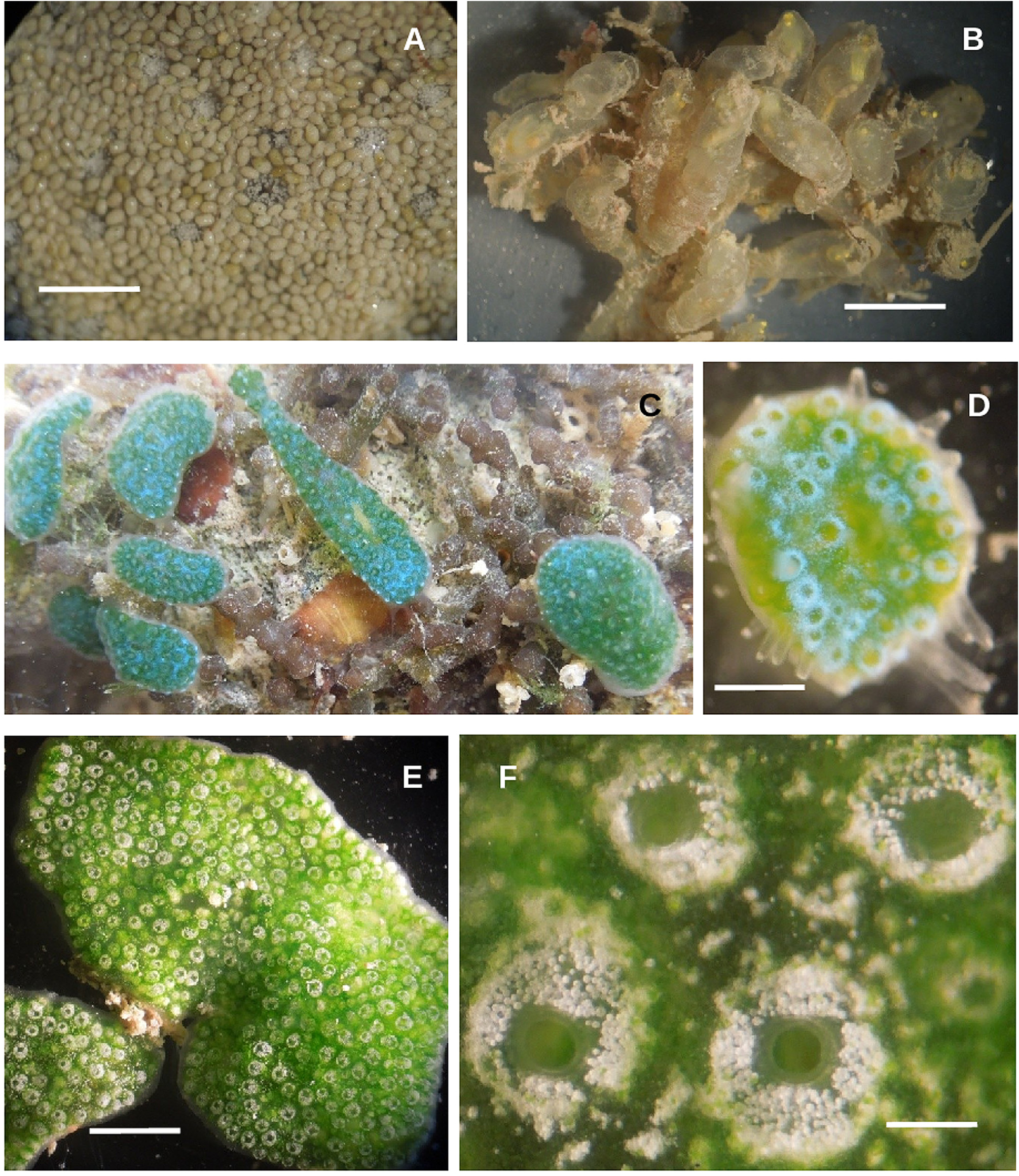
Figure 2 A # 0151 A; # 1168 b; # 3850 C, more spicules than usual; # IT 65; # DR 70; # IT 88; # SD 84, no sample taken; # IT 94, Cyrene patch reef, not collected. Distinguished by the brownish-grey color of the tunic due to the presence of dense fecal pellets. The spicules are small and sparse, restricted to a narrow region around the oral siphons (small white clumps in photo). They tend to dissolve easily in fixatives even though buffered. Occurs in all tropical waters worldwide including China, Indonesia, Philippines, New Caledonia, Papua New Guinea, Fiji, Palau, Tonga, Guam, Red Sea, Persian Gulf, East & South Africa, Australia, Ifaluk, Japan, Hawaii, Guadeloupe, SE Brazil, Panama (Caribbean), French Guiana, Gulf of Mexico, Florida. Detailed references with figures: Tokioka (1953 as D. fuscus, 1967 as D. dorotuba), Eldredge (1967), Monniot F. (1983), Kott (2001), Mohadassi et al. (2019). Other references: Kott (1981, 1998), Goodbody (1984), Monniot C. & Monniot F. (1994), Monniot F. (1995), Rocha & Monniot (1995), Monniot F. & Monniot C. (1996, 2001), Monniot C. et al. (2001), Lambert (2003), Rocha et al. (2005), Monniot F. (2016).
Lambert, Gretchen, Lee, Serina Siew-Chen, Teo, Serena Lay-Ming (2021): Ascidians collected during the 2013 Singapore Strait International Marine Biodiversity Workshop. Zootaxa 4933 (1): 1-38, DOI: 10.11646/zootaxa.4933.1.1
Export occurrence data
Darwin Core Archive (ZIP)
CLASSIFICATION
Taxonomic Classification Tree

MULTIMEDIA
Media Files(1)
FIGURE 2. A: Didemnum psammatodes; B: Euherdmania cf. digitata; C, D: Diplosoma simile; E, F: Lissoclinum punctatum. Scale bars: A, 1 mm; B, 6 mm; D, 5 mm; E, 5 mm; F, 0.4 mm.
Imageimage/png© Lambert, Gretchen;Lee, Serina Siew-Chen;Teo, Serena Lay-MingLambert, Gretchen;Lee, Serina Siew-Chen;Teo, Serena Lay-Ming
IMAGES