
AnimaliaNot EvaluatedacceptedspeciesAccepted
Palaeovaranus lismonimenos

Palaeovaranus lismonimenos

Georgalis, Čerňanský & Klembara, 2021

GBIF:181601113

0year

ABOUT

Descriptions(8)

(Figs 37 B, D; 38 - 40; 41 B; 42; 43) urn: lsid: zoobank. org: act: 3 C 906259 - DAB 5 - 4 B 97 - A 1 BB- 7860695 A 76 B 8
Georgalis, Georgios L., Čerňanský, Andrej, Klembara, Jozef (2021): Osteological atlas of new lizards from the Phosphorites du Quercy (France), based on historical, forgotten, fossil material. Geodiversitas 43 (9): 219-293, DOI: 10.5252/geodiversitas2021v43a9
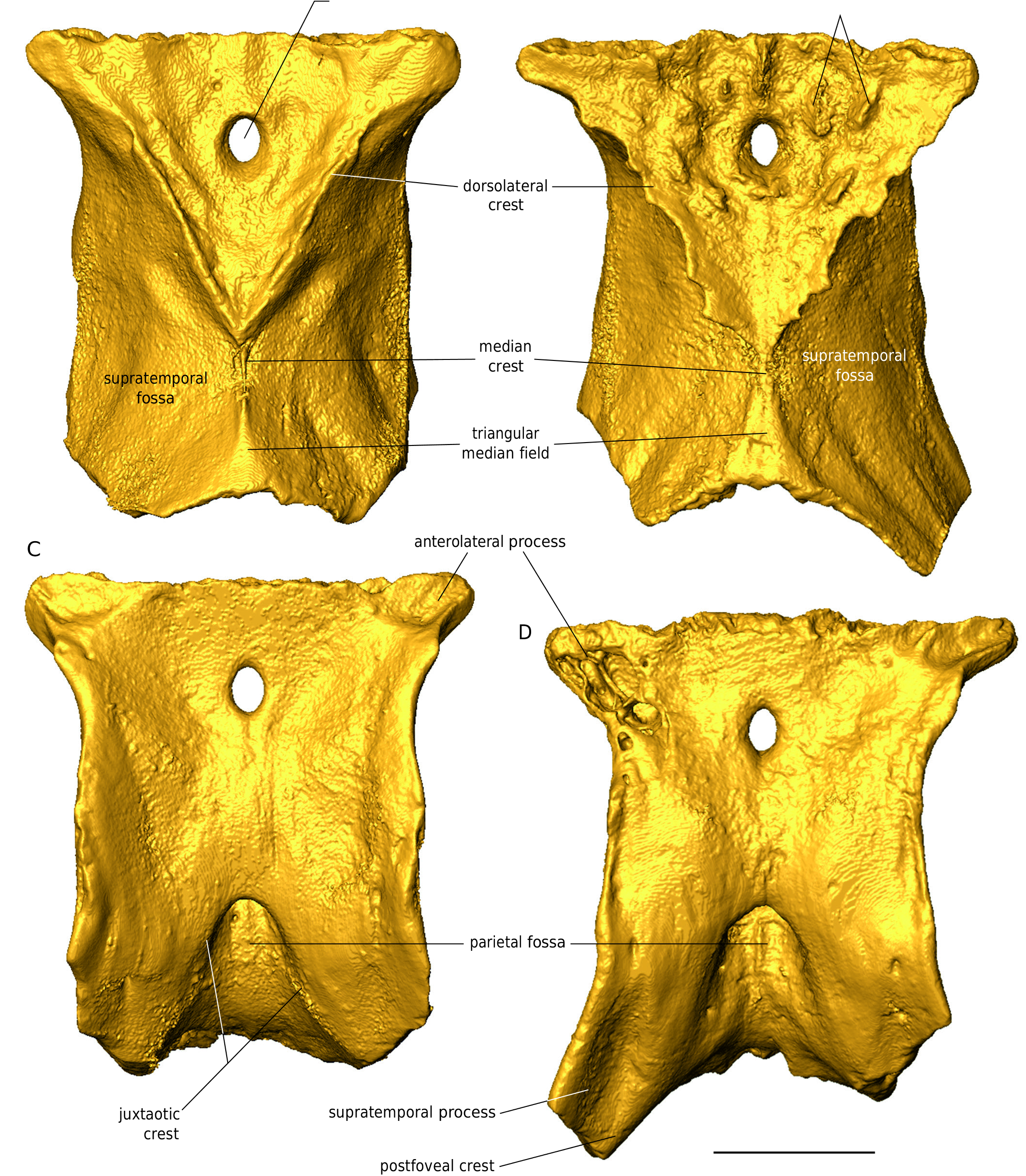
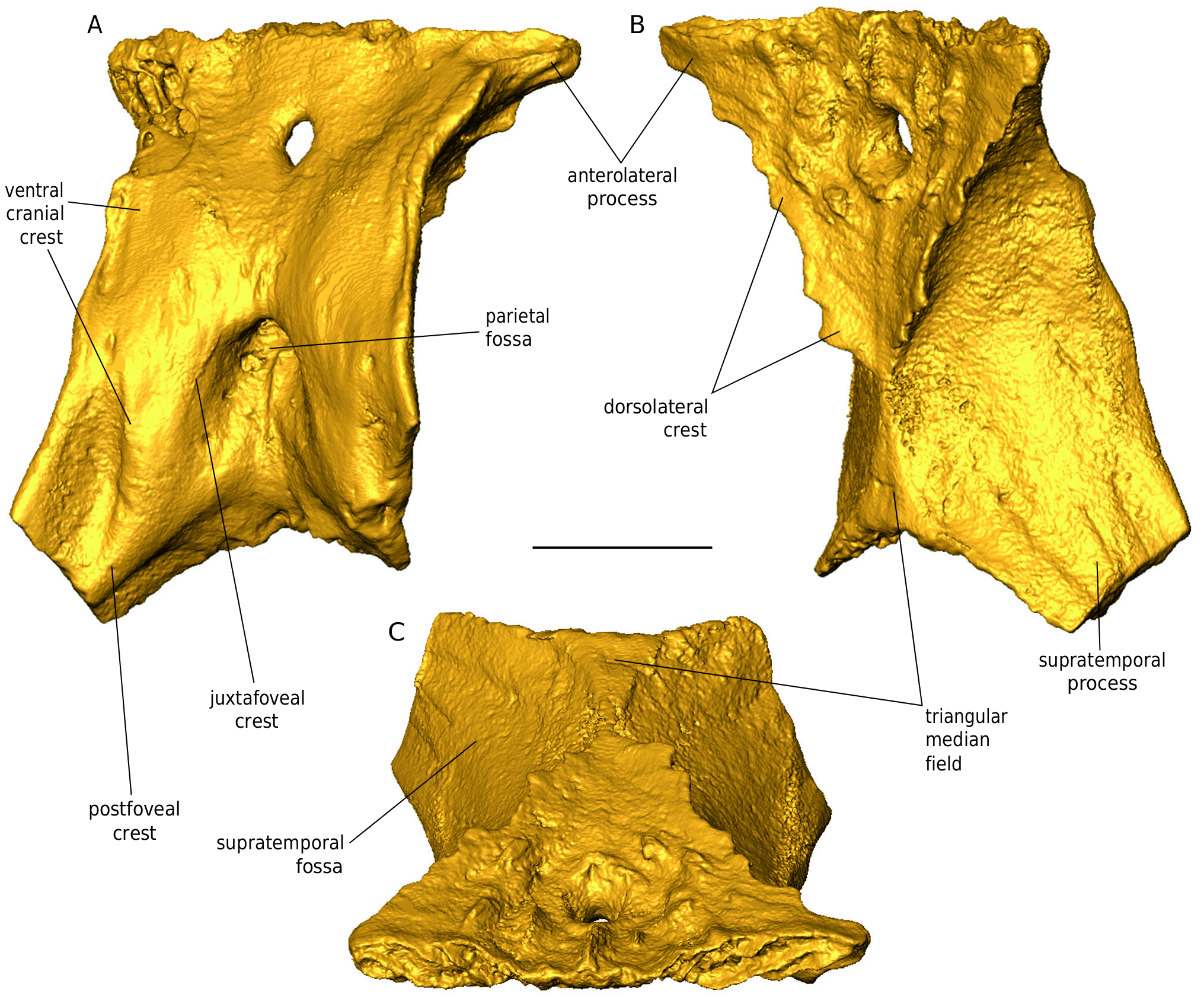
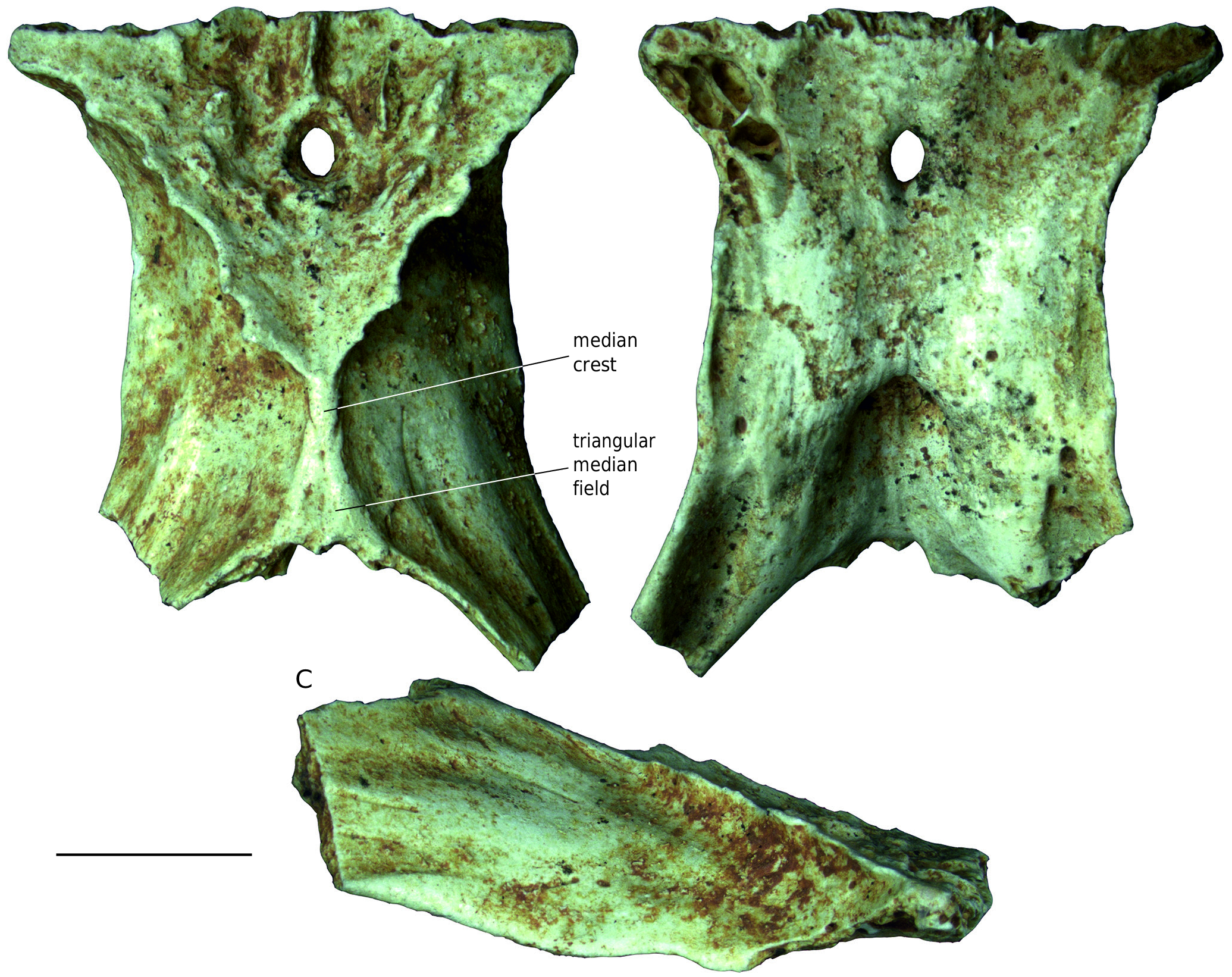
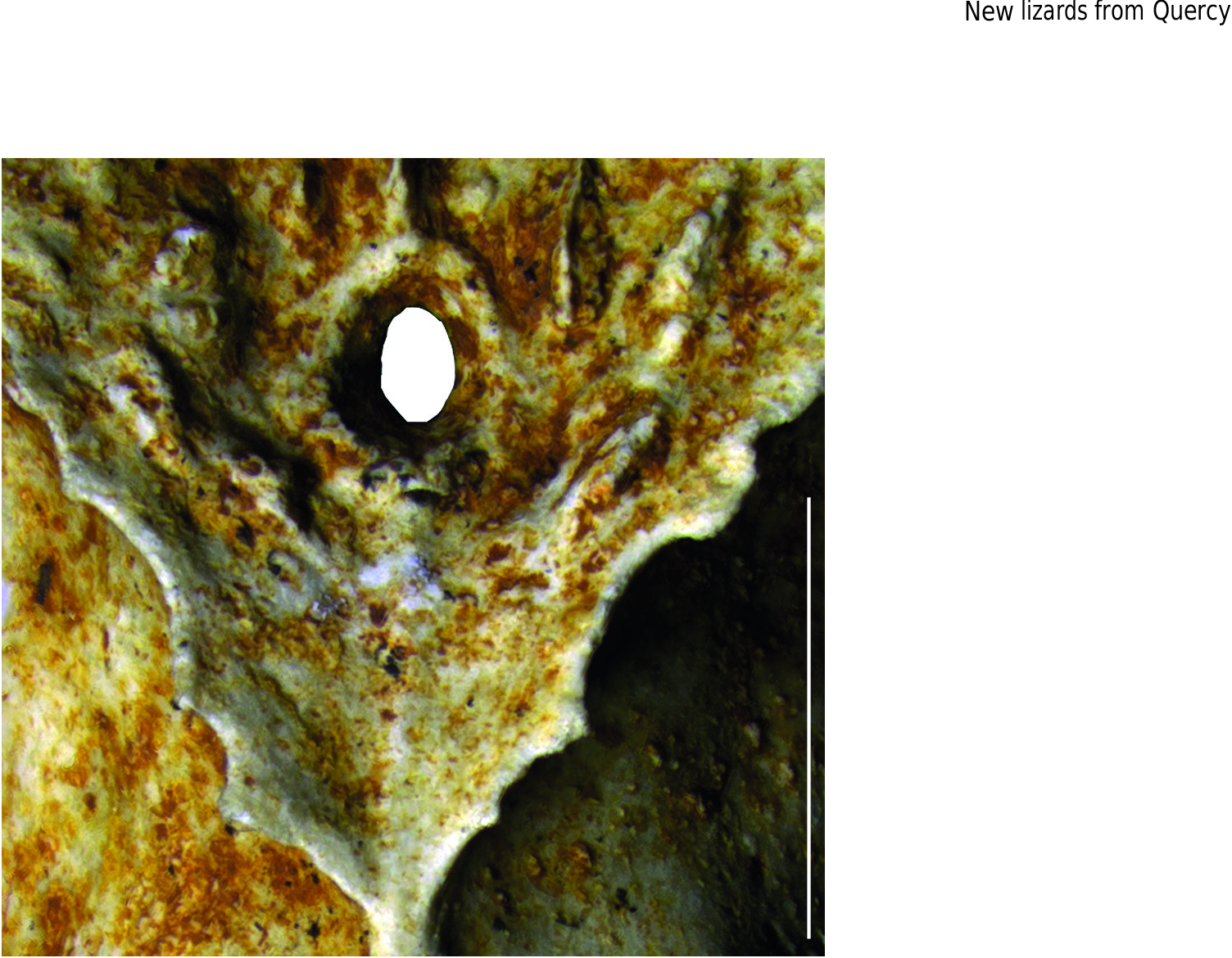
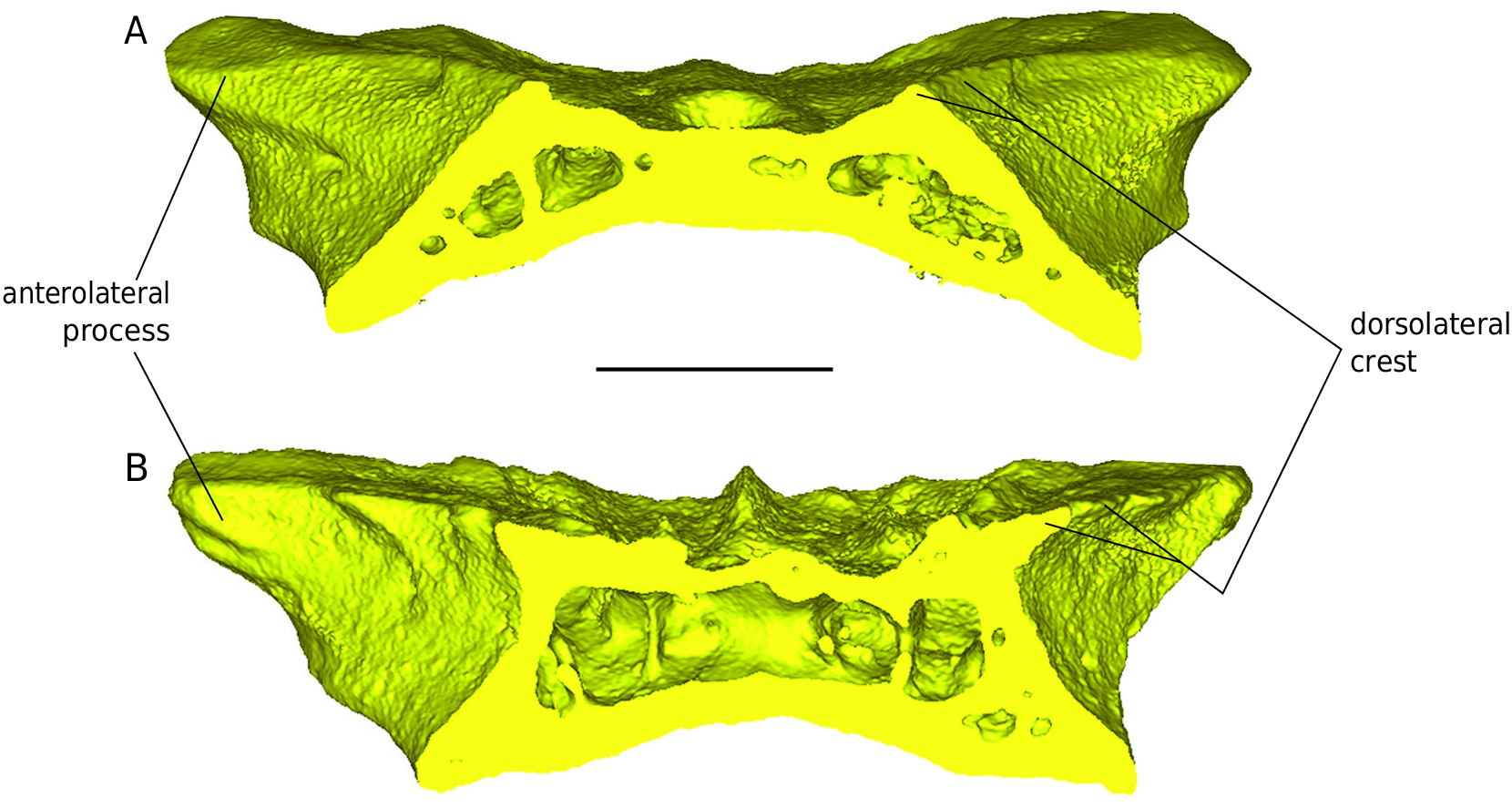
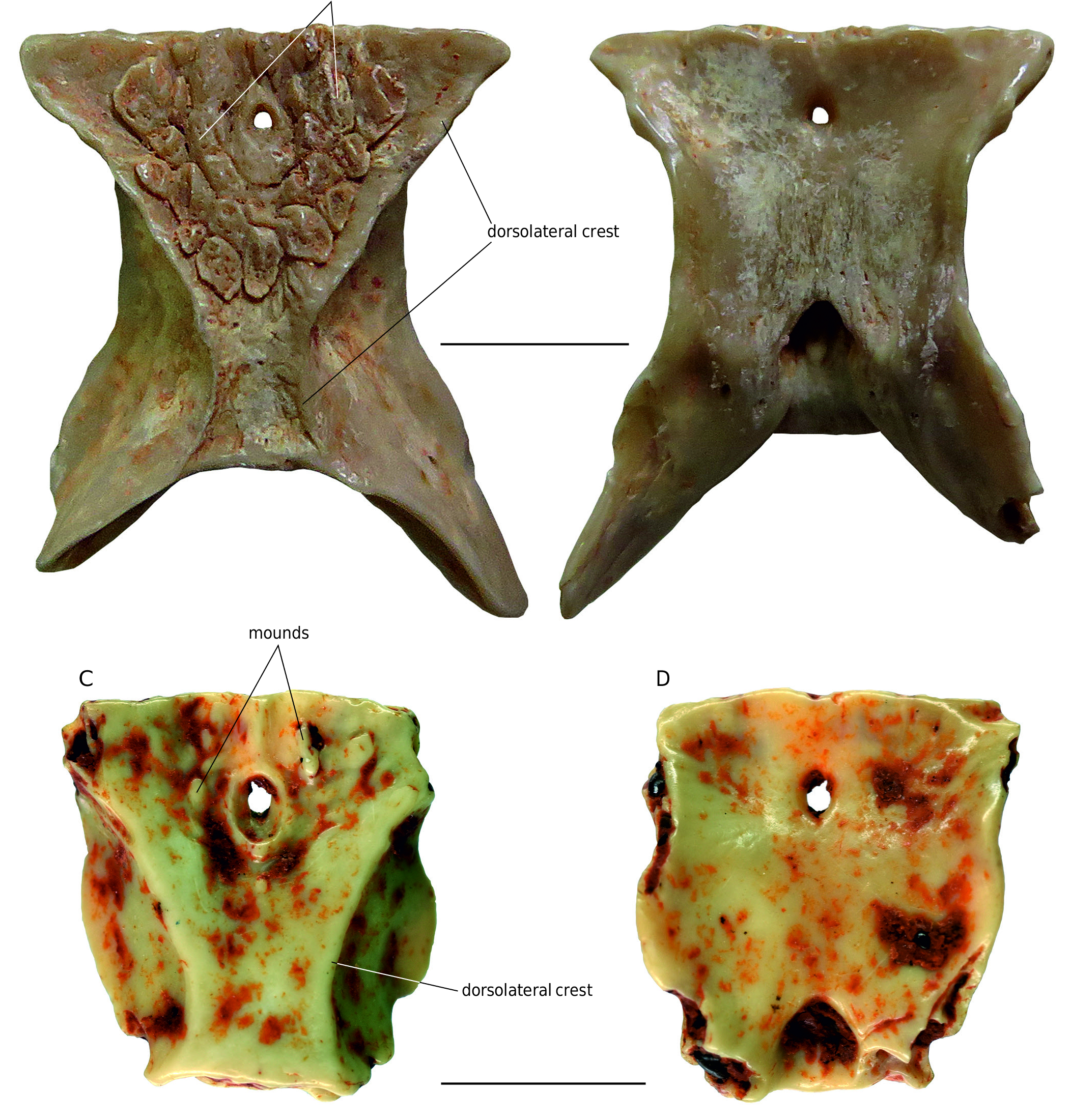
DESCRIPTION Holotype NHMW 2019 / 0047 / 0001 (Figs 37 B, D; 38 - 40; 41 B) The holotype NHMW 2019 / 0047 / 0001 has a length of its parietal table 14.5 mm (measured in mid-line). The parietal table is anteroposteriorly elongate (Figs 37 B; 38 B; 39 A). The anterolateral process is slender. The dorsolateral crest is distinctly developed. It extends posterolaterally and dorsally. Its margin is distinctly crenulated. The crenulation consists of several more or less shallow and long notches. The anterior end of the dorsolateral crest reaches the tip of the anterolateral process. The dorsolateral crests and the anterior margin of the parietal limit a triangular field. Its deepest portion is pierced by the parietal foramen. The foramen lies in about the midlength of the anterior half of the parietal table. The surface of the triangular field is covered by small, but distinct mounds, most of them bearing the longitudinal crests on their surfaces. The median crest is short and its posterior pointed portion fits between the two anteriorly pointed anterolateral processes of the triangular median field (Fig. 39 A). The supratemporal fossa is large and is inclined ventrolaterally. The ventral surface is smooth (Figs 37 D; 38 A; 39 B). The anterior margin of the parietal fossa lies anterior to the level of the junctions of the anterolateral margins of the supratemporal processes with the parietal plate. The ventral cranial crest is rather low and runs closely medially to the lateral margin of the parietal table. The postfoveal crest passes along the medial margin of the root portion of the supratemporal process (Fig. 38 A).
Georgalis, Georgios L., Čerňanský, Andrej, Klembara, Jozef (2021): Osteological atlas of new lizards from the Phosphorites du Quercy (France), based on historical, forgotten, fossil material. Geodiversitas 43 (9): 219-293, DOI: 10.5252/geodiversitas2021v43a9
DIAGNOSIS. — The parietal of Palaeovaranus lismonimenos n. sp. differs from that of Palaeovaranus cayluxi by the following distinguished features and the combination of features: 1) the dorsolateral crests are rather distinct, extending posterolaterally and dorsally, and their margins are distinctly crenulated; 2) the median crest is short (shorter than the length of the median triangular field measured in the median plane) and its posterior tip fits between the anterolateral processes of the triangular median field; 3) the anterior ends of the dorsolateral crests extend to the tips of the anterolateral processes; 4) the ornamentation of the parietal consists of small, more or less densely arranged mounds having more or less distinctly developed crest; and 5) the anterior margin of the parietal fossa lies anterior to the level of the junctions of the anterolateral margins of the supratemporal processes with the parietal plate. REFERRED SPECIMENS. — A complete parietal (MNHN. F. QU 17177) and a partial parietal (UM BFI 1873), both from juvenile individuals. Tentatively also, two frontals (MNHN. F. QU 17175 and UM PRA 8).
Georgalis, Georgios L., Čerňanský, Andrej, Klembara, Jozef (2021): Osteological atlas of new lizards from the Phosphorites du Quercy (France), based on historical, forgotten, fossil material. Geodiversitas 43 (9): 219-293, DOI: 10.5252/geodiversitas2021v43a9
REMARKS The two smaller specimens MNHN. F. QU 17177 and UM BFI 1873 (Fig. 42), which we herein assign to Palaeovaranus lismonimenos n. sp. were originally described by Augé (2005) who also provided drawings of both (his Figs 194 and 195 respectively) and referred them to as “ Necrosaurus eucarinatus ” (see Discussion below about the status of this name). MNHN. F. QU 17177 has a length of the parietal table 11.5 mm (measured in the mid-line) (Fig. 42 A, B); thus, it is smaller than the holotype parietal NHMW 2019 / 0047 / 0001 (14.5 mm). The right supratemporal process is completely preserved in MNHN. F. QU 17177; it extends posterolaterally (Fig. 42 A, B). The dorsolateral crests of the specimen MNHN. F. QU 17177 bear slightly developed crenulations and do not meet in the mid-line, as is also the case in the still smaller specimen UM BFI 1873 (Fig. 42 C, D). In this smallest specimen UM BFI 1873, the ornamentation is weakly developed and the dorsolateral crests are still more distantly placed one to another than in MNHN. F. QU 17177. We may interpret this here by the hypothesis that during ontogenetic growth, the dorsolateral crests move one to another and finally fuse together in about their posterior portions to form a median crest. As a consequence, large anterior and small posterior median triangular fields are produced (Fig. 42). If so, the anatomy of three different size stages presented and discussed herein represent the first evidence of the medial movement of the dorsolateral crests to their final fusion in the median plane in adult specimens. We suppose the same process of the origin of the similar morphology of the dorsal surface of parietal in Palaeovaranus cayluxi. Although there is no palaeovaranid frontal material in the NHMW collection, there have been previously described such elements from the Phosphorites du Quercy (Fig. 43). Augé (2005) described the frontal MNHN. F. QU 17175 as belonging to “ Necrosaurus cayluxi ” and that of the specimen UM PRA 8 as “ Necrosaurus eucarinatus ”. In contrast to Palaeovaranus cayluxi, however, both these frontals have the same type of mounds as those present in the dorsal surface of the parietals of Palaeovaranus lismonimenos n. sp. (Fig. 43). To the contrary, the dorsal surfaces of all three known parietals of Palaeovaranus cayluxi have no such type of ornamentation, as that exhibited in Palaeovaranus lismonimenos n. sp. Thus, it is highly probable that these two frontals belong to Palaeovaranus lismonimenos n. sp. and we accordingly, tentatively assign them to our new species.
Georgalis, Georgios L., Čerňanský, Andrej, Klembara, Jozef (2021): Osteological atlas of new lizards from the Phosphorites du Quercy (France), based on historical, forgotten, fossil material. Geodiversitas 43 (9): 219-293, DOI: 10.5252/geodiversitas2021v43a9
DISTRIBUTION. — The holotype parietal NHMW 2019 / 0047 / 0001, the referred parietal MNHN. F. QU 17177, and the tentatively referred frontal MNHN. F. QU 17175, all originate from impre- cisely known localities in the Department of Lot or that of Tarnet-Garonne, within the Phosphorites du Quercy. The referred parietal UM BFI 1873 originates from the late Eocene (MP 17) of Bouffie (= La Bouffie), Quercy (Department of Lot), while the tentatively referred frontal UM PRA 8 originates from the coeval, late Eocene (MP 17) locality of Les Pradigues, also in Quercy (but in the Department of Tarn-et-Garonne). Accordingly, we here sug- gest that the specimens with imprecise locality date (including the holotype), originate also from late Eocene locality (ies), potentially also around the MP 17 stage.
Georgalis, Georgios L., Čerňanský, Andrej, Klembara, Jozef (2021): Osteological atlas of new lizards from the Phosphorites du Quercy (France), based on historical, forgotten, fossil material. Geodiversitas 43 (9): 219-293, DOI: 10.5252/geodiversitas2021v43a9
ETYMOLOGY. — The new name originates from the Greek word “ λησμονημένος ” (“ lismonimenos ”) meaning “ forgotten ”, alluding to the fact that the holotype specimen was forgotten and unnoticed inside a museum drawer for more than a century.
Georgalis, Georgios L., Čerňanský, Andrej, Klembara, Jozef (2021): Osteological atlas of new lizards from the Phosphorites du Quercy (France), based on historical, forgotten, fossil material. Geodiversitas 43 (9): 219-293, DOI: 10.5252/geodiversitas2021v43a9
HOLOTYPE. — An almost complete parietal (NHMW 2019 / 0047 / 0001).
Georgalis, Georgios L., Čerňanský, Andrej, Klembara, Jozef (2021): Osteological atlas of new lizards from the Phosphorites du Quercy (France), based on historical, forgotten, fossil material. Geodiversitas 43 (9): 219-293, DOI: 10.5252/geodiversitas2021v43a9
TYPE LOCALITY. — Imprecisely known locality, Phosphorites du Quercy, Department of Lot or Tarn-et-Garonne, Occitanie, southern France; probably late Eocene, around MP 17 (see Distribution below).
Georgalis, Georgios L., Čerňanský, Andrej, Klembara, Jozef (2021): Osteological atlas of new lizards from the Phosphorites du Quercy (France), based on historical, forgotten, fossil material. Geodiversitas 43 (9): 219-293, DOI: 10.5252/geodiversitas2021v43a9

Export occurrence data

Darwin Core Archive (ZIP)

CLASSIFICATION

Taxonomic Classification Tree

AnimaliaChordataReptiliaPalaeovaranusPalaeovaranus lismonimenos

MULTIMEDIA

Media Files(7)

FIG. 37. — Palaeovaranus cayluxi Zittel, 1887-1890 and Palaeovaranus lismonimenos n. sp. A, C, virtual 3D models of parietal NHMW 2019/0048/0001 of Palaeovaranus cayluxi in dorsal (A) and ventral (C) views; B, D, virtual 3D models of the holotype parietal NHMW 2019/0047/0001 of Palaeovaranus lismonimenos n. sp. in dorsal (B) and ventral (D) views. Scale bar: 5 mm.
Imageimage/png© Georgalis, Georgios L.;Čerňanský, Andrej;Klembara, JozefGeorgalis, Georgios L.;Čerňanský, Andrej;Klembara, Jozef

FIG. 38. — Palaeovaranus lismonimenos n. sp. Virtual 3D models of the holotype parietal NHMW 2019/0047/0001 of Palaeovaranus lismonimenos n. sp. in posteroventral (A), dorsolateral (B), and anterodorsal (C) views. Scale bar: 5 mm.
Imageimage/png© Georgalis, Georgios L.;Čerňanský, Andrej;Klembara, JozefGeorgalis, Georgios L.;Čerňanský, Andrej;Klembara, Jozef

FIG. 39. — Palaeovaranus lismonimenos n. sp. Photographs of the holotype parietal NHMW 2019/0047/0001 in dorsal (A), ventral (B), and right lateral (C) views. Scale bar: 5 mm.
Imageimage/png© Georgalis, Georgios L.;Čerňanský, Andrej;Klembara, JozefGeorgalis, Georgios L.;Čerňanský, Andrej;Klembara, Jozef

FIG. 40. — Palaeovaranus lismonimenos n. sp. Close up photograph of the sculpturing pattern of the holotype parietal NHMW 2019/0047/0001 and the crenula- tion of its dorsolateral crests in dorsal view. Scale bar: 5 mm.
Imageimage/png© Georgalis, Georgios L.;Čerňanský, Andrej;Klembara, JozefGeorgalis, Georgios L.;Čerňanský, Andrej;Klembara, Jozef

FIG. 41. — Palaeovaranus cayluxi Zittel, 1887-1890 and Palaeovaranus lismonimenos n. sp. Transverse sections of 3D models of parietals. A, parietal NHMW 2019/0048/0001 of Palaeovaranus cayluxi; B, holotype parietal NHMW 2019/0047/0001 of Palaeovaranus lismonimenos n. sp. Scale bar: 3 mm.
Imageimage/png© Georgalis, Georgios L.;Čerňanský, Andrej;Klembara, JozefGeorgalis, Georgios L.;Čerňanský, Andrej;Klembara, Jozef

FIG. 42. — Palaeovaranus lismonimenos n. sp. Parietals of juvenile individuals.A, B, photographs of parietal MNHN.F.QU17177 in dorsal (A) and ventral (B) views; C, D, photographs of parietal UM BFI 1873 in dorsal (C) and ventral (D) views. Both these specimens originally appeared as drawings in Augé (2005: Figs 194 and 195 respectively). Scale bars: 5 mm.

Imageimage/png© Georgalis, Georgios L.;Čerňanský, Andrej;Klembara, JozefGeorgalis, Georgios L.;Čerňanský, Andrej;Klembara, Jozef

IMAGES

Gallery(7)

See Gallery

Occurrences with images

Source Information

Osteological atlas of new lizards from the Phosphorites du Quercy (France), based on historical, forgotten, fossil material

checklist

This dataset contains the digitized treatments in Plazi based on the original journal article Georgalis, Georgios L., Čerňanský, Andrej, Klembara, Jozef (2021): Osteological atlas of new lizards from the Phosphorites du Quercy (France), based on historical, forgotten, fossil material. Geodiversitas 43 (9): 219-293, DOI: 10.5252/geodiversitas2021v43a9

MOTS CLÉS Squamata, lézards, Quercy, Paléogène, micro-CT, anatomie squelettique, espèces nouvelles.

Georgalis G L, Čerňanský A, Klembara J, felipe (2021). Osteological atlas of new lizards from the Phosphorites du Quercy (France), based on historical, forgotten, fossil material. Geodiversitas. Checklist dataset https://doi.org/10.5252/geodiversitas2021v43a9 accessed via GBIF.org on 2026-06-15.

CC0Published 4/22/2021View dataset
GBIF Usage Key
181601113
Dataset Key
04426a8e-c179-4af0-8e23-d72908e8b4cc
Origin
source
Backbone Key
11153245
Taxon ID
03A1633BFF87FFE8338FFB2BFB843F01.taxon
Last Crawled
6/10/2026
Last Interpreted
6/10/2026