
AnimaliaNot EvaluatedacceptedspeciesAccepted
Palaeovaranus cayluxi

Palaeovaranus cayluxi

Zittel, 1887

GBIF:181601118

0year

ABOUT

Descriptions(5)

(Figs 34 - 36; 37 A, C; 41 A)
Georgalis, Georgios L., Čerňanský, Andrej, Klembara, Jozef (2021): Osteological atlas of new lizards from the Phosphorites du Quercy (France), based on historical, forgotten, fossil material. Geodiversitas 43 (9): 219-293, DOI: 10.5252/geodiversitas2021v43a9
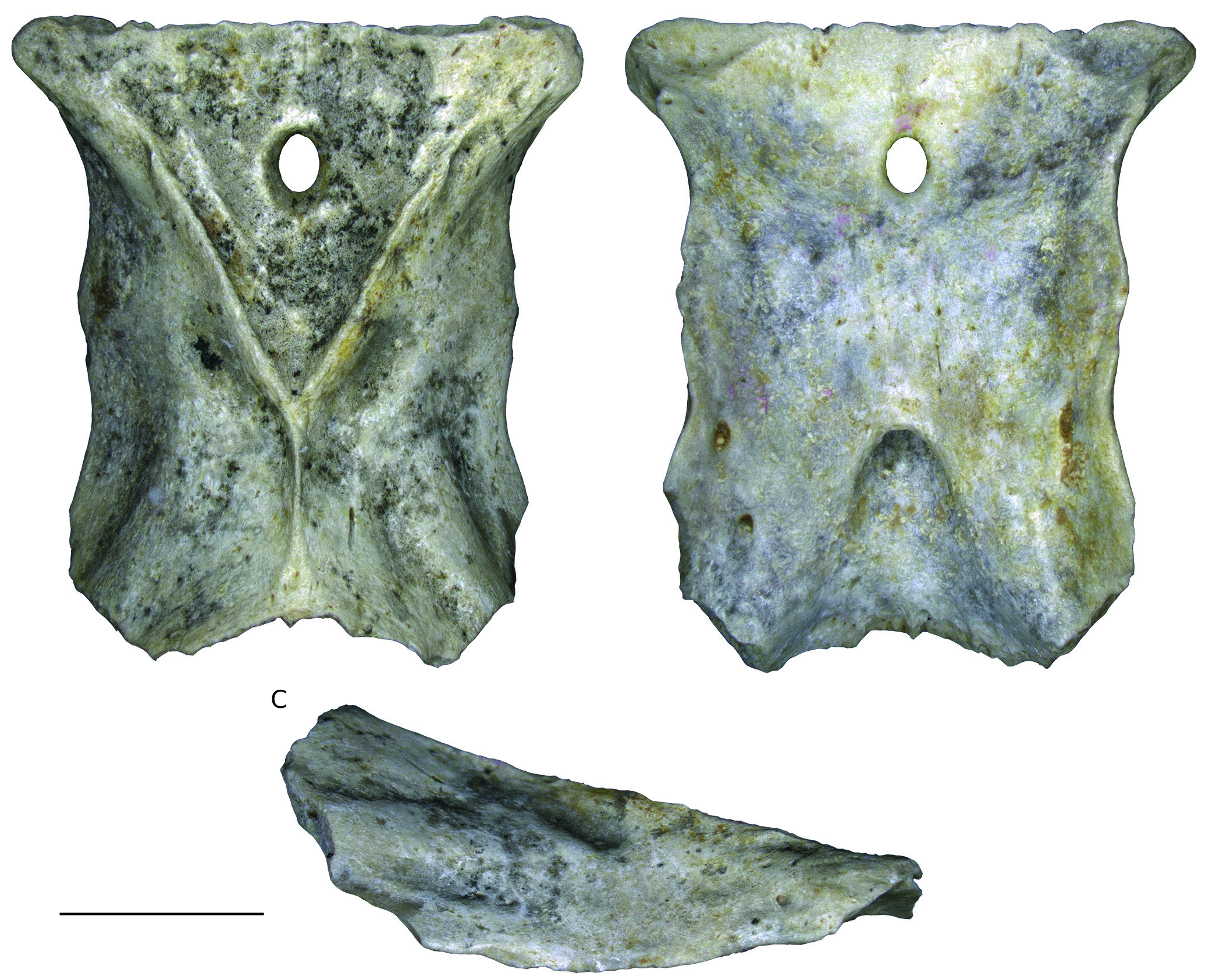
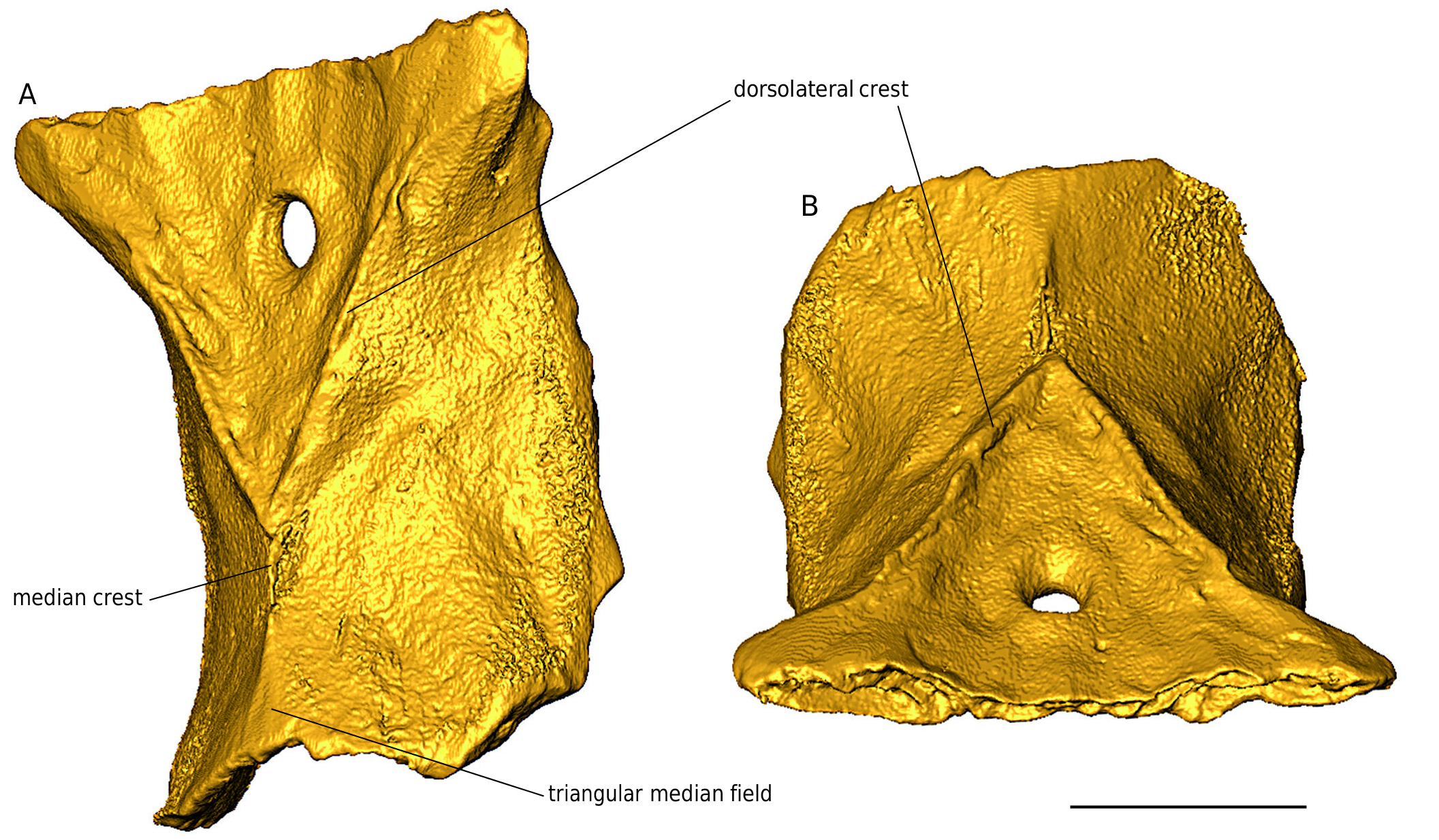
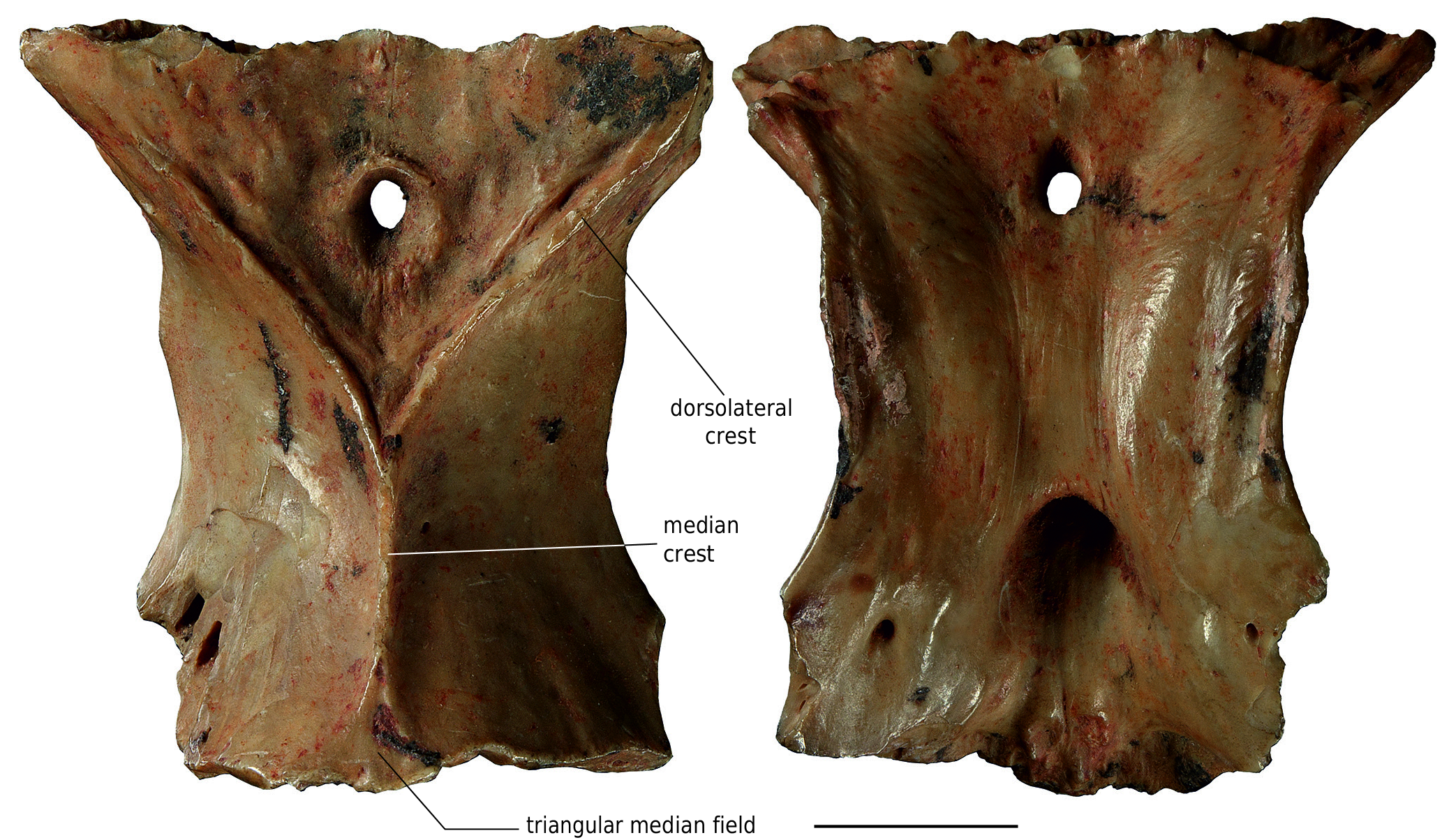
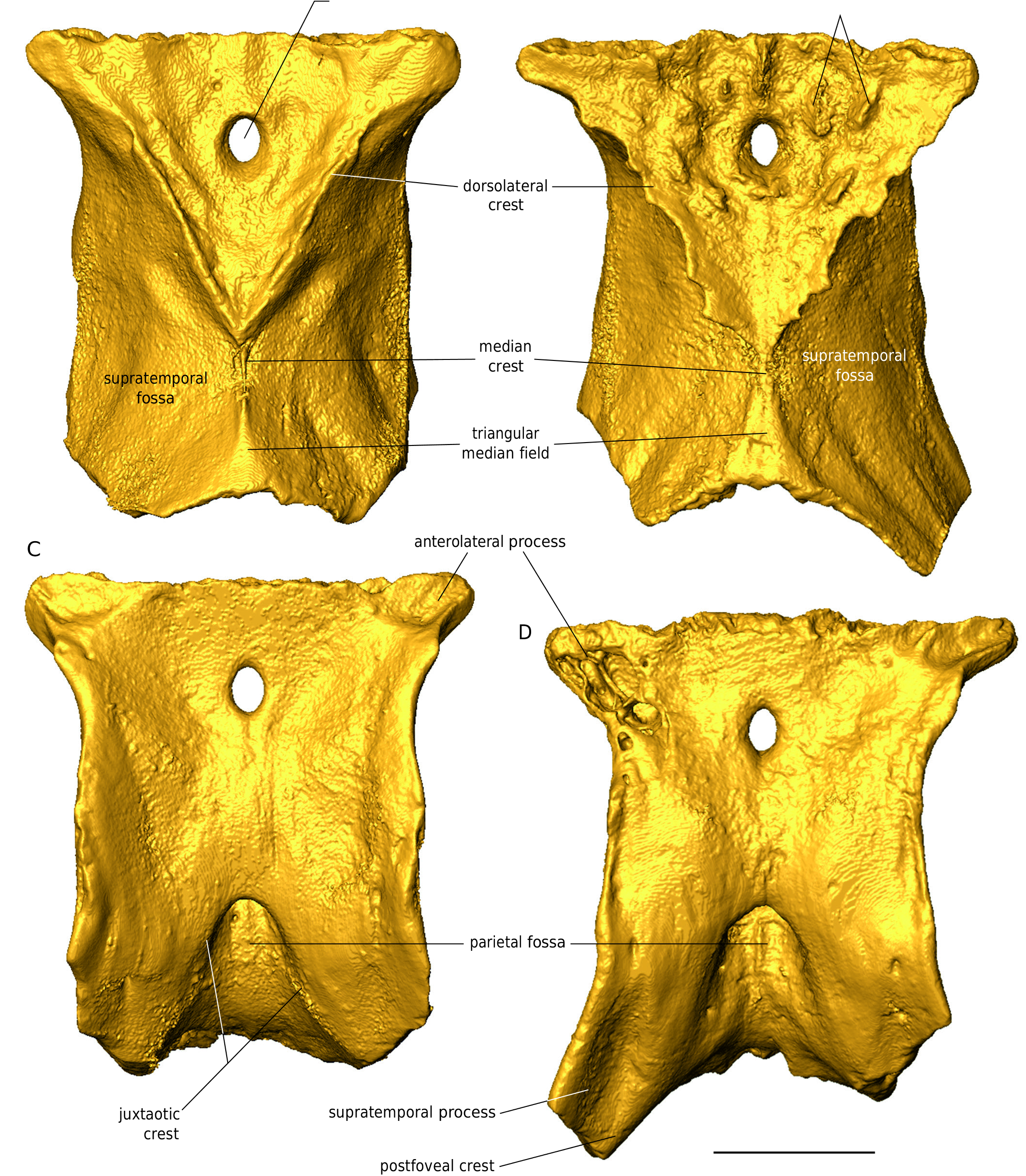
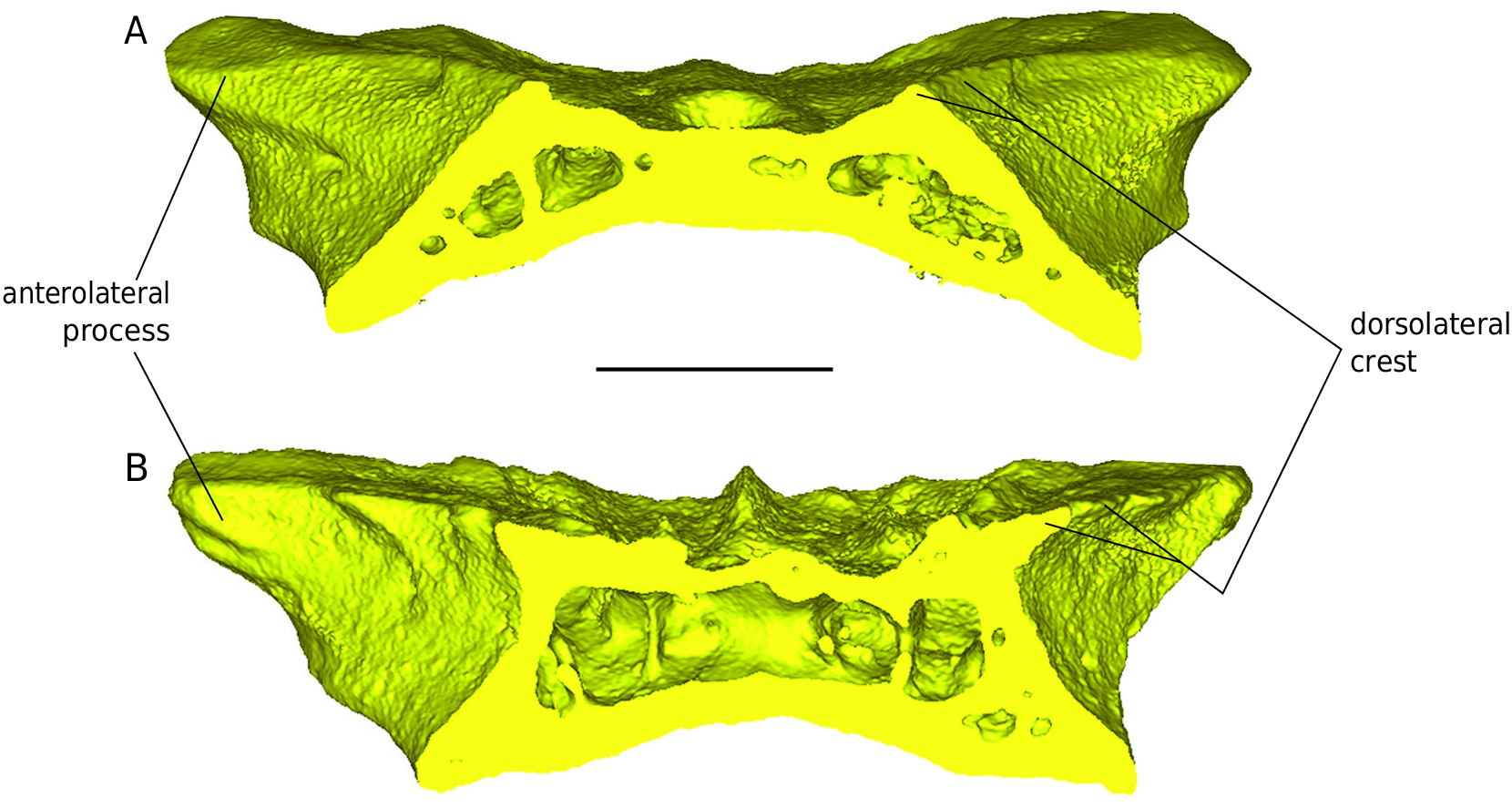
DESCRIPTION The parietal plate is rectangular; only the basis of the supratemporal processes is preserved in both parietals (Figs 34 - 36). The anterolateral process is slender. The parietal foramen lies in about the mid-length of the anterior half of the parietal plate. The most distinctive feature of the dorsal surface of the parietal are two dorsolateral crests. The crests run in anterolateral-posteromedial direction. The anterior end of each crest gradually diminishes and terminates on the dorsal surface of the anterolateral process. The posterior ends of the dorsolateral crests meet in the median plane. The crests, together with the anterior margin of the parietal, limit a triangular field containing the parietal foramen. The surface bears several low mounds and more or less long ridges running along the medial margins of the dorsolateral crests. From the junction of the dorsolateral crests, a median crest extends posteriorly. The length of the crest increases with the size of the parietal and it seems that this increase in length comes to the negative expense of the midline length of the anterior triangular surface, which gradually throughout ontogeny becomes proportionally shorter. This can be demonstrated by comparing the largest known parietal of this species (the one figured by Rage 1978) relative to the two ones described in our paper. From the posterior end of the median crest, a median triangular field is located. The triangular field is a space between the posteriormost portions of the dorsolateral crests. The triangular field achieves its largest width posteriorly; its posterior end is the posteromedian margin of the parietal table (Figs 34 - 36). The supratemporal fossa is mediolaterally broad indicating a strongly developed adductor musculature. The ventral surface of the parietal is smooth (Figs 34 B; 36 B; 37 C). The anterior margin of the parietal fossa lies at the level (or posterior to the level in large specimens) of the junctions of the anterolateral margins of the supratemporal processes with the parietal table. The ventral cranial crest is low and runs immediately medially to the lateral margin of the parietal. Its posterior end is turned posteromedially. The length of the juxtaotic and postfoveal crests is about the same. The posterior portion of the postfoveal crest runs immedi- ately laterally to the medial margin of the basal portion of the supratemporal process.
Georgalis, Georgios L., Čerňanský, Andrej, Klembara, Jozef (2021): Osteological atlas of new lizards from the Phosphorites du Quercy (France), based on historical, forgotten, fossil material. Geodiversitas 43 (9): 219-293, DOI: 10.5252/geodiversitas2021v43a9
EMENDED DIFFERENTIAL DIAGNOSIS. — The parietal of Palaeovaranus cayluxi differs from that of the sole other recognized species of the genus, Palaeovaranus lismonimenos n. sp., described below, in the following distinguished characters and the combination of features: 1) presence of a long median crest (longer than the length of the median triangular field measured in the median plane); 2) dorsolateral crests are low and without crenulations; 3) anterior end of the dorsolateral crests disappears on the dorsal surface of the root of the anterolateral process; 4) the ornamentation is weakly developed consisting of only several low ridges of various lengths running medially to the medial margins of the dorsolateral crests, as well as small mounds; and 5) the anterior margin of the parietal fossa lies at or posterior to the level of the junctions of the anterolateral margins of the supratemporal processes with the parietal plate.
Georgalis, Georgios L., Čerňanský, Andrej, Klembara, Jozef (2021): Osteological atlas of new lizards from the Phosphorites du Quercy (France), based on historical, forgotten, fossil material. Geodiversitas 43 (9): 219-293, DOI: 10.5252/geodiversitas2021v43a9
REMARKS Although we acknowledge that the holotype of Palaeovaranus cayluxi is a maxilla (see Georgalis 2017 for details), we assign these parietals to the same species on the basis of the referral of a parietal by Rage (1978) to the same species (see Discussion below for details). The so far three known parietals of this species (the two ones documented herein plus the one described by Rage [1978]) enhance our understanding of the parietal morphology and variation in this species and allow a confident distinguishment from its new congeneric species described below.
Georgalis, Georgios L., Čerňanský, Andrej, Klembara, Jozef (2021): Osteological atlas of new lizards from the Phosphorites du Quercy (France), based on historical, forgotten, fossil material. Geodiversitas 43 (9): 219-293, DOI: 10.5252/geodiversitas2021v43a9
REFERRED SPECIMENS. — Two almost complete parietals (NHMW 2019 / 0048 / 0001 and MNHN. F. QU 17176).
Georgalis, Georgios L., Čerňanský, Andrej, Klembara, Jozef (2021): Osteological atlas of new lizards from the Phosphorites du Quercy (France), based on historical, forgotten, fossil material. Geodiversitas 43 (9): 219-293, DOI: 10.5252/geodiversitas2021v43a9

Export occurrence data

Darwin Core Archive (ZIP)

CLASSIFICATION

Taxonomic Classification Tree

MULTIMEDIA

Media Files(5)

FIG. 34. — Palaeovaranus cayluxiZittel,1887-1890.Photographs of parietal NHMW 2019/0048/0001 in dorsal (A), ventral (B), and right lateral (C) views.Scale bar:5 mm.
Imageimage/png© Georgalis, Georgios L.;Čerňanský, Andrej;Klembara, JozefGeorgalis, Georgios L.;Čerňanský, Andrej;Klembara, Jozef

FIG. 35. — Palaeovaranus cayluxi Zittel,1887-1890.Virtual 3D models of parietal NHMW 2019/0048/0001 in dorsolateral (A) and anterior (B) views.Scale bar:5 mm.
Imageimage/png© Georgalis, Georgios L.;Čerňanský, Andrej;Klembara, JozefGeorgalis, Georgios L.;Čerňanský, Andrej;Klembara, Jozef

FIG. 36. — Palaeovaranus cayluxi Zittel, 1887-1890. Photographs of parietal MNHN.F.QU17176 in dorsal (A) and ventral (B) views. This specimen originally appeared as drawings in Augé (2005: fig. 188). Scale bar: 5 mm.
Imageimage/png© Georgalis, Georgios L.;Čerňanský, Andrej;Klembara, JozefGeorgalis, Georgios L.;Čerňanský, Andrej;Klembara, Jozef

FIG. 37. — Palaeovaranus cayluxi Zittel, 1887-1890 and Palaeovaranus lismonimenos n. sp. A, C, virtual 3D models of parietal NHMW 2019/0048/0001 of Palaeovaranus cayluxi in dorsal (A) and ventral (C) views; B, D, virtual 3D models of the holotype parietal NHMW 2019/0047/0001 of Palaeovaranus lismonimenos n. sp. in dorsal (B) and ventral (D) views. Scale bar: 5 mm.
Imageimage/png© Georgalis, Georgios L.;Čerňanský, Andrej;Klembara, JozefGeorgalis, Georgios L.;Čerňanský, Andrej;Klembara, Jozef

FIG. 41. — Palaeovaranus cayluxi Zittel, 1887-1890 and Palaeovaranus lismonimenos n. sp. Transverse sections of 3D models of parietals. A, parietal NHMW 2019/0048/0001 of Palaeovaranus cayluxi; B, holotype parietal NHMW 2019/0047/0001 of Palaeovaranus lismonimenos n. sp. Scale bar: 3 mm.

Imageimage/png© Georgalis, Georgios L.;Čerňanský, Andrej;Klembara, JozefGeorgalis, Georgios L.;Čerňanský, Andrej;Klembara, Jozef

IMAGES

Gallery(5)

See Gallery

Occurrences with images

Source Information

Osteological atlas of new lizards from the Phosphorites du Quercy (France), based on historical, forgotten, fossil material

checklist

This dataset contains the digitized treatments in Plazi based on the original journal article Georgalis, Georgios L., Čerňanský, Andrej, Klembara, Jozef (2021): Osteological atlas of new lizards from the Phosphorites du Quercy (France), based on historical, forgotten, fossil material. Geodiversitas 43 (9): 219-293, DOI: 10.5252/geodiversitas2021v43a9

MOTS CLÉS Squamata, lézards, Quercy, Paléogène, micro-CT, anatomie squelettique, espèces nouvelles.

Georgalis G L, Čerňanský A, Klembara J, felipe (2021). Osteological atlas of new lizards from the Phosphorites du Quercy (France), based on historical, forgotten, fossil material. Geodiversitas. Checklist dataset https://doi.org/10.5252/geodiversitas2021v43a9 accessed via GBIF.org on 2026-06-15.

CC0Published 4/22/2021View dataset
GBIF Usage Key
181601118
Dataset Key
04426a8e-c179-4af0-8e23-d72908e8b4cc
Origin
source
Backbone Key
11176620
Taxon ID
03A1633BFF80FFE530D9F949FFF03C43.taxon
Last Crawled
6/10/2026
Last Interpreted
6/10/2026