
AnimaliaNot EvaluatedacceptedspeciesAccepted
Actinopus argenteus

Actinopus argenteus

Rios-Tamayo & Goloboff, 2018

GBIF:190123767

0year

ABOUT

Descriptions(3)

Description. See Ríos-Tamayo & Goloboff (2018: 26).
Miglio, Laura Tavares, Pérez-Miles, Fernando, Bonaldo, Alexandre B. (2020): Taxonomic Revision of the Spider Genus Actinopus Perty, 1833 (Araneae, Mygalomorphae, Actinopodidae). Megataxa 2 (1): 1-256, DOI: 10.11646/megataxa.2.1.1
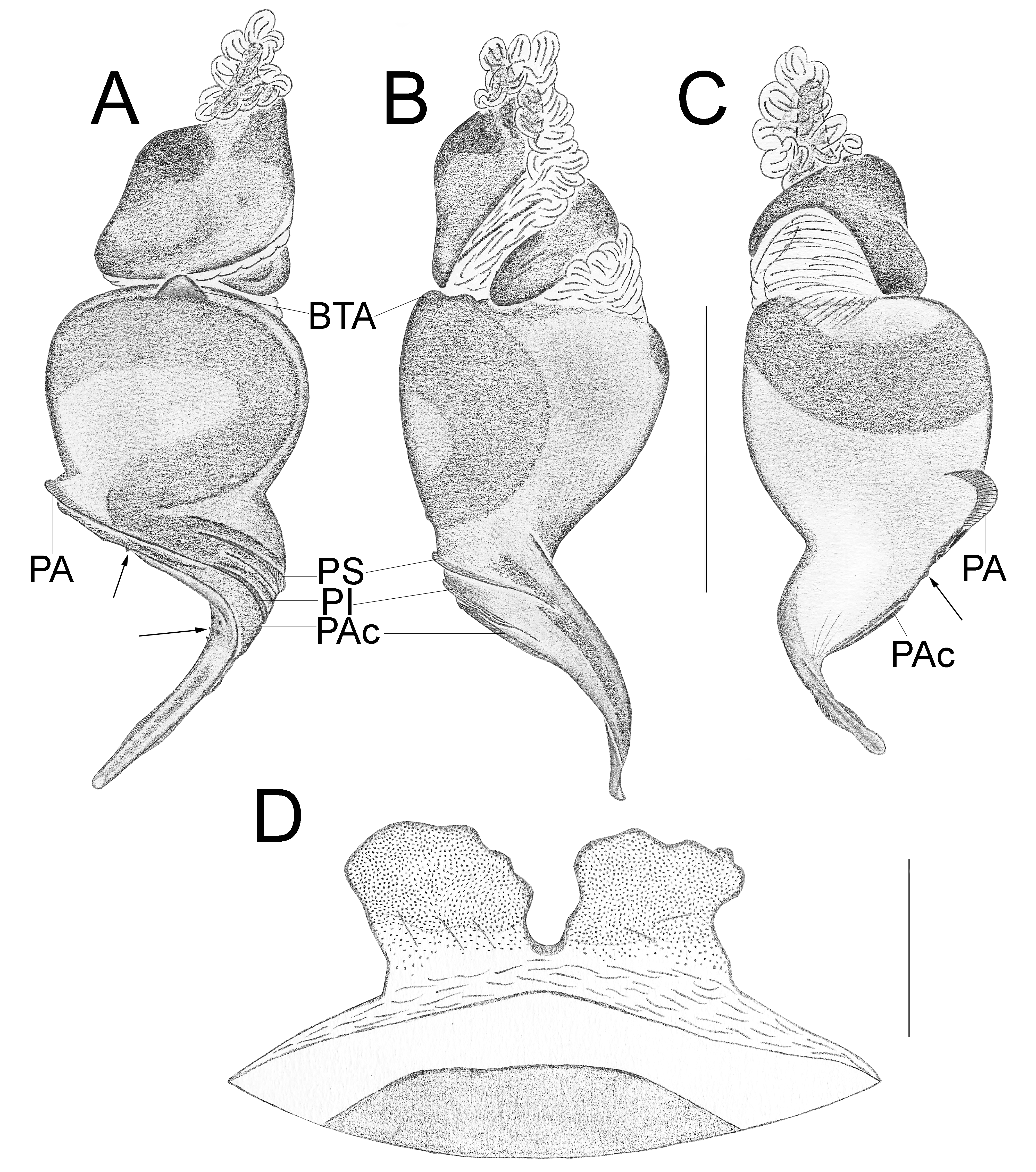
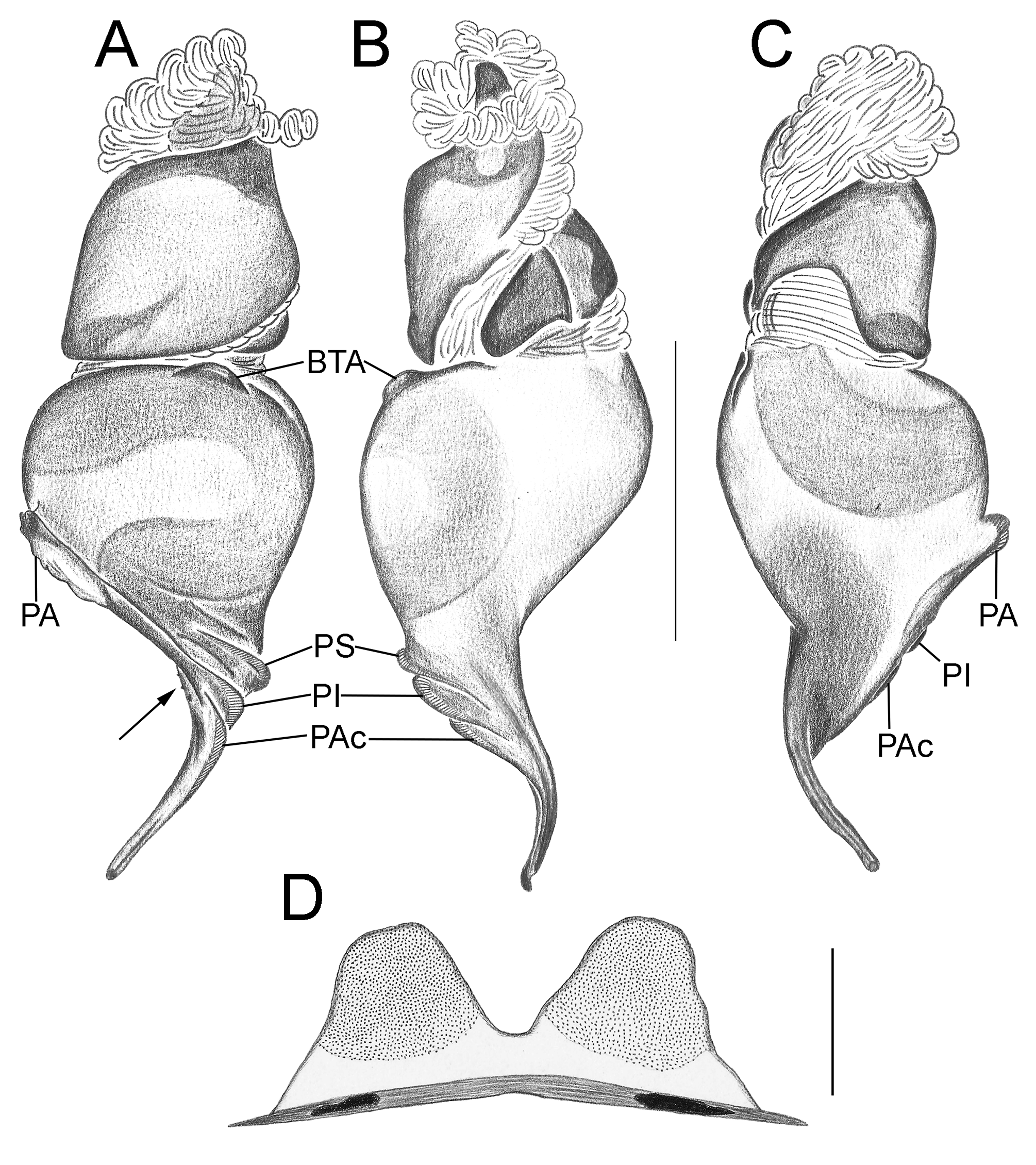
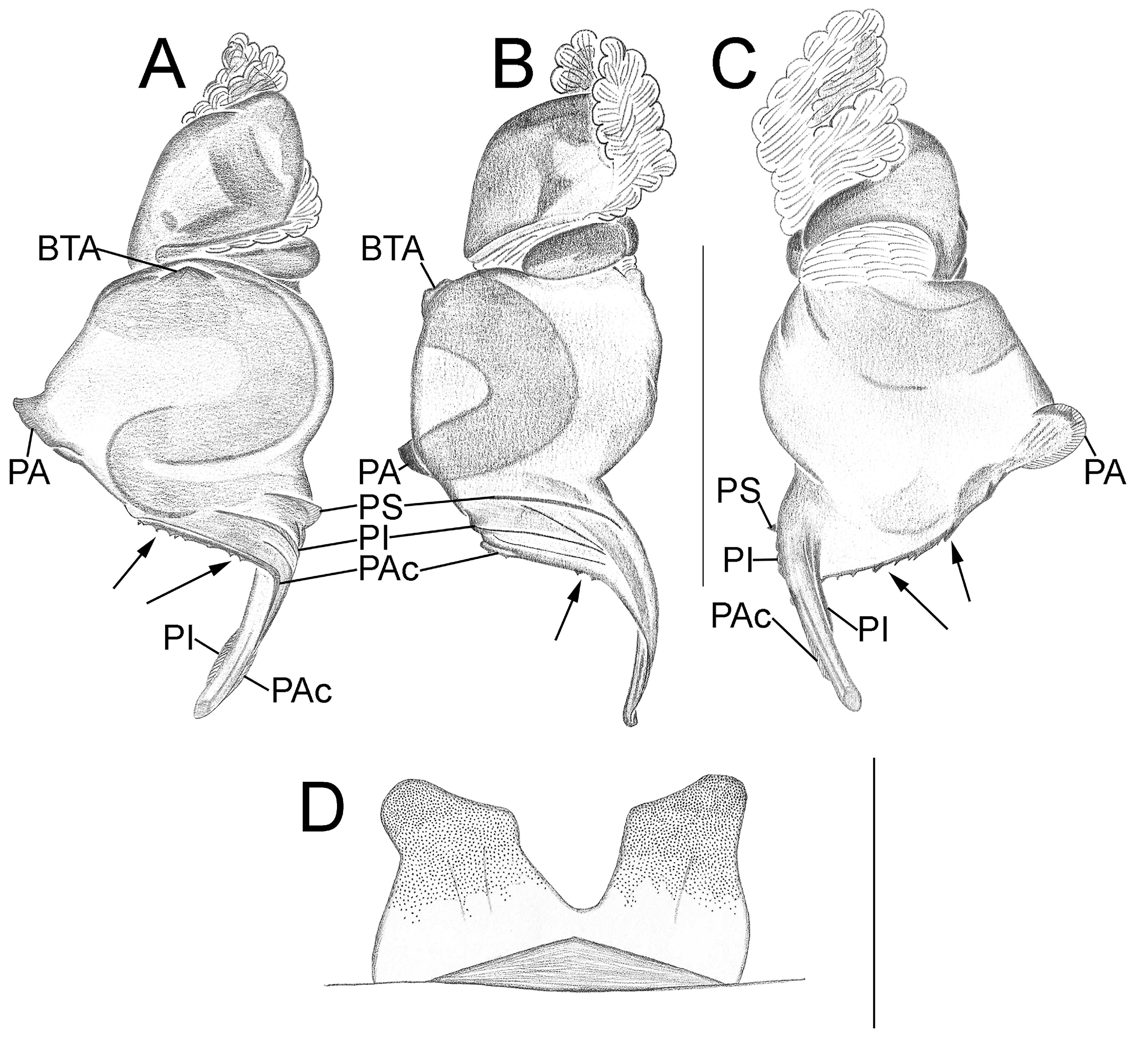
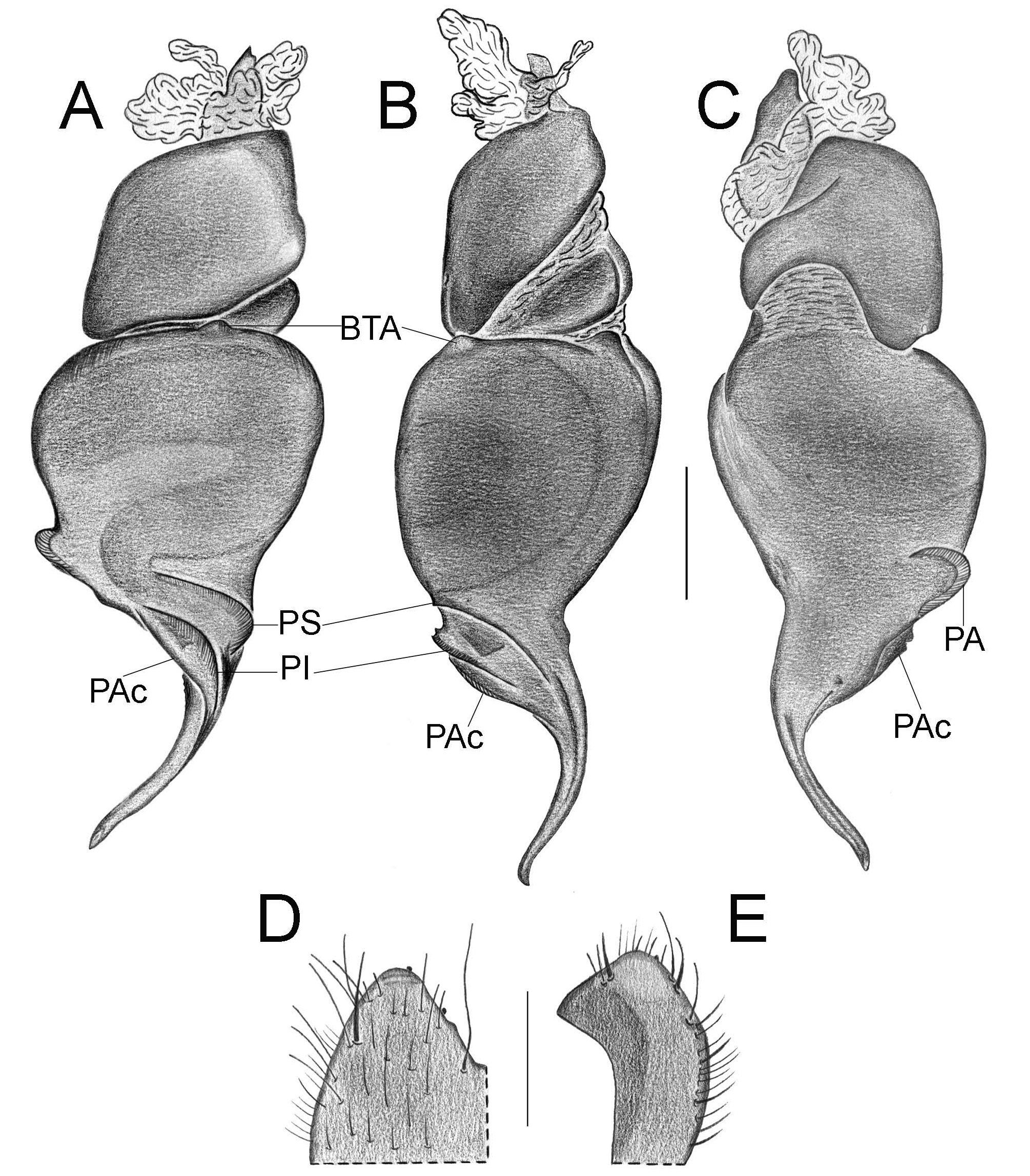
Diagnosis. Males of Actinopus argenteus share with A. tutu (Fig. 143 A – C), A. azaghal (Fig. 148 A – C) and A. pindapoy (Fig. 159 A – C) the PA continuous to PAc. They differ from A. azaghal, A. longipalpis (Fig. 156 A – C), A. pampa (Ríos-Tamayo & Goloboff, 2018, fig. 27 G – H), and A. pindapoy by BTA inserted dorsally on the tegulum, and from A. tutu ¸ A. azaghal, A. itacolomi (Fig. 153 A – C) and A. pindapoy by PS reaching less than the width of embolus. Females of A. argenteus share with A. tutu (Fig. 143 D) the similar subquadrate shape of receptacles. Males differ from those of the trilobate receptacles bearing a conspicouous lateral constriction.
Miglio, Laura Tavares, Pérez-Miles, Fernando, Bonaldo, Alexandre B. (2020): Taxonomic Revision of the Spider Genus Actinopus Perty, 1833 (Araneae, Mygalomorphae, Actinopodidae). Megataxa 2 (1): 1-256, DOI: 10.11646/megataxa.2.1.1
Distribution. ARGENTINA: Santiago del Estero, Córdoba, and Catamarca.
Miglio, Laura Tavares, Pérez-Miles, Fernando, Bonaldo, Alexandre B. (2020): Taxonomic Revision of the Spider Genus Actinopus Perty, 1833 (Araneae, Mygalomorphae, Actinopodidae). Megataxa 2 (1): 1-256, DOI: 10.11646/megataxa.2.1.1

Export occurrence data

Darwin Core Archive (ZIP)

CLASSIFICATION

Taxonomic Classification Tree

MULTIMEDIA

Media Files(5)

FIGURE 143. Actinopus tutu sp. nov., male: A–C UFMG 585: A. Copulatory bulb, prolateral; B. Copulatory bulb, dorsal; C. Copulatory bulb, retrolateral. PA-Paraembolic apophysis; BTA-Basal Tegular Apophysis; PAc-Prolateral Accessory keel; PI- Prolateral Inferior keel; PS-Prolateral Superior keel; Arrows: Serrated area. Paratype, female: D UFMG 5647: D. Spermathecae, dorsal view. Scale line: 1 mm.
Imageimage/png© Miglio, Laura Tavares;Pérez-Miles, Fernando;Bonaldo, Alexandre B.Miglio, Laura Tavares;Pérez-Miles, Fernando;Bonaldo, Alexandre B.

FIGURE 148. Actinopus azaghal sp. nov., male: A–C MCTP: A. Copulatory bulb, prolateral; B. Copulatory bulb, dorsal; C. Copulatory bulb, retrolateral. PA-Paraembolic apophysis; BTA-Basal Tegular Apophysis; PAc-Prolateral Accessory keel; PI- Prolateral Inferior keel; PS-Prolateral Superior keel;Arrow: Serrated area. Paratype, female: D CZUFMT-ARAC: D. Spermathecae, dorsal view. Scales lines: Male: 1 mm; Female: 0.5 mm.
Imageimage/png© Miglio, Laura Tavares;Pérez-Miles, Fernando;Bonaldo, Alexandre B.Miglio, Laura Tavares;Pérez-Miles, Fernando;Bonaldo, Alexandre B.

FIGURE 153. Actinopus itacolomi sp. nov., male: A–C IBSP: A. Copulatory bulb, prolateral; B. Copulatory bulb, dorsal; C. Copulatory bulb, retrolateral. PA-Paraembolic apophysis; BTA-Basal Tegular Apophysis; PAc-Prolateral Accessory keel; PI- Prolateral Inferior keel; PS-Prolateral Superior keel; Arrows: Serrated area. Paratype, female: D UFMG 18876: D. Spermathecae, dorsal view. Scales lines: 1 mm.
Imageimage/png© Miglio, Laura Tavares;Pérez-Miles, Fernando;Bonaldo, Alexandre B.Miglio, Laura Tavares;Pérez-Miles, Fernando;Bonaldo, Alexandre B.

FIGURE 156. Actinopus longipalpis C. L. Koch, 1842, holotype, male: A–E ZMB 2107: A. Copulatory bulb, prolateral; B. Copulatory bulb, dorsal; C. Copulatory bulb, retrolateral. PA-Paraembolic apophysis; BTA-Basal Tegular Apophysis; PAc- Prolateral Accessory keel; PI-Prolateral Inferior keel; PS-Prolateral Superior keel. D. Rastellum, dorsal; E. Rastellum, ventral. Scales lines: A–C: 1 mm; D–E: 0.5 mm.
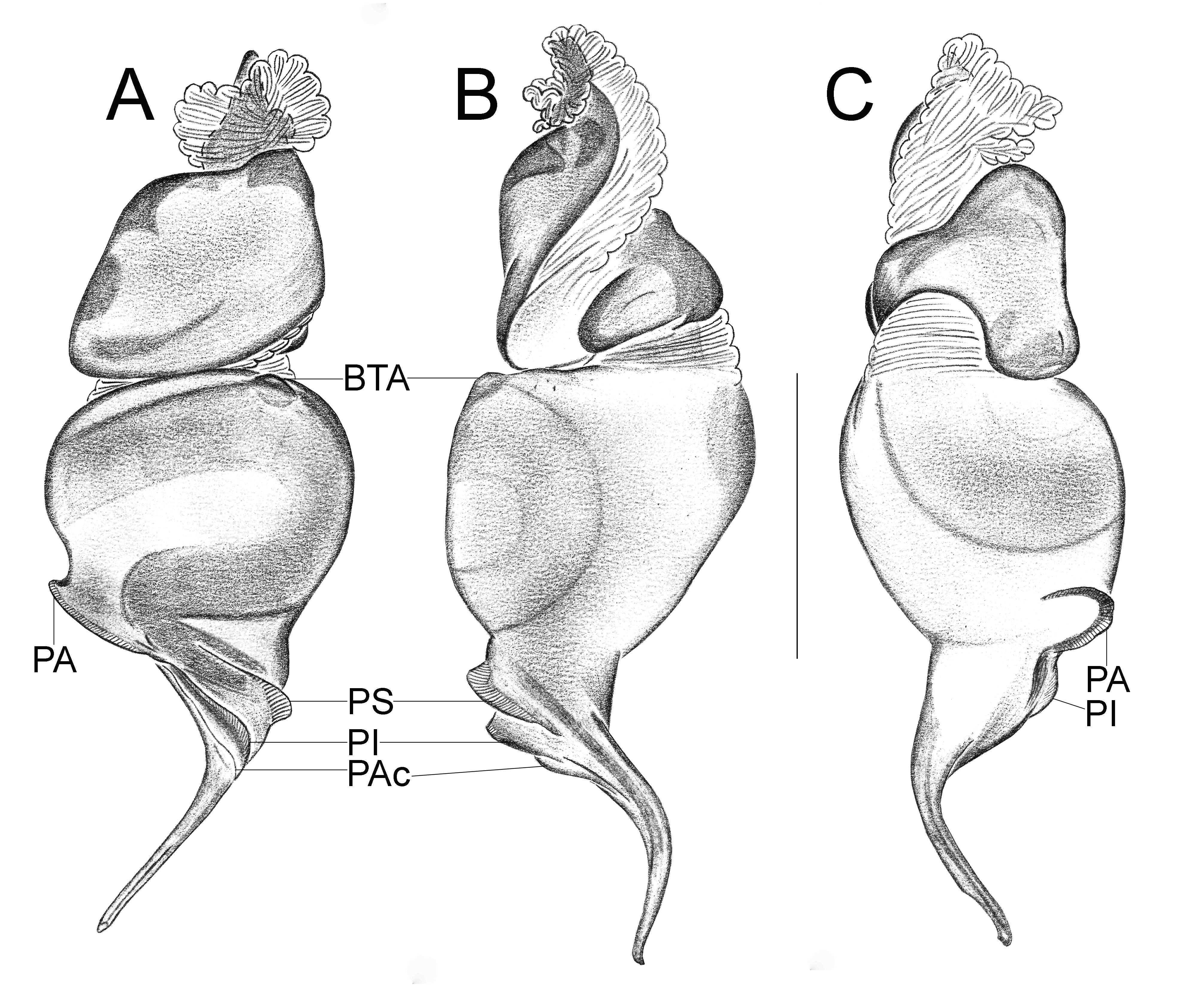
Imageimage/png© Miglio, Laura Tavares;Pérez-Miles, Fernando;Bonaldo, Alexandre B.Miglio, Laura Tavares;Pérez-Miles, Fernando;Bonaldo, Alexandre B.

FIGURE 159. Actinopus pindapoy sp. nov., male: A–C ZMB 19824: A. Copulatory bulb, prolateral; B. Copulatory bulb, dorsal; C. Copulatory bulb, retrolateral. PA-Paraembolic apophysis; BTA-Basal Tegular Apophysis; PAc-Prolateral Accessory keel; PI- Prolateral Inferior keel; PS-Prolateral Superior keel. Scale line: 1 mm.

Imageimage/png© Miglio, Laura Tavares;Pérez-Miles, Fernando;Bonaldo, Alexandre B.Miglio, Laura Tavares;Pérez-Miles, Fernando;Bonaldo, Alexandre B.

IMAGES

Gallery(5)

See Gallery

Occurrences with images

Source Information

Taxonomic Revision of the Spider Genus Actinopus Perty, 1833 (Araneae, Mygalomorphae, Actinopodidae)

checklist

This dataset contains the digitized treatments in Plazi based on the original journal article Miglio, Laura Tavares, Pérez-Miles, Fernando, Bonaldo, Alexandre B. (2020): Taxonomic Revision of the Spider Genus Actinopus Perty, 1833 (Araneae, Mygalomorphae, Actinopodidae). Megataxa 2 (1): 1-256, DOI: 10.11646/megataxa.2.1.1

Abstract

Actinopus Perty, 1833 is characterized and redescribed, including 80 species occurring from Panama to Argentina. Eighteen previously known species are redescribed: A. rufipes (Lucas, 1834); A. longipalpis C. L. Koch, 1842; A. nattereri (Doleschall, 1871); A. crassipes (Keyserling, 1891); A. robustus (O. Pickard-Cambridge, 1892); A. wallacei F. O. P.-Cambridge, 1896; A. princeps Chamberlin, 1917; A. xenus Chamberlin, 1917; A. fractus Mello-Leit „o, 1920; A. paranensis Mello-Leit „o, 1920; A. pusillus Mello-Leit „o, 1920; A. dubiomaculatus Mello-Leit „o, 1923; A. trinotatus Mello-Leit„o, 1938; A. cucutaensis Mello-Leit „o, 1941; A. echinus Mello-Leit „o, 1949; A. clavero Ríos-Tamayo & Goloboff, 2018; A. gerschiapelliarum Ríos-Tamayo & Goloboff, 2018; and A. palmar Ríos-Tamayo & Goloboff, 2018. Additionally, A. tarsalis Perty, 1833, the type species, A. insignis (Holmberg, 1881) and other 18 species recently described species from Argentina and Bolivia, are re-evaluated. Forty-two new species are described: Actinopus castelo sp. nov., A. apalai sp. nov., A. mairinquensis sp. nov., A. obidos sp. nov., A. buritiensis sp. nov., A. pinhao sp. nov., A. ducke sp. nov., A. hirsutus sp. nov., A. jaboticatubas sp. nov., A. confusus sp. nov., A. pampulha sp. nov., A. candango sp. nov., A. paraitinga sp. nov., A. cornelli sp. nov., A. vilhena sp. nov., A. harveyi sp. nov., A. itapitocai sp. nov., A. ipioca sp. nov., A. itaqui sp. nov., A. xingu sp. nov., A. mesa sp. nov., A. caxiuana sp. nov., A. utinga sp. nov., A. emas sp. nov., A. bocaina sp. nov., A. osbournei sp. nov., A. dioi sp. nov., A. tutu sp. nov., A. azaghal sp. nov., A. itacolomi sp. nov., A. parafundulus sp. nov., A. urucui sp. nov., A. reznori sp. nov., A. anselmoi sp. nov., A. guajara sp. nov., A. apiacas sp. nov., A. jamari sp. nov. from Brazil; A. laventana sp. nov. from Argentina and Uruguay; A. lomalinda sp. nov. from British Guiana and Colombia; A. concinnus sp. nov. from Venezuela and Brazil; A. pindapoy sp. nov. from Argentina; A. panguana sp. nov. from Peru. The females of A. dubiomaculatus and A. cucutaensis and the males of A. nattereri are described for the first time. New records are presented for A. clavero; A.crassipes; A. dubiomaculatus; A. fractus; A. gerschiapelliarum; A. nattereri; A. palmar; A. paranensis; A. princeps, A. pusillus, A. robustus and A. wallacei. Ten old species names are herein considered species inquirendae: A. caraiba (Simon, 1889); A. harti Pocock, 1895; A. liodon (Ausserer, 1875); A. nigripes (Lucas, 1834); A. pertyi Lucas, 1843; A. piceus (Ausserer, 1871); A. rojasi (Simon, 1889); A. rufibarbis Mello-Leit „o, 1930; A. scalops (Simon, 1889) and A. valencianus (Simon, 1889). Most species presently recognized were included in 11 informal groups based mainly on male palpal characters. A key for these groups plus three species, not included in any group, but known from males, is presented.

Miglio L T, Pérez-Miles F, Bonaldo A B, plazi (2020). Taxonomic Revision of the Spider Genus Actinopus Perty, 1833 (Araneae, Mygalomorphae, Actinopodidae). Plazi.org taxonomic treatments database. Checklist dataset https://doi.org/10.11646/megataxa.2.1.1 accessed via GBIF.org on 2026-06-14.

CC0Published 10/9/2020View dataset
GBIF Usage Key
190123767
Dataset Key
f7793976-e4e9-4562-a9cd-eda910d77fa0
Origin
source
Backbone Key
10063829
Taxon ID
0975136AFF22CEF2FF77F8C2DF143B48.taxon
Last Crawled
6/9/2026
Last Interpreted
6/9/2026