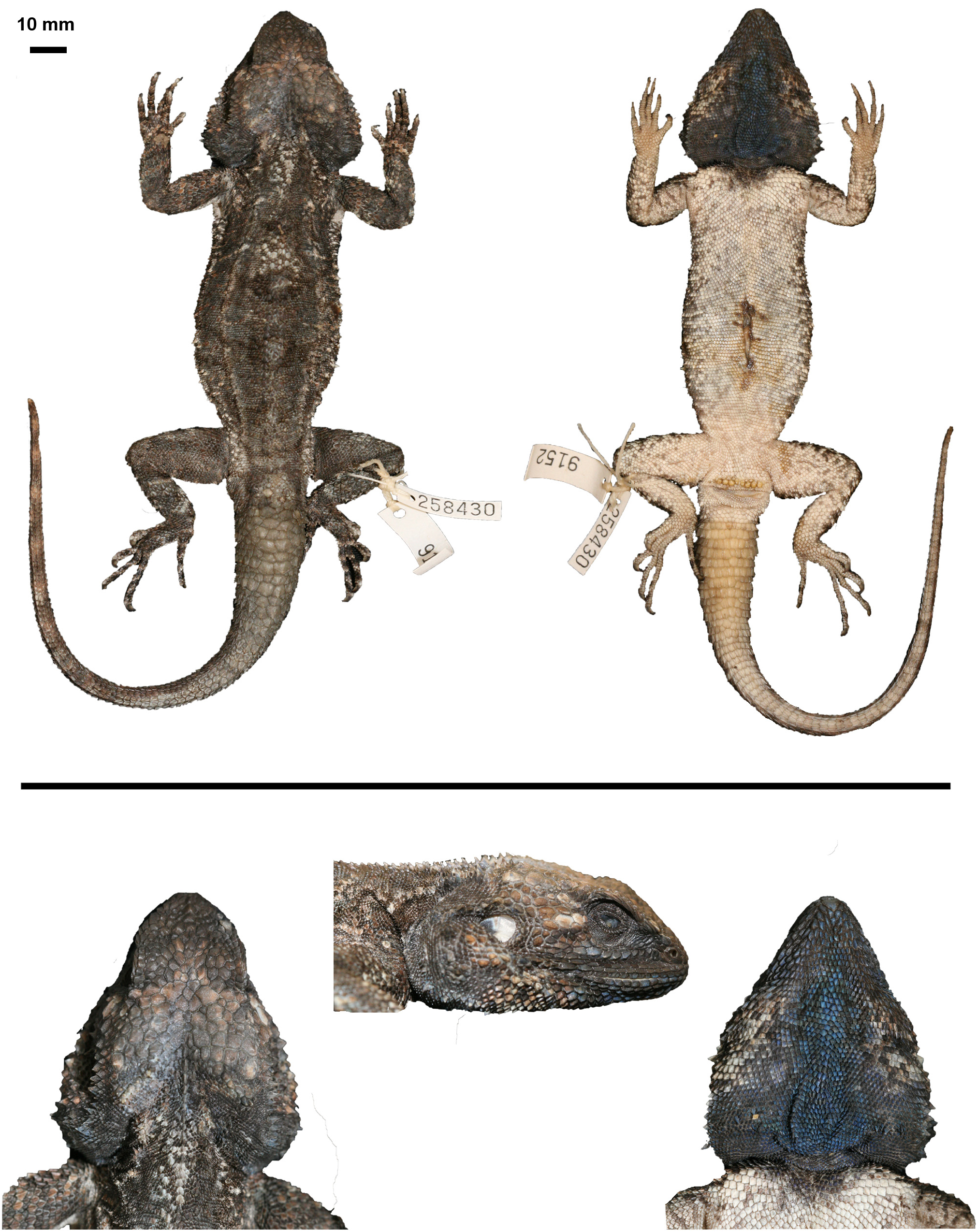
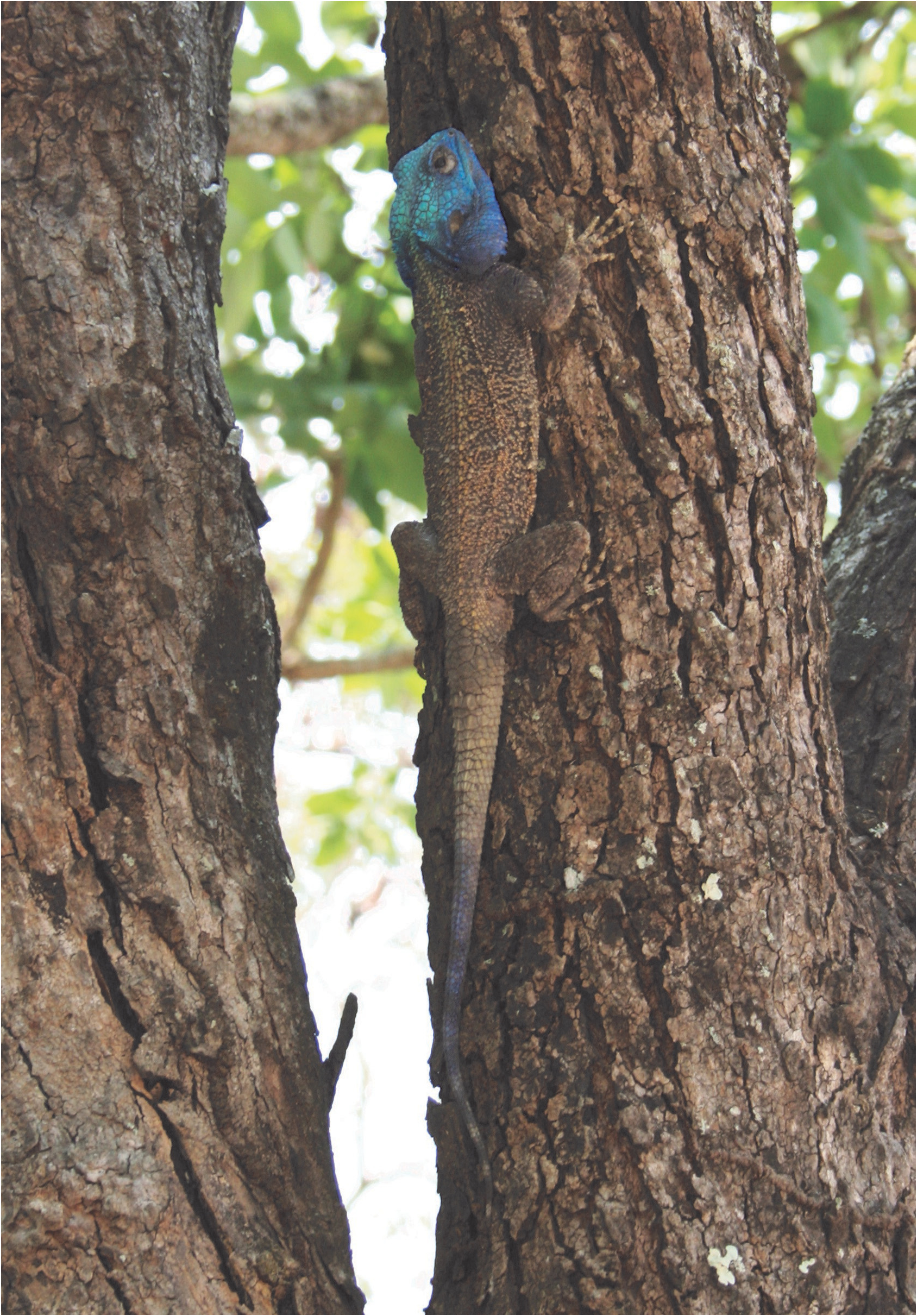
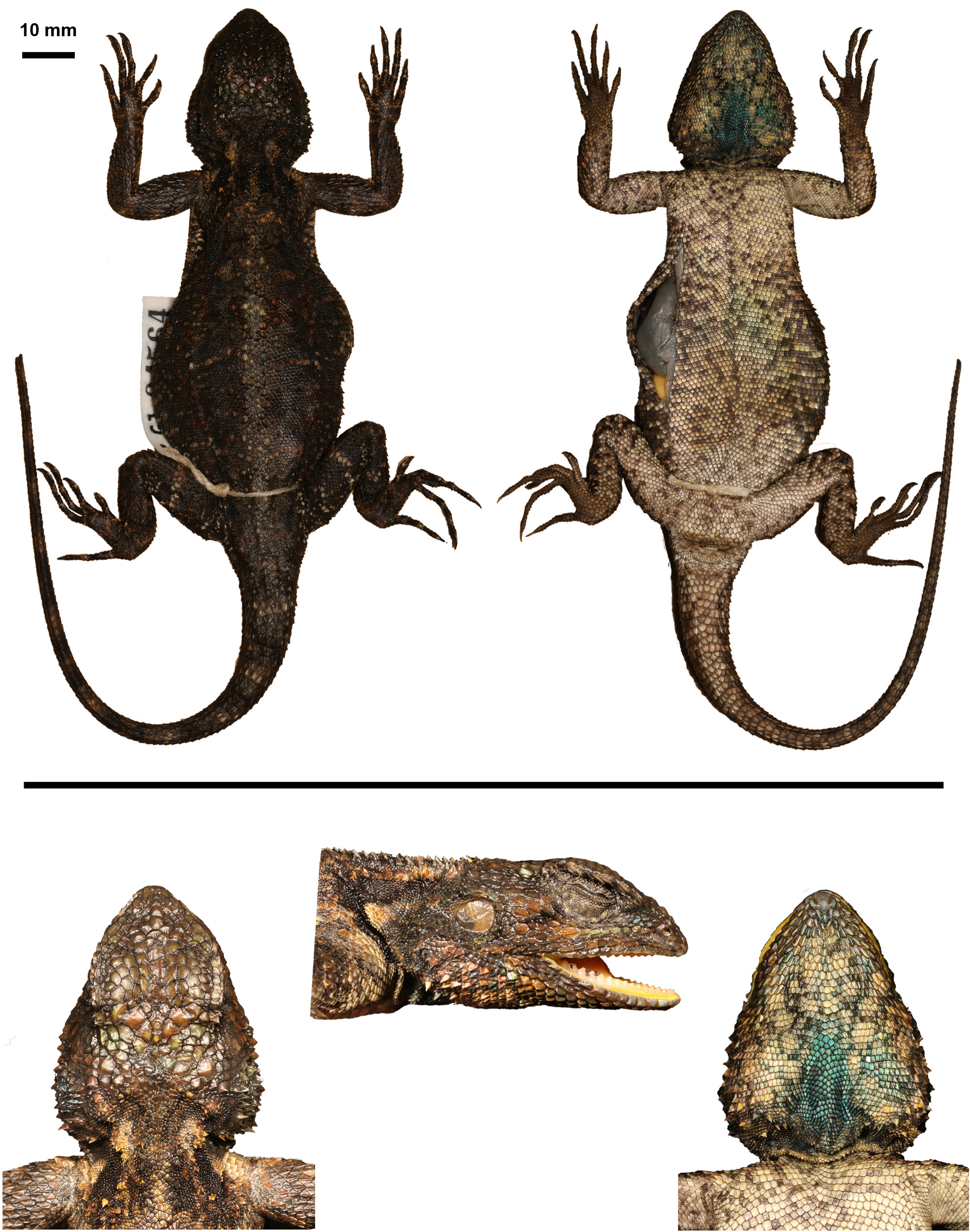
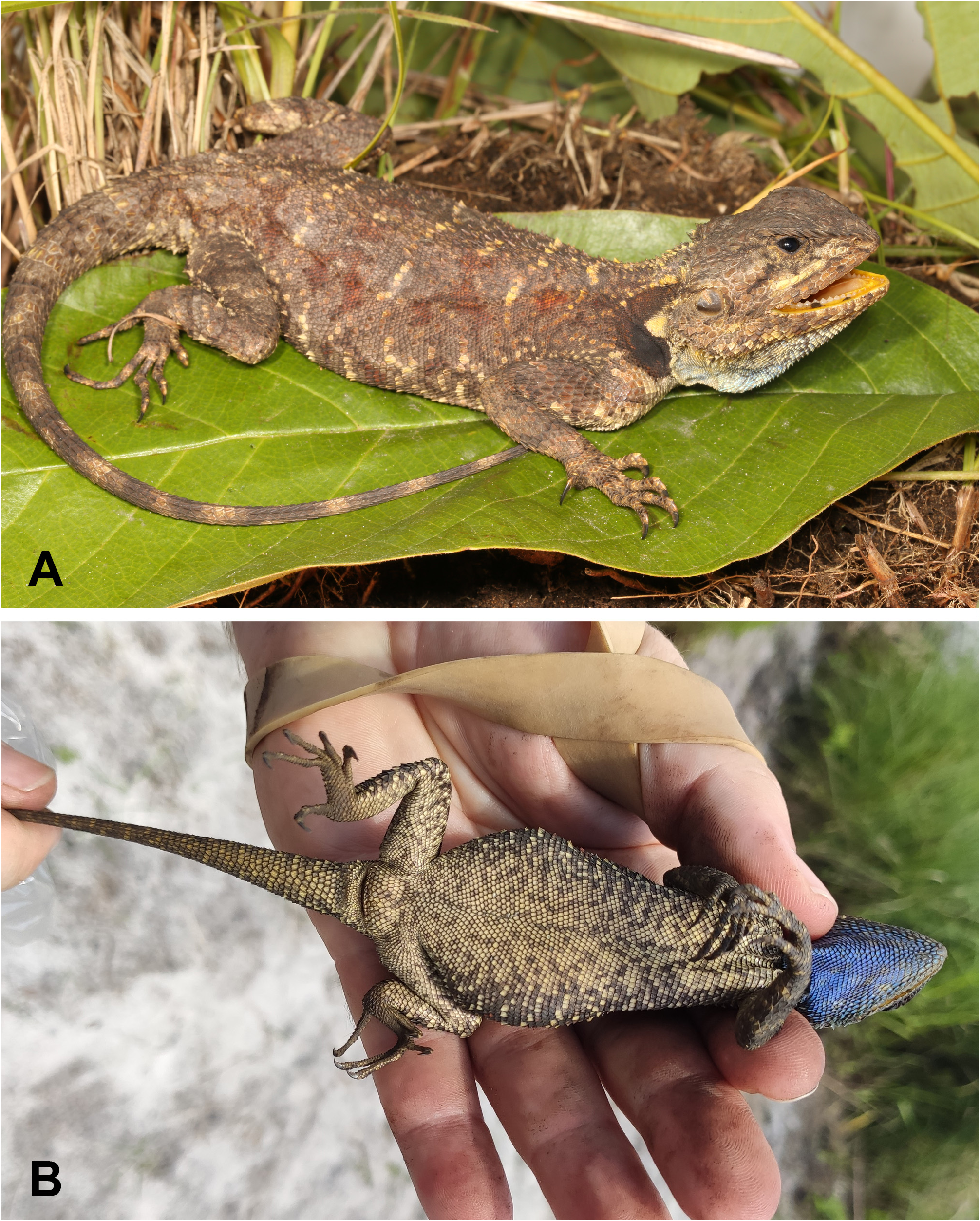
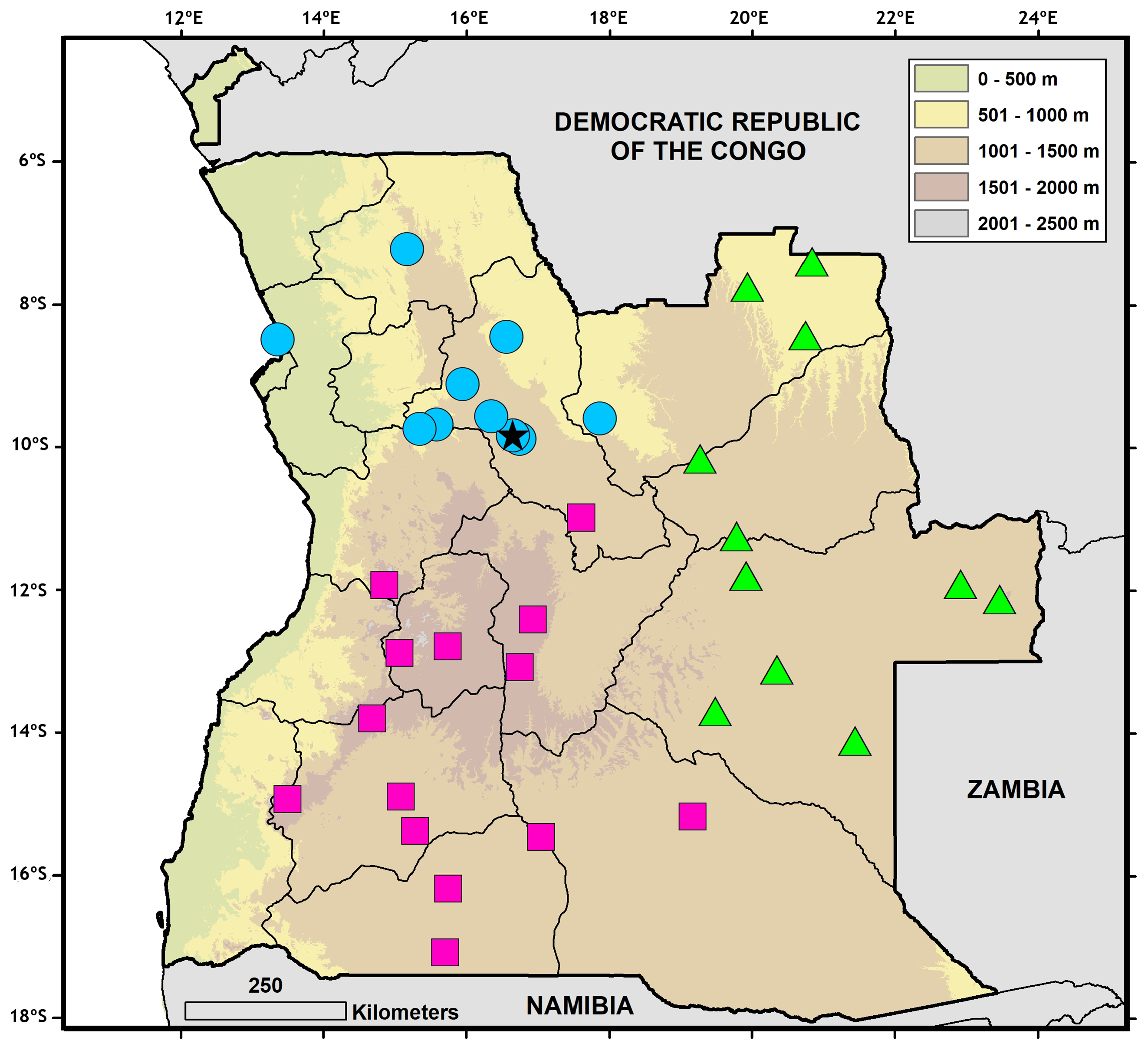
Description of the holotype. Adult male (Fig. 2). Measurements: snout – vent length (SVL) 143 mm, tail length (TL) 187 mm, head length (HL) 48 mm, head width (HW) 38 mm, head height (HH) 34 mm. Habitus stout, with a large triangular head distinct from body; nasal scale flat to faintly convex, smooth, oval and situated slightly below canthus rostralis, pierced by round nostril in posterior part of scale, directed laterally. Scales on anterior, lateral, and central parts of head large, but smaller from behind ear opening, half the size of large head scales; head scales unequal in size, not oriented in the same direction, usually smooth, sporadically heavily keeled or with a rough surface, with free anterior margins and only sporadically with sensory pits. Fourteen supralabial scales and twelve infralabial scales on both sides; supraocular scales smooth, twelve scales along the canthus rostralis from nasal to behind the eye; six scales from nasal to anterior margin of eye; parietal shield quadrangular; pineal organ small, visible in posterior part of parietal shield. Ear opening large, but smaller than eye, posterior margin lacking semicircle of spinose mucronate scales; tympanum superficial. No nuchal crest present. Gular scales smooth, flat to faintly convex in the anterior part of the gular area; mucronate and spinose in the posterior part, becoming more spiny and smaller towards gular fold. Dorsal body scales a mix of small and smooth matrix scales, sometimes giving the impression of granular scales, and scattered, pale white-edged, enlarged scales. Large scales keeled, sometimes mucronate or spinose, not arranged in clusters, but rather in seven to eight, very indistinct, transverse rows between limbs. Sixty-four dorsal scales along vertebral column from midpoint of pectoral region to midpoint of pelvic region. Vertebral region covered by a mix of small and large scales, forming a pattern distinct from rest of lateral parts of body, with a large set of vertebral scales strongly keeled to smooth or feebly keeled. Ventral body scales smooth, slightly imbricate at posterior margins, in 89 rows from midpoint of pectoral region to precloacal pores. One hundred twenty-six scale rows around body behind forelimbs; 105 around midbody and 80 around body in front of hind limbs. Precloacal scales in two rows (the more anterior weakly developed), twelve pores in the posterior row and seven pores in the row above. Scales on upper side of forelimb unequal in size and strongly keeled, smooth on underside, upper arm scales somewhat larger than largest dorsal body scales. Relative length of manual digits 4 = 3> 2> 5> 1, subdigital lamellae keeled and mucronate, 21 under left 4 th finger. Scales on upper side of hind limb keeled to smooth, becoming completely smooth on underside; scales on upper thighs unequal in size, a mix of small and scattered enlarged scales that are as large as the enlarged dorsal body scales. Fourth toe longest, relative length of pedal digits 4> 3> 2> 5> 1, subdigital lamellae keeled and mucronate, 23 under left 4 th toe. Tail with indistinct whorls of five scale rings (one ring consists of distinctly smaller scales) in its basal portion, caudal scales keeled and mucronate. First third of tail slightly swollen, scales larger than in other parts of the body, strongly robust and keeled. Distal portion of the tail much thinner and slightly depressed. After formalin fixation and six years of preservation in ethanol (Fig. 2) head dark with some brown to orange scales. Gular region bluish and dark from the mental through the throat, whitish in lateral parts. Black patch on shoulders. Ground color of dorsum grayish to brownish, enlarged scales on upper and lateral parts of body and limbs speckled dirty white. Four to five brownish areola-like markings delimited by white pale circles are visible through the vertebral region. Ventral side of body, limbs and tail dirty grayish, speckled with dark spots. Enlarged scales on upper side of tail base distinctly whitish. Scales becoming more brownish-dirty white striped towards tail tip. Coloration. In displaying males (see Fig. 3), head vibrantly blue; neck, shoulders, body and limbs brownish with a pattern of white and black stripes and speckles; a pale vertebral band from the neck to the tail is present, distinct anteriorly between the flanks, becoming more indistinct and on a brown background posteriorly; enlarged dorsal scales of the lower part of the body yellowish, matrix scales greyish becoming brownish on the hind limbs; first half of the tail yellowish, second half of the tail with dark and lighter blue bands. Ventral parts of the body, limbs and tail dirty whitish with a brown patterning coloration on females in life (see Fig. 5). Shoulders brownish with a black patch, some individuals present a pale blue head. Four dark brown, broad transverse bands between limbs, each interspersed by transverse bands composed of a single row of enlarged yellow scales. Upper and lateral parts of tail with brown and whitish / yellowish bands. Ventral parts of the body, limbs and tail dirty whitish with an extensive dark brown pattern. Gular region of a vibrant blue. Regarding its Angolan congeners, the coloration of displaying males (Fig. 3) is overall more similar to A. cyanocephalus than to A. margaritae. However, in A. cyanocephalus, the blue coloration of the head extends to the neck and shoulders, while in A. ceriacoi sp. nov. the blue is limited to the head. The new species is clearly distinct from A. margaritae, in that the latter species has a blue coloration of the head, forelimbs, flanks of the upper part of the body and second half of the tail (not banded as in A. ceriacoi sp. nov.). Variation. Some variations of the type series are shown in Table 2. Snout-vent length 99 – 143 mm (mean 123 mm); Tail length 125 – 187 mm (mean 162 mm), with the ratio TL / SVL 1.26 – 1.31 (mean 1.32); head length 28 – 48 mm (mean 39 mm); supralabial scales on the left side 12 – 14 (mean 13); supraocular scales on the left side 6; temporal scales on the left side 7; scale rows around fore body 121 – 128 (mean 126); scale rows around hind body 74 – 87 (mean 80); subdigital lamellae under Fi 4 21 – 23 (mean 21); subdigital lamellae under TOE 4 21 – 23 (mean 22); precloacal pores 17 – 20 (mean 18).
Marques, Mariana P., Parrinha, Diogo, Santos, Bruna S., Bandeira, Suzana, Butler, Brett O., Sousa, Ana Carolina A., Bauer, Aaron M., Wagner, Philipp (2022): All in all it’s just another branch in the tree: A new species of Acanthocercus Fitzinger, 1843 (Squamata: Agamidae), from Angola. Zootaxa 5099 (2): 221-243, DOI: 10.11646/zootaxa.5099.2.4