
AnimaliaNot EvaluatedacceptedspeciesAccepted
Polycarpa carpocincta
Monniot F. & Monniot C., 2003
GBIF:202595061
0year
ABOUT
Descriptions(1)
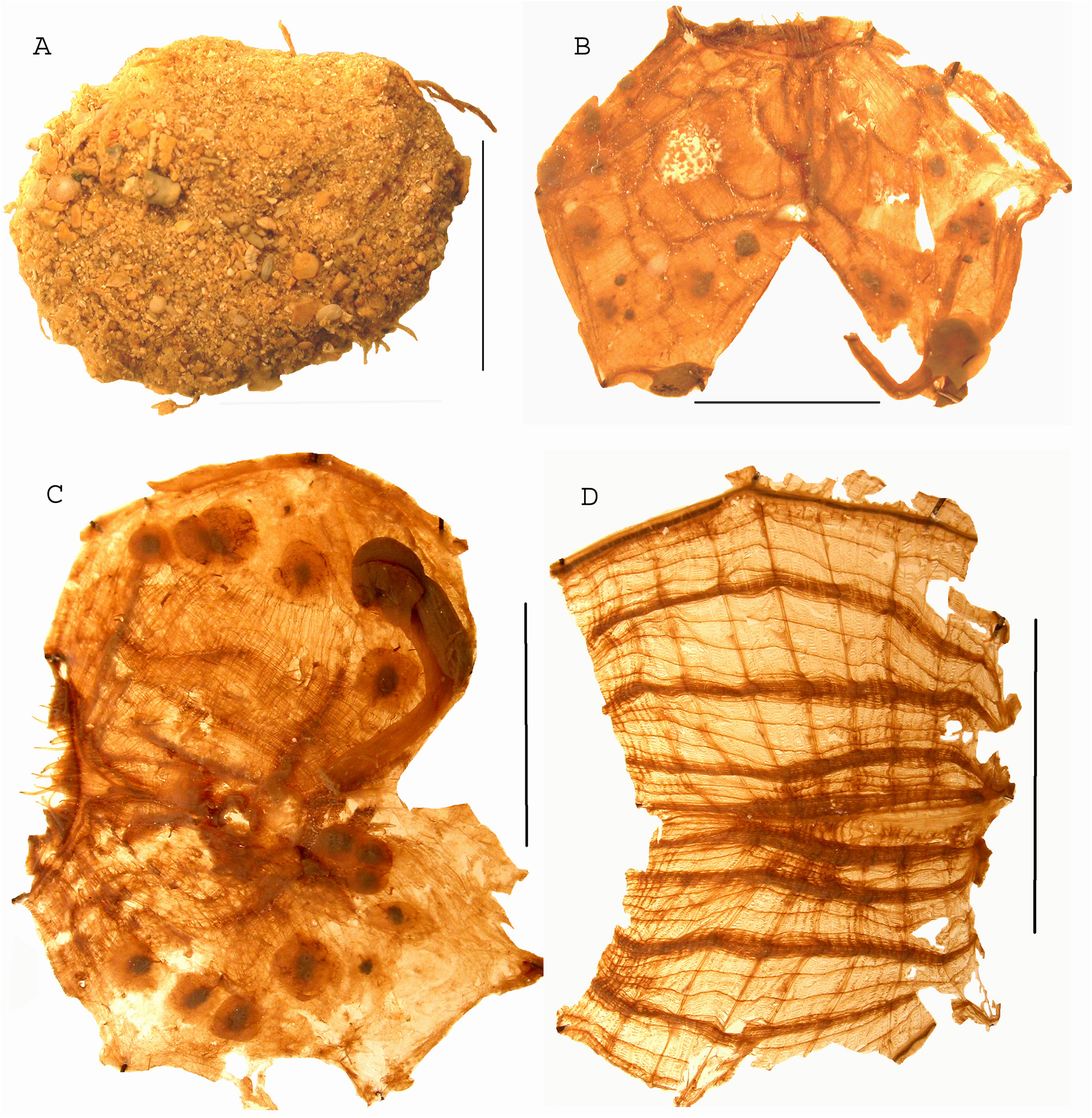
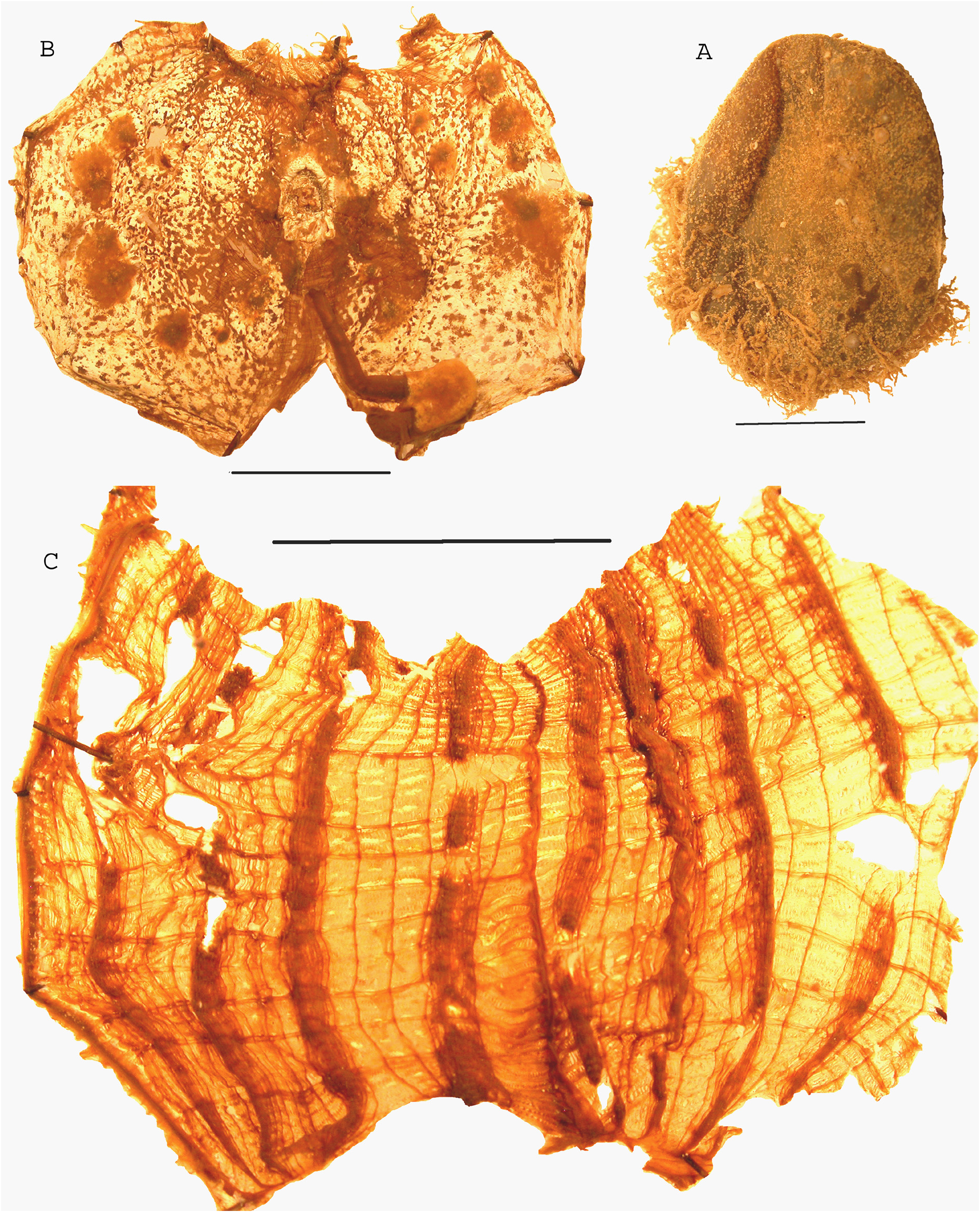
Figures 7 – 8 Stations: SPANBIOS: CP 5284, 2 specimens. CP 5290, 2 specimens. All specimens are similar in shape and are coated with sand. They are about 2.5 cm in diameter with a variable number of rhizoids issued from the ventral side (Fig. 7 A; 8 A). The siphons are inconspicuous. The tunic is resistant but thin. All internal tissues are pigmented in brown (Figs 7; 8). The musculature forms strong sphincters at the siphons and a dense network of thin brown fibres over the body. Some chalky pigment is present on the internal side of the siphons. Only in one specimen the white pigment was also abundant on the body wall and branchial vessels (Fig. 8 B). The oral tentacles are numerous with several sizes. The double prepharyngeal band is curved in a deep dorsal V containing a small button-like dorsal tubercle. The dorsal lamina is long and low. There are four branchial folds on each side (Figs 7 D; 8 C) with eight to 12 longitudinal vessels and separated by two to three vessels; ten to 12 stigmata were counted in a mesh between the folds without parastigmatic vessels. The gut loop is narrow and occupies a small part of the left body side (Figs 7 B, C; 8 B); it contains a large endocarp. The stomach has internal longitudinal folds and a small button-like caecum. The anus has eight lobes. The gonads are round polycarps (Figs 7 B, C; 8 B) included in large translucent vesicles of the body wall. The gonoducts open in a single hole at the inner body wall surface. The number of gonads varies; in one specimen there are eight on the right and five on the left side. There are no endocarps on the body wall. P. carpocincta collected several times in the tropical western Pacific (Monniot F. & C. 2003) seems to live in sandy bottoms between 100 to 200 m depth.
Exbodi, Françoise Monniot (2022): Additional records of bathyal ascidians (Tunicata) from the New Caledonia region. Zootaxa 5195 (3): 201-223, DOI: 10.11646/zootaxa.5195.3.1
Export occurrence data
Darwin Core Archive (ZIP)
CLASSIFICATION
Taxonomic Classification Tree

IMAGES