
AnimaliaNot EvaluatedacceptedspeciesAccepted
Fredericella indica
GBIF:203932737
ABOUT
Descriptions(4)
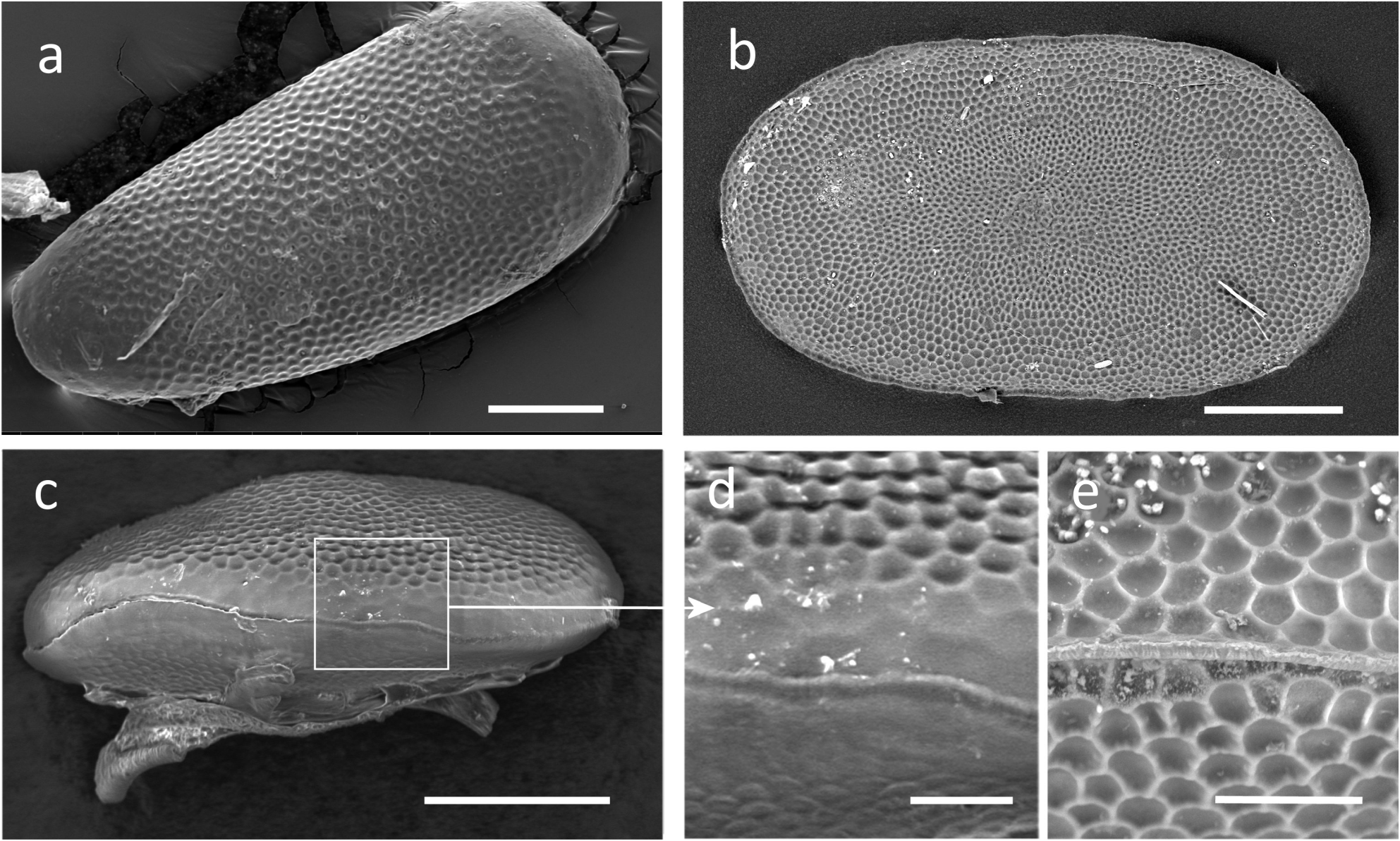
(Fig. 1 a, c, d) Original description. Fredericella indica: Annandale, 1909 b: p. 373 – 374.
Wood, Timothy S. (2022): Phylactolaemate bryozoans at the Zoological Survey of India and a taxonomic key to Indian Phylactolaemata. Zootaxa 5200 (2): 401-435, DOI: 10.11646/zootaxa.5200.5.1
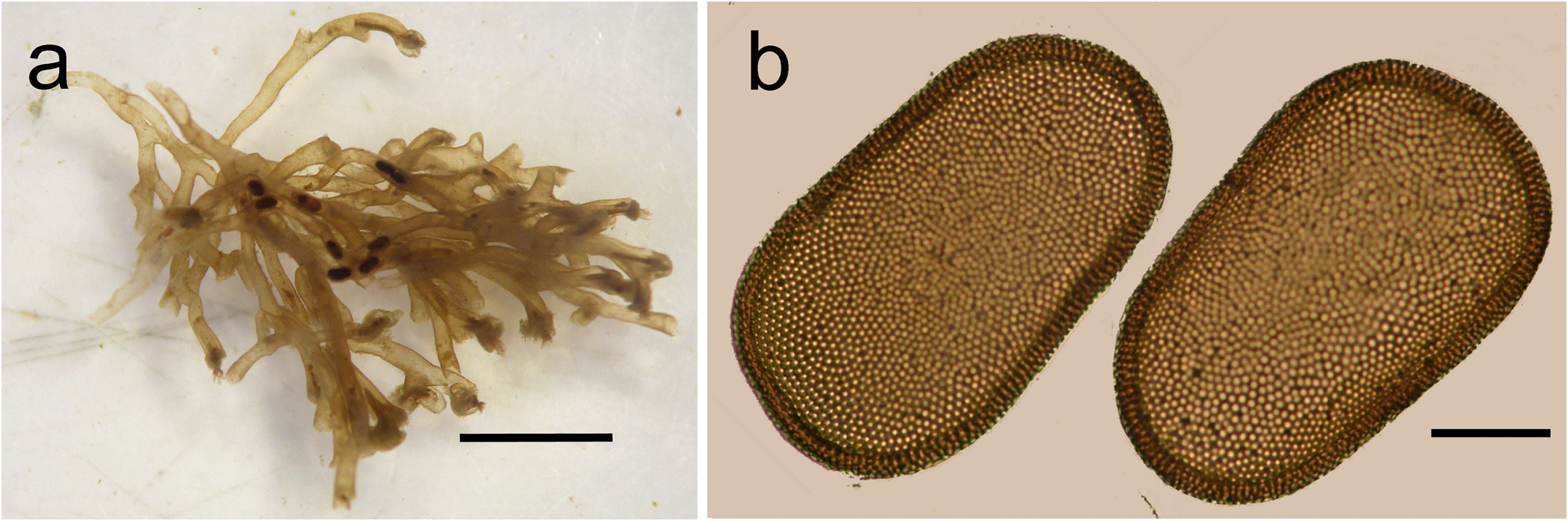
Remarks. Several containers at ZSI are labelled Fredericella indica “ type. ” Essential statoblasts are lacking in ZEV 3637 / 7, ZEV 3759 / 7 and ZEV 4125 / 7. Specimen ZEV 3479 / 7 includes two vials, one of which contains only wood fibers. However, the other vial in ZEV 3479 / 7 has excellent material with good colony structure and about 22 statoblasts matching Annandale’s original description. Another good specimen closely resembling the lectotype is NHMUK 1914.10.2.1 collected 1 October 1914 in Columbo, Sri Lanka by L. F. Hincks. Two sites were listed by Annandale where F. indica had been collected: Igatpuri Lake northeast of Mumbai and Sasthamcotta Lake in Kerala State. In 1987 I had the opportunity to search for F. indica at Igatpuri Lake, but found only F. sultana with smooth statoblasts. At the U. S. National Museum a specimen from Igatpuri Lake labelled Fredericella indica also is clearly F. sultana (No. 5165, collected by R. Hodgart). Annandale saw the small depressions on the statoblast as “ minute prominences ” an understandable misinterpretation. He noted that the markings were “ sometimes sparser in the middle than towards the edges, ” although this was not confirmed in his material from Sasthamcotta Lake. The textured statoblast surface in F. indica contrasts sharply with the mirror-smooth surface of statoblasts in F. sultana (Wood & Backus 1992). However, the distinction is not immediately obvious unless the statoblasts are viewed in a dry condition with reflected light. The statoblasts of F. sultana are shiny, while those of F. indica appear dull. Isolated frontal valves in water also show the difference very plainly with transmitted light. In a study of Lake Erie bryozoans Rogick (1935, 1937) noted a “ roughened ” surface in certain fredericellid statoblasts, and her 1937 illustration is remarkably similar to that of Annandale’s F. indica. Rogick suggested the rough texture occurred only in “ old statoblasts. ” When Bushnell (1965) surveyed the nearby state of Michigan he reported “ reticulations ” on the statoblasts to be “ obscure to reasonably clear. ” A re-examination of Bushnell’s collection at Michigan State University and Rogick’s Lake Erie collection at the U. S. National Museum showed that virtually every fredericellid specimen had strongly textured statoblasts (Wood, unpublished). Collections from 22 sites in Ohio gave similar results (Wood 1989), leading to the assumption that F. indica was a common species entrenched in North America, previously mistaken for F. sultana (Wood & Backus 1992). The same species has since been reported from a site in Germany (Massard & Geimer 1996). It was also collected from multiple locations in Norway, but only in cold water, mostly at 11 – 15 ° C and never warmer than 20 ° C. (Økland & Økland 2001). This led to speculation that northern species might be a separate group undetected by morphology alone. It seemed inconceivable that the same species would thrive on the Indian subcontinent as well as above the Arctic Circle. A closer examination of Annandale’s F. indica from the ZSI provides new insight. The pitted surface texture fades along the periphery of both valves, leaving the entire suture area relatively smooth (Fig. 1 a, c, d). This is consistent with the specimen from Sri Lanka (NHMUK 1914.10.2.1), but such peripheral fading is not seen in material from North America or Europe. In fact, in the more northern material the densely pitted texture clearly extends uniformly across the entire statoblast surface, extending to the suture itself (Figs 1 b, e, 12 b) (Wood & Backus 1992; Geimer & Massard 1986; Økland & Økland 2001). This morphological difference provides a distinction between Annandale’s Fredericella indica and the very similar species occurring in North America and Europe, which is now to be designated Fredericella borealis and is described below as a new species.
Wood, Timothy S. (2022): Phylactolaemate bryozoans at the Zoological Survey of India and a taxonomic key to Indian Phylactolaemata. Zootaxa 5200 (2): 401-435, DOI: 10.11646/zootaxa.5200.5.1
Distribution. India and Sri Lanka.
Wood, Timothy S. (2022): Phylactolaemate bryozoans at the Zoological Survey of India and a taxonomic key to Indian Phylactolaemata. Zootaxa 5200 (2): 401-435, DOI: 10.11646/zootaxa.5200.5.1
Type material. ZSI No. 3479 / 7 (lectotype, chosen here) collected 1909 at Sasthamkotta Lake, 16 km NNW Kollam in what is now Kerala State, India, by Annandale. Characterization. Colony matches the original description by Annandale (1909 b). Statoblasts bear a fine reticulation in which the lattice walls leave small, rounded depressions covering most of the surface except for a band along both side of the suture, which is smooth; reticulation is less strongly expressed on the basal valve than on the frontal valve. Status. The species is valid. Additional references. Annandale 1910: p. 39 – 40; 1911: p. 210, fig. 41 A – C.
Wood, Timothy S. (2022): Phylactolaemate bryozoans at the Zoological Survey of India and a taxonomic key to Indian Phylactolaemata. Zootaxa 5200 (2): 401-435, DOI: 10.11646/zootaxa.5200.5.1
Export occurrence data
Darwin Core Archive (ZIP)
CLASSIFICATION
Taxonomic Classification Tree

MULTIMEDIA
Media Files(2)
FIGURE 1. Fredericella statoblast valves with pitted exterior. (a) Fredericella indica statoblast valve showing a smooth surface at the ends, from Annandale’s type specimen, ZSI 3479, valve has curled upon drying; (b) Fredericella borealis showing pitted surface at the ends, from Magerøya Island, Norway; (c) Fredericella indica, lateral view showing smooth region near the suture, from NHMUK 1914.10.2.1, Colombo, Sri Lanka; (d) Enlargement of previous photo; (e) Enlarged view of suture area of F. borealis from Illinois, USA, showing reticulation extending to the suture. Scale bars for a–c = 100 µm, scale bars for d–e = 20 µm.
Imageimage/png© Wood, Timothy S.Wood, Timothy S.
IMAGES