
AnimaliaNot EvaluatedacceptedspeciesAccepted
Stolella indica
GBIF:203932753
ABOUT
Descriptions(4)
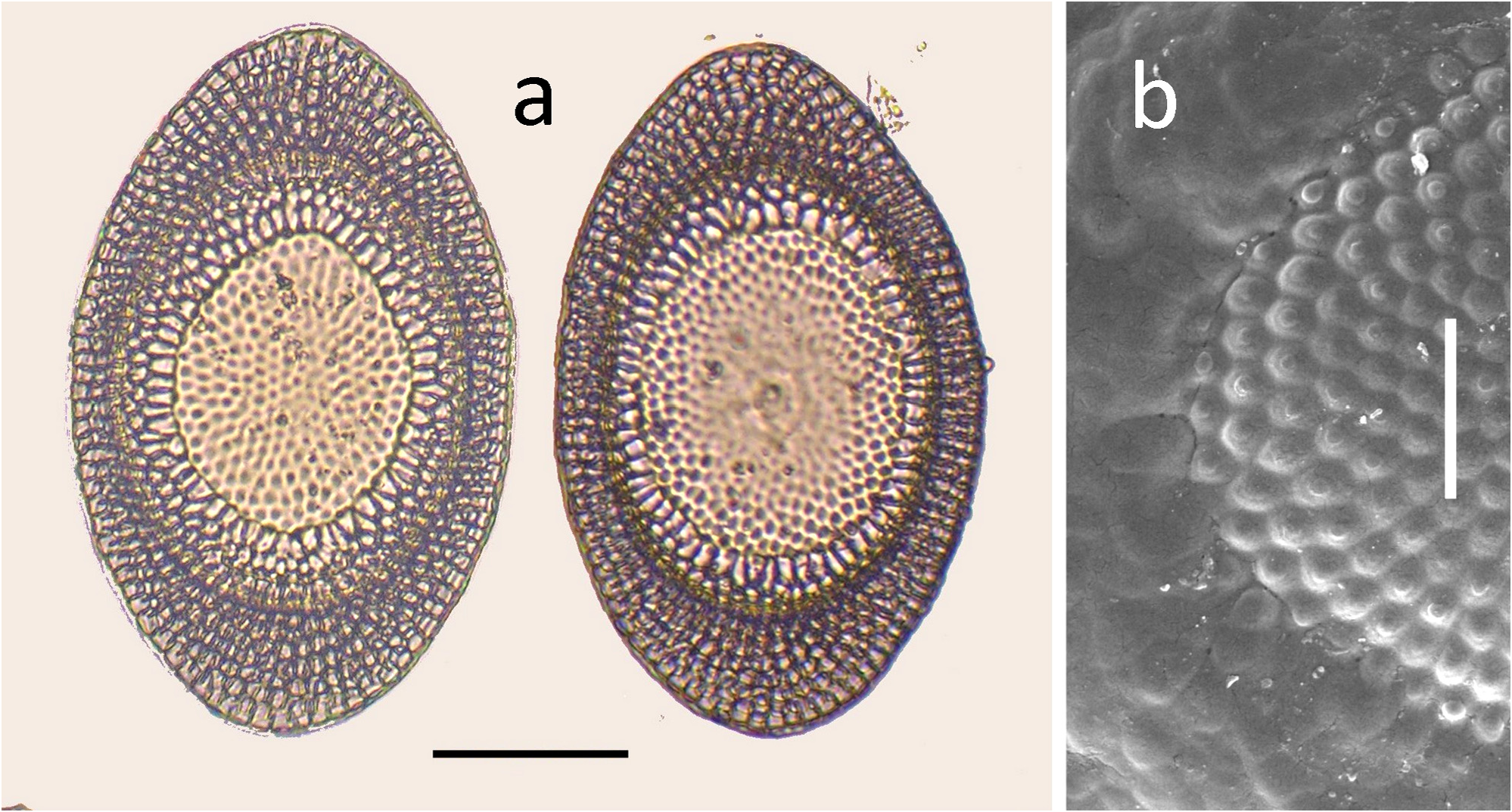
(Fig. 11) Original description. Stolella indica: Annandale, 1909 a: p. 279, 280.
Wood, Timothy S. (2022): Phylactolaemate bryozoans at the Zoological Survey of India and a taxonomic key to Indian Phylactolaemata. Zootaxa 5200 (2): 401-435, DOI: 10.11646/zootaxa.5200.5.1
Remarks. According to Annandale (1911) this species was found growing over colonies of the ctenostome bryozoan, Hislopia lacustris Carter, 1858. The holotype consists of two flat flakes, each about 2 cm 2, composed mostly of Hislopia but with some tubules of the phylactolaemate, including a few floatoblasts and sessoblasts. Another specimen, ZEV 3748 / 7 also is labeled Stolella indica “ Type ” from a “ Tank east of Sealdah, Calcutta. ” The material is sparse and stringy, attached to a small stem and lacking statoblasts. Its designation as a “ type ” is surely in error and should be disregarded. Lacourt (1968) mentions an additional specimen of Stolella indica, ZEV 4925 / 7 (from Madras, collected by K. R. Menon), and although it is listed in the ZSI catalog it seems to be missing from the collection. The distinctive spindle shape of the floatoblast is very similar to floatoblasts of Swarupella andamanensis Shrivastava, 1981 and S. kasetsartensis Wood et al., 2006. All three species also have roughened sutures that project beyond the floatoblast margin as small spines or rounded knobs. The floatoblasts are relatively small with a length seldom exceeding 350 µm. Despite these similarities, “ Stolella indica ” is placed in the genus Rumarcanella because of its small statoblasts with hypertubercles while the other two species remain for now in Swarupella Shrivastava, 1981 due to the roughened suture. A molecular approach with fresh material may be necessary to sort this out. This species has twice been reported in error from sites beyond India. A species in North American described as Stolella indica (Rogick 1943) appears instead to be Plumatella repens (L.). The species in East Africa identified as Stolella indica (Wiebach 1964) was actually an undescribed species, now Plumatella kisalensis Wood, 2020.
Wood, Timothy S. (2022): Phylactolaemate bryozoans at the Zoological Survey of India and a taxonomic key to Indian Phylactolaemata. Zootaxa 5200 (2): 401-435, DOI: 10.11646/zootaxa.5200.5.1
Distribution. The species is known from its original collection site in Uttar Pradesh as well as unspecified sites near Kolkata (Annandale 1909).
Wood, Timothy S. (2022): Phylactolaemate bryozoans at the Zoological Survey of India and a taxonomic key to Indian Phylactolaemata. Zootaxa 5200 (2): 401-435, DOI: 10.11646/zootaxa.5200.5.1
Type material. ZEV 3482 / 7 (holotype) collected 29 July 1908 from a pond in Bulandsharh, Uttar Pradesh by H. J. Walton Characterization. According to Annandale (1911) “ zoecia are short and slender, erect or nearly so, distinctly emarginate and furrowed. Their ectocyst is soft, colorless and transparent but minutely roughened on the surface. ” Tentacles 30 – 35, colonies “ usually fixed to the roots of duckweed or to the stems of other plants. ” Floatoblasts distinctively shaped, widest in the middle and tapering towards narrowly rounded ends, dorsal fenestra slightly smaller than the ventral fenestra and surrounded by a slightly raised shoulder; both fenestrae covered by densely arranged tubercles bearing hypertubercles; individual cells of the annulus convex; floatoblast suture with knots and rounded protuberances projecting outwards to give the floatoblast edge a finely serrated appearance; dimensions of two similar floatoblasts about 334 µm long and 218 µm wide. Status. This species appears to be valid. However, the presence of hypertubercles, revealed by SEM, places it in the genus Rumarcanella (Hirose & Mawatari, 2011 b). The updated name is Rumarcanella indica (Annandale, 1909). Additional references. Annandale 1910: p. 53; 1911: p. 229, 230, fig. 45.
Wood, Timothy S. (2022): Phylactolaemate bryozoans at the Zoological Survey of India and a taxonomic key to Indian Phylactolaemata. Zootaxa 5200 (2): 401-435, DOI: 10.11646/zootaxa.5200.5.1
Export occurrence data
Darwin Core Archive (ZIP)
CLASSIFICATION
Taxonomic Classification Tree

IMAGES