
AnimaliaNot EvaluatedacceptedspeciesAccepted
Plumatella bombayensis
Annandale, 1908
GBIF:203932757
0year
ABOUT
Descriptions(4)
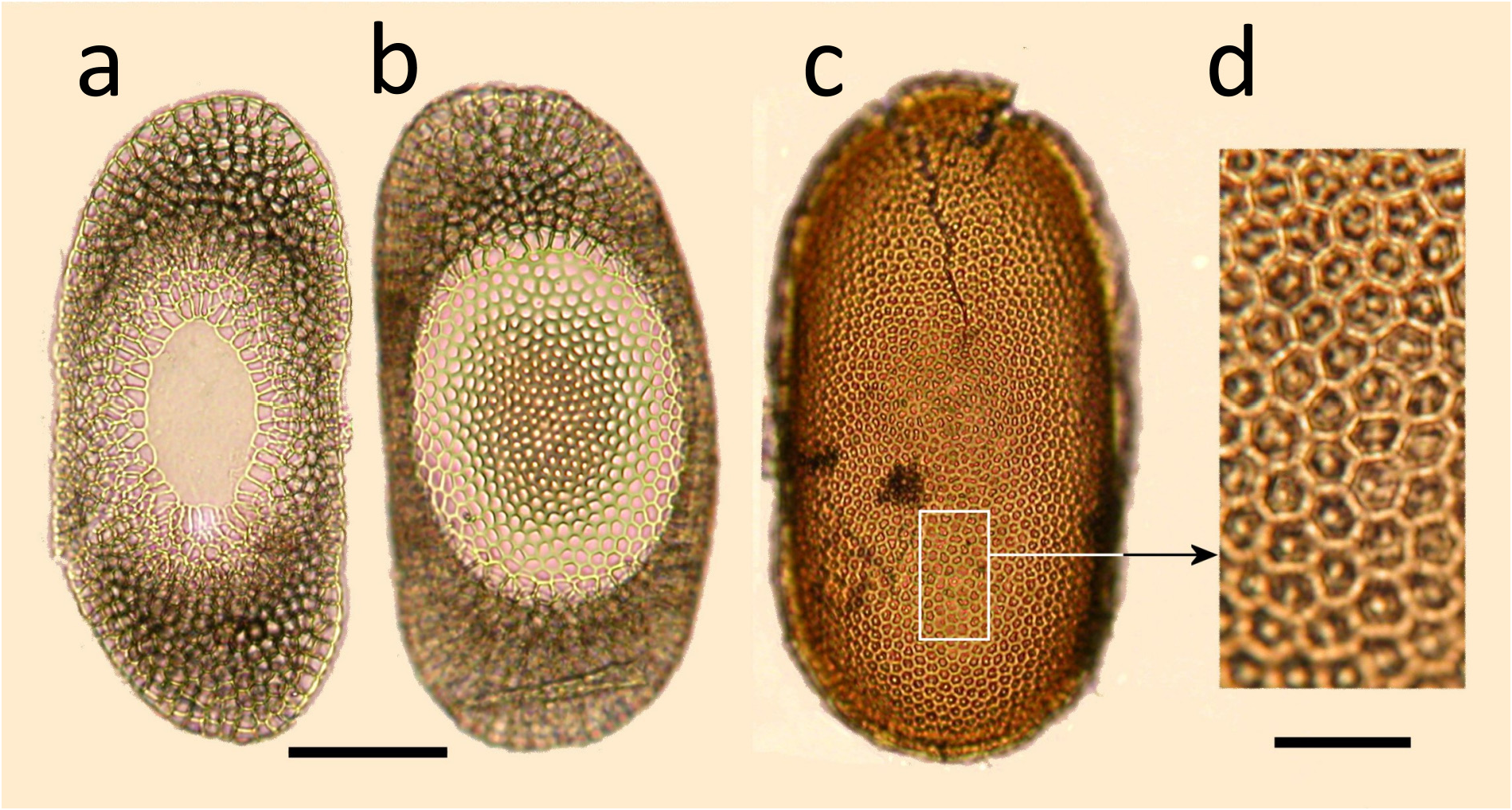
(Fig. 4) Original descriptions. Annandale, 1908: p. 169 – 171, figs 1, 2; 1910: p. 51 – 52.
Wood, Timothy S. (2022): Phylactolaemate bryozoans at the Zoological Survey of India and a taxonomic key to Indian Phylactolaemata. Zootaxa 5200 (2): 401-435, DOI: 10.11646/zootaxa.5200.5.1
Remarks. The holotype, ZEV 3759, is a small scrap of colony with immature floatoblasts. All the additional specimens referenced above include floatoblasts, and ZEV 1188 includes good sessoblasts. Described at a time when colony morphology was considered important, P. bombayensis stoked confusion with its highly variable colony form. More than a dozen specimens of P. bombayensis at the ZSI had been misidentified, either as P. emarginata, P. fruticosa, P. punctata, or P. tanganyikae. The best diagnostic features for this species are with the statoblasts. Among species with elongate floatoblasts only P. bombayensis exhibits a strongly reticulated ventral fenestra and a featureless dorsal fenestra. The prominent interstitial tubercles of the sessoblast are unique to this species. However, see below for a description of Plumatella paltensis, a similar species.
Wood, Timothy S. (2022): Phylactolaemate bryozoans at the Zoological Survey of India and a taxonomic key to Indian Phylactolaemata. Zootaxa 5200 (2): 401-435, DOI: 10.11646/zootaxa.5200.5.1
Distribution. In addition to India, Plumatella bombayensis has been documented in Myanmar, Thailand, and Cambodia; there is also a single documented occurrence from the cooling waters of a nuclear power plant in Belarus (Wood & Okamura 2005). In India the species was most recently found in Maharastra (Swami et al. 2016 b).
Wood, Timothy S. (2022): Phylactolaemate bryozoans at the Zoological Survey of India and a taxonomic key to Indian Phylactolaemata. Zootaxa 5200 (2): 401-435, DOI: 10.11646/zootaxa.5200.5.1
Type material. ZEV 3759 (holotype) collected 22 November 1909 at Igatpuri in the Western Ghat Mountains, Nashik District, Maharashtra State, India, by R. Hodgart. Additional material. ZEV 1192 and 1194 (Madhya Pradesh), ZEV 1561 (Kolkata), ZEV 1218 (Lahore), ZEV 1188, ZEV 2966, ZEV 3447 (Burma), all collected prior to 1916. Characterization. The colony is highly variable in appearance. On limited substrate it is often dense and bristling with upright zooids, the ectocyst dark but clear, stiff, and heavily sclerotized; at other times colony is spread out and rambling with ectocyst soft, thin, and opaque due to encrusting particles. Free branches are rare, with seldom a discernible raphe. Free statoblasts are elongate, the length about twice the breadth, the dorsal fenestra small and without markings, the ventral fenestra strongly reticulated. The sessile statoblast is initially covered by a tough membrane that shows a cellular structure but is otherwise quite smooth. When the membrane is shed it reveals slender tubercles emerging from deep, uniformly distributed pits (Fig. 4 c, d). Status. This is a valid species. Additional references. Plumatella fruticosa: Hora, 1926: p. 85, 86, figs 1, 2. Plumatella (Afrindella) tanganyikae, Rao, 1929: p. 270, 271; Plumatella longigemmis, Lacourt 1968: p. 73 – 75, pl. 15 k.
Wood, Timothy S. (2022): Phylactolaemate bryozoans at the Zoological Survey of India and a taxonomic key to Indian Phylactolaemata. Zootaxa 5200 (2): 401-435, DOI: 10.11646/zootaxa.5200.5.1
Export occurrence data
Darwin Core Archive (ZIP)
CLASSIFICATION
Taxonomic Classification Tree

MULTIMEDIA
Media Files(1)
FIGURE 4. Plumatella bombayensis. Statoblasts from ZEV 3804, Zoological Gardens, Kolkata. (a) Floatoblast dorsal valve showing small, unmarked fenestra; (b) Floatoblast ventral valve showing pronounced fenestra reticulation; (c) Sessoblast showing reticulation in which each cell bears a single tubercle; (d) Partial enlargement of previous image. Scale bars for a–c = 100 µm, scale bar for d = 20 µm.
Imageimage/png© Wood, Timothy S.Wood, Timothy S.
IMAGES