AnimaliaNot EvaluatedacceptedspeciesAccepted
Plumatella crispa

Plumatella crispa

Wood, 2022

GBIF:203932759

0year

ABOUT

Descriptions(7)

(Fig. 15)
Wood, Timothy S. (2022): Phylactolaemate bryozoans at the Zoological Survey of India and a taxonomic key to Indian Phylactolaemata. Zootaxa 5200 (2): 401-435, DOI: 10.11646/zootaxa.5200.5.1
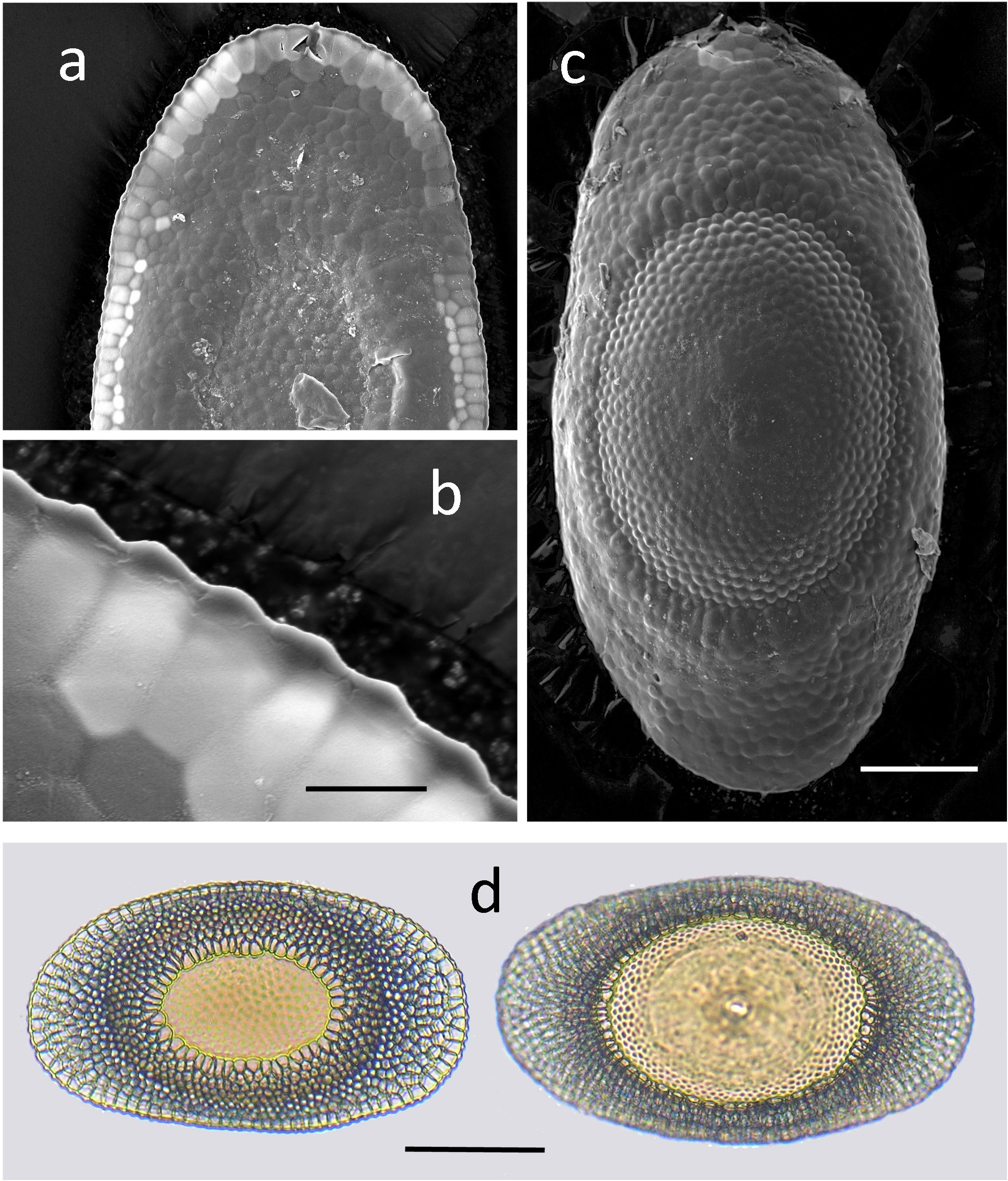
Description. Colony appearing as a tangle of branching tubules extending from the substratum; floatoblasts long and narrow (Table 1), floatoblast dorsal fenestra relatively small, with length and width less than half of corresponding outer dimensions of the floatoblast; tubercles on the dorsal fenestra low and rounded, with little space between them, dorsal valve margins distinctively scalloped or lightly curled; floatoblast ventral fenestra broadly oval, nearly twice as wide as the dorsal fenestra, with low, rounded tubercles that fade towards the center.
Wood, Timothy S. (2022): Phylactolaemate bryozoans at the Zoological Survey of India and a taxonomic key to Indian Phylactolaemata. Zootaxa 5200 (2): 401-435, DOI: 10.11646/zootaxa.5200.5.1
Diagnosis. The colony appears as a tangle of free branches; dorsal margin of the floatoblast slightly curled inwards.
Wood, Timothy S. (2022): Phylactolaemate bryozoans at the Zoological Survey of India and a taxonomic key to Indian Phylactolaemata. Zootaxa 5200 (2): 401-435, DOI: 10.11646/zootaxa.5200.5.1
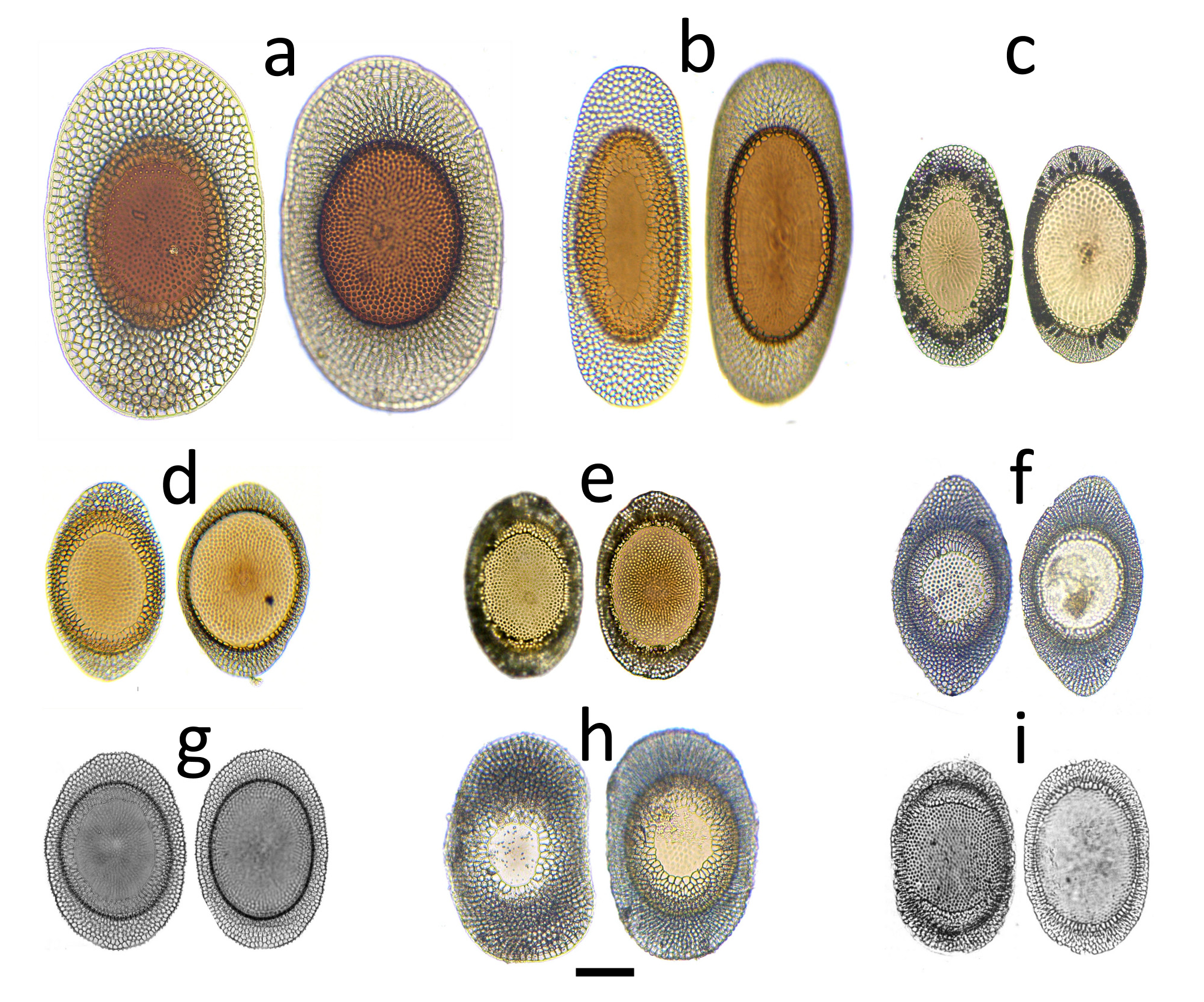
Remarks. The holotype colony is attached in places to a small piece of reed. Sessoblasts are absent. The marginal curling of the floatoblast is best seen with scanning microscopy, but is nevertheless detectable when the isolated valve is viewed with a compound microscope. The initial designation of this species as Plumatella fruticosa is understandable, since colonies of both species have free branches, the floatoblasts are long and narrow, and the dorsal fenestrae are relatively small. An important difference is one of scale: with P. fruticosa the floatoblast length is over 500 µm (Fig. 20 b), while in P. crispa n. sp. it is less than 400 µm.
Wood, Timothy S. (2022): Phylactolaemate bryozoans at the Zoological Survey of India and a taxonomic key to Indian Phylactolaemata. Zootaxa 5200 (2): 401-435, DOI: 10.11646/zootaxa.5200.5.1
Distribution. The species is known only from its type locality in China.
Wood, Timothy S. (2022): Phylactolaemate bryozoans at the Zoological Survey of India and a taxonomic key to Indian Phylactolaemata. Zootaxa 5200 (2): 401-435, DOI: 10.11646/zootaxa.5200.5.1
Etymology. The specific epithet is from the Latin adjective crispus, meaning curled or curly, in reference to the upturned dorsal margin of the floatoblast.
Wood, Timothy S. (2022): Phylactolaemate bryozoans at the Zoological Survey of India and a taxonomic key to Indian Phylactolaemata. Zootaxa 5200 (2): 401-435, DOI: 10.11646/zootaxa.5200.5.1
Holotype. ZSI P 163 collected 1 January 1922 in “ Canton, China ” by A. W. L. Oliver, originally labeled “ Plumatella fruticosa ”.
Wood, Timothy S. (2022): Phylactolaemate bryozoans at the Zoological Survey of India and a taxonomic key to Indian Phylactolaemata. Zootaxa 5200 (2): 401-435, DOI: 10.11646/zootaxa.5200.5.1

Export occurrence data

Darwin Core Archive (ZIP)

CLASSIFICATION

Taxonomic Classification Tree

MULTIMEDIA

Media Files(2)

FIGURE 15. Floatoblasts of Plumatella crispa n. sp. from the holotype, P163 (a) Partial SEM view of dorsal valve; (b) Enlarged portion of floatoblast dorsal valve margin showing distinctive crease; (c) SEM view of ventral valve; (d) Floatoblast valves seen with light microscopy. Scale bars = 50 µm for a, c, and d, 10 µm for b.

Imageimage/png© Wood, Timothy S.Wood, Timothy S.

FIGURE 20. Miscellaneous floatoblasts. (a) Hyalinella lendenfeldi; (b) Plumatella fruticosa not from India; (c) Plumatella casmiana; (d) Plumatella javanica; (e) Rumarcanella vorstmani; (f) Swarupella andamanensis; (g) Swarupella divina; (h) Varunella coronifera; (i) Varunella indorana. Scale bar = 100 µm. Figure (i) modified from Wiebach, 1974.

Imageimage/png© Wood, Timothy S.Wood, Timothy S.

IMAGES

Gallery(2)

See Gallery

Occurrences with images

Source Information

Phylactolaemate bryozoans at the Zoological Survey of India and a taxonomic key to Indian Phylactolaemata

checklist

This dataset contains the digitized treatments in Plazi based on the original journal article Wood, Timothy S. (2022): Phylactolaemate bryozoans at the Zoological Survey of India and a taxonomic key to Indian Phylactolaemata. Zootaxa 5200 (2): 401-435, DOI: 10.11646/zootaxa.5200.5.1

Abstract

A review of the phylactolaemate (freshwater) bryozoan collection at the Zoological Survey of India in Kolkata reaches the following conclusions: (1) Fredericella indica Annandale, 1909 from the Indian subcontinent is not the same as the species widely known as F. indica from the northern temperate zones; the latter species name is now changed to Fredericella borealis; (2) Plumatella bigemmis Annandale, 1919 is a junior synonym of Plumatella fungosa Pallas, 1768; (3) Plumatellia persica Annandale, 1919 is a junior synonym of Plumatella casmiana Oka, 1907; (4) Plumatella (Afrindella) testudinicola Annandale, 1912 combines two previously known species: Plumatella bombayensis Annandale, 1908 and Plumatella casmiana Oka, 1907; (5) Rumarcanella minuta (Toriumi, 1941) is a junior synonym of Stolella himalayana Annandale, 1911 which now becomes Rumarcanella himalayana based on statoblast hypertubercles; (6) Plumatella longigemmis Annandale, 1915 and Hyalinella (Australella) indica Annandale, 1915 are both junior synonyms of Hyalinella lendenfeldi (Ridley, 1886); (7) Stolella indica Annandale, 1909, Swarupella andamanensis Rao, 1961 and Swarupella kasetsartensis Wood, 2006, may all be synonymous. The species Plumatella bombayensis is confirmed, and its holotype is re-described. In addition to Fredericella borealis four new species are presented: Plumatella crispa, P. dhritiae, P. paltensis and P. raoi. Validity is rejected for the genera Afrindella, Australella, Stolella, and Swarupella. The genera Rumarcanella and Varunella require refinement and documentation.A taxonomic key to the Indian Phylactolaemata concludes this paper.

Wood T S, plazi (2022). Phylactolaemate bryozoans at the Zoological Survey of India and a taxonomic key to Indian Phylactolaemata. Plazi.org taxonomic treatments database. Checklist dataset https://doi.org/10.15468/9ygzz4 accessed via GBIF.org on 2026-06-17.

CC0Published 11/1/2022View dataset
GBIF Usage Key
203932759
Dataset Key
58f68688-480d-45c7-bf1b-773e9dfd96a9
Origin
source
Backbone Key
11725619
Taxon ID
762C8786FFF8FFAF2390FA1DA4FA5AC5.taxon
Last Crawled
6/9/2026
Last Interpreted
6/9/2026