
AnimaliaacceptedspeciesAccepted
Placosaurus spec.

Placosaurus spec.

GBIF:216223920

ABOUT

Descriptions(4)

(Figs 19 - 22)
Georgalis, Georgios L., Čerňanský, Andrej, Klembara, Jozef (2021): Osteological atlas of new lizards from the Phosphorites du Quercy (France), based on historical, forgotten, fossil material. Geodiversitas 43 (9): 219-293, DOI: 10.5252/geodiversitas2021v43a9
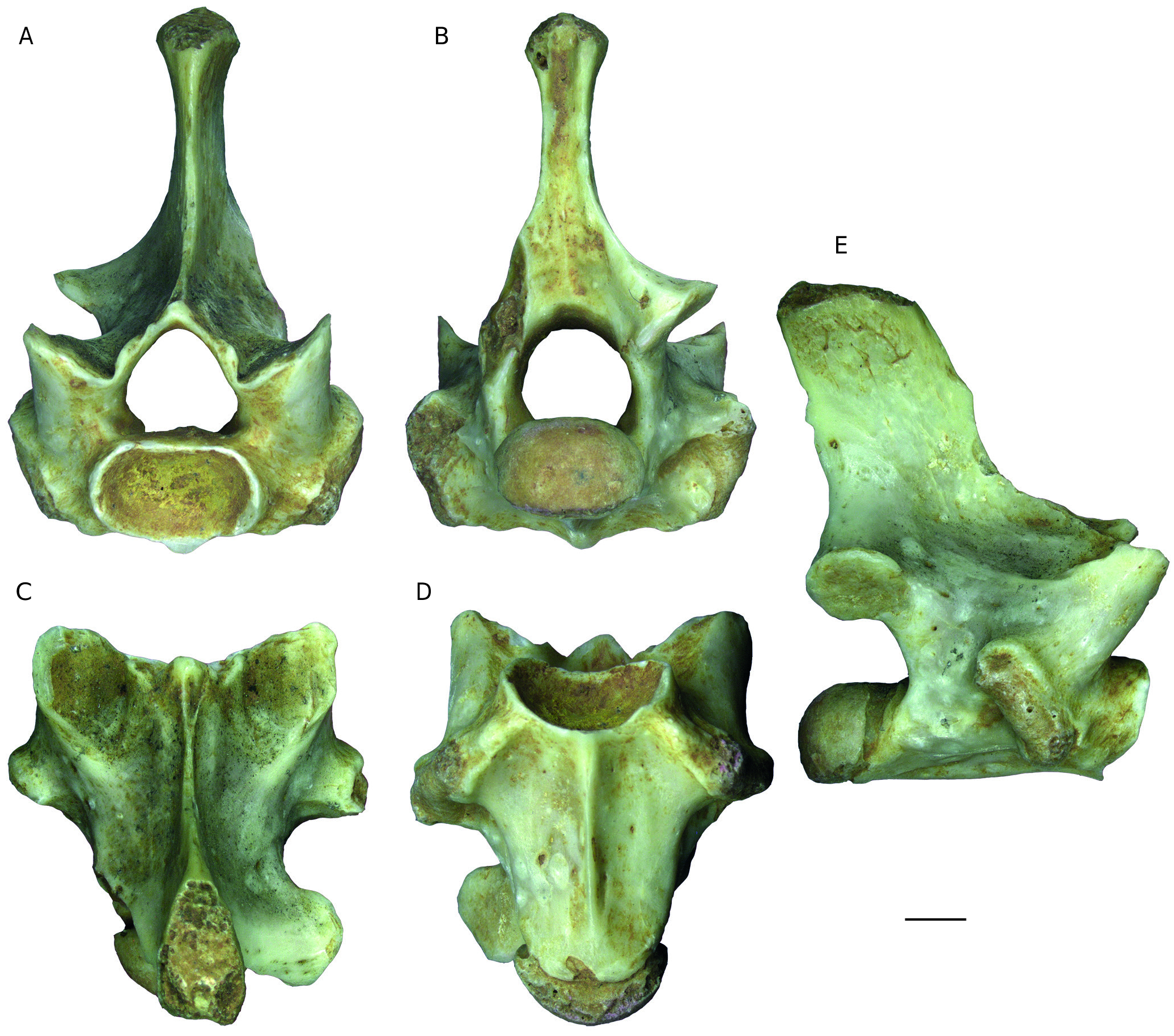
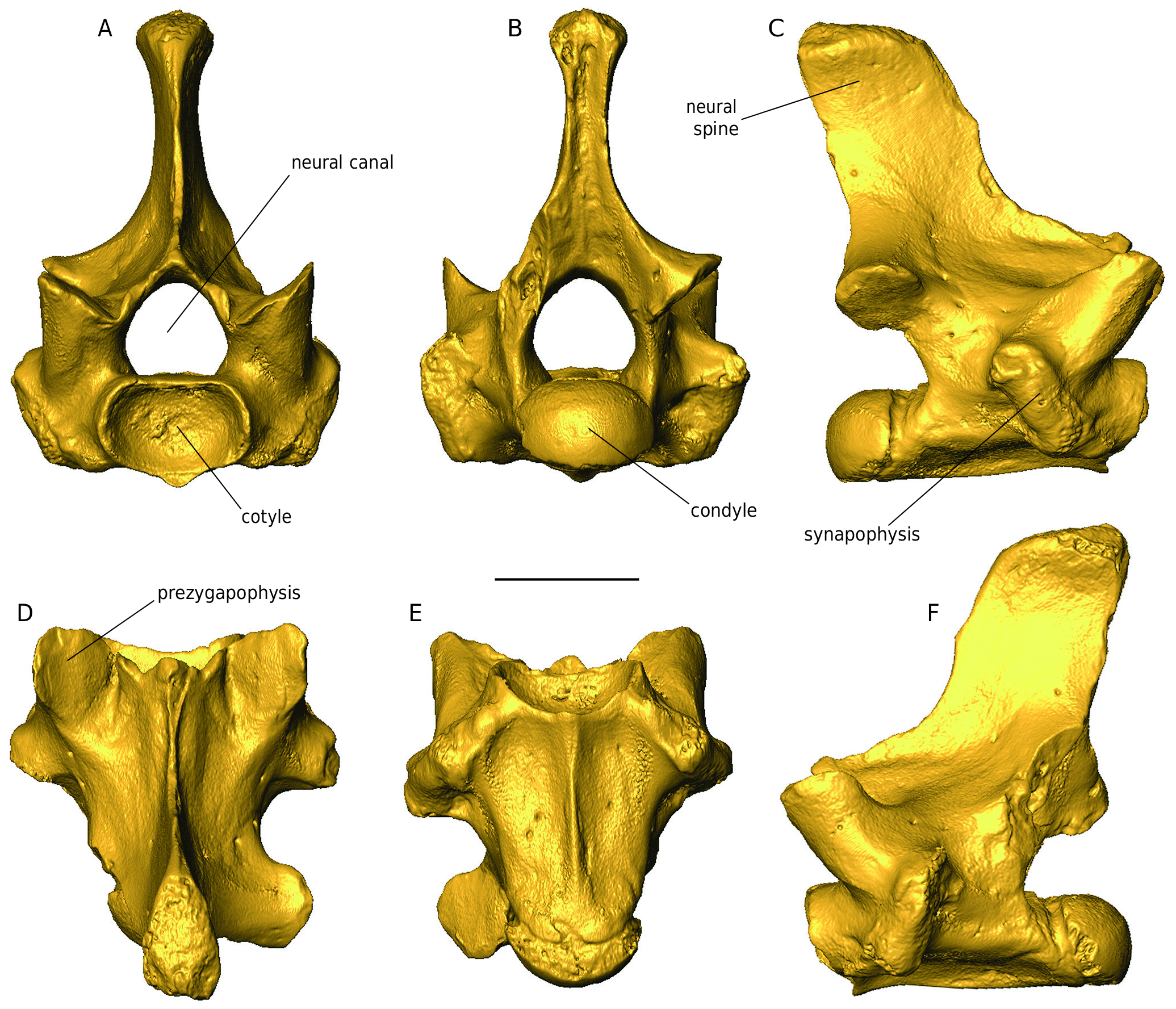
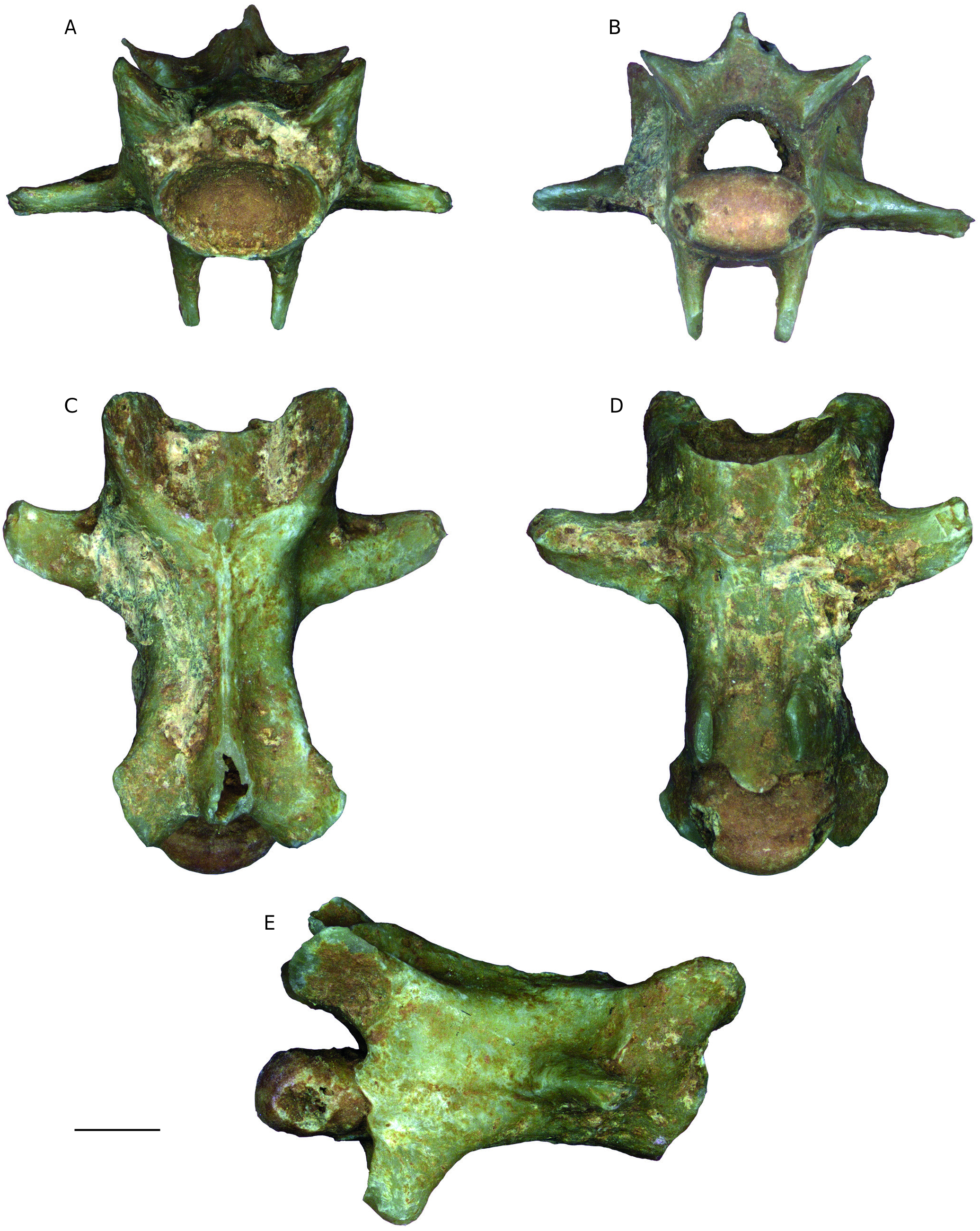
DESCRIPTION Presacral vertebrae (Figs 19 - 21) The vertebra NHMW 2019 / 0046 / 0001 is relatively large (centrum length = 9.8 mm) (Figs 20; 21), while the cervical vertebra (NHMW 2019 / 0046 / 0002) is also large, with a centrum length of 8.5 mm (Fig. 19) (Appendix 1). NHMW 2019 / 0046 / 0001 is primarily characterized by the presence of a median ridge running throughout the ventral surface of the centrum (Figs 20; 21). This median ridge is prominent and sharp, being slightly thicker at its anteriormost portion. Nevertheless, in the single known, cervical vertebra (NHMW 2019 / 0046 / 0002), this median ridge is substituted by a thick hypapophysis (Fig. 19). The base of the hypapophysis in this specimen is broad and extends throughout the entire midline surface of the centrum. In this cervical vertebra, the neural spine is relatively thick in dorsal view, while in lateral view it is inclined much posteriorly and develops in height mostly in the posterior portion of the neural arch. In NHMW 2019 / 0046 / 0001, the neural spine is rather high in lateral view, whereas in anterior view, it possesses a distinctive dorsal thickening. The neural spine augments in height only at the posterior half of the neural arch, but its base extends, in the shape of a longitudinal ridge, much anteriorly, reaching the anteriormost edge of the neural arch. The prezygapophyses are much dorsally inclined. The postzygapophyses are small. The synapophyses are massive and elongated. The cotyle and the condyle are dorsoventrally depressed. Similarly to the vertebrae of Palaeovaranus described below, the cotyle is rather anteroventrally directed, so that its dorsal level can be observed even in ventral view of the specimens. Unlike the melanosaurine and palaeovaranid presacral vertebrae described below, there are no anocotylar foramina (i. e., foramina above the cotyle). NHMW 2019 / 0046 / 0008 is a rather fragmentary specimen and its size cannot be fully evaluated, though it is certainly a much smaller specimen than the other two. The median ridge in this specimen is in fact a much wide surface and not sharp; the fact that the posterior portion of the ventral surface of the centrum is totally missing does not even permit to identify this specimen as a cervical or post-cervical vertebra. The referral of NHMW 2019 / 0046 / 0008 to Placosaurus should be considered as rather tentative. Caudal vertebra (Fig. 22) The single available caudal vertebra NHMW 2019 / 0046 / 0009 is relatively large in size, with a centrum length of 9.5, but its outline is rather slender (Fig. 22). The transverse processes extend laterally in dorsal view. The neural spine is much broken but seems to have been developed only at the posterior half of the neural arch, although, similarly to the presacral vertebrae, its base was extending also anteriorly until the anteriormost edge of the neural arch, in the shape of a thin longitudinal ridge. The prezygapophyses are strongly dorsally inclined in anterior view. Both cotyle and condyle are dorsoventrally depressed. The haemapophyses are not fused to each other and appear almost parallel in ventral and posterior views; they are situated rather near the level of the condyle. The autotomic septum is evident in the anterior portion of the ventral surface of the centrum, at the level of the transverse processes.
Georgalis, Georgios L., Čerňanský, Andrej, Klembara, Jozef (2021): Osteological atlas of new lizards from the Phosphorites du Quercy (France), based on historical, forgotten, fossil material. Geodiversitas 43 (9): 219-293, DOI: 10.5252/geodiversitas2021v43a9
REMARKS
Georgalis, Georgios L., Čerňanský, Andrej, Klembara, Jozef (2021): Osteological atlas of new lizards from the Phosphorites du Quercy (France), based on historical, forgotten, fossil material. Geodiversitas 43 (9): 219-293, DOI: 10.5252/geodiversitas2021v43a9
REFERRED SPECIMENS. — Three presacral vertebrae (NHMW 2019 / 0046 / 0001, NHMW 2019 / 0046 / 0002, andpossiblyalsoNHMW 2019 / 0046 / 0008); one caudal vertebra (NHMW 2019 / 0046 / 0009).
Georgalis, Georgios L., Čerňanský, Andrej, Klembara, Jozef (2021): Osteological atlas of new lizards from the Phosphorites du Quercy (France), based on historical, forgotten, fossil material. Geodiversitas 43 (9): 219-293, DOI: 10.5252/geodiversitas2021v43a9

Export occurrence data

Darwin Core Archive (ZIP)

CLASSIFICATION

Taxonomic Classification Tree

MULTIMEDIA

Media Files(4)

FIG. 19. — Placosaurus sp. Photographs of cervical vertebra NHMW 2019/0046/0002 in anterior (A), posterior (B), dorsal (C), ventral (D), and right lateral (E) views. Scale bar: 2 mm.
Imageimage/png© Georgalis, Georgios L.;Čerňanský, Andrej;Klembara, JozefGeorgalis, Georgios L.;Čerňanský, Andrej;Klembara, Jozef

FIG. 20. — Placosaurus sp. Photographs of presacral vertebra NHMW 2019/0046/0001 in anterior (A), posterior (B), dorsal (C), ventral (D), and right lateral (E) views. Scale bar: 2 mm.
Imageimage/png© Georgalis, Georgios L.;Čerňanský, Andrej;Klembara, JozefGeorgalis, Georgios L.;Čerňanský, Andrej;Klembara, Jozef

FIG. 21. — Placosaurus sp. Virtual 3D models of presacral vertebra NHMW 2019/0046/0001 in anterior (A), posterior (B), right lateral (C), dorsal (D), ventral (E), and left lateral (F) views. Scale bar: 5 mm.
Imageimage/png© Georgalis, Georgios L.;Čerňanský, Andrej;Klembara, JozefGeorgalis, Georgios L.;Čerňanský, Andrej;Klembara, Jozef

FIG. 22. — Placosaurus sp. Photographs of caudal vertebra NHMW 2019/0046/0009 in anterior (A), posterior (B), dorsal (C), ventral (D), and right lateral (E) views. Scale bar: 2 mm.

Imageimage/png© Georgalis, Georgios L.;Čerňanský, Andrej;Klembara, JozefGeorgalis, Georgios L.;Čerňanský, Andrej;Klembara, Jozef

IMAGES

Gallery(4)

See Gallery

Occurrences with images

Source Information

Osteological atlas of new lizards from the Phosphorites du Quercy (France), based on historical, forgotten, fossil material

checklist

This dataset contains the digitized treatments in Plazi based on the original journal article Georgalis, Georgios L., Čerňanský, Andrej, Klembara, Jozef (2021): Osteological atlas of new lizards from the Phosphorites du Quercy (France), based on historical, forgotten, fossil material. Geodiversitas 43 (9): 219-293, DOI: 10.5252/geodiversitas2021v43a9

MOTS CLÉS Squamata, lézards, Quercy, Paléogène, micro-CT, anatomie squelettique, espèces nouvelles.

Georgalis G L, Čerňanský A, Klembara J, felipe (2021). Osteological atlas of new lizards from the Phosphorites du Quercy (France), based on historical, forgotten, fossil material. Geodiversitas. Checklist dataset https://doi.org/10.5252/geodiversitas2021v43a9 accessed via GBIF.org on 2026-06-17.

CC0Published 4/22/2021View dataset
GBIF Usage Key
216223920
Dataset Key
04426a8e-c179-4af0-8e23-d72908e8b4cc
Origin
source
Taxon ID
03A1633BFFBAFFDC3421F8F8FB363D83.taxon
Last Crawled
6/10/2026
Last Interpreted
6/10/2026