
AnimaliaNot EvaluatedacceptedspeciesAccepted

Leptopelis bocagii
(Gunther, 1865)
GBIF:231569743
0year
ABOUT
Descriptions(1)
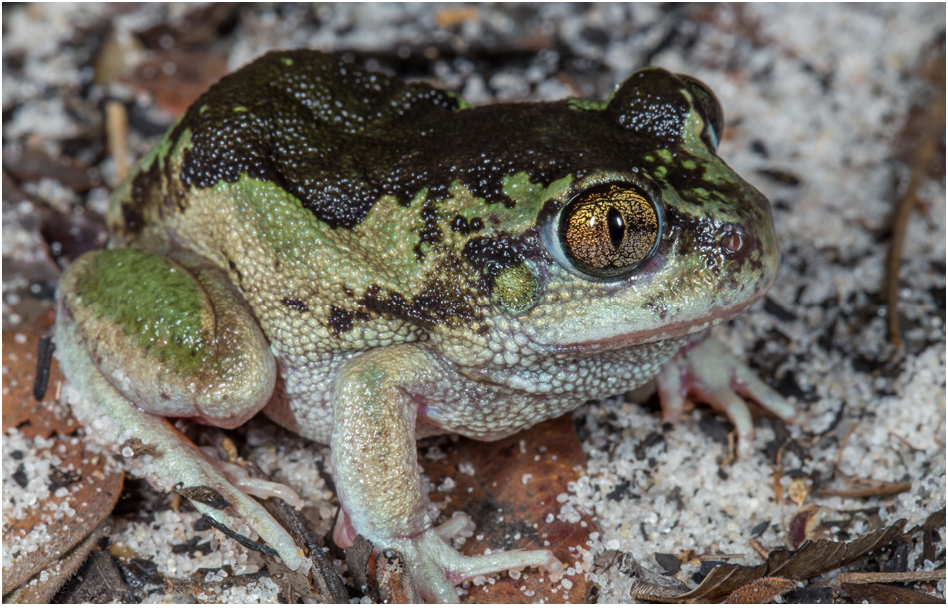
Material (46 specimens): PEM A 12701 – 10, Lungwebungu River camp bridge crossing, - 12.58347 ° 18.66598 °, 1,304 m asl; PEM A 12742 – 6, Cuando River source, - 13.00346 ° 19.12751 °, 1,346 m asl; PEM A 12772 – 4, INBAC: WC- 4634, Cuanavale River side tributary source, - 13.07452 ° 18.88345 °, 1,385 m asl; PEM A 12873 – 80, INBAC: WC- 4669 and 4672, Quembo River source lake, - 13.13624 ° 19.04591 °, 1,411 m asl; PEM A 14688 – 9, Lungwebungu River camp, massambas on left side of river, - 12.58276 ° 18.66556 °, 1,295 m asl; PEMA 14701 – 4, INBAC: WC- 6763, Lungwebungu River camp, - 12.58439 ° 18.66748 °, 1,297 m asl; PEM A 14723, PEM A 14742, Quembo River bridge camp, - 13.52746 ° 19.28060 °, 1,241 m asl; PEM A 14741, Quembo River bridge camp, trap 3, - 13.52778 ° 19.27455 °, 1,256 m asl; PEM A 14755 – 6, PEM A 14758 – 9, INBAC: WC- 6994, Quembo River right side tributary (Micongo River) past village, - 13.51877 ° 19.28487 °, 1,248 m asl; PEM A 14823, camp at side tributary (Luandai River) of the Luanguinga River, - 13.70885 ° 21.26234 °, 1,116 m asl; PEM A 14891, Luvu River camp, - 13.71200 ° 21.83538 °, 1,082 m asl. Description: Large terrestrial tree frog; broad rounded head; large protruding eyes; tympanum clearly visible; large well-developed inner metatarsal tubercle; no webbing or expanded toe tips. Dorsum varied from green to brown, with dark horseshoe pattern on the back, and dark interorbital bar; dark facial mask from snout to eye, continuing to above arm; sides of body with scattered black spots or continuous black bar between limbs; scattered white speckles on dorsum; ventrum immaculate. Breeding males with dark throat and weakly developed pectoral glands. Adult females (n = 12) varied from 41.5 – 67.8 (57.9) mm (largest female: PEM A 12746); adult males (n = 34) varied from 43.0 – 56.8 (48.6) mm (largest male: INBAC: WC- 4669). Habitat and natural history notes: Collected along the sandy margins of source lakes or rivers associated with miombo woodland. Frequently encountered in the clearings of agricultural fields near water sources. Males were found calling from the ground. Comment. These are the first records from eastern Angola, bridging the distribution gap between western Angola and Zambia (Broadley 1971; Marques et al. 2018; Baptista et al. 2019).
Conradie, Werner, Keates, Chad, Verburgt, Luke, Baptista, Ninda L., Harvey, James (2023): Contributions to the herpetofauna of the Angolan Okavango- Cuando-Zambezi river drainages. Part 3: Amphibians. Amphibian & Reptile Conservation (e 325) 17 (1): 19-56, DOI: 10.5281/zenodo.12761936
Export occurrence data
Darwin Core Archive (ZIP)
CLASSIFICATION
Taxonomic Classification Tree

MULTIMEDIA
Media Files(3)
Fig. 3. Adult male Leptopelis bocagii (brown form) from Cuando River source. Photo by James Harvey.
Imageimage/png© Conradie, Werner;Keates, Chad;Verburgt, Luke;Baptista, Ninda L.;Harvey, JamesConradie, Werner;Keates, Chad;Verburgt, Luke;Baptista, Ninda L.;Harvey, James

IMAGES