
AnimaliaNot EvaluatedacceptedspeciesAccepted
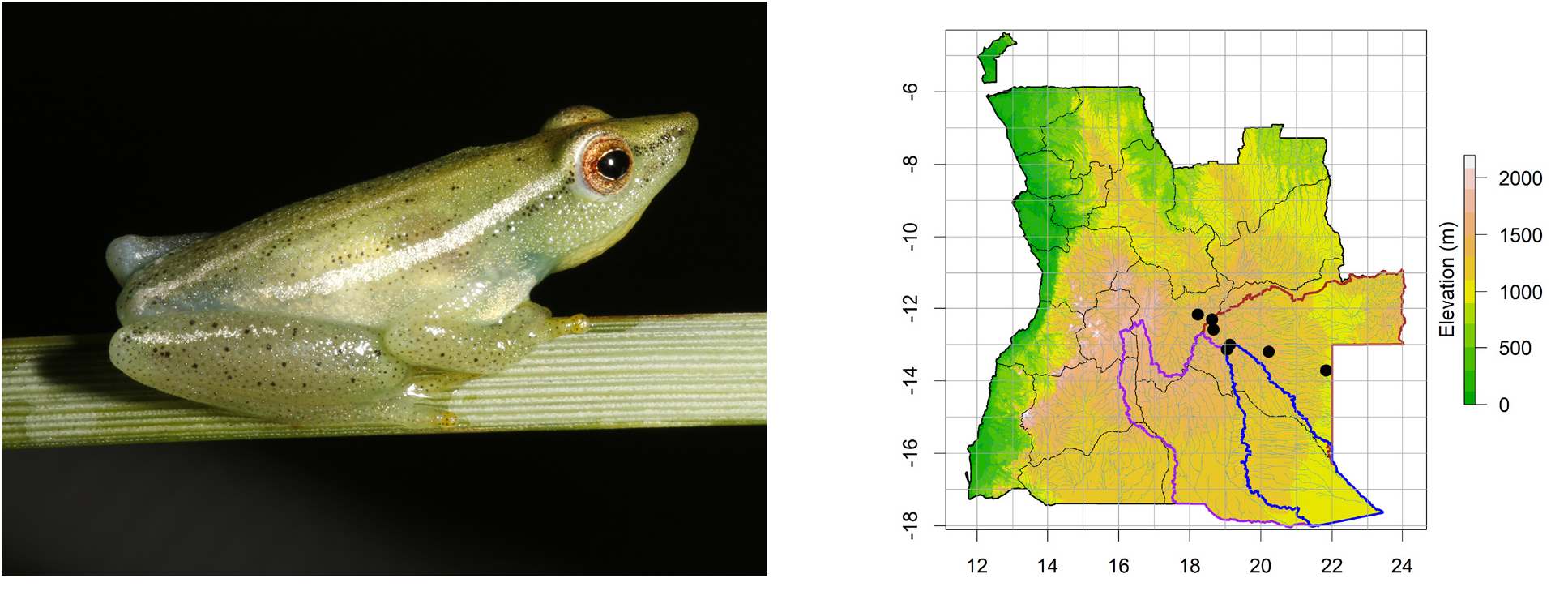
Hyperolius inyangae
Laurent, 1943
GBIF:231569758
0year
ABOUT
Descriptions(1)
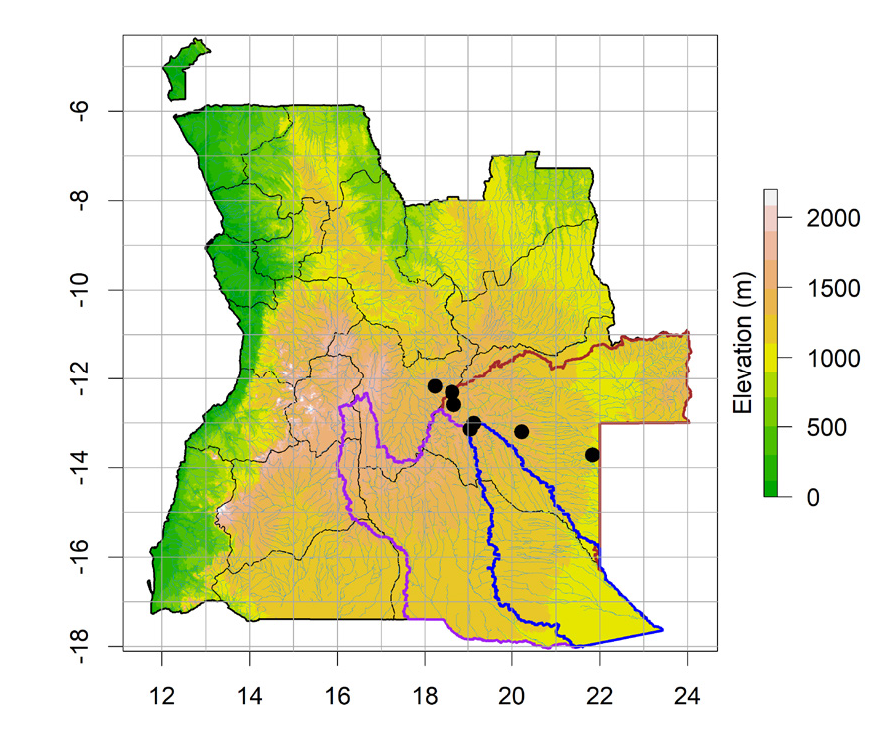
Material (30 specimens): PEM A 12730 – 3, INBAC: WC- 4839; INBAC (no number x 3), Cuando River source, - 13.00346 ° 19.12751 °, 1,353 m asl; PEM A 14793 – 803, INBAC: WC- 7023, INBAC: WC- 7025, Luio River camp floodplains, - 13.19711 ° 20.22194 °, 1,181 m asl; PEM A 13741, Lungwebungu River campsite, - 12.58319 ° 18.66570 °, 1,284 m asl; PEM A 14887 – 8, Luvu River camp, - 13.71200 ° 21.83538 °, 1,082 m asl; PEM A 12858 – 9, Quembo River source lake, - 13.13624 ° 19.04591 °, 1,366 m asl; PEM A 12500, PEM A 12513, river crossing before Samboano Village, - 12.30700 ° 18.62350 °, 1,398 m asl; PEM A 14892 – 3, wetland near old quarry east of Quemba, - 12.16960 ° 18.22965 °, 1,353 m asl. Additional material (1 specimen): P 2 - 274 (photograph and tissue sample), wetland near old quarry east of Quemba, - 12.16960 ° 18.22965 °, 1,353 m asl. Description: Small slender species of reed frog; very sharp snout with a small anterior protrusion, which extends well beyond the margin of the mouth; small black asperites on throat; pedal webbing formula: I (1), II i / e (1 – 0.75), III (1 – 0.75), IV (0.75 – 0.75), V (0.5). Dorsum lime green with white dorsolateral stripes; ventrum transparent; toe tips and webbing yellow. Adult females (n = 9) varied from 15.0 – 19.6 (16.7) mm (largest female: PEM A 12500); adult males (n = 21) varied from 12.8 – 17.9 (15.1) mm (largest male: PEM A 14893). Habitat and natural history notes: Found sympatric with Hyperolius nasutus at the Lungwebungu, Cuando, and Quembo rivers, where they were distinguished by microhabitat preference. Hyperolius cf. inyangae was found among vegetation associated with slow running water, while H. nasutus was found on margins of source lakes or flooded areas with larger bodies of open water. Comments: Bittencourt-Silva (2019) assigned a specimen from western Zambia to H. nasicus based on head shape and webbing, but mentioned that molecularly it is most like H. inyangae. The new material documented here is molecularly identical (16 S rRNA: 97.5 – 100 %) to the published sequences of H. inyangae (Channing et al. 2013; Bittencourt-Silva 2019) and agrees with the description, especially regarding the sharp snout usually with a pointed protrusion, but differs in the pedal webbing condition (Channing et al. 2013). It is reported to have reduced webbing and is illustrated as such, while the specimens here have more extensive webbing. This is either an error or there is a degree of variation in the webbing condition. The presence of this species so far to the west is an unexpected result, as H. inyangae is currently only known from the Eastern Highlands of Zimbabwe. These new records thus represent a range extension of over 1,500 km westward. Further phylogenetic work is underway to fully document the taxonomic status of this population and other species assigned to the H. nasutus or H. benguellensis complexes.
Conradie, Werner, Keates, Chad, Verburgt, Luke, Baptista, Ninda L., Harvey, James (2023): Contributions to the herpetofauna of the Angolan Okavango- Cuando-Zambezi river drainages. Part 3: Amphibians. Amphibian & Reptile Conservation (e 325) 17 (1): 19-56, DOI: 10.5281/zenodo.12761936
Export occurrence data
Darwin Core Archive (ZIP)
CLASSIFICATION
Taxonomic Classification Tree

IMAGES