
AnimaliaNot EvaluatedacceptedspeciesAccepted
Kassina kuvangensis
(Monard, 1937)
GBIF:231569762
0year
ABOUT
Descriptions(2)
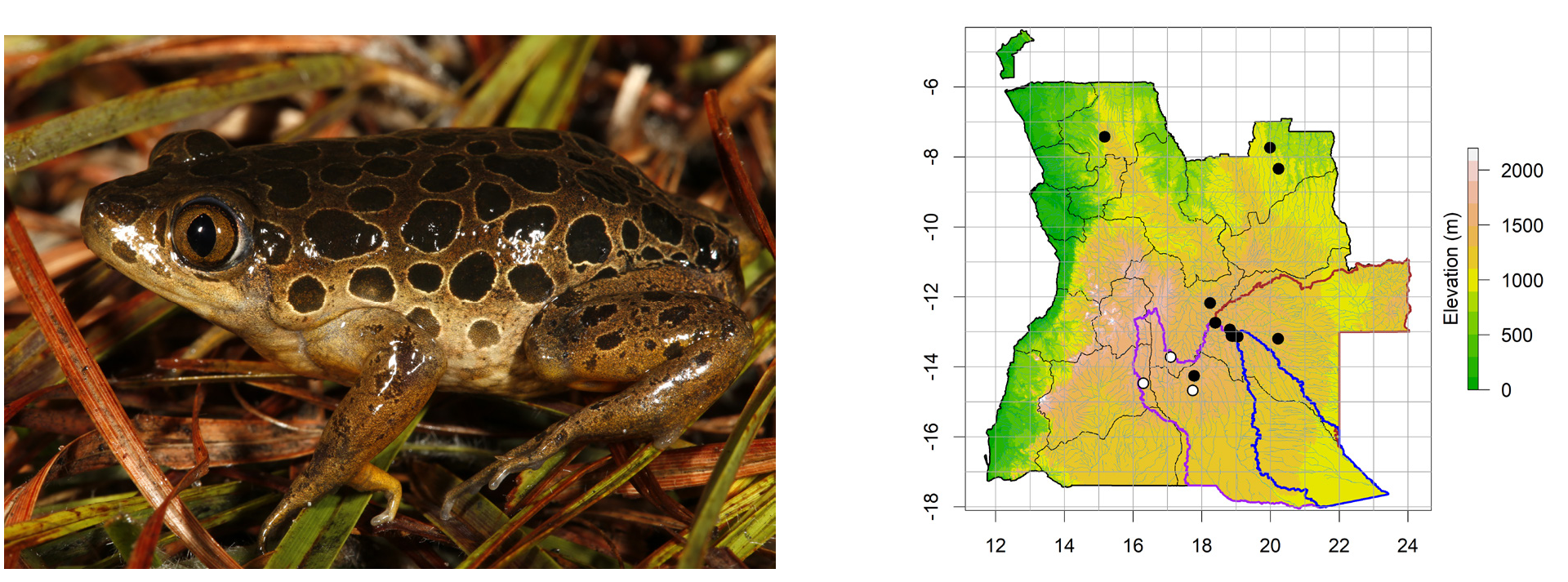
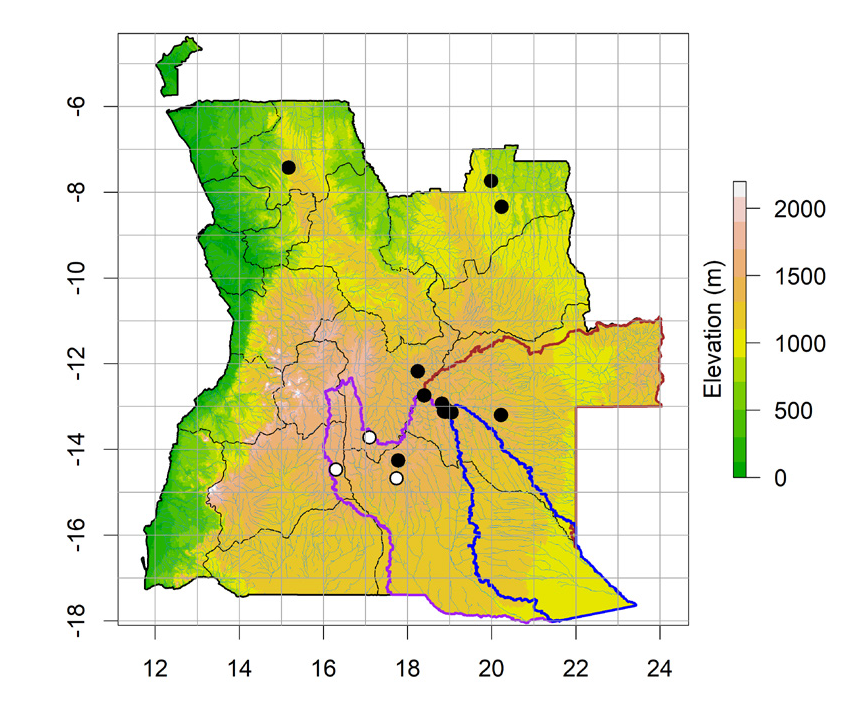
Kuvangu Kassina (Fig. 22; Map 19)
Conradie, Werner, Keates, Chad, Verburgt, Luke, Baptista, Ninda L., Harvey, James (2023): Contributions to the herpetofauna of the Angolan Okavango- Cuando-Zambezi river drainages. Part 3: Amphibians. Amphibian & Reptile Conservation (e 325) 17 (1): 19-56, DOI: 10.5281/zenodo.12761936
Material (9 specimens, 5 tadpole lots): PEM A 12496 – 7, unnamed side-triburaty source of Cuanavale River, - 13.07518 ° 18.88481 °, 1,374 m asl; PEM A 12775 – 6, Quembo River, trap 4, - 13.13586 ° 19.04709 °, 1,369 m asl; PEM A 12781, Quembo River trap 1, - 13.13592 ° 19.04417 °, 1,369 m asl; PEM A 12825, Quembo River, trap 3, - 13.13073 ° 19.03725 °, 1,445 m asl; PEM A 14116 (tadpoles), river crossing before Sombanana village, - 12.30710 ° 18.62350 °, 1,407 m asl; PEM A 12828, PEM A 14119 (tadpoles), Calua River source 6 km SE of Cuito River source, - 12.73675 ° 18.39310 °, 1,446 m asl; PEM A 14089 (tadpoles), 4 km upstream from Cuanavale River source, - 13.05084 ° 18.89726 °, 1,394 m asl; PEM A 14096, Dala River, near Samanga village, - 12.93169 ° 18.81458 °, 1,363 m asl; PEM A 14101 (tadpoles), 4 km downstream from Cuanavale River source camp, - 13.11585 ° 18.90246 °, 1,354 m asl; PEM A 14104 (tadpoles), confluence of Cuito and Calua rivers, - 13.12458 ° 18.89989 °, 1,345 m asl; PEM A 14804, Luio River camp floodplains, - 13.19711 ° 20.22194 °, 1,181 m asl. Additional material (4 tadpole lots): SAIAB 209127 (1 tadpole), SAIAB 209107 (2 tadpoles), swamp near Cuanavale River lake camp, - 13.10750 ° 18.86089 °, 1,386 m asl; SAIAB 209108 (22 tadpoles), pool in wetland on road edge west of Munhango, - 12.17806 ° 18.24306 °, 1,381 m asl; SAIAB 209089 (4 tadpoles), Calua lagoon, - 12.73599 ° 18.39394 °, 1,448 m asl. Description: Large sized Kassina; tympanum visible; elliptical vertical pupils; large inner metatarsal tubercle; subarticular tubercle well-developed. Dorsum very dark olive-brown, with scattered large darker brown yellow-edged irregular shaped spots; ventrum yellow, but in some individuals has black-edged white / yellow spots. In females, the cloaca sides are swollen. In males, the gular flap is dark and the glands behind eye / head are enlarged. Adult females (n = 2) varied from 51.9 – 53.3 (52.6) mm (largest female: PEM A 14096); adult males (n = 7) varied from 38.4 – 52.9 (43.7) mm (largest male: PEM A 12781). Tadpoles can get very large (up to 135 mm total length); LTRF 1 / 2 (1), with strong jaw sheaths. Habitat and natural history notes: In the evenings, males call from the margins of source lakes and flooded areas while clinging to vegetation, and quickly submerge themselves when disturbed. Comments: These new records and other records from Uíge Province, which are the northwesternmost records (Ernst et al. 2020), represent the first adult K. kuvangensis for Angola since the original species description (Monard 1937). The new localities recorded here lie between the species type locality in Angola (Kuvango, Monard 1937) and western Zambia (Poynton and Broadley 1987, 1991; Channing 2001).
Conradie, Werner, Keates, Chad, Verburgt, Luke, Baptista, Ninda L., Harvey, James (2023): Contributions to the herpetofauna of the Angolan Okavango- Cuando-Zambezi river drainages. Part 3: Amphibians. Amphibian & Reptile Conservation (e 325) 17 (1): 19-56, DOI: 10.5281/zenodo.12761936
Export occurrence data
Darwin Core Archive (ZIP)

IMAGES