
AnimaliaNot EvaluatedacceptedspeciesAccepted
Kassinula wittei
Laurent, 1940
GBIF:231569765
0year
ABOUT
Descriptions(1)
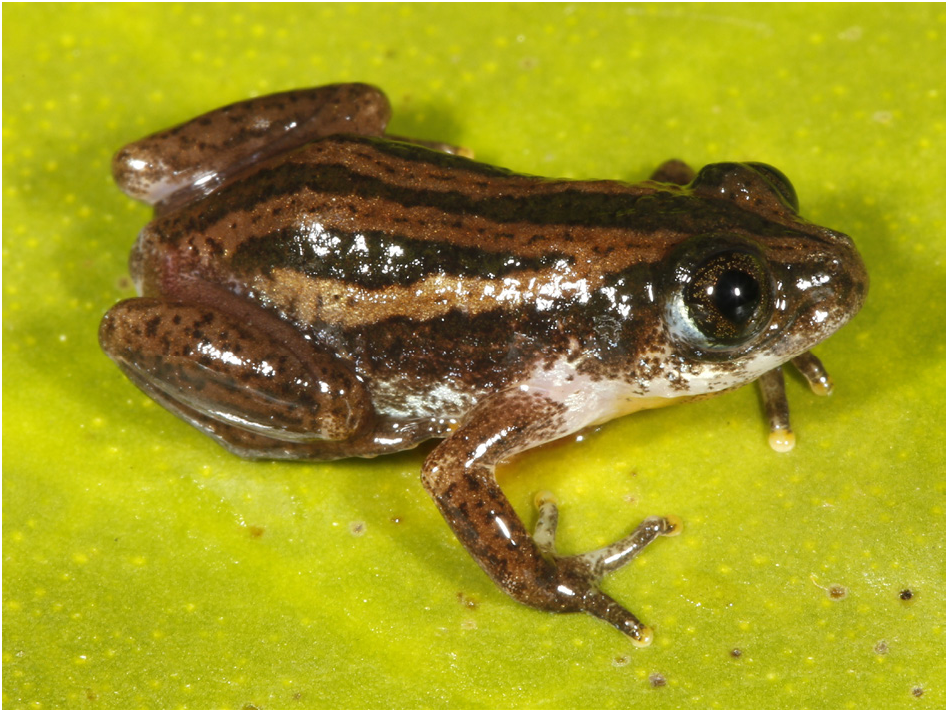
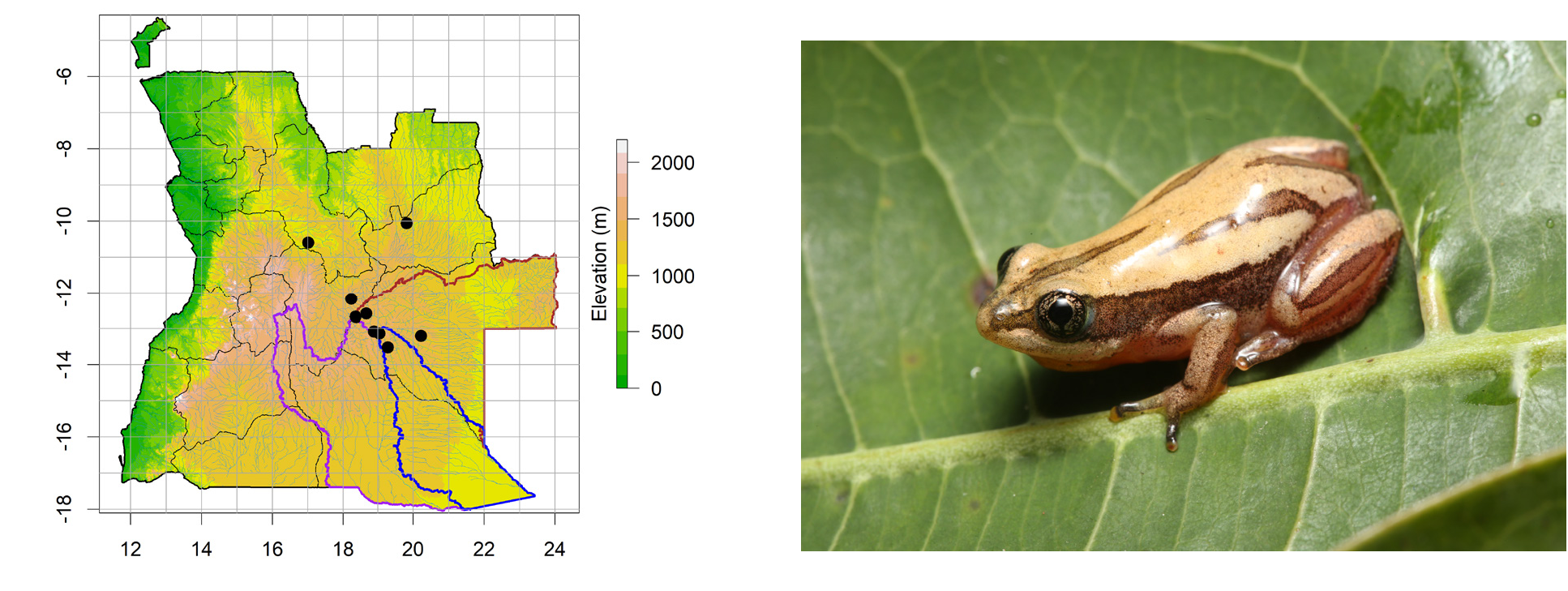
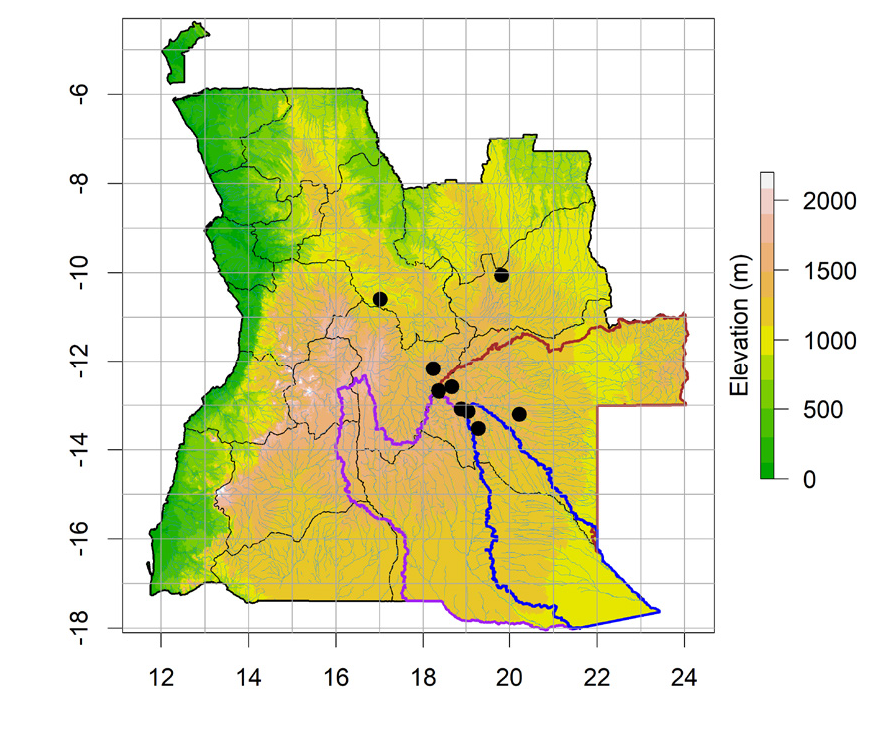
De Witte’s Clicking Frog (Figs. 24 – 25; Map 21) Material (48 specimens): PEM A 12468 – 5, PEM A 12792 – 3, INBAC (no number x 2), Cuanavale River source lake, - 13.08537 ° 18.89098 °, 1,360 m asl; PEM A 12807 – 12, INBAC (no number x 3), Cuito River source lake, - 12.68727 ° 18.36067 °, 1,423 m asl; PEM A 12817 – 8, Cuiva River source, - 12.66856 ° 18.35307 °, 1,433 m asl; PEM A 12870 – 2, INBAC (no number x 2), Quembo River source lake, - 13.13624 ° 19.04591 °, 1,366 m asl; PEM A 14271 – 3, INBAC: WC- 6743, Lungwebungu River camp, first oxbow on right side, - 12.58117 ° 18.67106 °, 1,294 m asl; PEM A 14274 – 5, Cuanavale River source, - 13.08537 ° 18.89098 °, 1,357 m asl; PEM A 14276 – 80, Quembo River right side tributary (Micongo River) past village, - 13.51877 ° 19.28487 °, 1,248 m asl; PEM A 14281 – 4, INBAC: WC- 6958 – 60, Luio River camp floodplains, - 13.20191 ° 20.22144 °, 1,181 m asl; PEM A 14270, PEM A 14285, wetland near old quarry east of Quemba, - 12.16960 ° 18.22965 °, 1,353 m asl. Additional material (4 specimens): P 2 - 278, P 2 - 279, P 2 - 280, P 2 - 281, wetland near old quarry east of Quemba, - 12.16960 ° 18.22965 °, 1,353 m asl. Description: Minute hyperoliid species. See Conradie et al. (2020 b) for a detailed description of this material. The only female measured 14.7 mm (PEM A 14284); adult males varied from 12.3 – 22.0 (14.2) mm (largest male: PEM A 14270). Habitat and natural history notes: Found in flooded grassland and peat wetlands. Comments: The occurrence of this species in northeastern Angola was expected from a biogeographical point of view, but these are the first records of the species for the country. These new records extend the known range of this species from northwestern Zambia and southern DRC to central Angola by more than 400 km (see Conradie et al. 2020 b). The taxonomic status of this genus has recently been validated phylogenetically and the species is considered to be closely related to Afrixalus, although its exact systematic placement remains unclear (see Conradie et al. 2020 b; Nečas et al. 2022). Two specimens (PEM A 14270, PEM A 14285) differ in the dorsal coloration pattern (vertebral band broken and no darker stipples in lighter bands versus continuous dark vertebral band and lighter bands, with fine dark stipples), maximum size (22 mm versus 16.7 mm), and potential differences in habitat preference from other K. wittei collected. These two specimens are similar in appearance to a specimen collected from Congolo River, Luando Strict Nature Reserve (FHK 091) (see Conradie et al. 2020 b). While Nečas et al. (2022) pointed out the relatively deep divergence between the specimen from Congolo River and the eastern Angolan and topotypic DRC samples, this difference was not considered in Conradie et al. (2020 b). Preliminary unpublished genetic results (W. Conradie, unpub. data) show that the two specimens listed here agree genetically with the western Angolan sample (Congolo River) and may represent an undescribed cryptic species. These specimens occur syntopically with typical K. wittei east of Quemba, although collected from different habitats and different times of the year.
Conradie, Werner, Keates, Chad, Verburgt, Luke, Baptista, Ninda L., Harvey, James (2023): Contributions to the herpetofauna of the Angolan Okavango- Cuando-Zambezi river drainages. Part 3: Amphibians. Amphibian & Reptile Conservation (e 325) 17 (1): 19-56, DOI: 10.5281/zenodo.12761936
Export occurrence data
Darwin Core Archive (ZIP)

MULTIMEDIA
Media Files(3)
Fig. 24. Adult male Kassinula wittei from Cuanavale River source. Photo by Werner Conradie.
Imageimage/png© Conradie, Werner;Keates, Chad;Verburgt, Luke;Baptista, Ninda L.;Harvey, JamesConradie, Werner;Keates, Chad;Verburgt, Luke;Baptista, Ninda L.;Harvey, James
IMAGES