
AnimaliaNot EvaluatedacceptedspeciesAccepted
Gigantohierax suarezi
Arredondo & Arredondo, 2002
GBIF:241079574
0year
0
Synonyms
ABOUT
Descriptions(3)
Suárez’s Giant Eagle (Águila Gigante de Suárez)
Suárez, William (2022): Catalogue of Cuban fossil and subfossil birds. Bulletin of the British Ornithologists’ Club 142 (1): 10-74, DOI: 10.25226/bboc.v142i1.2022.a3
Distribution. — Cave, asphalt and sinkhole deposits in west and central Cuba (see Appendix). Artemisa. Caimito: ACP (Arredondo 1955: 26 [‘ ave prehistórica, tal vez andadora’], 1958: 11 [‘ especie mucho mayor’], 1964: 19 [‘ Aguila cubana de la prehistoria’], 1970 a: 4 [‘ Aquila borrasi sp. nov. ’ (part)], figs. 5 * A = ungual phalanx [lateral], 9 * = ungual phalanx [lateral], see ‘ Notes’ under Buteogallus borrasi; 1971: 96 [‘ Aquila borrasi (part) ’], Arredondo & Arredondo 2002 a: 9 – 10; WS unpubl.), ASA = type locality (Suárez 2000 b: table 1 [‘ Accipitridae indeterminate’], Arredondo & Arredondo 2002 a: 10 [‘ Gigantohierax suarezi n. gen., n. sp. ’]), ACF (Arredondo & Arredondo 2002 a: 10). Mayabeque. Quivicán: YIN (WS unpubl.). Matanzas. Jagüey Grande: MFJ (WS unpubl.), Martí: MLB (Suárez 2020 a, fig. 11 = humerus: A [palmar], B [anconal], C = carpometacarpus [external], D = tarsometatarsus [distal], E [idem: anterior], F [idem: medial], G [idem: posterior], H = digit I, phalanx 1 [dorsal], I = ungual phalanx, digit I [lateral]). Villa Clara. Sagua La Grande: VCB (WS unpubl.). Direct 14 C dating. — None. For dating of other bird species at MLB, see Antigone cubensis, Gymnogyps varonai and Ornimegalonyx oteroi, and of associated extinct mammals (Parocnus browni = 11,880 ± 420 to 4,960 ± 280 years 14 C BP), see Jull et al. (2004) and Steadman et al. (2005). Notes. — Common in Cuban Quaternary deposits. This taxon is the largest Accipitridae ever known from the Americas, larger than the living Harpy Eagle Harpia harpyja (Linnaeus, 1758) or any of the extinct described species there (Arredondo & Arredondo 2002 a: 10, Suárez 2020 a: 22); the genus seems to have been also present on Hispaniola (Suárez 2020 a: 25). Another paratype of Aquila (= Buteogallus) borrasi, the ungual phalanx GEC unnumbered, at CZACC, from ACP (Arredondo 1970 a: 4), is referred herein to G. suarezi (see ‘ Notes’ under B. borrasi). According to B. Patterson’s notes comparing fossil material from Cuba with museum specimens, femur SEC P- 26 (see ‘ Other material’) was considered by him as a ‘ Giant Cuban Cathartid’, instead of ‘ Accipitridae’, as he identified other bones in the sample. Arredondo correctly assumed (contra Patterson’s notes) that the largest femur was an Accipitridae (now G. suarezi), and included it in the type series of ‘ Aquila ’ borrasi (see Arredondo 1970 a: 4, Arredondo 1984: 11). On the other hand, the skeleton of G. suarezi is similar to some Old World vultures in characters (Suárez & Olson 2021: 264, Suárez et al. unpubl.), which confused B. Patterson to the point that he considered the large Cuban femur as belonging to a cathartid. A more complete study of the anatomy and relationships of this taxon will be presented elsewhere (Suárez et al. unpubl.).
Suárez, William (2022): Catalogue of Cuban fossil and subfossil birds. Bulletin of the British Ornithologists’ Club 142 (1): 10-74, DOI: 10.25226/bboc.v142i1.2022.a3
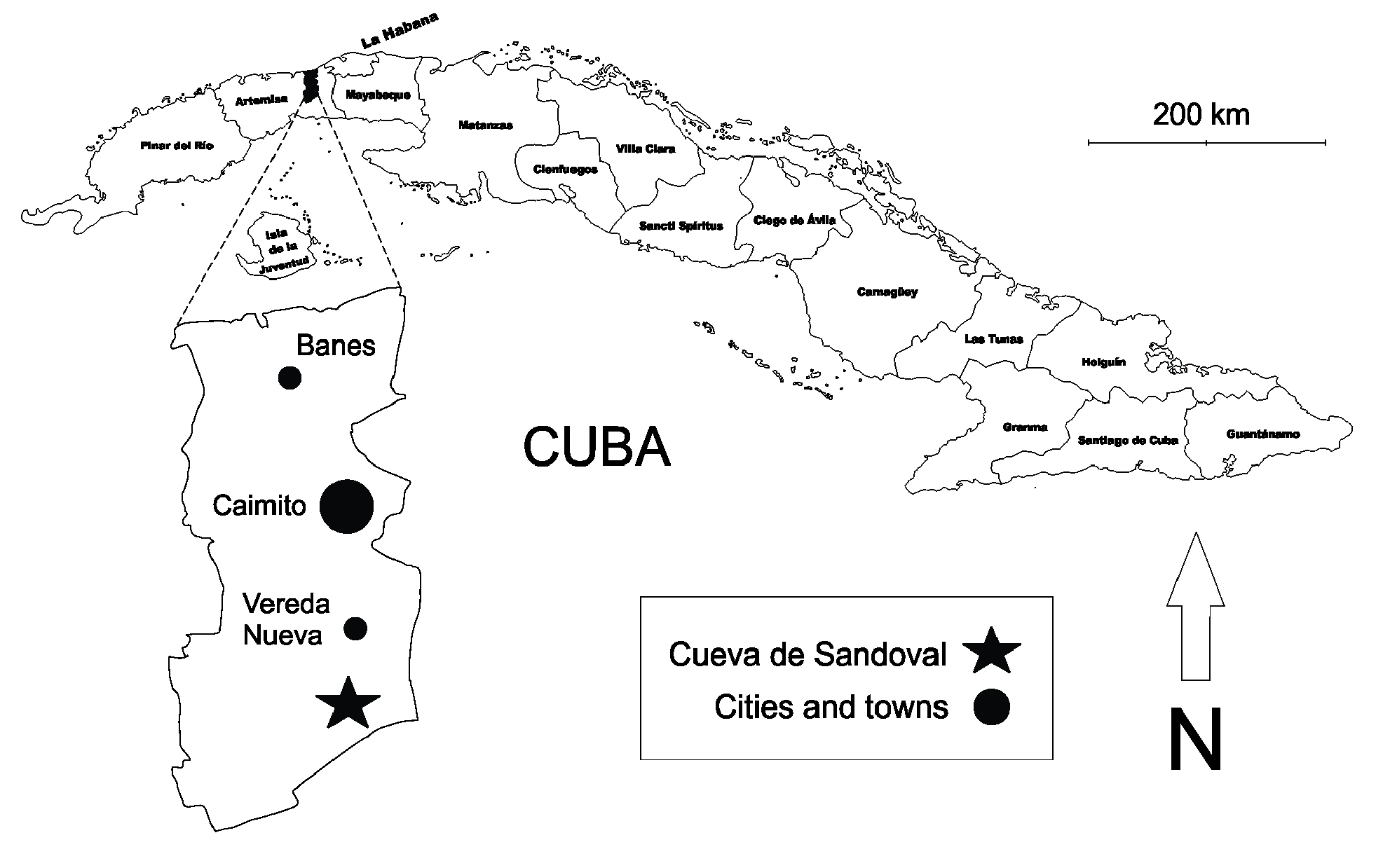
Holotype. — Left femur, MNHNCu 75.574, original number ‘ MNHNH. P- 574 ’ (Arredondo & Arredondo 2002 a: 10, figs. 1 * [anterior], 3 * A [posterior]; see Díaz-Franco 2004: 156, Herrera-Uria et al. 2015: 114). Collected 16 February 1995 by Jesús Martínez González and WS in the deposit known as El Sumidero (see Suárez 2000 b) at the type locality (Arredondo & Arredondo 2002 a: 9). The holotype was not ‘ discovered since the late 1950 s’ (contra Orihuela 2019: 60). Other material. — Femur: right lacking trochanter and condyles, SEC P- 26, at MCZ (Arredondo 1958: 12, fig. left unnumbered: top [anterior], 1964: 19, fig. left unnumbered: right [anterior], 1970 a: 4, fig. 7 [anterior], 1971: 96, fig. top left unnumbered: A, left [anterior], Arredondo & Arredondo 2002 a: 9 – 10, fig. 2 * [anterior]). Tarsometatarsus: three shaft fragments of right, WS 80120. E. Phalanges: ungual phalanx, digit I, SEC P- 31, at MCZ (Arredondo 1955: 27, fig. unnumbered *: centre [lateral], 1958: 10, fig. left unnumbered *: 2 [lateral], 12, fig. left unnumbered: middle right [lateral], 1970 a: 4, fig. 3 A [lateral], 1971: 96, fig. top left unnumbered: A, top [lateral], bottom * [lateral], Arredondo & Arredondo 2002 a: 9 – 10, fig. 4 A *: [lateral]). Type locality. — Cueva de Sandoval (ASA), c. 4 km south of Vereda Nueva, municipality of Caimito, Artemisa [formerly La Habana] province, Cuba (Arredondo & Arredondo 2002 a: 10). Fig. 6.
Suárez, William (2022): Catalogue of Cuban fossil and subfossil birds. Bulletin of the British Ornithologists’ Club 142 (1): 10-74, DOI: 10.25226/bboc.v142i1.2022.a3
Export occurrence data
Darwin Core Archive (ZIP)
CLASSIFICATION
Taxonomic Classification Tree

NOMENCLATURE
Synonyms(2)
IMAGES