
AnimaliaacceptedgenusAccepted
Alluroides
Beddard, 1894
GBIF:245596622
0year
ABOUT
Descriptions(3)
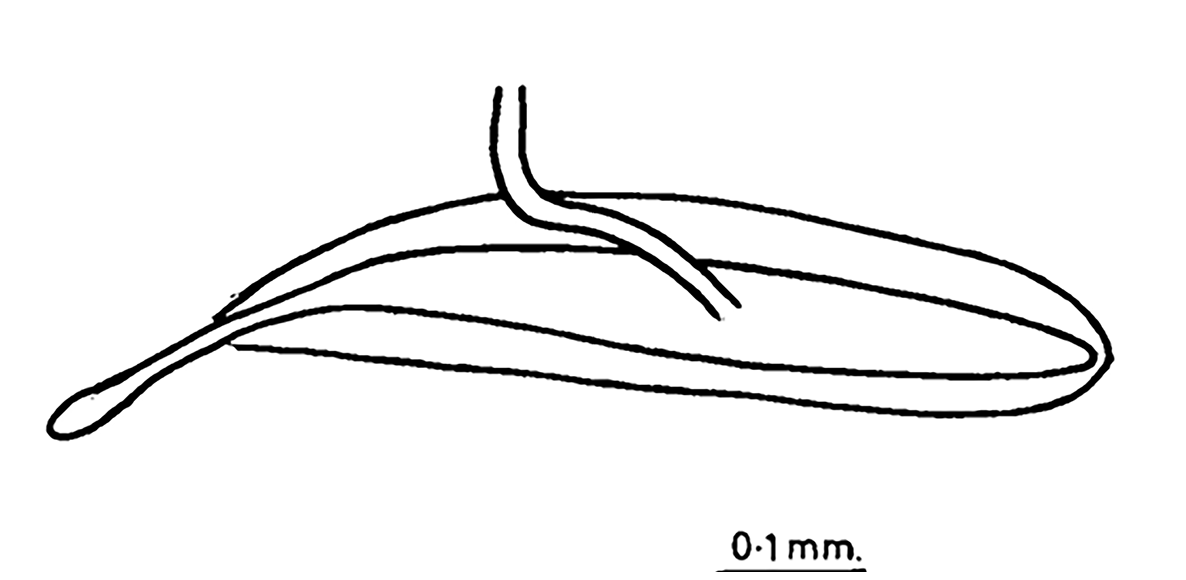
Remarks. Collectively the features listed above adequately diagnose Alluroides from the remainder of the sub – family. An individual character of particular note which is not shared with Brinkhurstia and Standeria is the termination of the vasa deferens entally on each atrium, clearly demonstrated by Brinkhurst (1964, Fig. 9) for A. ruwenzoriensis and observed by Jamieson (1968) in A. pordagei. The vasa deferentia of A. brinkhursti and A. tanganyikae have not been observed but the overall phenetic resemblance of these to the other two species points to the existence of such a connection. In the other genera entry of two ducts into each terminal male chamber is readily seen while A. tanganyikae and brinkhursti show no semblance of dual terminalia. At the specific level the systematics of Alluroides cannot be considered settled. Much larger series, from more localities, together with ecological and molecular data, are needed before the validity of the present division into A. pordagei, lauzannei, tanganyikae, ruwenzoriensis and brinkhursti can be conclusively determined.
Jamieson, Barrie G. M., Fragoso, Carlos (2024): A monograph of the Oligochaete family Alluroididae. Zootaxa 5529 (3): 401-435, DOI: 10.11646/zootaxa.5529.3.1, URL: http://dx.doi.org/10.11646/zootaxa.5529.3.1
Distribution. Tanzania; Uganda; Zimbabwe; South Africa; Ethiopia; Chad; Kenya; Democratic Republic of the Congo.
Jamieson, Barrie G. M., Fragoso, Carlos (2024): A monograph of the Oligochaete family Alluroididae. Zootaxa 5529 (3): 401-435, DOI: 10.11646/zootaxa.5529.3.1, URL: http://dx.doi.org/10.11646/zootaxa.5529.3.1
Type species: Alluroides pordagei Beddard 1894 Alluroidinae in which the atria are wide, coiled tubes or are bulbous; prostate cells surround the muscular sheath of the atrium, and the vas deferens enters each atrium near the midlength of the latter or entally. Male pores lateral; ventral setae of XIII present or absent; genital and penial setae absent. Spermathecal pores paired or single, dorsal in VI, VII and VIII, or in VII and VIII only, or in either VIII or IX. First septum 3 / 4; septum 10 / 11 attenuated. First nephridia in VIII or XV or XVI. Intestine commencing in XIII – XIX. Testes in X. With or without distinct seminal vesicles but with spermatogenic masses partly occluding XI.
Jamieson, Barrie G. M., Fragoso, Carlos (2024): A monograph of the Oligochaete family Alluroididae. Zootaxa 5529 (3): 401-435, DOI: 10.11646/zootaxa.5529.3.1, URL: http://dx.doi.org/10.11646/zootaxa.5529.3.1
Export occurrence data
Darwin Core Archive (ZIP)
CLASSIFICATION
Taxonomic Classification Tree

IMAGES