
AnimaliaacceptedgenusAccepted
Brinkhurstia
Jamieson, 1971
GBIF:245596623
0year
ABOUT
Descriptions(3)
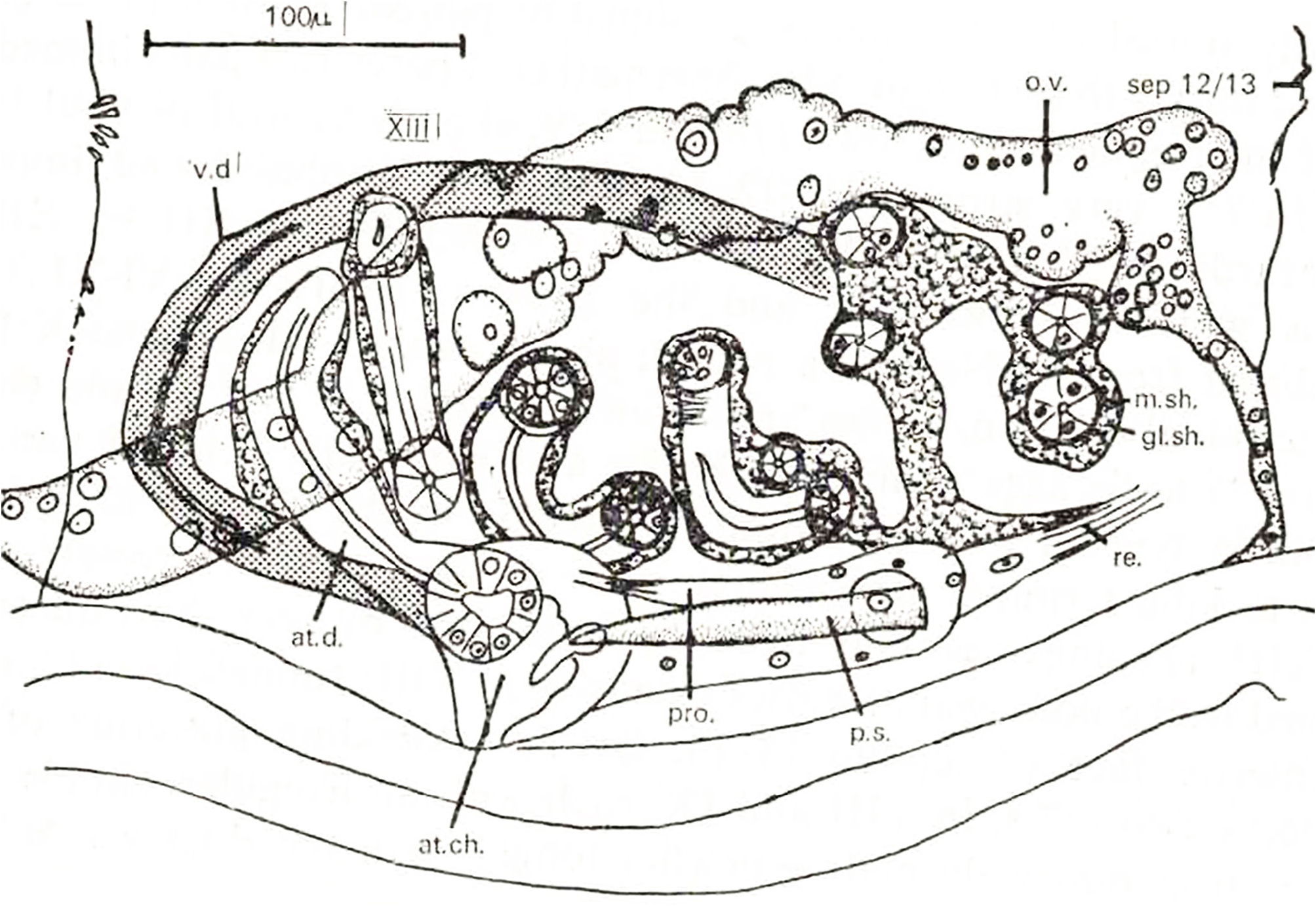
Remarks. Unique features within the Alluroidinae of Brinkhurstia americanus are the extreme attenuation of the atrial prostates, the ratio width muscular tube of the atrium: width body being only 0.036 at maturity, and the presence of penial setae. The generic significance of the penial setae, per se, is questionable, however, as their presence or absence varies intragenerically in other families. Brinkhurstia resembles Standeria, and differs from Alluroides, in possessing at each male pore a distinct, rounded terminal chamber into which two ducts, positively identified as the atrium and vas deferens of the corresponding side, discharge (Fig. 3) but the chamber is exceptional in Brinkhurstia in being non – muscular. A particularly noteworthy difference from Standeria, shared with Alluroides, is the presence of prostatic cells ensheathing the atria.
Jamieson, Barrie G. M., Fragoso, Carlos (2024): A monograph of the Oligochaete family Alluroididae. Zootaxa 5529 (3): 401-435, DOI: 10.11646/zootaxa.5529.3.1, URL: http://dx.doi.org/10.11646/zootaxa.5529.3.1
Distribution. Brazil; Saint Lucia (Caribbean); Argentina; Guyana.
Jamieson, Barrie G. M., Fragoso, Carlos (2024): A monograph of the Oligochaete family Alluroididae. Zootaxa 5529 (3): 401-435, DOI: 10.11646/zootaxa.5529.3.1, URL: http://dx.doi.org/10.11646/zootaxa.5529.3.1
Type species: Alluroides americanus Brinkhurst 1964 Alluroidinae in which the atria are very slender, much coiled tubes, prostatic cells surround the muscular sheath of the atrium, and the openings of each atrium into the rounded terminal, non – muscular chamber is separate from that of the corresponding vas deferens. Male pores ventrolateral. Ventral setal couples of XIII absent. Penial setae present. Spermathecal pore single, dorsal in IX. First septum 3 / 4; 10 / 11 not attenuated. First nephridia in IX? Intestine commencing in XIII – XV. No distinct seminal vesicles.
Jamieson, Barrie G. M., Fragoso, Carlos (2024): A monograph of the Oligochaete family Alluroididae. Zootaxa 5529 (3): 401-435, DOI: 10.11646/zootaxa.5529.3.1, URL: http://dx.doi.org/10.11646/zootaxa.5529.3.1
Export occurrence data
Darwin Core Archive (ZIP)
CLASSIFICATION
Taxonomic Classification Tree

MULTIMEDIA
Media Files(1)
FIGURE 3. Brinkhurstia americanus (Brinkhurst 1964). Longitudinal section through the male terminalia. at.ch, terminal chamber of atrium; at.d, atrial duct; gl.sh, glandular sheath; m.sh, muscular sheath; o.v, ovary; pro, protractor muscle; p.s, penial seta; re, retractor muscle; sep, septum; v.d, vas deferens. From Jamieson (1968).
Imageimage/png© Jamieson, Barrie G. M.;Fragoso, CarlosJamieson, Barrie G. M.;Fragoso, Carlos
IMAGES