
Agama anchietae
Anchieta's Agama(+11)·Bocage, 1896
GBIF:5226326
0
Synonyms
ABOUT
Descriptions(4)
Agama anchietae Bocage, 1896 *
Specimens.
Angola: Catumbella: BMNH 1893.12.27.7 , “ Région Littorale ”: BMNH 1946.8.27.97 [syntype, originally BMNH 1896.6.9.4; Fig. 16] .
Comments.
Bocage (1867 a) initially assigned material from coastal Angola (three specimens collected by Anchieta in “ Dombe ”, “ Benguella ” and “ Catumbella ”) to Agama aculeata . In the years that followed he received additional material from this region and started to note differences between these specimens and those from the Angolan hinterland, presenting a specimen from Catumbela to the British Museum in 1893 identified as “ Agama sp. ? ” (BMNH 1893.12.27.7). Bocage (1895 a) recorded this distinction some years later in his major work on Angolan herpetofauna, noting specimens sent by Anchieta from “ Benguella ”, “ Catumbella ” and “ Dombe ”, and by Hermenegildo Capello (1841–1917) and Roberto Ivens (1850–1898) from “ Mossamedes ” to differ from those from the high plateaus of the Angolan hinterland, which he assigned to Agama armata (see Agama cf. aculeata aculeata account above). Although he noted the coastal specimens as distinct in a note following the Agama armata account, Bocage (1895 a) refrained from naming this material at the time. On 3 April 1896, Bocage wrote to Boulenger asking for a specimen of Agama aculeata to compare with his material from coastal Angola (NHMA /DF/ZOO/235/1/1/1/76), to which Boulenger conceded by sending to Lisbon an adult male from Beaufort West, South Africa (AHMB /CE/B48). Shortly after, in a letter dated 2 June 1896, Bocage mentioned a shipment of ground agamas to the British Museum containing three samples, including an adult from Angola, “ Région Littorale ” (No. 2), that he believed to represent a new species (NHMA /DF/ZOO/235/1/1/1/76; Fig. 3). Later that year, Bocage (1896 b) formally described the populations from coastal Angola as Agama anchietae, based on the previously mentioned material collected by Anchieta in “ Benguella ”, “ Catumbella ” and “ Dombe ”, and by Capello and Ivens in “ Mossamedes ”.
In a revision of the Agama hispida and atra groups, Boulenger and Power (1921) recognized Agama anchieta as a valid species. The authors mentioned two specimens sent by Bocage to the British Museum, referring to a specimen from Caconda as “ one of the types ”. Marques et al. (2018) noted that this could not be a type, as Bocage (1895 a, 1896 b) never recorded the species from Caconda, and instead referred his material from that locality, in the highlands of the Angolan plateau, to Agama armata . Although it is impossible to state with certainty what led Boulenger and Power (1921) to record the type specimen as originating from Caconda, we are confident that this was done in error, as Bocage never mentioned this locality in his letters, nor is it stated in the original specimen label or the register. The locality “ Caconda, Coast of Angola ” appears only on the current label on the exterior of the specimen jar, which is a subsequent label presumably added when the specimen was reregistered as type in 1946, perpetuating Boulenger and Power’s (1921) error. While this is merely speculation, the source of the error may have been a misplaced label or confusion with other Agama specimens from Caconda sent by Bocage years earlier (see Agama cf. aculeata aculeata account). Considering this, we hereby correct the locality of the only surviving syntype of Agama anchietae (BMNH 1946.8.27.97; Fig. 16) to “ Région Littorale, Angola ”, corresponding to one of the coastal localities stated in the original description: Benguela, Catumbela, Dombe or Moçâmedes.
Export occurrence data
Darwin Core Archive (ZIP)
GEOGRAPHY
Distribution Map
REGIONS
Geographic Distribution(6)
DATA
Occurrence Datasets
Common names used for this species across different languages and regions. Available in 5 languages. 1 preferred.
Vernacular (common) names are the everyday names used for a species in different languages and regions. A single species may have dozens of common names worldwide. This taxon has names in 5 languages. 1 name preferred.

RELATED
Related Name Usages(10)
Matching names from other GBIF-indexed checklists and datasets.
MULTIMEDIA
Media Files(3)
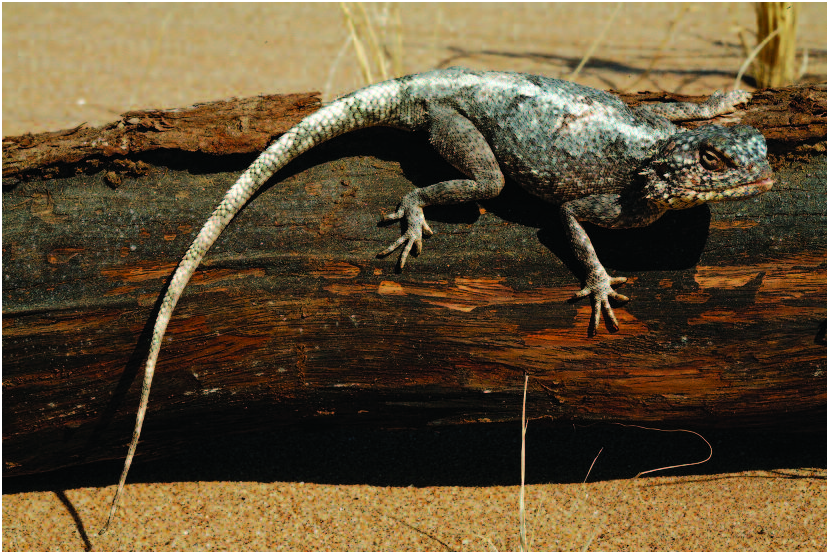
FIGURE 3. Anchieta’s Ground Agama, Agama anchietae Bocage, 1866, from Sesfontein, Kunene Region, Namibia. Photo courtesy of Johan Marais.
Figure 3. Sources of data examined. A Register noting specimens presented by Bocage; B Specimen jar with external label; C Original specimen label with locality and number mentioned in Bocage’s letter; D Extract of Bocage’s letter citing numbered specimens (NHMA / DF / ZOO / 235 / 1 / 1 / 1 / 76). Photos by DP.
Figure 16. Syntype of Agama anchietae (BMNH 1946.8. 27.97). Photos by DP.
IMAGES