AnimaliaLeast ConcernacceptedspeciesAcceptedRestricted
Chikila alcocki

Chikila alcocki

Alcock’s Chikila(+3)·Kamei, Gower, Wilkinson & Biju, 2013

GBIF:8610674

0countries
0year

PROFILE

Species Profile

Characteristics

Extant

ABOUT

Descriptions(6)

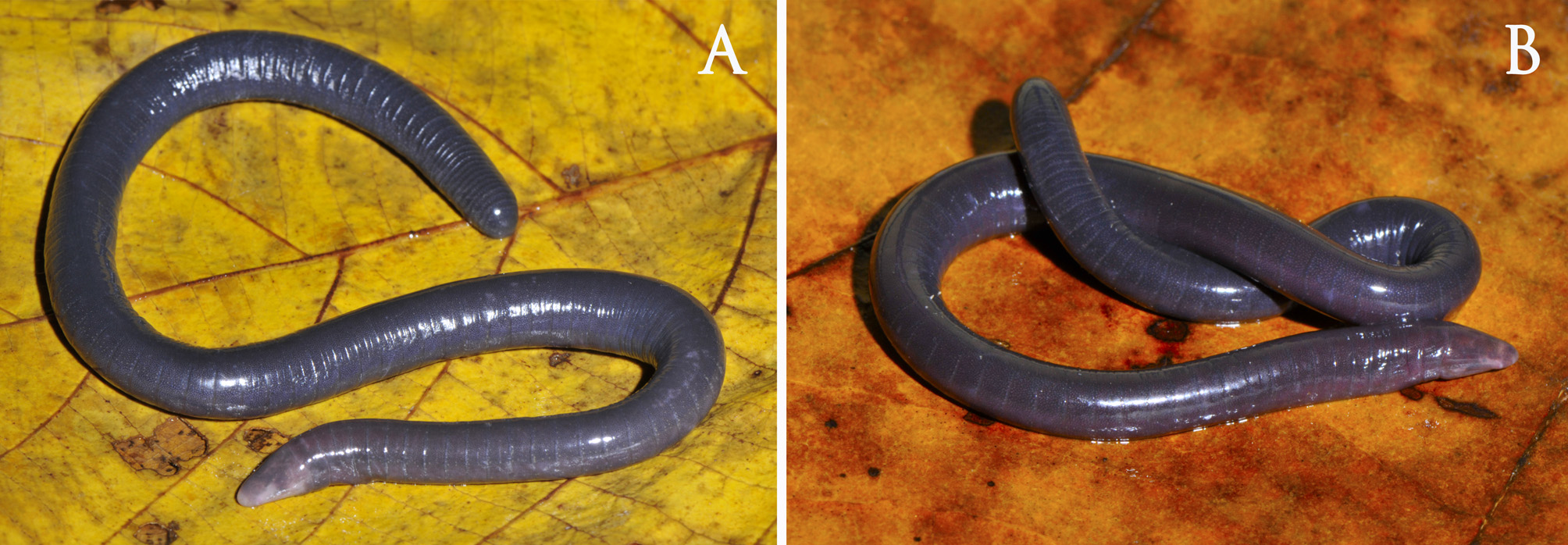
Latitude (N) Longitude (E) ARUNACHAL PRADESH East Kameng district Darlong, Seijosa 121 26.93722 92.99611 C. darlong sp. nov. Darlong 1, Seijosa 122 26.93750 92.99333 C. darlong sp. nov. PTR, Seijosa 125 26.93694 92.98194 C. darlong sp. nov. PTR 2 (Jaali nullah 2), Seijosa 254 26.95889 92.95694 C. darlong sp. nov. PTR 3 (Jaali nullah 3), Seijosa 261 26.95528 92.95361 C. darlong sp. nov. Changlang district Sipanullah, Bhoddisatta 365 27.51900 96.36712 C. alcocki sp. nov Sipanullah 1, Bhoddisatta 372 27.51917 96.36762 C. alcocki sp. nov ...... continued on the next page Diagnosis. A Chikila that differs from all congeners in its relatively unicoloured (weakly bicolored anteriorly) adult colour pattern (vs. moderately bicoloured in C. darlong and C. fulleri, strongly bicoloured in C. gaiduwani), weakly marked AGs (vs. moderately marked in C. darlong, C. gaiduwani, strongly marked in C. fulleri), and relatively narrow choanae (vs. small in C. darlong and C. fulleri, large in C. gaiduwani). Description of the holotype (Figures 4 A and 7). Some morphometric and meristic data are given in Tables 3 A and 4. In good condition; two midventral incisions, one ca. 10 mm close to midbody, one extending for ca. 50 mm from ca. 25 mm anterior to vent; one posterior scale pocket open dorsally; short artificial transverse crease in front of NG 1 (mouth open); artefactual longitudinal ridges on anterior of body; broken vertebral column approximately halfway; slightly dehydrated; terminus dented. Female with yolky ova, largest 3.8 x 1.8 mm. Body slightly tapering on anterior half, dorsoventrally flattened throughout, slightly less so on posterior half; L / W = ca. 25. In dorsal view, sides of head straight, converging steadily to level of TAs, rapidly between TAs and snout tip. In lateral view, top of head straight to weakly convex; upper lip weakly concave with apex slightly closer to level of eye than TA; lower jaw approximately same height as upper jaw at CM. In ventral view, lips notably more blunt anteriorly than ST. Eyes not visible. TAs barely elevated, visible ventrally (not dorsally), positioned just below imaginary lines between nares and CMs. Nares just visible ventrally, not dorsally. Teeth of inner series approximately half as small as those of outer series; VP series forming narrowly curved (somewhat angulate) arc anteromedially; projection of snout beyond anterior of mouth almost twice the distance between VP and PM series anteriorly. Choanae subcircular, smallest distance between them approximately 2.5 times the width of each at that point; valves just visible. Gap between anterior tip of tongue and IMs or between lateral margins of tongue and OMs narrow to absent, some IMs overlapping tip of tongue. Narial plugs with some irregular dark patches, flaplike, extend very slightly beyond tongue margin, separated from body of tongue by deep grooves, except posteriorly. Tongue with short median groove posteriorly, some small lateral grooves. Nuchal region not notably more massive than adjacent body or back of head. NG 1 and NG 2 completely encircling body, both curving slightly anteromedially on dorsum; C 2 with one long TG; one dorsal transverse crease behind TG on C 2 and one in front. AGs mostly complete middorsally except for middle third of body where incomplete or very faintly marked; ventrally AGs mostly incomplete along midline, more widely so on anterior half, a few complete posteriorly. Posterior edges of most PAs slightly raised. Many anterior PAs with one or more transverse, predominantly dorsolateral creases. Anteriormost SAGs short, dorsolateral, on both sides of 74 th PA; SAGs middorsally complete from 78 th PA, ventrally complete from 85 th PA. Vent region interrupts last four or five AGs. Vent in ovate (wider than long), fairly discrete disc with 10 denticulations, 3 of which partially subdivided. Two main rows of substantially overlapping scales present dorsally in posterior (87 th PA) of body in pocket approximately half-length of PA. Scales here irregular, squarish (0.8 mm). C. gaiduwani C. darlong C. fulleri C. alcocki C. gaiduwani 0 – 0.003, mean = 0.001 (n = 11) (n = 55) C. darlong 0.067 – 0.068, mean = 0.067 0 – 0.003, mean = 0.002 (n = 6) (n = 66) (n = 15) C. fulleri 0.084 – 0.088, mean = 0.086 0.089 – 0.092, mean = 0 – 0.015, mean = 0.008 (n = 13) (n = 143) 0.09 (n = 78) (n = 78) C. alcocki 0.094 – 0.098, mean = 0.096 0.1 – 0.105, mean = 0.102 0.092 – 0.099, mean = 0 – 0.013, mean = (n = 13) (n = 143) (n = 78) 0.095 (n = 169) 0.007 (n = 78) Weakly bicoloured anteriorly, more weakly so posteriorly; dorsally dark grey, ventrally brown-grey with intermittent, weak darker midventral line; slightly darker on last tenth of body. Dorsal grey to ventral grey transition gradual (less so posteriorly), at a short distance above halfway down flank; ventral brown-grey pales very slightly ventrally. Top of head not notably darker than body. Midline of lower jaw with narrow, anterior projection of same brown-grey as body; lateral to this a grey V, a whitish V and then pale grey bordered by whitish edge to lower lip. TAs in whitish spot that extends back as narrower pale stripe to expected position of eye. Nares in broad whitish blotches that meet anteriorly at pale snout tip. To unaided eye, AGs distinct, dark except immediately anterior to vent where whitish. Microscopically, AGs laterally with whitish edge, giving way to darker very narrow aglandular posterior margins of annuli; ventrally, a thicker dark band just behind anterior edge of annuli extending across midline even where AGs incomplete. Disc surrounding vent unpigmented; narrow strip (slightly less than length of secondary annulus) immediately anterior to disc also unpigmented. Tongue unpigmented. In life (Figure 4 A), dorsally dark lilac, slightly darker in the last one-fourth of the body, ventrally slightly paler. Head slightly paler than body with some white patches; lips, areas around CMs and snout tip whitish; nares in broad whitish blotches that meet anteriorly at pale snout tip; lower jaw bears a thick whitish V in ventral view, not reaching whitish margins of lips.
Systematics of the caecilian family Chikilidae (Amphibia: Gymnophiona) with the description of three new species of Chikila from northeast India

Remarks. Summary comparisons are provided in Tables 5 and 6. Beyond the differences given in the diagnosis, the examined material of C. alcocki differs from C. darlong in: having a less pointed head in dorsal view; externally invisible eyes; similar numbers of VPs and PMs (vs. fewer VPs than PMs). Chikila alcocki differs from C. fulleri additionally in: lacking pale blotches on the chin, throat and underside of anteriormost annuli; having a more extensive (length and breadth) pale eye-TA patch, generally encircling and extending behind the eye; having an unpigmented disc and patch anterior to disc; having an anteriorly less angulate VP series; having a broader head in dorsal view; having relatively lower TAs, imaginary naris-TA line crosses upper lip halfway (vs. one quarter) between CM and AM. Chikila alcocki differs from C. gaiduwani additionally in its less broadly rounded snout in dorsal view. The uncorrected mean divergences (16 S and cox 1 genes) between Chikila alcocki and C. darlong, C. fulleri and C. gaiduwani are 10.2 %, 9.5 % and 9.6 %, respectively (Table 2). The data suggest also that Chikila alcocki might differ from C. darlong in having relatively fewer SAGs, having a proportionately shorter head, and attaining a greater maximum length; from C. fulleri in having a less attenuate body and relatively shorter, broader head; and from C. gaiduwani in having relatively fewer SAGs.
Systematics of the caecilian family Chikilidae (Amphibia: Gymnophiona) with the description of three new species of Chikila from northeast India
Distribution and natural history. Chikila alcocki sp. nov. is currently known from the type locality Dhyütere and its vicinities in New Sendenyu village, Tseminyu, Kohima district, from Mon district in Nagaland, and from Changlang district of Arunachal Pradesh (Figure 1; Table 1). The type series and one referred specimen (SDB. DU 1662) were collected from slushy soil at the edges of rice paddies, banana plantation and jhum fields; soil was silty clay loam. The referred specimen SDB. DU 1613 was collected along the sides of artificial water canals that fed paddy fields; BNHS 5521 and ZSI A 11538 were collected in disturbed secondary forest bordering agricultural fields; BNHS 5522, BNHS 5526 and SDB. DU 2009.743 were collected near seepage-fed puddles inside disturbed secondary forests near Namdapha National Park. The species is known from altitudes of 320 – 900 meters asl and was fairly abundant at the type locality.
Systematics of the caecilian family Chikilidae (Amphibia: Gymnophiona) with the description of three new species of Chikila from northeast India
Etymology. Named in honour of Alfred William Alcock (1859 – 1933), former Superintendent of the Indian Museum, who described ‘ Herpele’ fulleri (Chikila fulleri). The species name alcocki is a noun in the genitive case. Suggested English common name. Alcock’s chikila.
Systematics of the caecilian family Chikilidae (Amphibia: Gymnophiona) with the description of three new species of Chikila from northeast India
Holotype. ZSI A 11539, female, collected 26 June 2007 by RGK & SDB from Dhyütere (25.91528 N, 94.10528 E; 782 m asl), New Sendenyu village, Tseminyu subdivision, Kohima district, Nagaland, India. Paratypes. BNHS 5523, ZSI A 11544 collected with the holotype; ZSI A 11540, collected 26 June 2007 from Dhyütere 1; BNHS 5520, collected 27 June 2007 from Paraseng 1 (ca. 1 km from the type locality); BNHS 5519, BNHS 5525, collected 0 2 October 2007 from Kenrunhü (less than 1 km from the type locality); BNHS 5524, collected 23 October 2007 from Dhyütere 2. All specimens collected by RGK & SDB. Referred specimens. BNHS 5521, collected 22 June 2008 by DG, MW, RGK & SDB from Khotlo (Shongnga); ZSI A 11538, collected 24 June 2008 by DG, MW, RGK & SDB from Humlu; BNHS 5522, collected 21 July 2009 by RGK & SDB from Sipanullah; BNHS 5526, SDB. DU 2009.743, collected 21 July 2009 by RGK & SDB from Sipanullah 1; SDB. DU 1613, collected 23 June 2008 by DG, MW, RGK & SDB from Api 1; SDB. DU 1662, collected 26 June 2008 by RGK & SDB from Dhyütere 1. Locality Altitude Coordinates Species recorded
Systematics of the caecilian family Chikilidae (Amphibia: Gymnophiona) with the description of three new species of Chikila from northeast India
Variation and additional information from the paratypes and referred specimens. Some morphometric and meristic data are given in Tables 3 A and 4. Noteworthy differences from the type include the following. Anterior body tapering less apparent in thinner animals (e. g., BNHS 5524, ZSI A 11540). In BNHS 5525 the upper lip is barely concave, with the apex almost below the TA. CM slightly less far from bottom than top of head in lateral view in BNHS 5524. TAs mostly touching imaginary lines between nares and CMs, a little variation in their degree of elevation. Collars more massive than adjacent body and head in BNHS 5524, BNHS 5525 and SDB. DU 1613. Longitudinal line or crease on throat never extends to posterior half of C 1 (in SDB. DU 2009.743 and BNHS 5521, the line or crease extends up to posterior groove of C 1). In most specimens the region in which AGs are incomplete dorsally is larger, approaching half the total length, and AGs are most widely incomplete ventrally approximately at midbody. Skin smooth on most specimens, with irregular creases on some. Pale patch in front of disc biggest (ca. equal to length of one PA) in ZSI A 11540, about half a PA in BNHS 5520 and ZSI A 11544, small in BNHS 5525, barely noticeable in BNHS 5519. Top of head notably greyer than body in SDB. DU 1613, ZSI A 11544 and BNHS 5523, and with a paler central patch in BNHS 5520 and BNHS 5524. BNHS 5519, BNHS 5525 and ZSI A 11538 are more or less unicoloured, not noticeably darker posteriorly, and lack a dark midventral line. In some specimens (e. g., BNHS 5525, ZSI A 11540) anterior of head quite pale, with pale spots around nares and TAs connected. Curve in VP series anteriorly less angulate with slight indentation laterally in BNHS 5520 and BNHS 5523. Choanae generally ovate and separated mostly by a little more than 2.25 times width of a single choana. Narial plugs generally not flap-like, may not extend beyond tongue (e. g., BNHS 5520, BNHS 5524), pigment not always apparent, but present on whole anterior of tongue in BNHS 5523. Median tongue groove present or absent. Snout projecting in front of mouth compared to the distance between anterior PM and VP series variable, about equal in BNHS 5525. In ZSI A 11538, scales present on last third of body, commencing between 65 th to 70 th PA; on 70 th PA few, only on lateral side of body; at 88 th PA longer (1.1 mm) than wide (0.8 mm) in three rows dorsally; three to four rows of slightly smaller (1.1 x 0.7 mm) scales on venter, in pockets approximately half-length of PA. In BNHS 5526, scales commencing at ca. 82 nd PA, few, isolated, tiny, only on dorsum; on 89 th PA three rows, small, round (0.6 x 0.6 mm) dorsally, pocket half-length of PA; two to three rows on venter in pocket slightly less than half-length of PA. In BNHS 5520, commencing between 70 th to 74 th PA; on 74 th PA two to three rows, small, isolated; on 85 th PA two to three rows dorsally and ventrally.
Systematics of the caecilian family Chikilidae (Amphibia: Gymnophiona) with the description of three new species of Chikila from northeast India

Export occurrence data

Darwin Core Archive (ZIP)

GEOGRAPHY

Distribution Map

Occurrence Map

Loading map…

Tiles © GBIF Maps API | Map powered by MapLibre GL

REGIONS

Geographic Distribution(1)

Global
least concern

DATA

Occurrence Datasets

Loading datasets…

Common names used for this species across different languages and regions. Available in 2 languages. 1 preferred.

engAlcock’s ChikilaengengAlcock's ChikilaengengAlcock’s Chikilaengaraضفدع ثعباني ألكوكيara

Vernacular (common) names are the everyday names used for a species in different languages and regions. A single species may have dozens of common names worldwide. This taxon has names in 2 languages. 1 name preferred.

engAlcock's Chikila
eng
Source: Catalogue of LifeSource taxon #299453969
engAlcock’s Chikila
eng
Source: Catalogue of LifeSource taxon #299453969
araضفدع ثعباني ألكوكي
ara
Source: Catalogue of LifeSource taxon #299453969
engAlcock’s Chikila
engpreferred
Source: The IUCN Red List of Threatened SpeciesSource taxon #258092556

CLASSIFICATION

Taxonomic Classification Tree

MULTIMEDIA

Media Files(4)

FIGURE 1. Northeast India showing the distribution of the genus Chikila. Positioning of locality dots is approximate; for exact coordinates, see Table 1.

Imageimage/png© Kamei, Rachunliu G.;Gower, David J.;Wilkinson, Mark;Biju, S. D.Systematics of the caecilian family Chikilidae (Amphibia: Gymnophiona) with the description of three new species of Chikila from northeast India

FIGURE 2. DNA phylogeny of Chikila based on the analysis of 1,982 base pairs (bp) of mitochondrial (mt) sequence data comprising a 696 bp long fragment of mt cytochrome oxidase 1 (cox 1), and two (non-overlapping) fragments of mt small subunit ribosomal DNA (16 S) of 463 and 823 bp. Numbers at nodes are support values for Maximum Likelihood (ML) and Bayesian inference (BI) analyses (see Kamei et al. 2012 for details).

Imageimage/png© Kamei, Rachunliu G.;Gower, David J.;Wilkinson, Mark;Biju, S. D.Systematics of the caecilian family Chikilidae (Amphibia: Gymnophiona) with the description of three new species of Chikila from northeast India

FIGURE 3. Midbody (lateral view) of Chikila species skinned and unskinned to show the pigmentation of the annular grooves and of septa in the underlying musculature. A. Chikila alcocki sp. nov. (SDB. DU 1662), B. Chikila darlong sp. nov. (SDB. DU 1695), C. Chikila fulleri (SDB. DU 1304), D. Chikila gaiduwani sp. nov. (SDB. DU 1560). Scale bar: 10 mm.

Imageimage/png© Kamei, Rachunliu G.;Gower, David J.;Wilkinson, Mark;Biju, S. D.Systematics of the caecilian family Chikilidae (Amphibia: Gymnophiona) with the description of three new species of Chikila from northeast India

FIGURE 4. Holotypes in life. A. Chikila alcocki sp. nov. (ZSI A 11539), B. Chikila darlong sp. nov. (ZSI A 11546).

Imageimage/png© Kamei, Rachunliu G.;Gower, David J.;Wilkinson, Mark;Biju, S. D.Systematics of the caecilian family Chikilidae (Amphibia: Gymnophiona) with the description of three new species of Chikila from northeast India
IMAGES

Gallery(4)

See Gallery

Occurrences with images

Source Information

GBIF Backbone Taxonomy

GBIF Backbone Taxonomy

checklist

The GBIF Backbone Taxonomy is a single, synthetic management classification with the goal of covering all names GBIF is dealing with. It's the taxonomic backbone that allows GBIF to integrate name based information from different resources, no matter if these are occurrence datasets, species pages, names from nomenclators or external sources like EOL, Genbank or IUCN. This backbone allows taxonomic search, browse and reporting operations across all those resources in a consistent way and to provide means to crosswalk names from one source to another.

It is updated regulary through an automated process in which the Catalogue of Life acts as a starting point also providing the complete higher classification above families. Additional scientific names only found in other authoritative nomenclatural and taxonomic datasets are then merged into the tree, thus extending the original catalogue and broadening the backbones name coverage. The GBIF Backbone taxonomy also includes identifiers for Operational Taxonomic Units (OTUs) drawn from the barcoding resources iBOL and UNITE.

International Barcode of Life project (iBOL), Barcode Index Numbers (BINs). BINs are connected to a taxon name and its classification by taking into account all names applied to the BIN and picking names with at least 80% consensus. If there is no consensus of name at the species level, the selection process is repeated moving up the major Linnaean ranks until consensus is achieved.

UNITE - Unified system for the DNA based fungal species, Species Hypotheses (SHs). SHs are connected to a taxon name and its classification based on the determination of the RefS (reference sequence) if present or the RepS (representative sequence). In the latter case, if there is no match in the UNITE taxonomy, the lowest rank with 100% consensus within the SH will be used.

The GBIF Backbone Taxonomy is available for download at https://hosted-datasets.gbif.org/datasets/backbone/ in different formats together with an archive of all previous versions.

The following 105 sources have been used to assemble the GBIF backbone with number of names given in brackets:

  • Catalogue of Life Checklist - 4766428 names
  • International Barcode of Life project (iBOL) Barcode Index Numbers (BINs) - 635951 names
  • UNITE - Unified system for the DNA based fungal species linked to the classification - 611208 names
  • The Paleobiology Database - 212054 names
  • World Register of Marine Species - 188857 names
  • The Interim Register of Marine and Nonmarine Genera - 183894 names
  • The World Checklist of Vascular Plants (WCVP) - 131891 names
  • GBIF Backbone Taxonomy - 114350 names
  • TAXREF - 109374 names
  • The Leipzig catalogue of vascular plants - 75380 names
  • ZooBank - 73549 names
  • Integrated Taxonomic Information System (ITIS) - 68377 names
  • Plazi.org taxonomic treatments database - 61346 names
  • Genome Taxonomy Database r207 - 60545 names
  • International Plant Names Index - 52329 names
  • Fauna Europaea - 45077 names
  • The National Checklist of Taiwan (Catalogue of Life in Taiwan, TaiCoL) - 36193 names
  • Dyntaxa. Svensk taxonomisk databas - 35892 names
  • The Plant List with literature - 32692 names
  • United Kingdom Species Inventory (UKSI) - 29643 names
  • Artsnavnebasen - 29208 names
  • The IUCN Red List of Threatened Species - 21221 names
  • Afromoths, online database of Afrotropical moth species (Lepidoptera) - 13961 names
  • Brazilian Flora 2020 project - Projeto Flora do Brasil 2020 - 13829 names
  • Prokaryotic Nomenclature Up-to-Date (PNU) - 10079 names
  • Checklist Dutch Species Register - Nederlands Soortenregister - 8814 names
  • ICTV Master Species List (MSL) - 7852 names
  • Cockroach Species File - 6020 names
  • GRIN Taxonomy - 5882 names
  • Taxon list of fungi and fungal-like organisms from Germany compiled by the DGfM - 4570 names
  • Catalogue of Afrotropical Bees - 3623 names
  • Catalogue of Tenebrionidae (Coleoptera) of North America - 3327 names
  • Checklist of Beetles (Coleoptera) of Canada and Alaska. Second Edition. - 3312 names
  • Systema Dipterorum - 2850 names
  • Catalogue of the Pterophoroidea of the World - 2807 names
  • The Clements Checklist - 2675 names
  • Taxon list of Hymenoptera from Germany compiled in the context of the GBOL project - 2496 names
  • IOC World Bird List, v13.2 - 2366 names
  • Official Lists and Indexes of Names in Zoology - 2310 names
  • National checklist of all species occurring in Denmark - 1922 names
  • Myriatrix - 1876 names
  • Database of Vascular Plants of Canada (VASCAN) - 1822 names
  • Taxon list of vascular plants from Bavaria, Germany compiled in the context of the BFL project - 1771 names
  • Orthoptera Species File - 1742 names
  • A list of the terrestrial fungi, flora and fauna of Madeira and Selvagens archipelagos - 1602 names
  • Aphid Species File - 1565 names
  • World Spider Catalog - 1561 names
  • Taxon list of Jurassic Pisces of the Tethys Palaeo-Environment compiled at the SNSB-JME - 1270 names
  • Backbone Family Classification Patch - 1143 names
  • GBIF Algae Classification - 1100 names
  • International Cichorieae Network (ICN): Cichorieae Portal - 975 names
  • Psocodea Species File - 803 names
  • New Zealand Marine Macroalgae Species Checklist - 787 names
  • Annotated checklist of endemic species from the Western Balkans - 754 names
  • Taxon list of animals with German names (worldwide) compiled at the SMNS - 503 names
  • Catalogue of the Alucitoidea of the World - 472 names
  • Lygaeoidea Species File - 462 names
  • Catálogo de Plantas y Líquenes de Colombia - 422 names
  • GBIF Backbone Patch - 317 names
  • Phasmida Species File - 259 names
  • Cortinariaceae fetched from the Index Fungorum API - 234 names
  • Coreoidea Species File - 233 names
  • GTDB supplement - 139 names
  • Mantodea Species File - 119 names
  • Endemic species in Taiwan - 93 names
  • Taxon list of Araneae from Germany compiled in the context of the GBOL project - 88 names
  • Species of Hominidae - 78 names
  • Taxon list of Sternorrhyncha from Germany compiled in the context of the GBOL project - 77 names
  • Taxon list of mosses from Germany compiled in the context of the GBOL project - 75 names
  • Mammal Species of the World - 73 names
  • Plecoptera Species File - 71 names
  • Species Fungorum Plus - 64 names
  • Catalogue of the type specimens of Cosmopterigidae (Lepidoptera: Gelechioidea) from research collections of the Zoological Institute, Russian Academy of Sciences - 47 names
  • Species named after famous people - 41 names
  • Dermaptera Species File - 36 names
  • Taxon list of Trichoptera from Germany compiled in the context of the GBOL project - 34 names
  • True Fruit Flies (Diptera, Tephritidae) of the Afrotropical Region - 33 names
  • Range and Regularities in the Distribution of Earthworms of the Earthworms of the USSR Fauna. Perel, 1979 - 32 names
  • Taxon list of Diplura from Germany compiled in the context of the GBOL project - 30 names
  • Lista de referencia de especies de aves de Colombia - 2022 - 24 names
  • Taxon list of Auchenorrhyncha from Germany compiled in the context of the GBOL project - 20 names
  • Catalogue of the type specimens of Polycestinae (Coleoptera: Buprestidae) from research collections of the Zoological Institute, Russian Academy of Sciences - 19 names
  • Taxon list of Thysanoptera from Germany compiled in the context of the GBOL project - 19 names
  • Lista de especies de vertebrados registrados en jurisdicción del Departamento del Huila - 18 names
  • Taxon list of Microcoryphia (Archaeognatha) from Germany compiled in the context of the GBOL project - 15 names
  • Catalogue of the type specimens of Bufonidae and Megophryidae (Amphibia: Anura) from research collections of the Zoological Institute, Russian Academy of Sciences - 12 names
  • Grylloblattodea Species File - 11 names
  • Coleorrhyncha Species File - 9 names
  • Taxon list of liverworts from Germany compiled in the context of the GBOL project - 9 names
  • Embioptera Species File - 7 names
  • Taxon list of Pisces and Cyclostoma from Germany compiled in the context of the GBOL project - 6 names
  • Taxon list of Pteridophyta from Germany compiled in the context of the GBOL project - 6 names
  • Taxon list of Siphonaptera from Germany compiled in the context of the GBOL project - 5 names
  • The Earthworms of the Fauna of Russia. Perel, 1997 - 5 names
  • Taxon list of Zygentoma from Germany compiled in the context of the GBOL project - 4 names
  • Asiloid Flies: new taxa of Diptera: Apioceridae, Asilidae, and Mydidae - 3 names
  • Taxon list of Protura from Germany compiled in the context of the GBOL project - 3 names
  • Taxon list of hornworts from Germany compiled in the context of the GBOL project - 2 names
  • Chrysididae Species File - 1 names
  • Taxon list of Dermaptera from Germany compiled in the context of the GBOL project - 1 names
  • Taxon list of Diplopoda from Germany in the context of the GBOL project - 1 names
  • Taxon list of Orthoptera (Grashoppers) from Germany compiled at the SNSB - 1 names
  • Taxon list of Pscoptera from Germany compiled in the context of the GBOL project - 1 names
  • Taxon list of Pseudoscorpiones from Germany compiled in the context of the GBOL project - 1 names
  • Taxon list of Raphidioptera from Germany compiled in the context of the GBOL project - 1 names

GBIF Secretariat (2023). GBIF Backbone Taxonomy. Checklist dataset https://doi.org/10.15468/39omei accessed via GBIF.org on 2026-06-16.

CC BYPublished 8/28/2023View dataset
GBIF Usage Key
8610674
Dataset Key
d7dddbf4-2cf0-4f39-9b2a-bb099caae36c
Origin
source
Backbone Key
8610674
Taxon ID
gbif:8610674
Last Crawled
8/22/2023
Last Interpreted
8/22/2023