AnimaliaNot EvaluatedacceptedspeciesAccepted
Anthothela aldersladei

Anthothela aldersladei

Moore & Miller, 2017

GBIF:9556879

0year

PROFILE

Species Profile

Habitat

Marine

ABOUT

Descriptions(5)

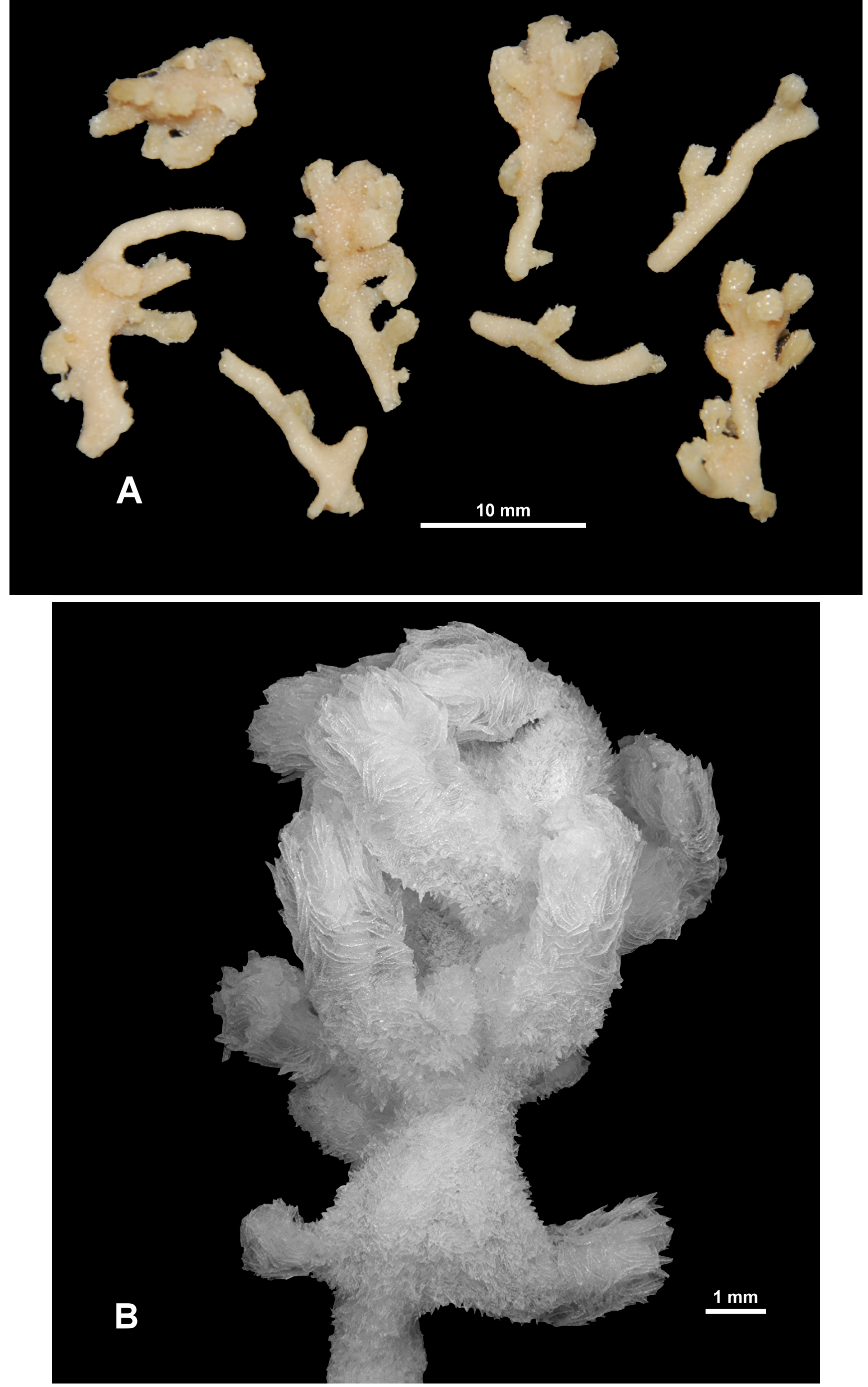
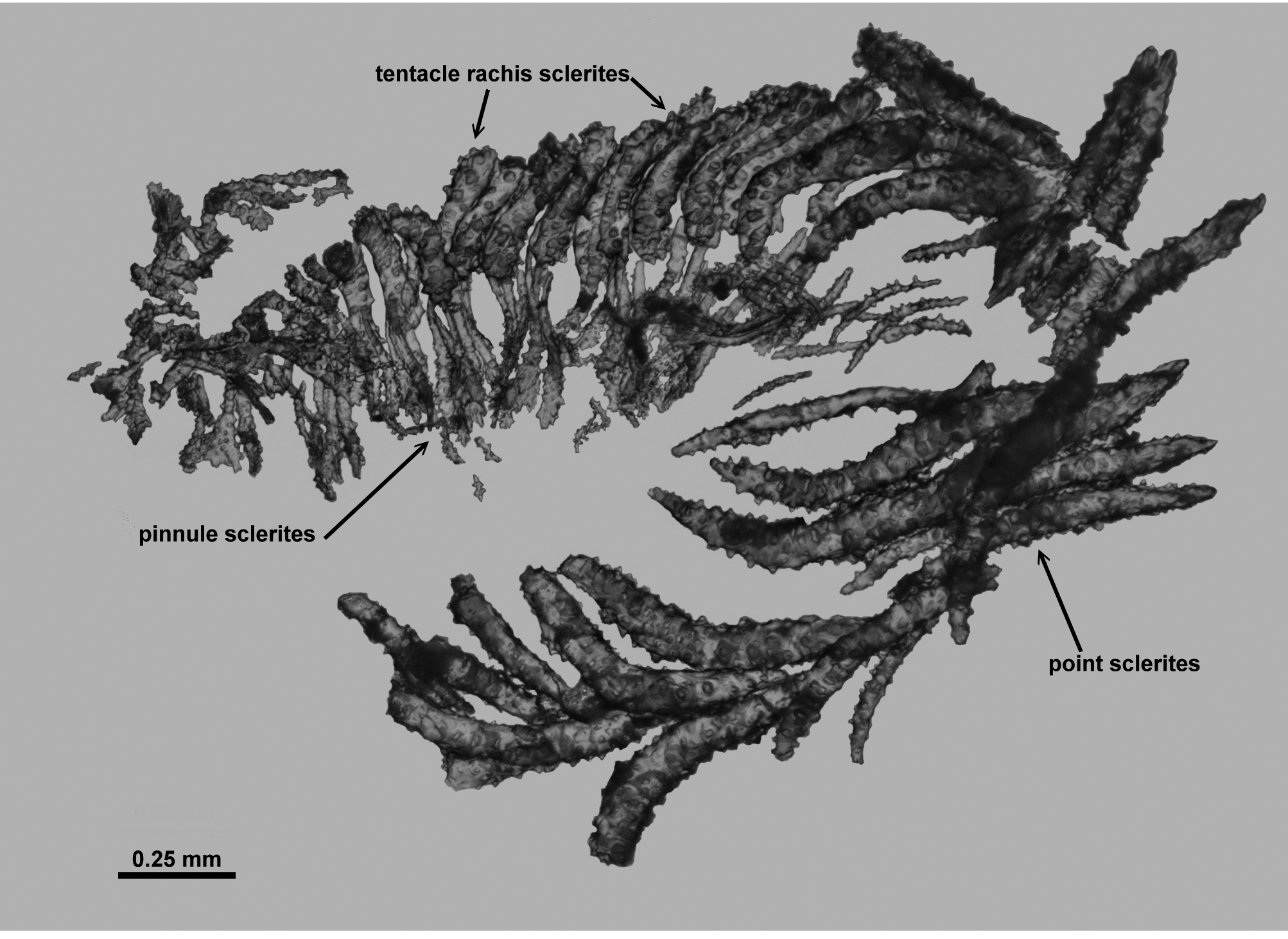
Description: Colony form: The holotype is broken into 6 small, irregular pieces of branches, all with calyces and polyps (Fig. 42 A). It is not possible to confidently reconstruct the shape or size of the colony, however the slightly twisted nature of the branches and the many bifurcation points indicate the colony form was probably tangled with irregular branching. The pieces of colony range in length from 10.6 mm to 24.6 mm and all are narrow (1.2 – 2.2 mm) and relatively delicate. The branches are usually circular in cross-section although they tend to flatten or distort at bifurcation points and where calyces arise. One piece has some evidence of anastomoses. All the colony pieces are in good condition with many intact polyps and undamaged surfaces. On three of the colony pieces, calyces are crowded into clavate terminal bunches with no space between the bases (Fig. 42 B). Proximal to the terminal bunches and on the remainder of the colony pieces, calyces occur sparsely, on all sides of the branches and project at right angles. There are sections of the branches which have no calyces; the largest of these spaces is 8.8 mm long. Colour: There is no record of live colour for this specimen; it is now light beige in alcohol. Polyps and Calyces: Calyces are large relative to the branch diameter, and range from 1.5 – 2.5 mm in height and 2 – 2.5 mm in width. They tend to be conical, and are clearly differentiated from the polyp neck and head by the arrangement and alignment of the sclerites (Fig. 43 A), which are small, crowded, arranged longitudinally and project out from the surface of the calyx giving it a prickly appearance. In contrast, immediately above the calyx lip, on the polyp neck and head much larger sclerites are arranged transversely, covering the polyp neck with no obvious thinning of the dense arrangement as is usually the case in other Anthothela species. These large sclerites continue obliquely to longitudinally up eight well-defined and quite spectacular points. All polyps are exsert with little or no invagination of the neck region and often with the polyp head bent over (Fig. 43 Ba), protruding 2.2 – 3.2 mm from the lip of the calyx and having a diameter of approximately 1.2 – 2.2 mm. The eight tentacles fold over the mouth of the polyp creating eight rounded ridges on the top of the polyp head. There are approximately 10 pinnules arranged in a single row along each side of the tentacles. Medulla and Cortex: The branches of the colony are composed of a central medulla, made up of tightly packed longitudinally arranged sclerites, that is surrounded by a cortex that is approximately 0.1 – 0.2 mm thick. The cortex and medulla are separated by a crowded series of adjacent longitudinal canals which encircle the medulla, allowing it to be easily separated from the cortex. A cross-section taken at the widest available part of the branches clearly shows the boundary canals, with no obvious, internal coelenteric canals (Fig. 44 A). In a narrower part of the colony, another cross-section demonstrates the same clear boundary canals with perhaps some indistinct canals in the central medulla (Fig. 44 B) which are more likely a thinning of the sclerites rather than defined canals. The body cavities of the polyps along the branches terminate at the medulla while the gastric canals of the polyps that are arranged in bunches at the tips of some branches tend to extend internally down the branch a short distance. Sclerites: The polyps and calyces are covered with a dense layer of crowded sclerites which are mostly tuberculate sticks and spindles on the polyp head and spiky thorn clubs on the calyx and colony surface. On the polyp head sclerites are very large, relative to the polyp, and are not as crowded as elsewhere on the colony. The largest sclerites are crescents or bent tuberculate hockey-sticks, with the straight, longest part of the sclerite arranged longitudinally in the points and the proximal portion curving to be transverse at the base of the points (Figs. 43 A; 45). Some have roots (or small branches) at the base and many have a serrated, thorny tip (Fig. 46) that can project out from the polyp head and above the back of the folded tentacles (Fig. 45). There is no true collaret, rather curved spindles are arranged transversely and obliquely down the polyp neck with no diminution of the sclerite cover at the neck area. Sclerites in the points range in size from 0.40 – 0.90 mm approximately, while those from the neck are slightly smaller (0.26 – 0.77 mm). From the tip of the points, sclerites continue obliquely along the tentacle rachis (Fig. 47). These sclerites are bent or straight tuberculate rods and sticks and spindles often with the shorter, curved end (Fig. 48 Aa) extending onto the tentacle flanks towards the pinnules. Straight sclerites are more commonly along the middle ridge of the tentacle rachis. The sclerites diminish in size along the tentacle; on the proximal end, the largest sclerites are approximately 0.58 mm long grading to the distal end of the tentacle where the smallest sclerites are approximately 0.20 mm long. In the pinnules, sclerites are crowded longitudinally and are delicate and easily broken (Fig. 47). Spatulate clubs are common, with a tapered handle and a broad, spatulate, almost leaf-like end, that is oriented distad in the pinnules (Fig. 48 B). These sclerites vary in length from 0.12 – 0.32 mm and the handle can be narrow and cylindrical or wide and flat. The smaller sclerites grade from spatulate clubs to simple tuberculate rods. There are also short flat rods (0.08 – 0.1 mm long) with sparse tubercles and narrow curved sticks and spindles (0.14 – 0.21 mm long) inter-dispersed with the spatulate clubs (Fig. 48 C, D). Calyces are covered in a dense and prickly layer of sclerites, almost all of which are small, bent, tuberculate thorn clubs (Fig. 49), orientated with the foliaceous, thorny tips distal on the calyx and angled out from the surface giving the calyx its prickly appearance. For the smaller sclerites there is some gradation between thorn clubs and those which are less developed at the tip and could be termed a wart club. Most calyx sclerites range from 0.22 – 0.52 mm, however there are some smaller, straight, tuberculate sticks and spindles mingled with the thorn clubs, which only reach approximately 0.17 mm in length. Very small sclerites with conical spines occur in the pharynx (Fig. 50 A). They are quite numerous and tend to occur in bunches. The size ranges from 0.05 – 0.12 mm long. The cortex contains sclerites very similar to those in the calyx — small, bent, warty thorn clubs with quite complex, at times foliose, spear-tips (Fig. 50 B). They are tightly packed with the tips projecting out from the surface giving the branches a very prickly appearance. Size does not vary much with most of the sclerites being from 0.19 – 0.43 mm long but occasionally there are some up to 0.53 mm long and as small as 0.12 mm. Amongst these short thorn clubs are some simple, tuberculate sticks and spindles (of a similar length) but the thorn clubs are far more common. The medulla is composed of tightly packed, longitudinally arranged sclerites — mostly sparsely tuberculate sticks and spindles (Fig. 51). Occasionally there are larger sticks and spindles with only sparse tubercles, often with branches, forks and fused areas. Most sclerites are from 0.20 – 0.53 mm long although many of those sampled showed evidence of breakage. It was difficult to ensure these long sclerites remained undamaged during sampling so the prevalence of these cannot be estimated. Occasionally there are small spindles only 0.1 mm in length. Sclerites are uniformly transparent under transmitted light. Variation: The paratype, WAM Z 13059, is membranous only, thinly encrusting large, straight sponge spicules (Fig. 52 A, B). It is from a site close to where the holotype was collected and was found at a similar depth. There is a similarly obvious delineation between the calyx and the polyp body (Fig. 52 A, C) and no retracted polyps were noted. Straightened out, the largest polyp is 5 mm long with the head 1.7 mm long and 1.4 mm wide. The sclerites on the points and neck region are smaller than those of the holotype (the largest measured at 0.58 mm) and slightly more crowded (Fig. 52 C, D) but the serrated ridges and thorny tubercles on the distal tips of the point sclerites resemble those of the holotype (Fig. 53 A) as do those sclerites from the neck (Fig. 53 B). Between each group of point sclerites there are two small intermediate sclerites which are narrow, curved spindles (Fig. 53 C). The arrangement of sclerites in the tentacles is similar to that in the holotype (Fig. 54 A) with bent tuberculate rods and bars (Fig. 54 B) arranged obliquely along the aboral side of the tentacle rachis and down onto the flanks, diminishing in size towards the distal tip, and the pinnules packed with spatulate clubs arranged longitudinally (Fig. 54 C). Some small rodlets with sparse, simple tubercles were found in the pharynx (Fig. 54 D). The calyces have well-developed, foliose thorn clubs similar to those in the holotype (Fig. 55 A), which project out from the surface giving it a prickly appearance (Fig. 52 Aa). The basal membrane of the colony contains predominantly rodlets, up to 0.2 mm long (Fig. 55 B). The larger spindles and small foliose, thorn clubs shown in the lower part of this figure are not common. The other paratype colony is also membranous only, growing on straight sponge spicules, but otherwise corresponds well with the holotype. Interestingly, it is geographically separated from the other two specimens, occurring in the Perth Canyon off southern Western Australia.
A taxonomic revision of Anthothela (Octocorallia: Scleraxonia: Anthothelidae) and related genera, with the addition of new taxa, using morphological and molecular data

Remarks: This species is different to other species in the genus Anthothela in having such large sclerites on the neck and in the points and predominately small thorn clubs in the calyces and cortex. The paratype is membranous only. Colony form has been such a large part of historical determinations in octocorals that linking this colony with scleraxonians which are predominantly branched is not immediately intuitive. In the absence of a medulla, the presence of spatulate clubs in the pinnules, well-developed calyces and clavate sclerites can provide a trigger to assess specimens with regards to Anthothela. It was only possible to obtain successful sequences of the two mitochondrial gene regions mtMutS and igr 1 – cox 1 from the holotype. Across the length of the two gene regions combined there was only a single nucleotide difference from a clade consisting of A. grandiflora and A. vickersi n. comb. specimens. In the phylogenetic analysis this was sufficient for the A. aldersladei n. sp. specimen to be positioned outside the A. grandiflora / A. vickersi clade but with low support. A single nucleotide in a single specimen may be no more than sequencing error so further attempts to sequence other specimens are necessary for a more robust result.
A taxonomic revision of Anthothela (Octocorallia: Scleraxonia: Anthothelidae) and related genera, with the addition of new taxa, using morphological and molecular data
Distribution: Western Australian coast Depth: 570 – 600 metres.
A taxonomic revision of Anthothela (Octocorallia: Scleraxonia: Anthothelidae) and related genera, with the addition of new taxa, using morphological and molecular data
Etymology: This species is named in honour of Dr Philip Alderslade, the first author’s PhD supervisor, who originally recognised the paratype as a possible Anthothela species and used the specimen as the catalyst for this revision.
A taxonomic revision of Anthothela (Octocorallia: Scleraxonia: Anthothelidae) and related genera, with the addition of new taxa, using morphological and molecular data
Material examined. Holotype: WAM Z 31463, 190 km NW of Karratha, Pluto Gas Field, Western Australia, SKM Pluto Gas Field Survey (PF 06 / S 1 – 600 / R 2), 19.874 ° S, 115.166 ° E, depth 600 m, 7 th December 2005. Paratypes: WAM Z 13059, North West Cape, Exmouth, Western Australia, AIMS North West Cape Survey II 2002, Fromont, J., Marsh, L. M. & Alderslade, P. N., stn. 0 4, 21.48 ° S, 113.966 ° E, depth 570 m, 20 th March 2002; WAM Z 90585, Perth Canyon, SE Indian Ocean, Western Australia, CSIRO RV Southern Surveyor, stn. 73 (SS 200510 / 073 - 020), 31.9650 ° S, 115.105 ° E, depth 1000 m, 30 th November 2005.
A taxonomic revision of Anthothela (Octocorallia: Scleraxonia: Anthothelidae) and related genera, with the addition of new taxa, using morphological and molecular data

Export occurrence data

Darwin Core Archive (ZIP)

CLASSIFICATION

Taxonomic Classification Tree

MULTIMEDIA

Media Files(14)

FIGURE 42. Anthothela aldersladei n. sp., holotype: A. Colony fragments; B. Polyp bunch.

Imageimage/png© Moore, Kirrily M.;Alderslade, Philip;Miller, Karen J.A taxonomic revision of Anthothela (Octocorallia: Scleraxonia: Anthothelidae) and related genera, with the addition of new taxa, using morphological and molecular data

FIGURE 43. Anthothela aldersladei, n. sp., holotype: A. Extended polyp; B. Polyp bunch (a. bent polyp)

Imageimage/png© Moore, Kirrily M.;Alderslade, Philip;Miller, Karen J.A taxonomic revision of Anthothela (Octocorallia: Scleraxonia: Anthothelidae) and related genera, with the addition of new taxa, using morphological and molecular data
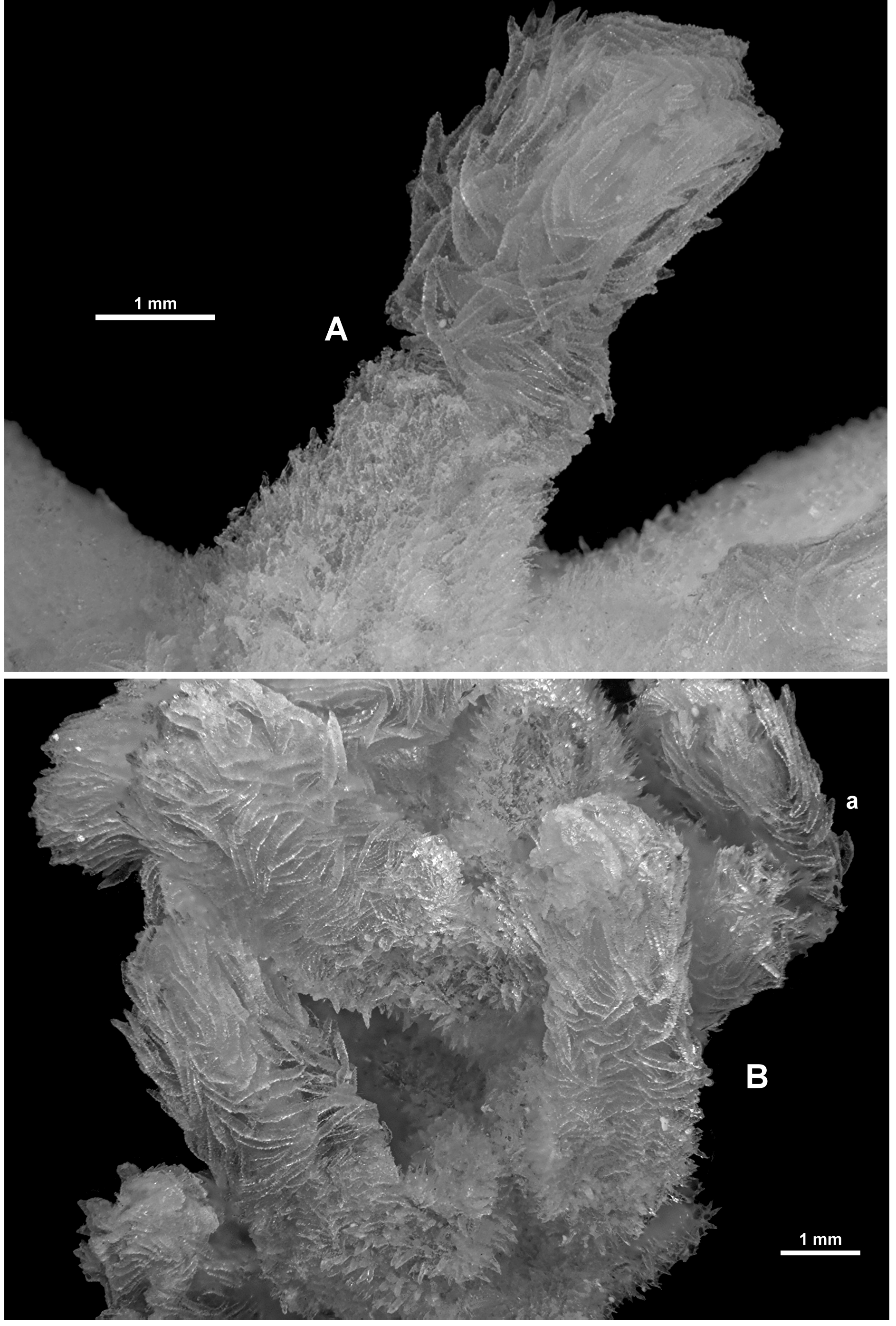
FIGURE 44. Anthothela aldersladei, n. sp., holotype: A – B. Cross-section of medulla.

Imageimage/png© Moore, Kirrily M.;Alderslade, Philip;Miller, Karen J.A taxonomic revision of Anthothela (Octocorallia: Scleraxonia: Anthothelidae) and related genera, with the addition of new taxa, using morphological and molecular data
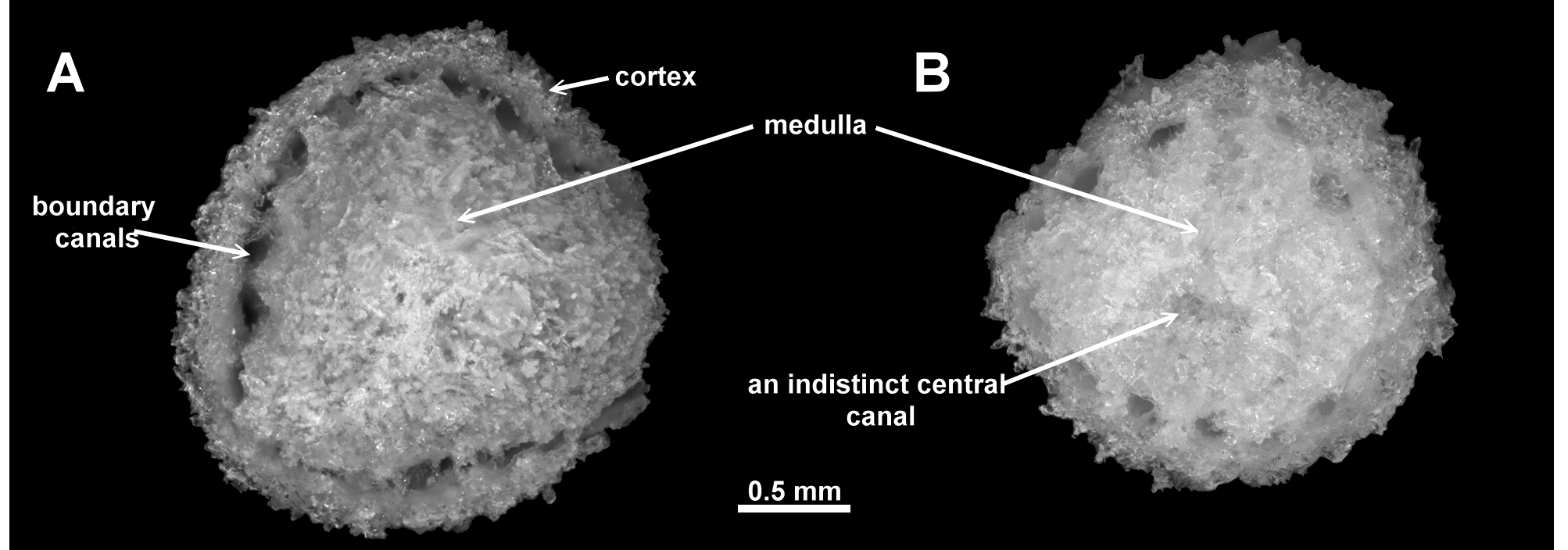
FIGURE 45. Anthothela aldersladei, n. sp., holotype: Arrangement of sclerites in points and on polyp neck.

Imageimage/png© Moore, Kirrily M.;Alderslade, Philip;Miller, Karen J.A taxonomic revision of Anthothela (Octocorallia: Scleraxonia: Anthothelidae) and related genera, with the addition of new taxa, using morphological and molecular data
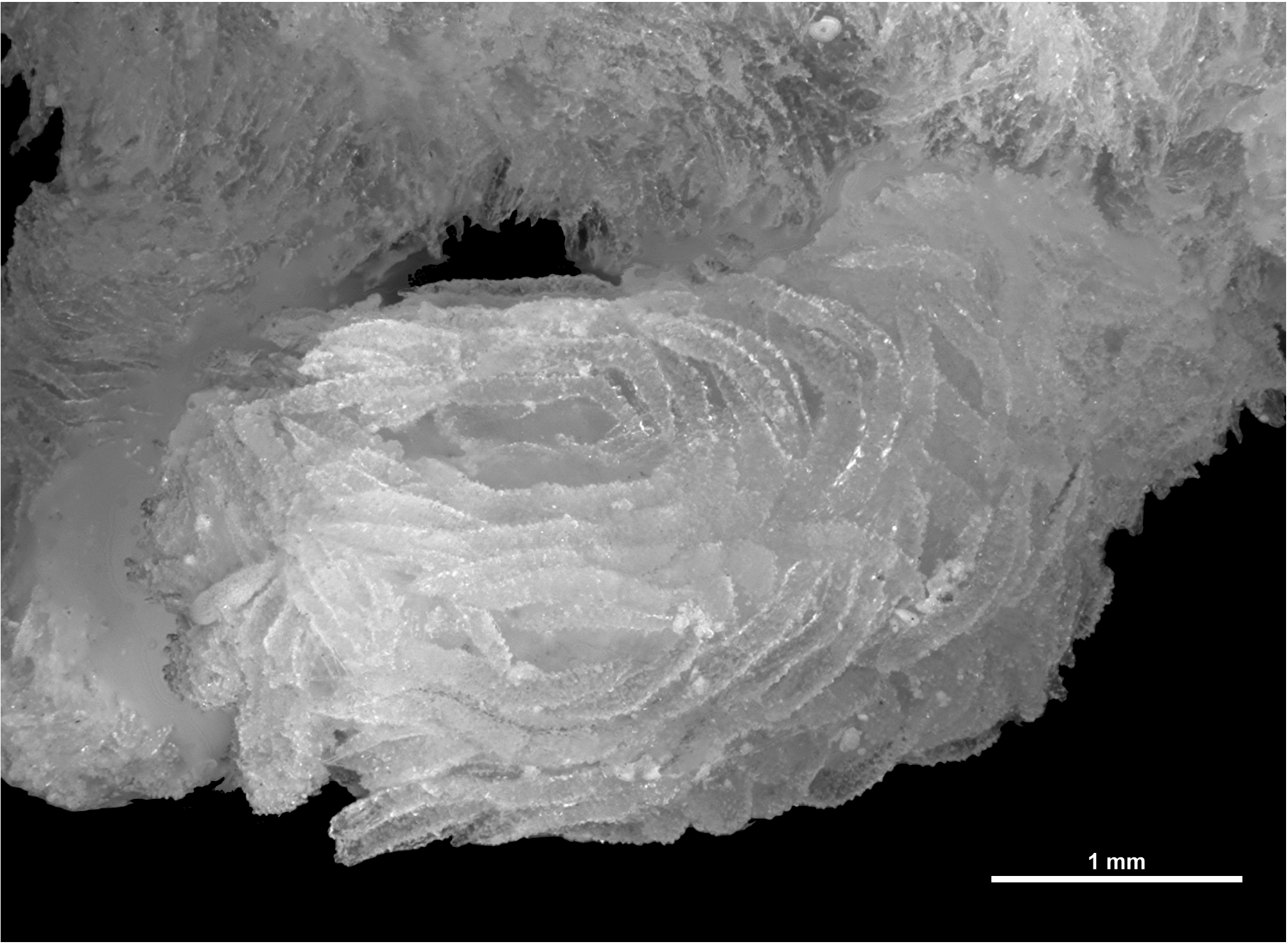
FIGURE 46. Anthothela aldersladei, n. sp., holotype, sclerites: Point.

Imageimage/png© Moore, Kirrily M.;Alderslade, Philip;Miller, Karen J.A taxonomic revision of Anthothela (Octocorallia: Scleraxonia: Anthothelidae) and related genera, with the addition of new taxa, using morphological and molecular data
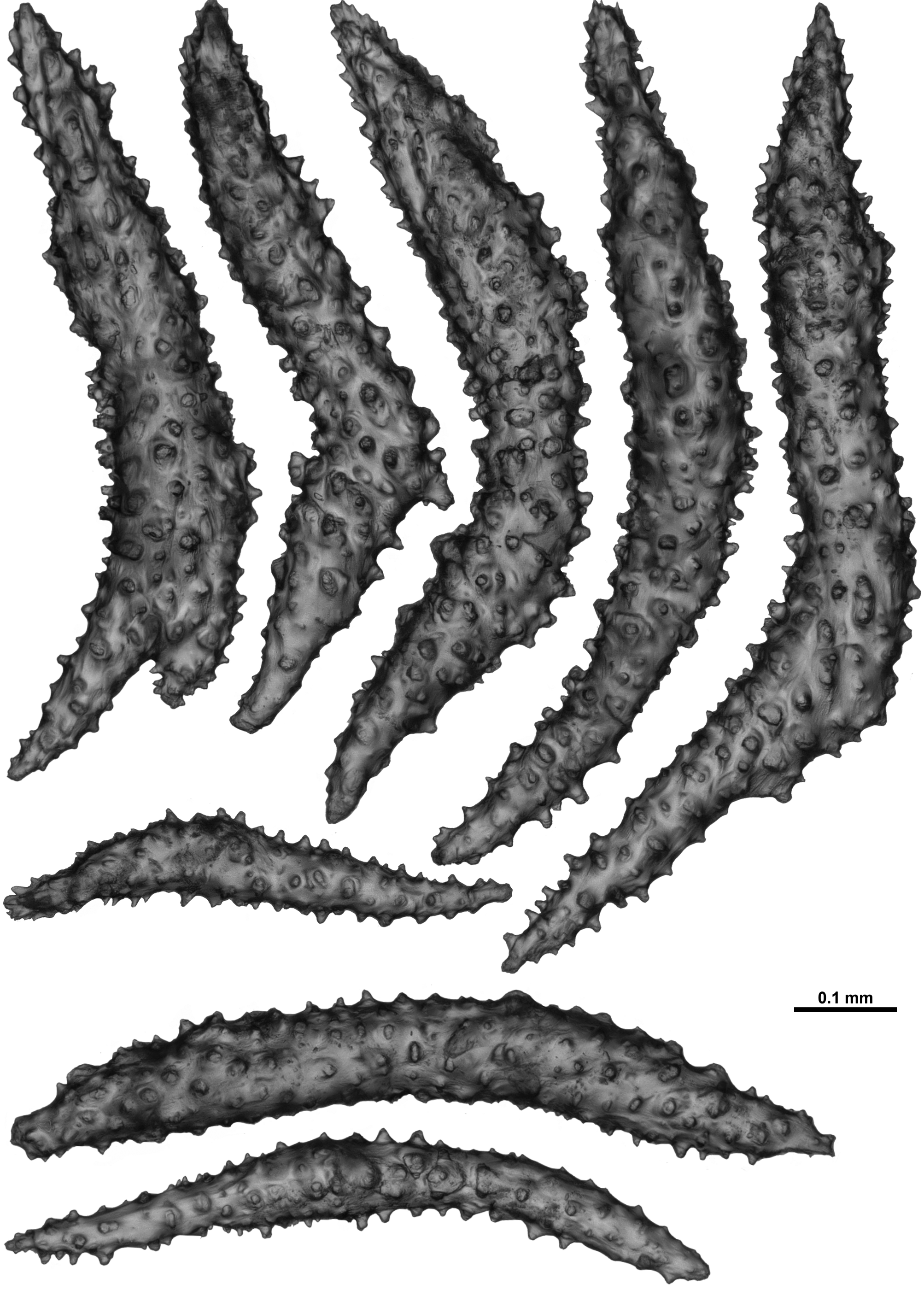
FIGURE 47. Anthothela aldersladei, n. sp., holotype: Tentacular and point sclerites in situ.

Imageimage/png© Moore, Kirrily M.;Alderslade, Philip;Miller, Karen J.A taxonomic revision of Anthothela (Octocorallia: Scleraxonia: Anthothelidae) and related genera, with the addition of new taxa, using morphological and molecular data
IMAGES

Gallery(14)

See Gallery

Occurrences with images

CITATIONS

References(1)

  • 1

    Moore, K. M.; Alderslade, P.; Miller, K. J. (2017). A taxonomic revision of Anthothela (Octocorallia: Scleraxonia: Anthothelidae) and related genera, with the addition of new taxa, using morphological and molecular data. <em>Zootaxa.</em> 4304(1): 1.

    original descriptionWorld Register of Marine Species
  • Source Information

    GBIF Backbone Taxonomy

    GBIF Backbone Taxonomy

    checklist

    The GBIF Backbone Taxonomy is a single, synthetic management classification with the goal of covering all names GBIF is dealing with. It's the taxonomic backbone that allows GBIF to integrate name based information from different resources, no matter if these are occurrence datasets, species pages, names from nomenclators or external sources like EOL, Genbank or IUCN. This backbone allows taxonomic search, browse and reporting operations across all those resources in a consistent way and to provide means to crosswalk names from one source to another.

    It is updated regulary through an automated process in which the Catalogue of Life acts as a starting point also providing the complete higher classification above families. Additional scientific names only found in other authoritative nomenclatural and taxonomic datasets are then merged into the tree, thus extending the original catalogue and broadening the backbones name coverage. The GBIF Backbone taxonomy also includes identifiers for Operational Taxonomic Units (OTUs) drawn from the barcoding resources iBOL and UNITE.

    International Barcode of Life project (iBOL), Barcode Index Numbers (BINs). BINs are connected to a taxon name and its classification by taking into account all names applied to the BIN and picking names with at least 80% consensus. If there is no consensus of name at the species level, the selection process is repeated moving up the major Linnaean ranks until consensus is achieved.

    UNITE - Unified system for the DNA based fungal species, Species Hypotheses (SHs). SHs are connected to a taxon name and its classification based on the determination of the RefS (reference sequence) if present or the RepS (representative sequence). In the latter case, if there is no match in the UNITE taxonomy, the lowest rank with 100% consensus within the SH will be used.

    The GBIF Backbone Taxonomy is available for download at https://hosted-datasets.gbif.org/datasets/backbone/ in different formats together with an archive of all previous versions.

    The following 105 sources have been used to assemble the GBIF backbone with number of names given in brackets:

    • Catalogue of Life Checklist - 4766428 names
    • International Barcode of Life project (iBOL) Barcode Index Numbers (BINs) - 635951 names
    • UNITE - Unified system for the DNA based fungal species linked to the classification - 611208 names
    • The Paleobiology Database - 212054 names
    • World Register of Marine Species - 188857 names
    • The Interim Register of Marine and Nonmarine Genera - 183894 names
    • The World Checklist of Vascular Plants (WCVP) - 131891 names
    • GBIF Backbone Taxonomy - 114350 names
    • TAXREF - 109374 names
    • The Leipzig catalogue of vascular plants - 75380 names
    • ZooBank - 73549 names
    • Integrated Taxonomic Information System (ITIS) - 68377 names
    • Plazi.org taxonomic treatments database - 61346 names
    • Genome Taxonomy Database r207 - 60545 names
    • International Plant Names Index - 52329 names
    • Fauna Europaea - 45077 names
    • The National Checklist of Taiwan (Catalogue of Life in Taiwan, TaiCoL) - 36193 names
    • Dyntaxa. Svensk taxonomisk databas - 35892 names
    • The Plant List with literature - 32692 names
    • United Kingdom Species Inventory (UKSI) - 29643 names
    • Artsnavnebasen - 29208 names
    • The IUCN Red List of Threatened Species - 21221 names
    • Afromoths, online database of Afrotropical moth species (Lepidoptera) - 13961 names
    • Brazilian Flora 2020 project - Projeto Flora do Brasil 2020 - 13829 names
    • Prokaryotic Nomenclature Up-to-Date (PNU) - 10079 names
    • Checklist Dutch Species Register - Nederlands Soortenregister - 8814 names
    • ICTV Master Species List (MSL) - 7852 names
    • Cockroach Species File - 6020 names
    • GRIN Taxonomy - 5882 names
    • Taxon list of fungi and fungal-like organisms from Germany compiled by the DGfM - 4570 names
    • Catalogue of Afrotropical Bees - 3623 names
    • Catalogue of Tenebrionidae (Coleoptera) of North America - 3327 names
    • Checklist of Beetles (Coleoptera) of Canada and Alaska. Second Edition. - 3312 names
    • Systema Dipterorum - 2850 names
    • Catalogue of the Pterophoroidea of the World - 2807 names
    • The Clements Checklist - 2675 names
    • Taxon list of Hymenoptera from Germany compiled in the context of the GBOL project - 2496 names
    • IOC World Bird List, v13.2 - 2366 names
    • Official Lists and Indexes of Names in Zoology - 2310 names
    • National checklist of all species occurring in Denmark - 1922 names
    • Myriatrix - 1876 names
    • Database of Vascular Plants of Canada (VASCAN) - 1822 names
    • Taxon list of vascular plants from Bavaria, Germany compiled in the context of the BFL project - 1771 names
    • Orthoptera Species File - 1742 names
    • A list of the terrestrial fungi, flora and fauna of Madeira and Selvagens archipelagos - 1602 names
    • Aphid Species File - 1565 names
    • World Spider Catalog - 1561 names
    • Taxon list of Jurassic Pisces of the Tethys Palaeo-Environment compiled at the SNSB-JME - 1270 names
    • Backbone Family Classification Patch - 1143 names
    • GBIF Algae Classification - 1100 names
    • International Cichorieae Network (ICN): Cichorieae Portal - 975 names
    • Psocodea Species File - 803 names
    • New Zealand Marine Macroalgae Species Checklist - 787 names
    • Annotated checklist of endemic species from the Western Balkans - 754 names
    • Taxon list of animals with German names (worldwide) compiled at the SMNS - 503 names
    • Catalogue of the Alucitoidea of the World - 472 names
    • Lygaeoidea Species File - 462 names
    • Catálogo de Plantas y Líquenes de Colombia - 422 names
    • GBIF Backbone Patch - 317 names
    • Phasmida Species File - 259 names
    • Cortinariaceae fetched from the Index Fungorum API - 234 names
    • Coreoidea Species File - 233 names
    • GTDB supplement - 139 names
    • Mantodea Species File - 119 names
    • Endemic species in Taiwan - 93 names
    • Taxon list of Araneae from Germany compiled in the context of the GBOL project - 88 names
    • Species of Hominidae - 78 names
    • Taxon list of Sternorrhyncha from Germany compiled in the context of the GBOL project - 77 names
    • Taxon list of mosses from Germany compiled in the context of the GBOL project - 75 names
    • Mammal Species of the World - 73 names
    • Plecoptera Species File - 71 names
    • Species Fungorum Plus - 64 names
    • Catalogue of the type specimens of Cosmopterigidae (Lepidoptera: Gelechioidea) from research collections of the Zoological Institute, Russian Academy of Sciences - 47 names
    • Species named after famous people - 41 names
    • Dermaptera Species File - 36 names
    • Taxon list of Trichoptera from Germany compiled in the context of the GBOL project - 34 names
    • True Fruit Flies (Diptera, Tephritidae) of the Afrotropical Region - 33 names
    • Range and Regularities in the Distribution of Earthworms of the Earthworms of the USSR Fauna. Perel, 1979 - 32 names
    • Taxon list of Diplura from Germany compiled in the context of the GBOL project - 30 names
    • Lista de referencia de especies de aves de Colombia - 2022 - 24 names
    • Taxon list of Auchenorrhyncha from Germany compiled in the context of the GBOL project - 20 names
    • Catalogue of the type specimens of Polycestinae (Coleoptera: Buprestidae) from research collections of the Zoological Institute, Russian Academy of Sciences - 19 names
    • Taxon list of Thysanoptera from Germany compiled in the context of the GBOL project - 19 names
    • Lista de especies de vertebrados registrados en jurisdicción del Departamento del Huila - 18 names
    • Taxon list of Microcoryphia (Archaeognatha) from Germany compiled in the context of the GBOL project - 15 names
    • Catalogue of the type specimens of Bufonidae and Megophryidae (Amphibia: Anura) from research collections of the Zoological Institute, Russian Academy of Sciences - 12 names
    • Grylloblattodea Species File - 11 names
    • Coleorrhyncha Species File - 9 names
    • Taxon list of liverworts from Germany compiled in the context of the GBOL project - 9 names
    • Embioptera Species File - 7 names
    • Taxon list of Pisces and Cyclostoma from Germany compiled in the context of the GBOL project - 6 names
    • Taxon list of Pteridophyta from Germany compiled in the context of the GBOL project - 6 names
    • Taxon list of Siphonaptera from Germany compiled in the context of the GBOL project - 5 names
    • The Earthworms of the Fauna of Russia. Perel, 1997 - 5 names
    • Taxon list of Zygentoma from Germany compiled in the context of the GBOL project - 4 names
    • Asiloid Flies: new taxa of Diptera: Apioceridae, Asilidae, and Mydidae - 3 names
    • Taxon list of Protura from Germany compiled in the context of the GBOL project - 3 names
    • Taxon list of hornworts from Germany compiled in the context of the GBOL project - 2 names
    • Chrysididae Species File - 1 names
    • Taxon list of Dermaptera from Germany compiled in the context of the GBOL project - 1 names
    • Taxon list of Diplopoda from Germany in the context of the GBOL project - 1 names
    • Taxon list of Orthoptera (Grashoppers) from Germany compiled at the SNSB - 1 names
    • Taxon list of Pscoptera from Germany compiled in the context of the GBOL project - 1 names
    • Taxon list of Pseudoscorpiones from Germany compiled in the context of the GBOL project - 1 names
    • Taxon list of Raphidioptera from Germany compiled in the context of the GBOL project - 1 names

    GBIF Secretariat (2023). GBIF Backbone Taxonomy. Checklist dataset https://doi.org/10.15468/39omei accessed via GBIF.org on 2026-06-15.

    CC BYPublished 8/28/2023View dataset
    GBIF Usage Key
    9556879
    Dataset Key
    d7dddbf4-2cf0-4f39-9b2a-bb099caae36c
    Origin
    source
    Backbone Key
    9556879
    Taxon ID
    gbif:9556879
    Last Crawled
    8/22/2023
    Last Interpreted
    8/22/2023