AnimaliaNot EvaluatedacceptedspeciesAcceptedRestricted
Acanthobdella peledina

Acanthobdella peledina

børsteigle(+7)·Grube, 1851

GBIF:2307565

0countries
0datasets
0year

0

Descendants

0

Children

PROFILE

Species Profile

Habitat

Marine

ABOUT

Descriptions(2)

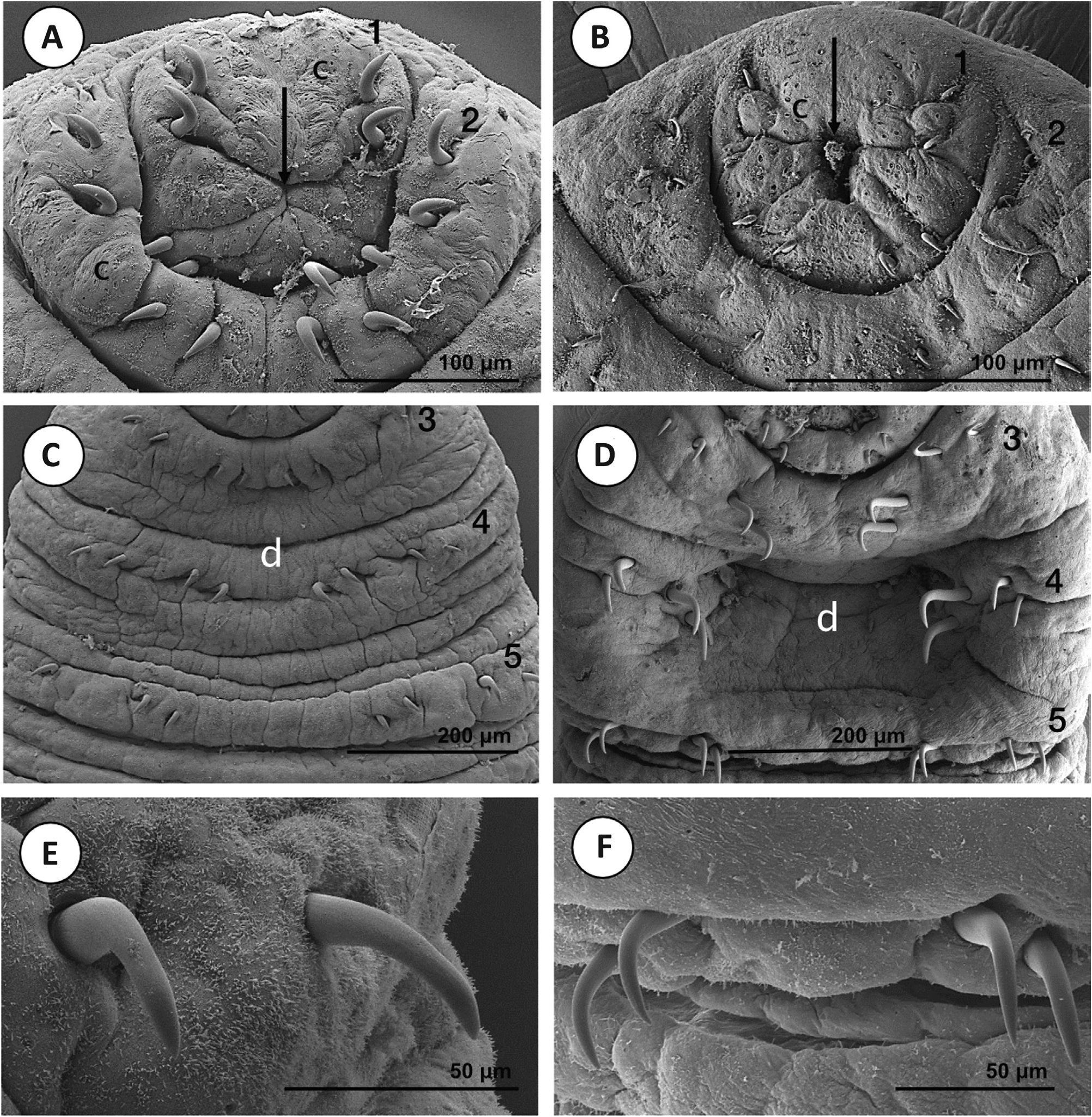
The present evidence suggests that A. peledina from Alaska is distinct, to some degree, from European samples. However, Siberia and the Russian Far East have not been adequately sampled genetically for A. peledina. Accordingly, it is difficult to determine the genetic variability and population structuring of this species. Coupled with increased taxon sampling, additional genetic sampling of Alaskan populations could help to indicate whether they are a unique species or population. Sampling of quickly evolving nuclear loci or, ideally, next generation sequence data (e. g. RADSeq) would be useful for determining whether gene flow exists between the Alaskan and Nordic localities. Unfortunately, COI, the most common marker for determining differences between leech species and populations (de Carle et al., 2017; Tessler et al., 2018 c; Mack et al., 2019), and additional nuclear loci did not amplify for these samples, potentially leading to some issues with missing data. Furthermore, given that no external morphological differences were noted between samples of Nordic and Alaskan A. peledina, we refrain from formal species or population delimitation analyses at this time. Nevertheless, the fact that the Alaskan population is sister to, and genetically divergent from, the Nordic samples suggests that this is not an invasive or nonnative species that was translocated only in recent times by humans, which would have been plausible given that the first records of this species in Alaska came from the 1970 s (Holmquist, 1974; Hauck et al., 1979) and that it has not officially been reported since then, despite the clear importance of these American animals. The Nordic populations are fairly similar genetically, despite being sampled from multiple (albeit geographically close) countries. The maximum genetic distance at the COI locus is 1.52 %, which is below the average value (~ 2.4 %) typically reported for species of Hirudinea (Kvist, 2015; de Carle et al., 2017; Anderson et al., 2020; Mack et al., 2019; Iwama et al., 2019). However, the countries sampled are all in relatively close proximity. It would be most useful to add samples from central and eastern Russia. Unfortunately, a 12 S sequence for A. peledina in the Baikal region of Russia from a recent publication was not made publicly available (Bolbat et al., 2019). MORPHOLOGY Our morphological examination and comparison of Paracanthobdella and populations of Acanthobdella help to characterize these species further. The scanning electron micrographs (Figs 6 – 9) and morphometry of facial hooks (N = 1280) help to accentuate the main external differences between the two species: (1) the presence or absence of a cup-shaped depression between rows of chaetae (anterior sucker); and (2) the chaetal dimensions and shape (Fig. 3; Table 3). The differences in both these characteristics become more notable as the species mature. The deep cupshaped anterior sucker, which is viewed as the most important distinguishing feature of P. livanowi, develops gradually through ontogeny from a flat state characteristic of juvenile individuals of the species. In A. peledina, the anterior end does not form a clearly separated sucker even in fully grown specimens, but a deep cavity appears between chaetae concomitantly with the growth of the animal. The shape of the chaetae differs between species: in A. peledina, chaetae are bent at a right angle and the breadth of the chaetae is similar in all rows, whereas in P. livanowi the angle is obtuse and chaetae in rows 4 and 5 have substantially greater breadth (Fig. 3; Table 3). The well-developed prostomium, which has been considered as another distinguishing feature of the species and the genus, was found to be less prominent and conspicuous than presented in previous studies (Epstein, 1987). Other studies have examined the internal morphology of these species (Bielecki et al., 2014); known differences from this work and others are summarized in Table 1. Acanthobdella peledina has the same morphology across the Nordic and Alaskan populations examined here and seems to be indistinguishable from Siberian populations (I. A. Kaygorodova & P. Świątek, unpublished scanning electron microscopy data) in other studies (Kaygorodova et al., 2012). Nevertheless, although we did not find differences between A. peledina from Alaska and Eurasia, it is entirely possible that detailed internal examinations might unearth differences, given that these populations appear to be divergent genetically. CONCLUSION AND FUTURE DIRECTIONS Our results help to shed light on the hook-faced fish worms (Acanthobdellida): an ancient lineage that is most closely related to leeches, and demonstrate that Acanthobdellida species and populations have diverged fairly recently. It is even possible that there are multiple species within A. peledina. Specifically, the American and Nordic populations appear to be distinct genetically and are likely to be isolated reproductively. However, there are important gaps to fill in the knowledge of the populations of this species before definitive action is taken on determining whether they represent the same species. Those gaps are as follows: (1) adding specimens from localities for central and eastern Russia; (2) obtaining additional genetic data (i. e. COI and additional nuclear data) for Alaskan samples; and (3) looking for internal morphological differences between populations.
Recent evolution of ancient Arctic leech relatives: systematics of Acanthobdellida
Geographic distribution. Palaearctic region, namely Northern Eurasia. In the Russian tundra: the Vashutkiny lakes system (Lukin 1966), northern part of Western Siberia (Zaloznyj 1984), the Gydansky Peninsula (Gagnon and Shorthouse 2019).
New data on species diversity of Annelida (Oligochaeta, Hirudinea) in the Kharbey lakes system, Bolshezemelskaya tundra (Russia)

Export occurrence data

Darwin Core Archive (ZIP)

GEOGRAPHY

Distribution Map

Occurrence Map

Loading map…

Tiles © GBIF Maps API | Map powered by MapLibre GL

REGIONS

Geographic Distribution(3)

North America
NO
SE
nativenot evaluated

DATA

Occurrence Datasets

Loading datasets…

Common names used for this species across different languages and regions. Available in 6 languages and 2 countries. 2 preferred.

NObørsteiglennoNObørsteiglenobengFish Hooking Leechengnobbørsteiglenobfinsukasjuotikasfin+3 more

Vernacular (common) names are the everyday names used for a species in different languages and regions. A single species may have dozens of common names worldwide. This taxon has names in 6 languages. 2 names preferred.

engFish Hooking Leech
eng
Source: Catalogue of LifeSource taxon #292396674
nobbørsteigle
nob
Source: Catalogue of LifeSource taxon #292396674
finsukasjuotikas
fin
Source: Catalogue of LifeSource taxon #292396674
FIsukasjuotikas
finFI
Source: The FinBIF checklist of Finnish speciesSource taxon #257956546
cesštětinovka sibiřská
ces
Source: Catalogue of LifeSource taxon #292396674
rusАкантобделла пеляжья
rus
Source: Catalogue of LifeSource taxon #292396674
NObørsteigle
nnopreferredNO
NObørsteigle
nobpreferredNO

CLASSIFICATION

Taxonomic Classification Tree

HIERARCHY

Child Taxa(1)

MULTIMEDIA

Media Files(5)

Figure 3. The chaetae of Acanthobdellida. Silhouettes show exemplary measurements of: A, chaetal length; B, chaetal breadth (from top to bottom) at the point of flexion, midsection (distal) and midsection (proximal); and C, flexion angle. Photographs, taken using a compound microscope, show: D, the chaetae of Acanthobdella peledina in the first segment; E, the chaetae of Paracanthobdella livanowi in the first segment; F, the chaetae of A. peledina in the fifth segment; and G, the chaetae of P. livanowi in the fifth segment. Scale bars: 35 µm (D–G).

Imageimage/png© Carle, Danielle Božena De;Gajda, Łukasz;Bielecki, Aleksander;Cios, Stanisław;Cichocka, Joanna M.;Golden, Heidi E.;Gryska, Andrew D.;Sokolov, Sergey;Shedko, Marina Borisowna;Knudsen, Rune;Utevsky, Serge;Świątek, Piotr;Tessler, MichaelRecent evolution of ancient Arctic leech relatives: systematics of Acanthobdellida

Figure 6. Scanning electron micrographs of general morphology in small specimens. A, Acanthobdella peledina (4 mm; Alaska). B, Paracanthobdella livanowi (3.5 mm; Kamchatka). Single black arrows, anterior body region; double black arrows, posterior sucker. In the A. peledina specimen, some fragments of host tissue (white arrow) are still attached to the sucker.

Imageimage/png© Carle, Danielle Božena De;Gajda, Łukasz;Bielecki, Aleksander;Cios, Stanisław;Cichocka, Joanna M.;Golden, Heidi E.;Gryska, Andrew D.;Sokolov, Sergey;Shedko, Marina Borisowna;Knudsen, Rune;Utevsky, Serge;Świątek, Piotr;Tessler, MichaelRecent evolution of ancient Arctic leech relatives: systematics of Acanthobdellida

Figure 7. Scanning electron micrographs of the anterior body region. A, B, small specimens of Acanthobdella peledina (5 mm; Sweden; A) and Paracanthobdella livanowi (3.5 mm; B). C, D, large specimens of A. peledina (12 mm; Norway; C) and P. livanowi (11 mm; Kamchatka; D). In the large P. livanowi specimen, body segmentation and chaetae in the anterior sucker are barely visible.Arrow, mouth opening;Arabic numerals 1–5 indicate rows of chaetae; d, deepening between pairs of chaetae.

Imageimage/png© Carle, Danielle Božena De;Gajda, Łukasz;Bielecki, Aleksander;Cios, Stanisław;Cichocka, Joanna M.;Golden, Heidi E.;Gryska, Andrew D.;Sokolov, Sergey;Shedko, Marina Borisowna;Knudsen, Rune;Utevsky, Serge;Świątek, Piotr;Tessler, MichaelRecent evolution of ancient Arctic leech relatives: systematics of Acanthobdellida

Figure 8. Scanning electron micrographs showing details of the anterior body region.A, B, first and second rows of chaetae in small Acanthobdella peledina (5 mm; Sweden; A) and small Paracanthobdella livanowi (3.5 mm; Kamchatka; B). C, D, third, fourth and fifth rows of chaetae in medium-sized A. peledina (7 mm; Sweden; C) and P. livanowi (6 mm; Kamchatka; D). E, F, chaetae from the fifth row of medium-sized A. peledina (6 mm; Sweden; E) and medium-sized P. livanowi (6 mm; Kamchatka; F). Arrow indicates mouth opening; Arabic numerals 1–5 indicate rows of chaetae; c, putative chemoreceptors; d, deepening between pairs of chaetae.

Imageimage/png© Carle, Danielle Božena De;Gajda, Łukasz;Bielecki, Aleksander;Cios, Stanisław;Cichocka, Joanna M.;Golden, Heidi E.;Gryska, Andrew D.;Sokolov, Sergey;Shedko, Marina Borisowna;Knudsen, Rune;Utevsky, Serge;Świątek, Piotr;Tessler, MichaelRecent evolution of ancient Arctic leech relatives: systematics of Acanthobdellida

Figure 9. Scanning electron micrographs of gonopores and posterior body regions.A, B, gonopores in a small Acanthobdella peledina (4 mm; Alaska; A) and a large Paracanthobella livanowi (11 mm; Kamchatka; B). C, D, the posterior body region for a medium-sized A. peledina (7 mm; Sweden; C) and a medium-sized P. livanowi (6 mm; Kamchatka; D). Double arrows indicate the posterior sucker; f, female gonopore; m, male gonopore; s, opening of the spermatheca. Dotted lines and Roman numerals denote segments.

Imageimage/png© Carle, Danielle Božena De;Gajda, Łukasz;Bielecki, Aleksander;Cios, Stanisław;Cichocka, Joanna M.;Golden, Heidi E.;Gryska, Andrew D.;Sokolov, Sergey;Shedko, Marina Borisowna;Knudsen, Rune;Utevsky, Serge;Świątek, Piotr;Tessler, MichaelRecent evolution of ancient Arctic leech relatives: systematics of Acanthobdellida

IMAGES

Gallery(5)

See Gallery

Occurrences with images

CITATIONS

References(3)

  • 1

    Grube, Adolph-Eduard. (1851). Annulaten. <em>Dr. A. Th. v. Middendorff's Reise in den äussersten Norden und Osten Sibiriens. St. Petersburg : Buchdr. der K. Akademie der Wissenschaften.</em> 2 Zoologie (1 Wirbellose Thiere): 1-24.

    original descriptionWorld Register of Marine Species
  • 2

    Sawyer, Roy T., 1986: null. Leech Biology and Behaviour, vol. 2. 419-793.

    Integrated Taxonomic Information System (ITIS)
  • 3

    Stefan Lundberg (Iglar) (2004) Stefan Lundberg, limnolog, sektionen för evertebratzoologi, Naturhistoriska riksmuseet.

    Dyntaxa. Svensk taxonomisk databas
  • Source Information

    GBIF Backbone Taxonomy

    GBIF Backbone Taxonomy

    checklist

    The GBIF Backbone Taxonomy is a single, synthetic management classification with the goal of covering all names GBIF is dealing with. It's the taxonomic backbone that allows GBIF to integrate name based information from different resources, no matter if these are occurrence datasets, species pages, names from nomenclators or external sources like EOL, Genbank or IUCN. This backbone allows taxonomic search, browse and reporting operations across all those resources in a consistent way and to provide means to crosswalk names from one source to another.

    It is updated regulary through an automated process in which the Catalogue of Life acts as a starting point also providing the complete higher classification above families. Additional scientific names only found in other authoritative nomenclatural and taxonomic datasets are then merged into the tree, thus extending the original catalogue and broadening the backbones name coverage. The GBIF Backbone taxonomy also includes identifiers for Operational Taxonomic Units (OTUs) drawn from the barcoding resources iBOL and UNITE.

    International Barcode of Life project (iBOL), Barcode Index Numbers (BINs). BINs are connected to a taxon name and its classification by taking into account all names applied to the BIN and picking names with at least 80% consensus. If there is no consensus of name at the species level, the selection process is repeated moving up the major Linnaean ranks until consensus is achieved.

    UNITE - Unified system for the DNA based fungal species, Species Hypotheses (SHs). SHs are connected to a taxon name and its classification based on the determination of the RefS (reference sequence) if present or the RepS (representative sequence). In the latter case, if there is no match in the UNITE taxonomy, the lowest rank with 100% consensus within the SH will be used.

    The GBIF Backbone Taxonomy is available for download at https://hosted-datasets.gbif.org/datasets/backbone/ in different formats together with an archive of all previous versions.

    The following 105 sources have been used to assemble the GBIF backbone with number of names given in brackets:

    • Catalogue of Life Checklist - 4766428 names
    • International Barcode of Life project (iBOL) Barcode Index Numbers (BINs) - 635951 names
    • UNITE - Unified system for the DNA based fungal species linked to the classification - 611208 names
    • The Paleobiology Database - 212054 names
    • World Register of Marine Species - 188857 names
    • The Interim Register of Marine and Nonmarine Genera - 183894 names
    • The World Checklist of Vascular Plants (WCVP) - 131891 names
    • GBIF Backbone Taxonomy - 114350 names
    • TAXREF - 109374 names
    • The Leipzig catalogue of vascular plants - 75380 names
    • ZooBank - 73549 names
    • Integrated Taxonomic Information System (ITIS) - 68377 names
    • Plazi.org taxonomic treatments database - 61346 names
    • Genome Taxonomy Database r207 - 60545 names
    • International Plant Names Index - 52329 names
    • Fauna Europaea - 45077 names
    • The National Checklist of Taiwan (Catalogue of Life in Taiwan, TaiCoL) - 36193 names
    • Dyntaxa. Svensk taxonomisk databas - 35892 names
    • The Plant List with literature - 32692 names
    • United Kingdom Species Inventory (UKSI) - 29643 names
    • Artsnavnebasen - 29208 names
    • The IUCN Red List of Threatened Species - 21221 names
    • Afromoths, online database of Afrotropical moth species (Lepidoptera) - 13961 names
    • Brazilian Flora 2020 project - Projeto Flora do Brasil 2020 - 13829 names
    • Prokaryotic Nomenclature Up-to-Date (PNU) - 10079 names
    • Checklist Dutch Species Register - Nederlands Soortenregister - 8814 names
    • ICTV Master Species List (MSL) - 7852 names
    • Cockroach Species File - 6020 names
    • GRIN Taxonomy - 5882 names
    • Taxon list of fungi and fungal-like organisms from Germany compiled by the DGfM - 4570 names
    • Catalogue of Afrotropical Bees - 3623 names
    • Catalogue of Tenebrionidae (Coleoptera) of North America - 3327 names
    • Checklist of Beetles (Coleoptera) of Canada and Alaska. Second Edition. - 3312 names
    • Systema Dipterorum - 2850 names
    • Catalogue of the Pterophoroidea of the World - 2807 names
    • The Clements Checklist - 2675 names
    • Taxon list of Hymenoptera from Germany compiled in the context of the GBOL project - 2496 names
    • IOC World Bird List, v13.2 - 2366 names
    • Official Lists and Indexes of Names in Zoology - 2310 names
    • National checklist of all species occurring in Denmark - 1922 names
    • Myriatrix - 1876 names
    • Database of Vascular Plants of Canada (VASCAN) - 1822 names
    • Taxon list of vascular plants from Bavaria, Germany compiled in the context of the BFL project - 1771 names
    • Orthoptera Species File - 1742 names
    • A list of the terrestrial fungi, flora and fauna of Madeira and Selvagens archipelagos - 1602 names
    • Aphid Species File - 1565 names
    • World Spider Catalog - 1561 names
    • Taxon list of Jurassic Pisces of the Tethys Palaeo-Environment compiled at the SNSB-JME - 1270 names
    • Backbone Family Classification Patch - 1143 names
    • GBIF Algae Classification - 1100 names
    • International Cichorieae Network (ICN): Cichorieae Portal - 975 names
    • Psocodea Species File - 803 names
    • New Zealand Marine Macroalgae Species Checklist - 787 names
    • Annotated checklist of endemic species from the Western Balkans - 754 names
    • Taxon list of animals with German names (worldwide) compiled at the SMNS - 503 names
    • Catalogue of the Alucitoidea of the World - 472 names
    • Lygaeoidea Species File - 462 names
    • Catálogo de Plantas y Líquenes de Colombia - 422 names
    • GBIF Backbone Patch - 317 names
    • Phasmida Species File - 259 names
    • Cortinariaceae fetched from the Index Fungorum API - 234 names
    • Coreoidea Species File - 233 names
    • GTDB supplement - 139 names
    • Mantodea Species File - 119 names
    • Endemic species in Taiwan - 93 names
    • Taxon list of Araneae from Germany compiled in the context of the GBOL project - 88 names
    • Species of Hominidae - 78 names
    • Taxon list of Sternorrhyncha from Germany compiled in the context of the GBOL project - 77 names
    • Taxon list of mosses from Germany compiled in the context of the GBOL project - 75 names
    • Mammal Species of the World - 73 names
    • Plecoptera Species File - 71 names
    • Species Fungorum Plus - 64 names
    • Catalogue of the type specimens of Cosmopterigidae (Lepidoptera: Gelechioidea) from research collections of the Zoological Institute, Russian Academy of Sciences - 47 names
    • Species named after famous people - 41 names
    • Dermaptera Species File - 36 names
    • Taxon list of Trichoptera from Germany compiled in the context of the GBOL project - 34 names
    • True Fruit Flies (Diptera, Tephritidae) of the Afrotropical Region - 33 names
    • Range and Regularities in the Distribution of Earthworms of the Earthworms of the USSR Fauna. Perel, 1979 - 32 names
    • Taxon list of Diplura from Germany compiled in the context of the GBOL project - 30 names
    • Lista de referencia de especies de aves de Colombia - 2022 - 24 names
    • Taxon list of Auchenorrhyncha from Germany compiled in the context of the GBOL project - 20 names
    • Catalogue of the type specimens of Polycestinae (Coleoptera: Buprestidae) from research collections of the Zoological Institute, Russian Academy of Sciences - 19 names
    • Taxon list of Thysanoptera from Germany compiled in the context of the GBOL project - 19 names
    • Lista de especies de vertebrados registrados en jurisdicción del Departamento del Huila - 18 names
    • Taxon list of Microcoryphia (Archaeognatha) from Germany compiled in the context of the GBOL project - 15 names
    • Catalogue of the type specimens of Bufonidae and Megophryidae (Amphibia: Anura) from research collections of the Zoological Institute, Russian Academy of Sciences - 12 names
    • Grylloblattodea Species File - 11 names
    • Coleorrhyncha Species File - 9 names
    • Taxon list of liverworts from Germany compiled in the context of the GBOL project - 9 names
    • Embioptera Species File - 7 names
    • Taxon list of Pisces and Cyclostoma from Germany compiled in the context of the GBOL project - 6 names
    • Taxon list of Pteridophyta from Germany compiled in the context of the GBOL project - 6 names
    • Taxon list of Siphonaptera from Germany compiled in the context of the GBOL project - 5 names
    • The Earthworms of the Fauna of Russia. Perel, 1997 - 5 names
    • Taxon list of Zygentoma from Germany compiled in the context of the GBOL project - 4 names
    • Asiloid Flies: new taxa of Diptera: Apioceridae, Asilidae, and Mydidae - 3 names
    • Taxon list of Protura from Germany compiled in the context of the GBOL project - 3 names
    • Taxon list of hornworts from Germany compiled in the context of the GBOL project - 2 names
    • Chrysididae Species File - 1 names
    • Taxon list of Dermaptera from Germany compiled in the context of the GBOL project - 1 names
    • Taxon list of Diplopoda from Germany in the context of the GBOL project - 1 names
    • Taxon list of Orthoptera (Grashoppers) from Germany compiled at the SNSB - 1 names
    • Taxon list of Pscoptera from Germany compiled in the context of the GBOL project - 1 names
    • Taxon list of Pseudoscorpiones from Germany compiled in the context of the GBOL project - 1 names
    • Taxon list of Raphidioptera from Germany compiled in the context of the GBOL project - 1 names

    GBIF Secretariat (2023). GBIF Backbone Taxonomy. Checklist dataset https://doi.org/10.15468/39omei accessed via GBIF.org on 2026-06-14.

    CC BYPublished 8/28/2023View dataset
    GBIF Usage Key
    2307565
    Dataset Key
    d7dddbf4-2cf0-4f39-9b2a-bb099caae36c
    Origin
    source
    Backbone Key
    2307565
    Taxon ID
    gbif:2307565
    Last Crawled
    8/22/2023
    Last Interpreted
    8/22/2023