AnimaliaNot EvaluatedacceptedspeciesAcceptedRestricted
Antonbruunia sociabilis

Antonbruunia sociabilis

Mackie, Oliver & Nygren, 2015

GBIF:8031018

0countries
0year

PROFILE

Species Profile

Habitat

Marine

Characteristics

Extant

ABOUT

Descriptions(4)

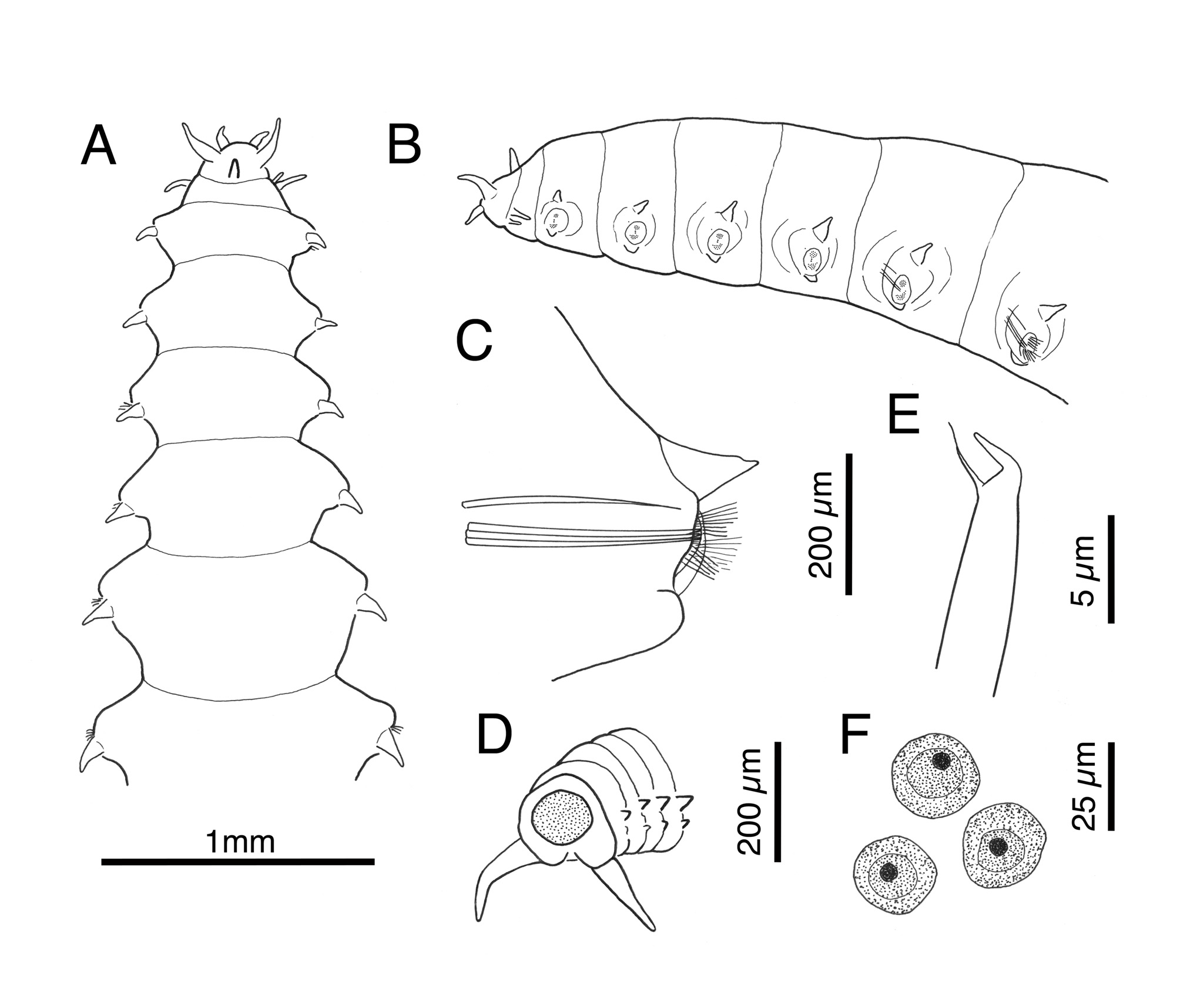
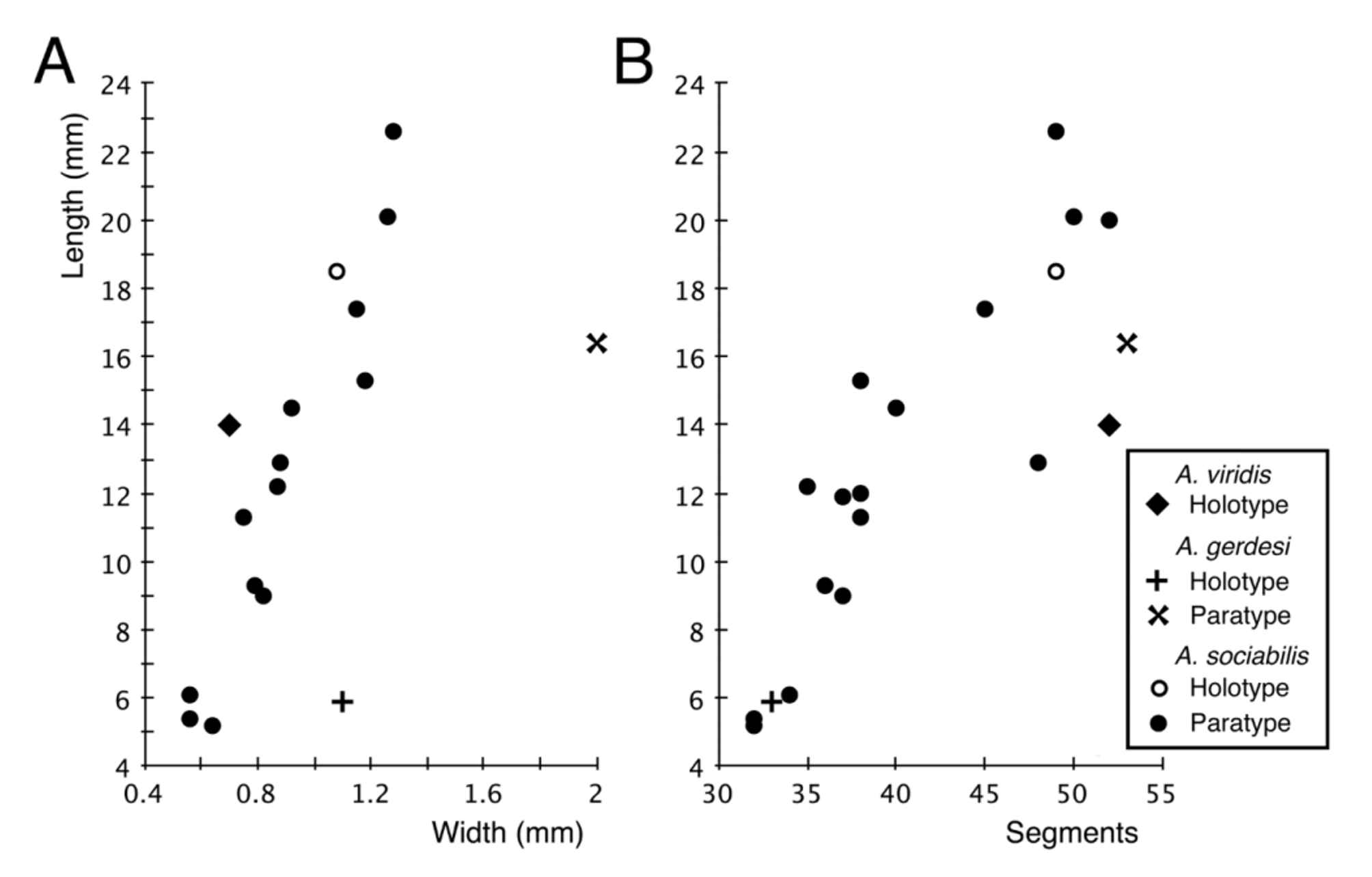
Description. Holotype entire, maximum width 1.08 mm (including parapodia), 18.5 mm long for prostomium and 48 segments. Paratypes ranging from 0.56 – 1.28 mm wide, 5.2 – 22.6 mm long, and 32 – 52 segments. Body long and slender, dorsally arched and ventrally flat, lacking ventral groove. Head and anterior 5 segments narrow; segments thereafter rapidly increasing in size (Fig. 1 A – B), reaching maximum in anterior third of body, rapidly decreasing in posterior region. Cuticle smooth and shiny on best preserved specimens. Pygidium lobulate, ventro-laterally with single pair of tapered pygidial cirri (Figs 1 D, 2 D). Prostomium subtrapezoidal, with rounded anterior margin, lacking eyes (Fig. 1 A). Pair of antero-ventral palps, somewhat conical, basally expanded and distally tapered. Pair of antero-dorsolateral antennae, of similar shape to palps, but broader and longer (Fig. 2 A – B). Median antenna of similar size and shape to palps, arising mid-dorsally near posterior margin of prostomium (Fig. 1 A, B). Nuchal organs elliptical ciliated grooves, positioned dorsolaterally between posterior prostomium and anterior margin of segment 1 (Fig. 2 B). Peristomium ventrally fused with prostomium and segment 1; delineation between prostomium and segment 1 only distinct dorsally and laterally. Mouth ventral, transverse, slit-like (Fig. 2 A – B). Two pairs of tapered tentacular cirri on segment 1, superior cirri 1.5 to 2 times as long as inferiors; parapodia and chaetae lacking. Pharynx muscular, axial, short and narrow, occupying anterior three segments; proboscis short and bulbous when extruded (Fig. 2 C), jaws lacking. Gut tubular, with markedly wider lumen from anterior to middle of chaetiger 3. Gut caecae from chaetiger 3 as pair of small lateral pouches; caecae increase in size over following 2 – 3 chaetigers, extending into parapodia. By chaetiger 6 or 7, distally tapered caecae reach into posterior parts of parapodia, just below dorsal cirri; caecae decrease in size in posterior half to third of body. Gut caecae revealed through methyl green staining; caecae appearing as opaque white unstained masses either side, extending laterally into the parapodia. Parapodia simple, short cuff-like, lacking any marked pre- or post-chaetal structures. Dorsal cirri above or slightly dorso-posterior to parapodia; cirri somewhat conical with broad bases and tapering cirriform tips of variable extension (Figs 1 A – C & 3 A – B). Ventral cirri positioned below or slightly posterior to neurochaetae. Ventral cirri of anterior and posterior parapodia short, conical with bluntly pointed tips (Fig. 3 A, D). Those of median body larger, more rounded, or rounded with tiny sharply pointed tips (Figs 1 C, 3 C). Anterior parapodia supported by two parallel, robust and distally pointed neuroaciculae; increasing to three aciculae by about chaetiger 6 or 7. Single notoaciculae with sharply tapering tips arise separate from neuroaciculae (Fig. 1 C). Each notoacicula directed forward into anterior part of parapod, tip ending anterior to and level with uppermost neurochaetae, well in advance of dorsal cirrus (Fig. 1 B, C); in slide preparations notoacicula may seem closer to dorsal cirrus than reality. Neurochaetae numerous in anterior and mid body region, disposed in two bundles; superior bundle compact, inferior bundle broader with chaetae extending more dorsally around acicular lobe on posterior side (Figs 1 B, 3 E). Number of chaetae similar in each bundle, usually slightly more in inferior bundle; two bundles together totalling about 30 – 35 chaetae in anterior parapodia, but increasing to 45 – 50 in parapodia of largest segments. Separation between superior and inferior bundles disappears in posterior parapodia, and number of chaetae decreases to less than five or six on posteriormost segments. Posteriormost 4 – 6 segments of smallest specimens have rudimentary parapodia and no chaetae. Neurochaetae slender, shafts smooth, each with strongly bent distal tooth and longer slender and delicate secondary spine, space between tooth and spine angular (Figs 1 E, 3 F); primary teeth all pointing dorsally (Fig. 3 E). Reproduction. Largest specimens, longer than about 15 mm clearly female with small (ca. 25 µm diameter) oocytes in parapodia and loose in coelom (Fig. 1 F). Several specimens between approximately 11 and 15 mm appear to be immature females. Sex of smaller specimens not determined. Colour. Preserved specimens white. Colour of live animals not known. Methyl Green staining. Glandular staining variable, most pronounced on the larger specimens. Band of speckles occurring behind the mouth and behind the ventral tentacular cirri. Ventrally, anterior 9 or 10 chaetigers with two widely separated, and interrupted, parallel lines of stain. These lines linked in posterior part of each chaetiger by broad transverse band, producing repetitive H-pattern of stain on anterior venter. The transverse band disappears on following chaetigers, and only two broken parallel lines remain. Other staining associated with the parapodia. Ventral staining patch present at base, as vertical line on body just anterior to each parapod, and as vertical patch on its anterior face. Similar, but more sparse speckled areas on posterior face of parapod. Sparse speckles of stain evident on basal part of dorsal cirri and on body dorsal to parapodia; mid-dorsal region unstained. Pygidial lobes surrounding anus stained. Morphometrics. The morphological attributes measured (width, length, number of segments) for A. sociabilis sp. nov. were strongly correlated: width and length (Fig. 4 A), r = 0.957, p <0.0001, n = 14; segments and length (Fig. 4 B), r = 0.894, p <0.0001, n = 17; segments and width (not figured), r = 0.806, p = 0.0002, n = 14.
Antonbruunia sociabilis sp. nov. (Annelida: Antonbruunidae) associated with the chemosynthetic deep-sea bivalve Thyasira scotiae Oliver & Drewery, 2014, and a re-examination of the systematic affinities of Antonbruunidae

Remarks. Hartman & Boss (1965) and Quiroga & Sellanes (2009) referred to all Antonbruunia prostomial appendages as antennae. The two antero-ventral prostomial appendages are here considered to be palps, while the two larger antero-dorsolateral organs are the lateral antennae. This is consistent with their positions on the prostomium in literature associated with Antonbruunidae (Fauchald 1977; Pleijel & Dahlgren 1998; Pleijel 2001 c; Aguado et al. 2013) and putative related families, Pilargidae (Pettibone 1966; Fitzhugh & Wolf 1990; Fauchald & Rouse 1997; Glasby 1993, 2000; Pleijel 2001 b) and Nautiliniellidae (Pleijel 2001 a; Fauchald & Rouse 1997; Aguado & Rouse 2011; Aguado et al. 2013). However, as Glasby (1993) pointed out, the true nature of the anteroventral appendages in Antonbruunia “ must remain in doubt until better material is available to conduct histological study. ” Antonbruunia sociabilis sp. nov. is morphologically most similar to A. viridis. Segment 1, bearing the tentacular cirri, is well-defined dorsally and laterally as a distinct ring behind the prostomium. The palps and antennae are relatively slender tapering to narrow tips, median antennae and palps of similar size. Both have slender cirriform anal cirri. In A. gerdesi, the tentacular cirri are more anteriorly positioned below / lateral to the prostomium, and segment 1 is dorsally reduced and narrow. All the anterior appendages are more robust, and the median antenna is similar to the lateral antennae in size and shape. The anal cirri are very robust also. Its body form seems altogether wider (Fig. 4 A), though some caution must be exercised here due to potential differences attributable to fixation treatments; A. gerdesi material was removed from its bivalve host and then fixed in 10 % formalin prior to transfer in 70 % ethanol, while A. sociabilis was preserved inside its host when the latter was preserved directly in 70 % ethanol. Antonbruunia viridis was likewise removed live from its host, but fixing and preservation were not reported.
Antonbruunia sociabilis sp. nov. (Annelida: Antonbruunidae) associated with the chemosynthetic deep-sea bivalve Thyasira scotiae Oliver & Drewery, 2014, and a re-examination of the systematic affinities of Antonbruunidae
Etymology. The species name sociabilis (L.), disposed to companionship, relates to the tendency for numerous individuals of the new species to live together. Further, it does honour to Roger Bamber, the most sociable of men.
Antonbruunia sociabilis sp. nov. (Annelida: Antonbruunidae) associated with the chemosynthetic deep-sea bivalve Thyasira scotiae Oliver & Drewery, 2014, and a re-examination of the systematic affinities of Antonbruunidae
Material examined. NE Atlantic: Scotland, Hatton-Rockall Basin, FRV Scotia, cruise 0712 S, Station S 12283 a, 57 ° 57 ’ N 15 ° 33 ’ W, 1187 - 1200 m, Jackson 460 Otter trawl, 23 June 2012. Antonbruunia removed from among arborescent lateral body pouches of three Thyasira scotiae types (NMW- Z. 2012.074.4 - 5); eight, nine, and two specimens, last including holotype (NMW-Z. 2012.074.6) and one paratype (NMW-Z. 2012.074.7). Remaining types. Four paratypes (NMW-Z. 2012.074.8), one paratype (NMW-Z. 2012.074.9 dissected), one paratype (NMW-Z. 2012.074.10 SEM), six paratypes (NMW-Z. 2012.074.11) and one paratype (NMW- Z. 2012.074.12 SEM). Four specimens were selected for sequencing; one voucher (NMW-Z. 2012.074.13) yielded the sequences registered with GenBank (Table 1).
Antonbruunia sociabilis sp. nov. (Annelida: Antonbruunidae) associated with the chemosynthetic deep-sea bivalve Thyasira scotiae Oliver & Drewery, 2014, and a re-examination of the systematic affinities of Antonbruunidae

Export occurrence data

Darwin Core Archive (ZIP)

GEOGRAPHY

Distribution Map

Occurrence Map

Loading map…

Tiles © GBIF Maps API | Map powered by MapLibre GL

REGIONS

Geographic Distribution(1)

NO

DATA

Occurrence Datasets

Loading datasets…

CLASSIFICATION

Taxonomic Classification Tree

MULTIMEDIA

Media Files(4)

FIGURE 1. Antonbruunia sociabilis sp. nov. (A, B & D, Holotype NMW-Z. 2012.074.6; C & E, Paratype NMW-Z. 2012.074.9; F, Largest paratype NMW-Z. 2012.074.8). A, anterior region, dorsal view; B, Anterior region, lateral view; C, parapod, chaetiger 16, anterior view; D, Posterior region; E, neuropodial chaeta, distal region, chaetiger 17; F, oocytes.

Imageimage/png© Mackie, Andrew S. Y.;Oliver, P. Graham;Nygren, ArneAntonbruunia sociabilis sp. nov. (Annelida: Antonbruunidae) associated with the chemosynthetic deep-sea bivalve Thyasira scotiae Oliver & Drewery, 2014, and a re-examination of the systematic affinities of Antonbruunidae

FIGURE 2. Antonbruunia sociabilis sp. nov. (A, B & D, NMW-Z. 2012.074.10; C, NMW-Z. 2012.074.12). A, Anterior region, ventral view; B, Anterior region, antero-lateral view (no = nuchal organ); C, Anterior region, ventral view, showing protruded proboscis; D, Pygidium, ventral view.

Imageimage/png© Mackie, Andrew S. Y.;Oliver, P. Graham;Nygren, ArneAntonbruunia sociabilis sp. nov. (Annelida: Antonbruunidae) associated with the chemosynthetic deep-sea bivalve Thyasira scotiae Oliver & Drewery, 2014, and a re-examination of the systematic affinities of Antonbruunidae
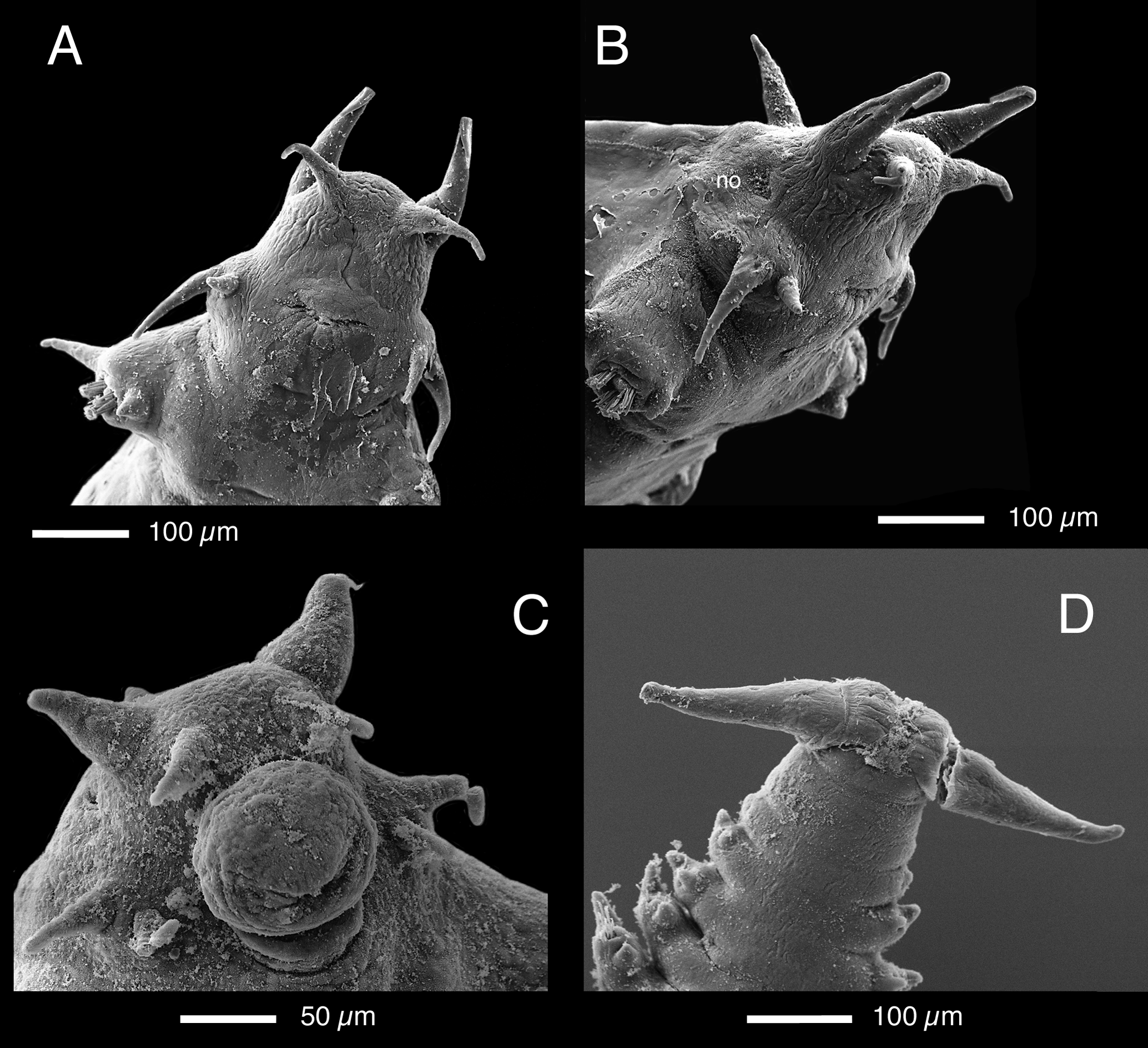
FIGURE 3. Antonbruunia sociabilis sp. nov. (NMW-Z. 2012.074.10). A, Chaetiger 1, antero-ventral view; B, Chaetiger 9, antero-ventral view; C, Chaetigers 20 and 21, antero-ventral view; D, Chaetigers 32 and 33, postero-ventral view; E, Parapodium, ventral cirrus and chaetae, chaetiger 9, anterior view; F, Chaetae, chaetiger 9, from upper posterior part of subacicular bundle.

Imageimage/png© Mackie, Andrew S. Y.;Oliver, P. Graham;Nygren, ArneAntonbruunia sociabilis sp. nov. (Annelida: Antonbruunidae) associated with the chemosynthetic deep-sea bivalve Thyasira scotiae Oliver & Drewery, 2014, and a re-examination of the systematic affinities of Antonbruunidae
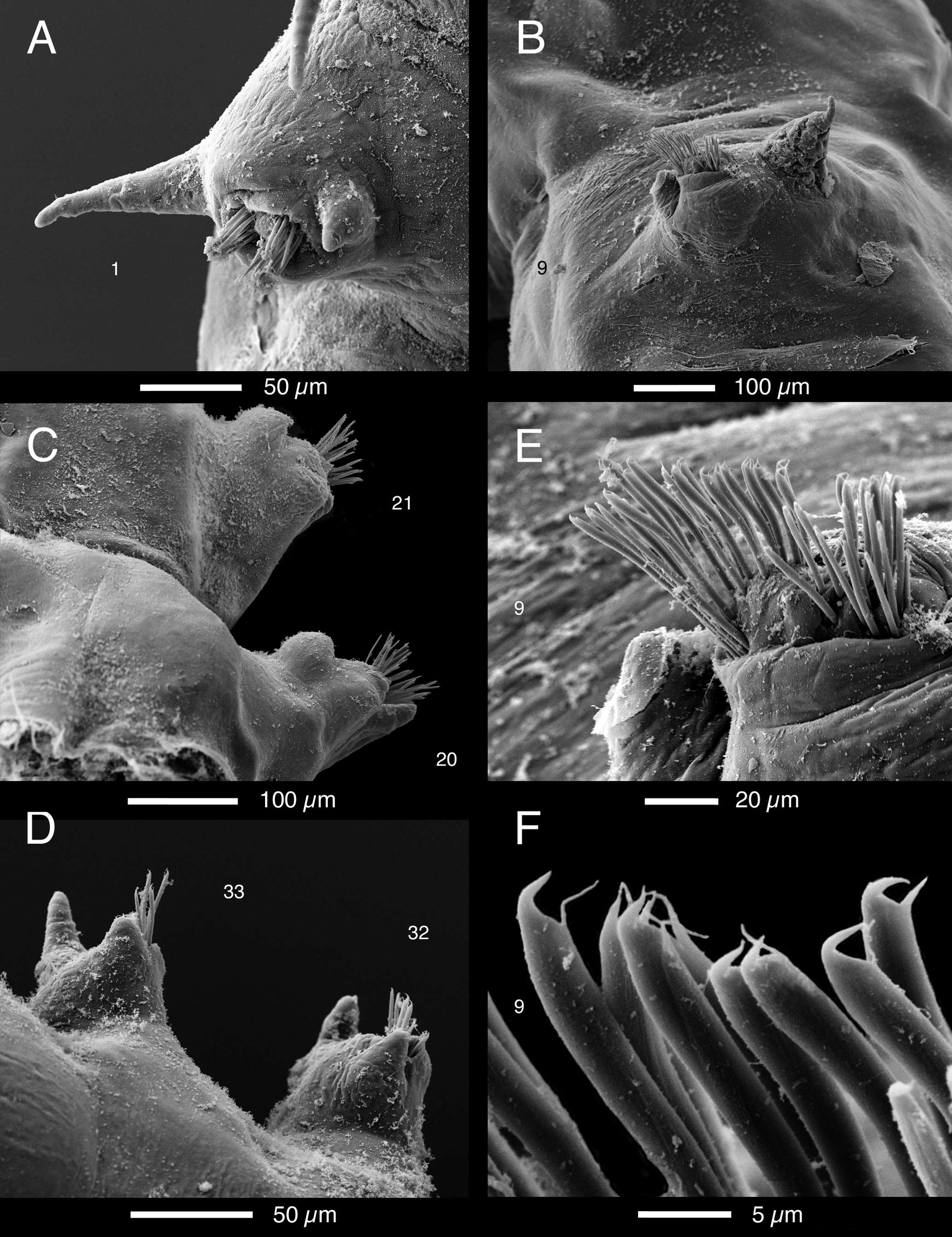
FIGURE 4. Morphometric relationships for Antonbruunia sociabilis sp. nov., and type material of A. viridis and A. gerdesi.

Imageimage/png© Mackie, Andrew S. Y.;Oliver, P. Graham;Nygren, ArneAntonbruunia sociabilis sp. nov. (Annelida: Antonbruunidae) associated with the chemosynthetic deep-sea bivalve Thyasira scotiae Oliver & Drewery, 2014, and a re-examination of the systematic affinities of Antonbruunidae
IMAGES

Gallery(4)

See Gallery

Occurrences with images

CITATIONS

References(2)

  • 1

    Horton, T.; Błażewicz-Paszkowycz, M.; Staples, D. A.; Bird, G. J. (2015). Foreword [A collection of taxonomic studies commemorating Roger N. Bamber (1949–2015)]. <em>Zootaxa.</em> 3995(1): 5.

    additional sourceWorld Register of Marine SpeciesDOI: 10.11646/zootaxa.3995.1.3
  • 2

    Mackie, Andrew S. Y.; Oliver, P. Graham; Nygren, Arne. (2015). <em>Antonbruunia</em> <em>sociabilis </em>sp. nov. (Annelida: Antonbruunidae) associated with the chemosynthetic deep-sea bivalve <em>Thyasira </em><em>scotiae </em>Oliver & Drewery, 2014, and a re-examination of the systematic affinities of Antonbruunidae. <em>Zootaxa.</em> 3995(1): 20-36.

    original descriptionWorld Register of Marine Species
  • Source Information

    GBIF Backbone Taxonomy

    GBIF Backbone Taxonomy

    checklist

    The GBIF Backbone Taxonomy is a single, synthetic management classification with the goal of covering all names GBIF is dealing with. It's the taxonomic backbone that allows GBIF to integrate name based information from different resources, no matter if these are occurrence datasets, species pages, names from nomenclators or external sources like EOL, Genbank or IUCN. This backbone allows taxonomic search, browse and reporting operations across all those resources in a consistent way and to provide means to crosswalk names from one source to another.

    It is updated regulary through an automated process in which the Catalogue of Life acts as a starting point also providing the complete higher classification above families. Additional scientific names only found in other authoritative nomenclatural and taxonomic datasets are then merged into the tree, thus extending the original catalogue and broadening the backbones name coverage. The GBIF Backbone taxonomy also includes identifiers for Operational Taxonomic Units (OTUs) drawn from the barcoding resources iBOL and UNITE.

    International Barcode of Life project (iBOL), Barcode Index Numbers (BINs). BINs are connected to a taxon name and its classification by taking into account all names applied to the BIN and picking names with at least 80% consensus. If there is no consensus of name at the species level, the selection process is repeated moving up the major Linnaean ranks until consensus is achieved.

    UNITE - Unified system for the DNA based fungal species, Species Hypotheses (SHs). SHs are connected to a taxon name and its classification based on the determination of the RefS (reference sequence) if present or the RepS (representative sequence). In the latter case, if there is no match in the UNITE taxonomy, the lowest rank with 100% consensus within the SH will be used.

    The GBIF Backbone Taxonomy is available for download at https://hosted-datasets.gbif.org/datasets/backbone/ in different formats together with an archive of all previous versions.

    The following 105 sources have been used to assemble the GBIF backbone with number of names given in brackets:

    • Catalogue of Life Checklist - 4766428 names
    • International Barcode of Life project (iBOL) Barcode Index Numbers (BINs) - 635951 names
    • UNITE - Unified system for the DNA based fungal species linked to the classification - 611208 names
    • The Paleobiology Database - 212054 names
    • World Register of Marine Species - 188857 names
    • The Interim Register of Marine and Nonmarine Genera - 183894 names
    • The World Checklist of Vascular Plants (WCVP) - 131891 names
    • GBIF Backbone Taxonomy - 114350 names
    • TAXREF - 109374 names
    • The Leipzig catalogue of vascular plants - 75380 names
    • ZooBank - 73549 names
    • Integrated Taxonomic Information System (ITIS) - 68377 names
    • Plazi.org taxonomic treatments database - 61346 names
    • Genome Taxonomy Database r207 - 60545 names
    • International Plant Names Index - 52329 names
    • Fauna Europaea - 45077 names
    • The National Checklist of Taiwan (Catalogue of Life in Taiwan, TaiCoL) - 36193 names
    • Dyntaxa. Svensk taxonomisk databas - 35892 names
    • The Plant List with literature - 32692 names
    • United Kingdom Species Inventory (UKSI) - 29643 names
    • Artsnavnebasen - 29208 names
    • The IUCN Red List of Threatened Species - 21221 names
    • Afromoths, online database of Afrotropical moth species (Lepidoptera) - 13961 names
    • Brazilian Flora 2020 project - Projeto Flora do Brasil 2020 - 13829 names
    • Prokaryotic Nomenclature Up-to-Date (PNU) - 10079 names
    • Checklist Dutch Species Register - Nederlands Soortenregister - 8814 names
    • ICTV Master Species List (MSL) - 7852 names
    • Cockroach Species File - 6020 names
    • GRIN Taxonomy - 5882 names
    • Taxon list of fungi and fungal-like organisms from Germany compiled by the DGfM - 4570 names
    • Catalogue of Afrotropical Bees - 3623 names
    • Catalogue of Tenebrionidae (Coleoptera) of North America - 3327 names
    • Checklist of Beetles (Coleoptera) of Canada and Alaska. Second Edition. - 3312 names
    • Systema Dipterorum - 2850 names
    • Catalogue of the Pterophoroidea of the World - 2807 names
    • The Clements Checklist - 2675 names
    • Taxon list of Hymenoptera from Germany compiled in the context of the GBOL project - 2496 names
    • IOC World Bird List, v13.2 - 2366 names
    • Official Lists and Indexes of Names in Zoology - 2310 names
    • National checklist of all species occurring in Denmark - 1922 names
    • Myriatrix - 1876 names
    • Database of Vascular Plants of Canada (VASCAN) - 1822 names
    • Taxon list of vascular plants from Bavaria, Germany compiled in the context of the BFL project - 1771 names
    • Orthoptera Species File - 1742 names
    • A list of the terrestrial fungi, flora and fauna of Madeira and Selvagens archipelagos - 1602 names
    • Aphid Species File - 1565 names
    • World Spider Catalog - 1561 names
    • Taxon list of Jurassic Pisces of the Tethys Palaeo-Environment compiled at the SNSB-JME - 1270 names
    • Backbone Family Classification Patch - 1143 names
    • GBIF Algae Classification - 1100 names
    • International Cichorieae Network (ICN): Cichorieae Portal - 975 names
    • Psocodea Species File - 803 names
    • New Zealand Marine Macroalgae Species Checklist - 787 names
    • Annotated checklist of endemic species from the Western Balkans - 754 names
    • Taxon list of animals with German names (worldwide) compiled at the SMNS - 503 names
    • Catalogue of the Alucitoidea of the World - 472 names
    • Lygaeoidea Species File - 462 names
    • Catálogo de Plantas y Líquenes de Colombia - 422 names
    • GBIF Backbone Patch - 317 names
    • Phasmida Species File - 259 names
    • Cortinariaceae fetched from the Index Fungorum API - 234 names
    • Coreoidea Species File - 233 names
    • GTDB supplement - 139 names
    • Mantodea Species File - 119 names
    • Endemic species in Taiwan - 93 names
    • Taxon list of Araneae from Germany compiled in the context of the GBOL project - 88 names
    • Species of Hominidae - 78 names
    • Taxon list of Sternorrhyncha from Germany compiled in the context of the GBOL project - 77 names
    • Taxon list of mosses from Germany compiled in the context of the GBOL project - 75 names
    • Mammal Species of the World - 73 names
    • Plecoptera Species File - 71 names
    • Species Fungorum Plus - 64 names
    • Catalogue of the type specimens of Cosmopterigidae (Lepidoptera: Gelechioidea) from research collections of the Zoological Institute, Russian Academy of Sciences - 47 names
    • Species named after famous people - 41 names
    • Dermaptera Species File - 36 names
    • Taxon list of Trichoptera from Germany compiled in the context of the GBOL project - 34 names
    • True Fruit Flies (Diptera, Tephritidae) of the Afrotropical Region - 33 names
    • Range and Regularities in the Distribution of Earthworms of the Earthworms of the USSR Fauna. Perel, 1979 - 32 names
    • Taxon list of Diplura from Germany compiled in the context of the GBOL project - 30 names
    • Lista de referencia de especies de aves de Colombia - 2022 - 24 names
    • Taxon list of Auchenorrhyncha from Germany compiled in the context of the GBOL project - 20 names
    • Catalogue of the type specimens of Polycestinae (Coleoptera: Buprestidae) from research collections of the Zoological Institute, Russian Academy of Sciences - 19 names
    • Taxon list of Thysanoptera from Germany compiled in the context of the GBOL project - 19 names
    • Lista de especies de vertebrados registrados en jurisdicción del Departamento del Huila - 18 names
    • Taxon list of Microcoryphia (Archaeognatha) from Germany compiled in the context of the GBOL project - 15 names
    • Catalogue of the type specimens of Bufonidae and Megophryidae (Amphibia: Anura) from research collections of the Zoological Institute, Russian Academy of Sciences - 12 names
    • Grylloblattodea Species File - 11 names
    • Coleorrhyncha Species File - 9 names
    • Taxon list of liverworts from Germany compiled in the context of the GBOL project - 9 names
    • Embioptera Species File - 7 names
    • Taxon list of Pisces and Cyclostoma from Germany compiled in the context of the GBOL project - 6 names
    • Taxon list of Pteridophyta from Germany compiled in the context of the GBOL project - 6 names
    • Taxon list of Siphonaptera from Germany compiled in the context of the GBOL project - 5 names
    • The Earthworms of the Fauna of Russia. Perel, 1997 - 5 names
    • Taxon list of Zygentoma from Germany compiled in the context of the GBOL project - 4 names
    • Asiloid Flies: new taxa of Diptera: Apioceridae, Asilidae, and Mydidae - 3 names
    • Taxon list of Protura from Germany compiled in the context of the GBOL project - 3 names
    • Taxon list of hornworts from Germany compiled in the context of the GBOL project - 2 names
    • Chrysididae Species File - 1 names
    • Taxon list of Dermaptera from Germany compiled in the context of the GBOL project - 1 names
    • Taxon list of Diplopoda from Germany in the context of the GBOL project - 1 names
    • Taxon list of Orthoptera (Grashoppers) from Germany compiled at the SNSB - 1 names
    • Taxon list of Pscoptera from Germany compiled in the context of the GBOL project - 1 names
    • Taxon list of Pseudoscorpiones from Germany compiled in the context of the GBOL project - 1 names
    • Taxon list of Raphidioptera from Germany compiled in the context of the GBOL project - 1 names

    GBIF Secretariat (2023). GBIF Backbone Taxonomy. Checklist dataset https://doi.org/10.15468/39omei accessed via GBIF.org on 2026-06-14.

    CC BYPublished 8/28/2023View dataset
    GBIF Usage Key
    8031018
    Dataset Key
    d7dddbf4-2cf0-4f39-9b2a-bb099caae36c
    Origin
    source
    Backbone Key
    8031018
    Taxon ID
    gbif:8031018
    Last Crawled
    8/22/2023
    Last Interpreted
    8/22/2023